Ingredients
Equipment
Method
- Prepare the shrimp: If using frozen shrimp, thaw completely. Pat the shrimp very dry with paper towels, then season both sides lightly with salt and black pepper.
- Cook the linguine: Bring a large pot of generously salted water to a boil. Cook the linguine according to package directions until al dente. Before draining, reserve about 1 cup of the pasta cooking water. Drain the pasta without rinsing.
- Sear the shrimp: Heat the olive oil in a large skillet over medium-high heat. Add the shrimp in a single layer, working in batches if necessary. Cook for about 1½–2 minutes per side, or until the shrimp are opaque and lightly golden. Transfer them to a plate.
- Make the garlic butter base: Reduce the heat to medium and add the butter to the same skillet. Once melted, add the garlic and red pepper flakes. Cook for 30 seconds to 1 minute, stirring frequently, until fragrant. Do not burn the garlic.
- Add lemon: Pour in the fresh lemon juice and scrape the bottom of the skillet with a wooden spoon or spatula to release the flavorful browned bits.
- Create the sauce: Add ¼ cup of reserved pasta water and stir well. Let the mixture gently simmer for 1–2 minutes. Add more pasta water a little at a time if necessary until the sauce becomes silky and glossy.
- Toss with pasta: Add the cooked linguine to the skillet. Using tongs, toss the pasta thoroughly in the garlic butter sauce until the noodles are evenly coated.
- Return the shrimp: Add the cooked shrimp back to the skillet and gently toss for about 30 seconds to 1 minute, just until heated through.
- Finish the dish: Stir in the chopped fresh parsley. Taste and adjust the seasoning with additional salt, black pepper, lemon juice, or red pepper flakes as desired.
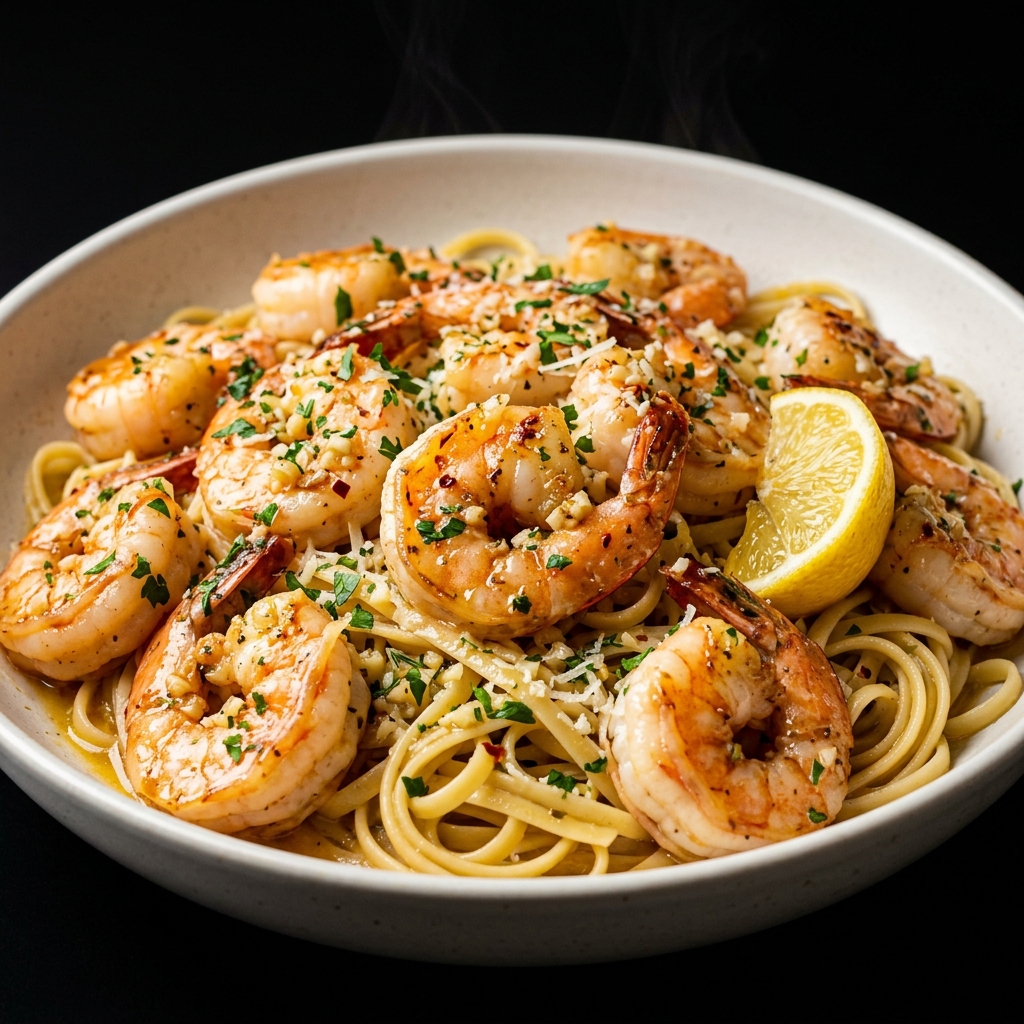
- Serve: Divide the shrimp scampi among serving bowls or plates. Garnish with fresh parsley and lemon wedges. Add freshly grated Parmesan if desired and serve immediately.
Notes
Dry the shrimp well: Removing excess moisture helps the shrimp brown rather than steam.
Do not overcook the shrimp: Large shrimp generally need only a few minutes. They should be opaque and tender and should curl into a loose C shape.
Reserve pasta water: The starch in the water helps create a silky sauce that coats the linguine.
Watch the garlic: Garlic burns quickly and can become bitter. Cook it only until fragrant and lightly softened.
Adjust the lemon: Start with the recommended amount and add more at the end if you prefer a brighter, more citrus-forward flavor.
For gluten-free: Replace regular linguine with certified gluten-free pasta.
For lower-carb: Replace the linguine with zucchini noodles, shirataki noodles, spaghetti squash, or another low-carb alternative.
Parmesan is optional: The dish is delicious without it, particularly if you prefer a more traditional garlic, butter, lemon, and shrimp flavor.
Best served fresh: Shrimp scampi has its best texture immediately after cooking.
Do not overcook the shrimp: Large shrimp generally need only a few minutes. They should be opaque and tender and should curl into a loose C shape.
Reserve pasta water: The starch in the water helps create a silky sauce that coats the linguine.
Watch the garlic: Garlic burns quickly and can become bitter. Cook it only until fragrant and lightly softened.
Adjust the lemon: Start with the recommended amount and add more at the end if you prefer a brighter, more citrus-forward flavor.
For gluten-free: Replace regular linguine with certified gluten-free pasta.
For lower-carb: Replace the linguine with zucchini noodles, shirataki noodles, spaghetti squash, or another low-carb alternative.
Parmesan is optional: The dish is delicious without it, particularly if you prefer a more traditional garlic, butter, lemon, and shrimp flavor.
Best served fresh: Shrimp scampi has its best texture immediately after cooking.