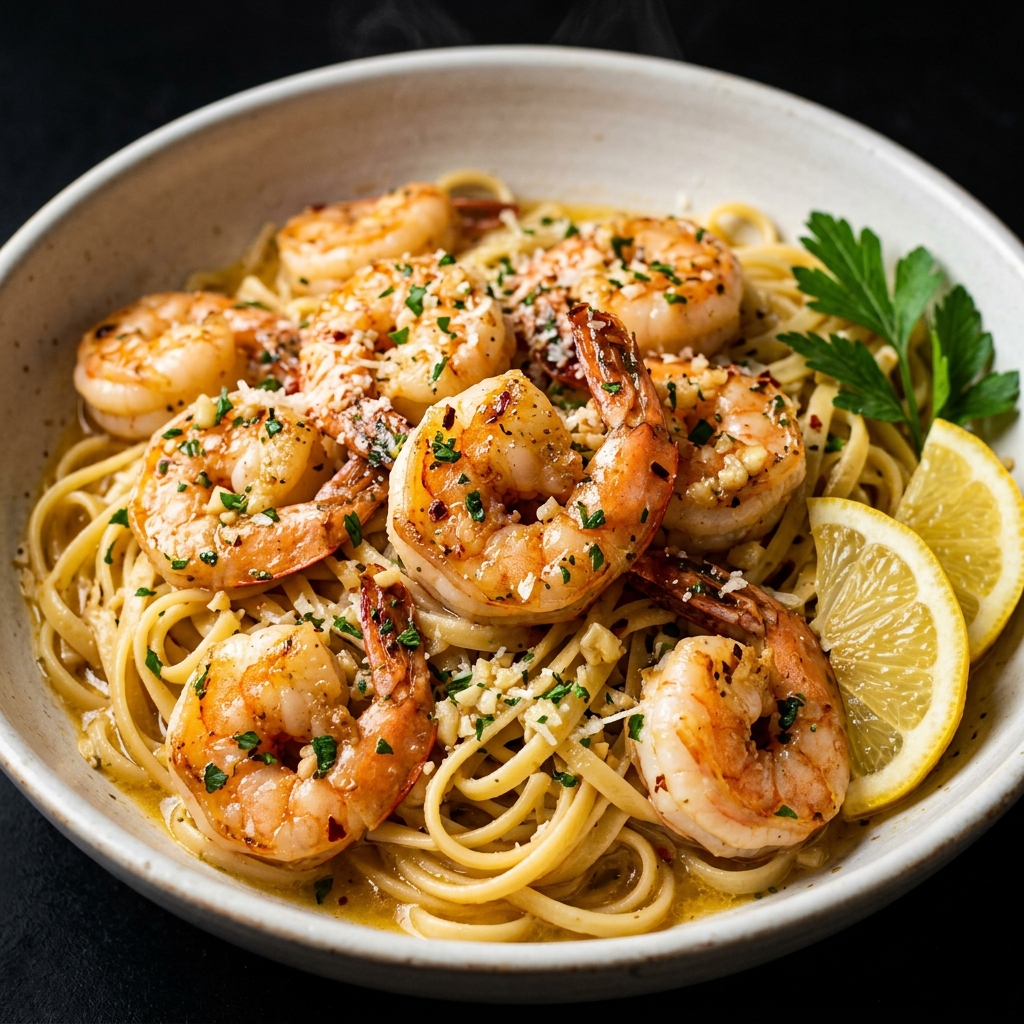
Few dinners can turn simple ingredients into something this impressive. Classic Garlic Butter Shrimp Scampi combines juicy shrimp, tender pasta, fresh garlic, butter, lemon, parsley, and a touch of red pepper for a bright, rich, restaurant-style meal that comes together surprisingly quickly. If you love easy seafood dinners with bold flavor and a luxurious sauce, this is one recipe you will want to keep close.
Ingredients for Classic Garlic Butter Shrimp Scampi
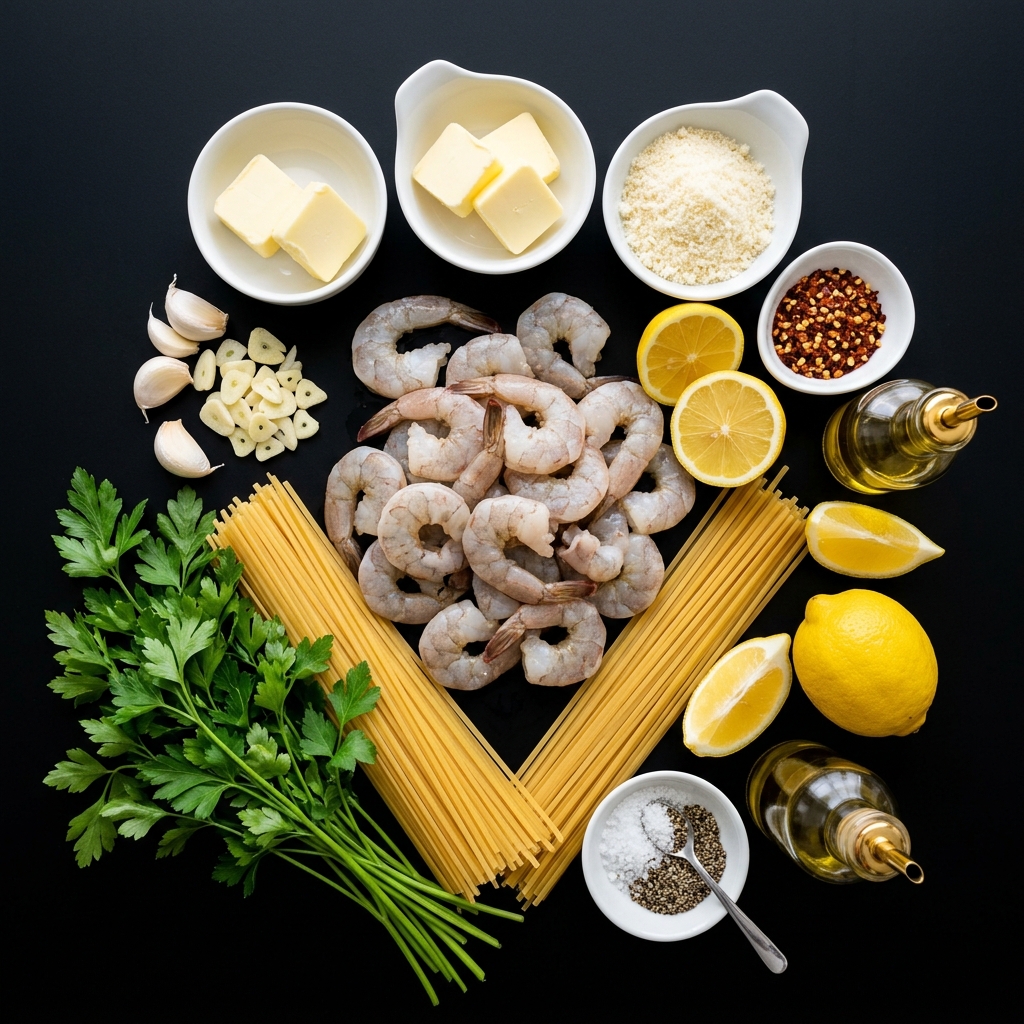
Shrimp
Use about 1 pound of large shrimp, peeled and deveined. Fresh shrimp are excellent, but good-quality frozen shrimp work beautifully too.
Large shrimp are particularly useful because they remain juicy while developing enough surface area for browning. If using frozen shrimp, thaw them completely and pat them very dry before cooking. Excess moisture can cause the shrimp to steam instead of sear.
Look for shrimp with a clean, fresh smell and firm flesh. Avoid shrimp that smell strongly fishy.
Linguine
About 8 ounces of linguine provides the ideal base for this recipe. Spaghetti or angel hair can also work, but linguine has enough surface area to hold onto the buttery sauce.
Cook the pasta until al dente, meaning it should be tender but still have a slight firmness when bitten. Overcooked pasta can become soft and break apart when tossed with the sauce.
Butter
Use 4 tablespoons of unsalted butter. Unsalted butter gives you better control over the final seasoning.
Butter provides the rich, creamy foundation of the scampi sauce, while olive oil helps prevent the butter from becoming overly dark during the initial cooking process.
Olive Oil
About 2 tablespoons of extra-virgin olive oil add fruity depth and help create a flavorful cooking base for the shrimp and garlic.
Fresh Garlic
Use 5 to 6 cloves of fresh garlic, finely minced or thinly sliced.
Fresh garlic makes a significant difference here. Jarred minced garlic can work in a pinch, but freshly prepared garlic gives the sauce a much brighter aroma and more pronounced flavor.
Be careful not to burn it. Garlic can go from beautifully fragrant to bitter in a matter of seconds.
Lemon
You will need the juice of 1 fresh lemon, plus a few lemon wedges for serving.
Fresh lemon is essential because it balances the richness of the butter and gives the finished dish its characteristic bright, fresh flavor.
If you enjoy a stronger lemon flavor, add a small amount of finely grated lemon zest as well.
Fresh Parsley
Use about ¼ cup chopped fresh parsley.
Parsley is more than a garnish. Its fresh, slightly grassy flavor helps balance the richness of the sauce and gives the dish a vibrant finish.
Red Pepper Flakes
Add ¼ to ½ teaspoon red pepper flakes, depending on your preference.
The goal is not necessarily to make the shrimp scampi very spicy. A small amount adds warmth and makes the buttery sauce taste more complex.
Parmesan Cheese
A small amount of freshly grated Parmesan can be added when serving, although traditional shrimp scampi does not require it.
If using Parmesan, grate it yourself whenever possible. Freshly grated cheese melts more smoothly and has considerably better flavor than many pre-shredded varieties.
Salt and Black Pepper
Season the shrimp and sauce with salt and freshly ground black pepper to taste.
Seasoning at different stages is important. Properly seasoned shrimp taste much better than relying on a final sprinkle of salt over the finished dish.
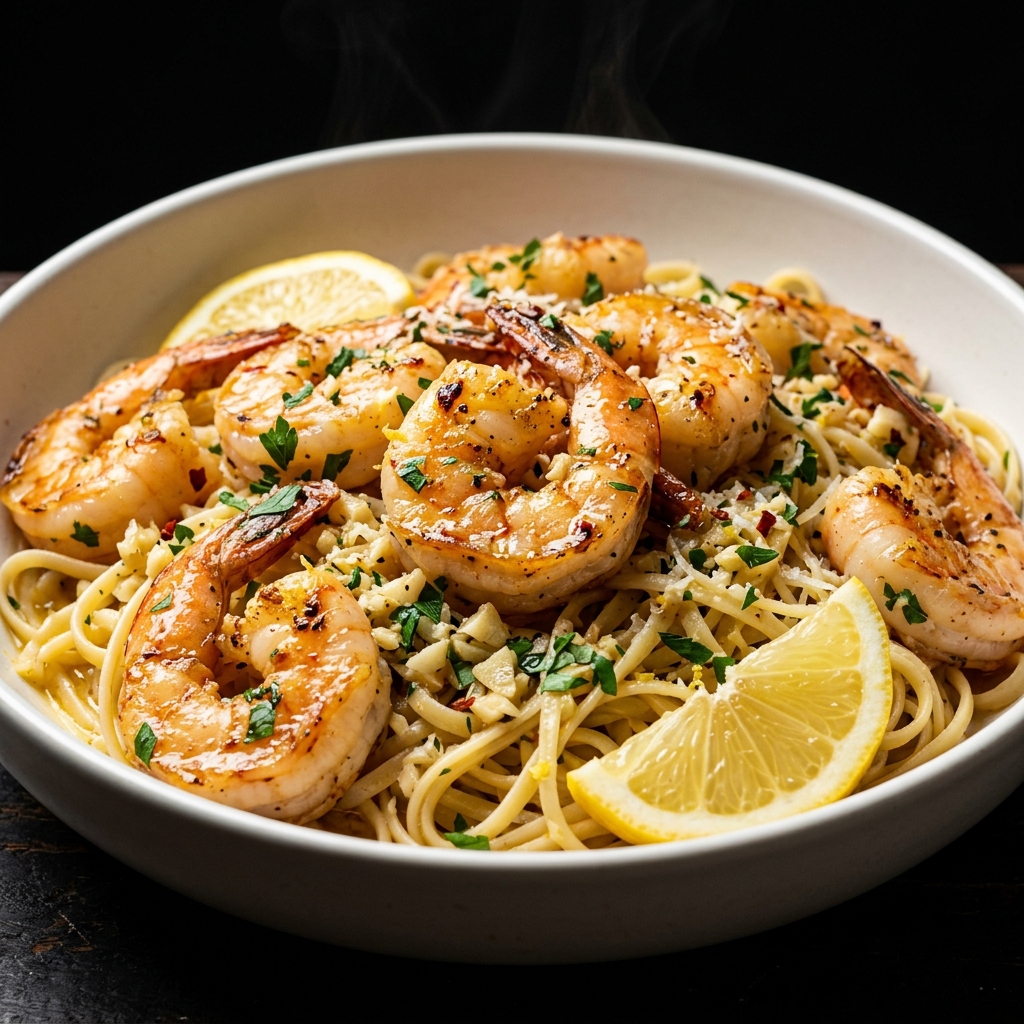
How to Make Classic Garlic Butter Shrimp Scampi
Step 1: Prepare the Shrimp
If your shrimp are frozen, thaw them completely and remove the shells and tails if desired. Devein them if they have not already been cleaned.
Pat the shrimp thoroughly dry with paper towels.
This small step is easy to overlook, but it is one of the secrets to beautifully browned shrimp. Wet shrimp release water into the pan, lowering the temperature and preventing proper browning.
Season both sides lightly with salt and freshly ground black pepper.
Step 2: Cook the Linguine
Bring a large pot of generously salted water to a boil.
Add the linguine and cook according to the package directions until al dente.
Before draining, reserve about 1 cup of the pasta cooking water.
This is one of the most useful tricks in the entire recipe. Pasta water contains starch released from the noodles, and that starch helps emulsify the butter, oil, lemon juice, and other liquids into a silky sauce that coats the pasta beautifully.
Drain the pasta and set it aside. Do not rinse it.
Step 3: Sear the Shrimp
Place a large skillet over medium-high heat and add the olive oil.
Once the oil is hot, arrange the shrimp in a single layer. Avoid overcrowding the pan. If necessary, cook them in two batches.
Cook the shrimp for approximately 1½ to 2 minutes per side, depending on their size.
You are looking for shrimp that are opaque, pink, and lightly golden around the edges. Once cooked, transfer them to a plate.
Do not overcook them at this stage. Shrimp continue cooking slightly from residual heat, and they will return to the skillet later.
Step 4: Build the Garlic Butter Sauce
Reduce the heat to medium and add the butter to the same skillet.
Once melted, add the minced or sliced garlic and red pepper flakes.
Cook for approximately 30 seconds to 1 minute, stirring frequently, until the garlic becomes fragrant.
Do not allow the garlic to become deep brown. Burnt garlic introduces a bitter flavor that can overpower the entire dish.
Step 5: Add the Lemon
Pour in the fresh lemon juice and stir, scraping the bottom of the skillet with a wooden spoon or spatula.
Those browned bits left behind by the shrimp are packed with flavor. Incorporating them into the sauce is one of the easiest ways to make a quick dinner taste restaurant-quality.
Step 6: Create the Silky Sauce
Add about ¼ to ½ cup of reserved pasta water to the skillet and stir.
Allow the mixture to simmer gently for a minute or two. The butter, olive oil, lemon juice, and starchy pasta water should begin to come together into a glossy sauce.
If the sauce appears too thin, let it reduce slightly. If it becomes too concentrated, add another splash of pasta water.
Step 7: Toss in the Pasta
Add the drained linguine directly to the skillet.
Use tongs to toss the pasta continuously, allowing the noodles to become coated in the garlic butter sauce.
This is where the recipe really comes together. Instead of placing plain pasta on a plate and spooning sauce over it, tossing the noodles directly in the skillet allows every strand to absorb and carry the sauce.
Step 8: Return the Shrimp
Add the cooked shrimp back into the skillet.
Gently toss everything together for about 30 seconds to 1 minute, just until the shrimp are heated through.
Add the chopped parsley and toss again.
Taste the sauce and adjust with additional salt, black pepper, lemon juice, or red pepper flakes as needed.
Step 9: Serve Immediately
Transfer the shrimp scampi to warm serving bowls or plates.
Finish with fresh parsley, a few lemon wedges, and a light sprinkle of freshly grated Parmesan if desired.
Serve immediately while the sauce is glossy and the shrimp are tender.
The Secret to Restaurant-Style Shrimp Scampi
The difference between an average shrimp pasta and an exceptional shrimp scampi is rarely the number of ingredients. It is usually technique.
The first secret is controlling the heat. Shrimp cook extremely quickly, and high heat can turn them from tender to rubbery before you realize what happened. Give them enough heat to brown, but remove them from the skillet as soon as they are nearly cooked.
The second secret is using the same skillet for the sauce. The flavorful browned pieces left behind after cooking the shrimp become part of the sauce, giving it much more depth than a sauce made in a clean pan.
And then there is the pasta water. Never underestimate it. A splash of starchy pasta water helps bring the fat and liquid ingredients together while giving the sauce enough body to cling to the linguine. It is a simple restaurant technique that can dramatically improve homemade pasta dishes.
What Makes the Sauce So Flavorful?
A great garlic butter sauce depends on balance. Butter provides richness, olive oil contributes savory depth, garlic supplies aromatic intensity, lemon brings acidity, and parsley gives the finished dish freshness.
If you use too much butter without enough acidity, the dish can taste heavy. Too much lemon can make it sharp. Too much garlic can overpower the shrimp. The goal is to let every component support the others.
For an especially flavorful result, add the lemon juice near the end of the sauce-building process rather than cooking it aggressively for a long time. This keeps its fresh, bright character.
Variations of Classic Garlic Butter Shrimp Scampi
One of the best things about shrimp scampi is how easily it can be adapted without losing its essential character.
Creamy Garlic Butter Shrimp Scampi
For a richer variation, add a small splash of heavy cream after preparing the garlic butter base. Simmer gently until slightly thickened, then add the pasta and shrimp.
The result is a creamier sauce with a luxurious texture.
Spicy Shrimp Scampi
Increase the red pepper flakes or add a pinch of cayenne pepper.
For serious heat, a finely chopped fresh chili can be sautéed with the garlic. Keep the amount controlled, however, because too much heat can overwhelm the delicate flavor of the shrimp.
Vegetable Shrimp Scampi
Add vegetables such as spinach, cherry tomatoes, asparagus, zucchini, or broccoli.
Cherry tomatoes are particularly good because their natural acidity complements the lemony garlic butter sauce. Add quick-cooking vegetables toward the end so they remain vibrant and slightly crisp.
Garlic Butter Shrimp Scampi Without Pasta
For a lighter meal, skip the linguine and serve the shrimp with roasted vegetables, zucchini noodles, cauliflower rice, or a simple green salad.
This version allows the shrimp and garlic butter sauce to remain the main attraction.
Gluten-Free Shrimp Scampi
Use your favorite certified gluten-free pasta instead of traditional linguine.
The shrimp, butter, garlic, lemon, olive oil, parsley, and seasonings are naturally suitable for a gluten-free preparation; the important consideration is replacing the wheat-based pasta with a gluten-free alternative.
Lemon Herb Shrimp Scampi
For an even fresher flavor, add additional herbs such as basil, chives, or a small amount of fresh oregano.
Use herbs carefully so they complement rather than overpower the garlic, lemon, and shrimp.
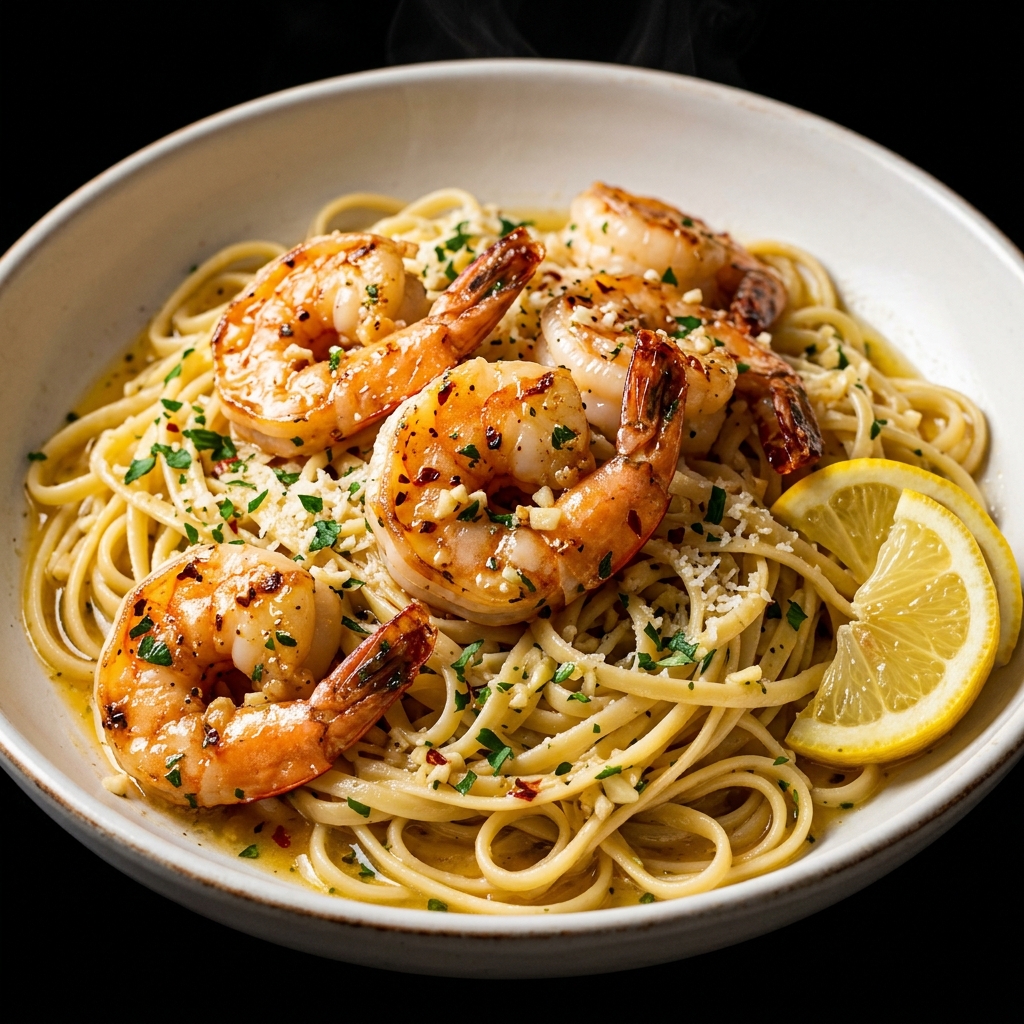
Expert Tips for Perfect Shrimp Scampi Every Time
Dry the Shrimp Before Cooking
This is perhaps the simplest improvement you can make. Thoroughly dried shrimp brown much better and develop more flavor.
Do Not Crowd the Pan
Shrimp need direct contact with the hot cooking surface. Overcrowding traps moisture and causes steaming.
Cook in batches if your skillet is small.
Watch the Garlic Closely
Garlic should become fragrant and lightly golden at most. If it turns dark brown or black, its flavor can become bitter.
Reserve More Pasta Water Than You Think You Need
You may not use the entire cup, but having it available gives you control over the sauce. Pasta water is much easier to add than to recover once a sauce becomes too watery.
Finish With Fresh Lemon
Even if lemon juice is already included in the sauce, a tiny squeeze over the finished dish can wake up all the flavors.
Use Fresh Herbs
Fresh parsley provides a brightness that dried parsley simply cannot replicate in this recipe.
Do Not Overcook the Shrimp
Shrimp are done when they become opaque and curl into a loose C shape. Extremely tight, curled shrimp are often a sign that they have been cooked too long.
Toss the Pasta in the Sauce
Do not treat the sauce as something that simply sits on top of the noodles. Tossing the pasta directly in the skillet helps distribute the sauce evenly and gives the dish a much more cohesive flavor.
Taste Before Serving
Always taste the sauce at the end. Depending on the saltiness of your butter, pasta water, Parmesan, and other ingredients, you may need a final adjustment of salt, lemon, pepper, or red pepper flakes.
A final 10-second taste test can be the difference between a good dinner and an outstanding one.
Make-Ahead Options
Classic Garlic Butter Shrimp Scampi is best served immediately because freshly cooked shrimp and glossy garlic butter sauce have their best texture when hot. However, you can prepare several components ahead of time to make dinner much faster.
The shrimp can be peeled, deveined, seasoned, and refrigerated in a covered container for several hours before cooking. Garlic can also be minced ahead of time, parsley chopped, and lemon wedges prepared. Keep these ingredients refrigerated separately until you are ready to cook.
You can also measure out the butter, olive oil, red pepper flakes, and seasonings in advance. When dinner time arrives, all you need to do is cook the pasta and shrimp, prepare the sauce, and bring everything together.
I do not recommend fully cooking the shrimp and pasta several hours ahead if you want the best texture. Shrimp can become firm and dry after reheating, while pasta can absorb too much sauce and lose its appealing texture.
What to Serve With Garlic Butter Shrimp Scampi
Because shrimp scampi already contains pasta, protein, vegetables, fat, and plenty of flavor, you do not need a complicated side dish. A few fresh or lightly seasoned sides work beautifully.
Garlic Bread
A crisp piece of garlic bread is almost impossible to resist with shrimp scampi. It is especially useful for soaking up any remaining garlic butter sauce at the bottom of the plate.
For an even better result, use a crusty loaf with a soft interior so that the bread provides both crunch and plenty of surface area for the sauce.
Simple Green Salad
A fresh green salad provides a light contrast to the richness of the butter sauce.
Try mixed greens, cucumber, tomatoes, and a simple lemon vinaigrette. The acidity from the dressing complements the lemon in the shrimp scampi without competing with its flavor.
Roasted Asparagus
Roasted asparagus is an excellent vegetable side because its slightly crisp texture and savory flavor pair naturally with garlic butter shrimp.
Toss asparagus with olive oil, salt, and black pepper, then roast until tender with lightly browned edges.
Steamed Broccoli
For an easy weeknight option, lightly steamed broccoli works perfectly. Keep it relatively simple so that the garlic, lemon, and shrimp remain the stars of the meal.
Roasted Cherry Tomatoes
Cherry tomatoes become sweet and juicy when roasted, making them a wonderful companion to the bright lemon-butter sauce.
Their natural acidity also helps keep the meal from feeling overly rich.
Crusty Bread
If you do not want traditional garlic bread, serve a warm crusty baguette or artisan loaf alongside the shrimp scampi.
The bread is especially valuable because the sauce is too delicious to leave behind.
How to Store Garlic Butter Shrimp Scampi
If you have leftovers, allow the shrimp scampi to cool slightly before transferring it to an airtight container.
Refrigerate leftovers promptly and use them within 3 days for the best quality.
Store the pasta and shrimp together if necessary, although separating the components can make reheating easier. The pasta will continue absorbing some of the sauce as it sits, so leftovers may not be quite as saucy as the freshly prepared dish.
How to Reheat Shrimp Scampi
The stovetop is generally the best method.
Place the leftovers in a skillet over low to medium-low heat. Add a small splash of water, broth, or additional lemon juice and gently toss until heated through.
Avoid blasting the shrimp with high heat. Slow reheating helps prevent them from becoming rubbery.
You can also reheat the dish in the microwave in short intervals, stirring between each interval. Stop heating as soon as everything is hot.
Do not repeatedly reheat the same portion. Reheat only the amount you plan to eat.
Common Mistakes to Avoid
Even a simple shrimp scampi can go wrong if a few important details are overlooked.
Overcooking the Shrimp
This is the most common mistake.
Shrimp cook much faster than many people expect. Once they turn opaque and develop a pink color, they are usually close to done. Cooking them for several additional minutes can leave them tough and rubbery.
Remember that they will receive additional heat when they are returned to the sauce.
Burning the Garlic
Garlic is the foundation of the sauce, so burnt garlic can ruin the entire dish.
Keep the skillet at moderate heat when adding garlic and stir frequently. You want it fragrant and lightly softened, not dark and bitter.
Forgetting the Pasta Water
Discarding all the pasta water is a missed opportunity.
The starchy water helps loosen the sauce while also helping the fat and liquid ingredients cling to the pasta. Reserve some before draining every time you make this dish.
Using Too Much Lemon
Lemon is essential, but more is not always better.
Start with the recommended amount and taste before adding more. You want brightness and balance rather than an aggressively sour sauce.
Not Seasoning in Layers
If you wait until the very end to season everything, the flavor may taste flat.
Season the shrimp lightly before cooking, season the sauce as needed, and taste the completed dish before serving.
Letting the Pasta Sit Too Long
Pasta continues absorbing liquid after cooking. If it sits for an extended period before being tossed with the sauce, it can become sticky and lose its ideal texture.
For the best result, coordinate the pasta and sauce so they come together while both are hot.
Frequently Asked Questions
Can I use frozen shrimp for shrimp scampi?
Yes. Frozen shrimp are an excellent option and can produce fantastic results. Thaw them completely before cooking and pat them very dry with paper towels. Removing excess moisture helps the shrimp brown instead of steaming.
Should I use shrimp with the tails on or off?
Either works. Tails can provide a more attractive presentation and may add a small amount of flavor during cooking, while tail-off shrimp are easier to eat.
For a casual family dinner, tail-off shrimp are particularly convenient. For a dinner party, tail-on shrimp can create a more elegant presentation.
Can I use pre-cooked shrimp?
You can, but raw shrimp are strongly recommended.
Pre-cooked shrimp require very little additional cooking, and placing them in a hot skillet for several minutes can make them rubbery. If using pre-cooked shrimp, add them near the end only long enough to warm them through.
What size shrimp are best?
Large or extra-large shrimp are ideal because they remain juicy and provide a satisfying bite.
Medium shrimp can also work, but they cook faster, so watch them carefully.
Can I make shrimp scampi without wine?
Absolutely.
Although some shrimp scampi recipes use white wine, you can make an excellent version using fresh lemon juice and reserved pasta water instead. The result remains bright, buttery, garlicky, and flavorful.
Can I make this recipe without Parmesan?
Yes. Parmesan is optional and is not necessary for a delicious shrimp scampi.
The core flavors come from the shrimp, garlic, butter, olive oil, lemon, parsley, and seasonings. If you prefer a cleaner, more traditional buttery seafood flavor, simply leave the Parmesan out.
How do I make the sauce thicker?
The sauce should be silky and cling lightly to the pasta rather than resemble a heavy cream sauce.
If it is too thin, allow it to simmer briefly to reduce. Tossing the pasta in the sauce also helps because the starch on the noodles contributes to the sauce’s body.
You can add another small piece of butter at the end and toss vigorously for additional richness and gloss.
Why is my shrimp scampi watery?
The most common causes are wet shrimp, too much liquid, or overcrowding the skillet.
Pat the shrimp dry before cooking, avoid overcrowding, and add pasta water gradually rather than pouring in a large amount at once.
Can I use another type of pasta?
Definitely. Spaghetti, fettuccine, bucatini, angel hair, or even short pasta shapes can work.
Linguine remains one of the best choices because its broad, flat strands provide plenty of surface area for the garlic butter sauce.
Can I make this recipe low-carb?
Yes, with a substitution.
Replace the linguine with zucchini noodles, spaghetti squash, shirataki noodles, or another low-carb alternative. Keep in mind that the nutritional profile will change depending on the substitute you choose.
A Final Chef’s Note
The beauty of Classic Garlic Butter Shrimp Scampi is its simplicity. There is nowhere for poor technique to hide, but there is also no need for complicated cooking methods. Start with properly dried shrimp, use fresh garlic and lemon, control your heat, reserve that precious pasta water, and bring the pasta together with the sauce while everything is still hot.
Most importantly, do not rush the final tasting stage. A little more lemon can brighten the sauce, another pinch of black pepper can sharpen the flavor, and a touch of red pepper flakes can give the dish just the right amount of warmth.
When served immediately with tender linguine, juicy shrimp, fragrant garlic butter sauce, fresh parsley, and lemon, this is the kind of dinner that tastes far more elaborate than the effort required to prepare it.
Whether you are cooking for your family on a busy weeknight or looking for an impressive seafood dinner for guests, this shrimp scampi delivers the combination that makes a recipe worth repeating: simple ingredients, smart technique, vibrant flavor, and a finished dish that everyone wants another helping of.
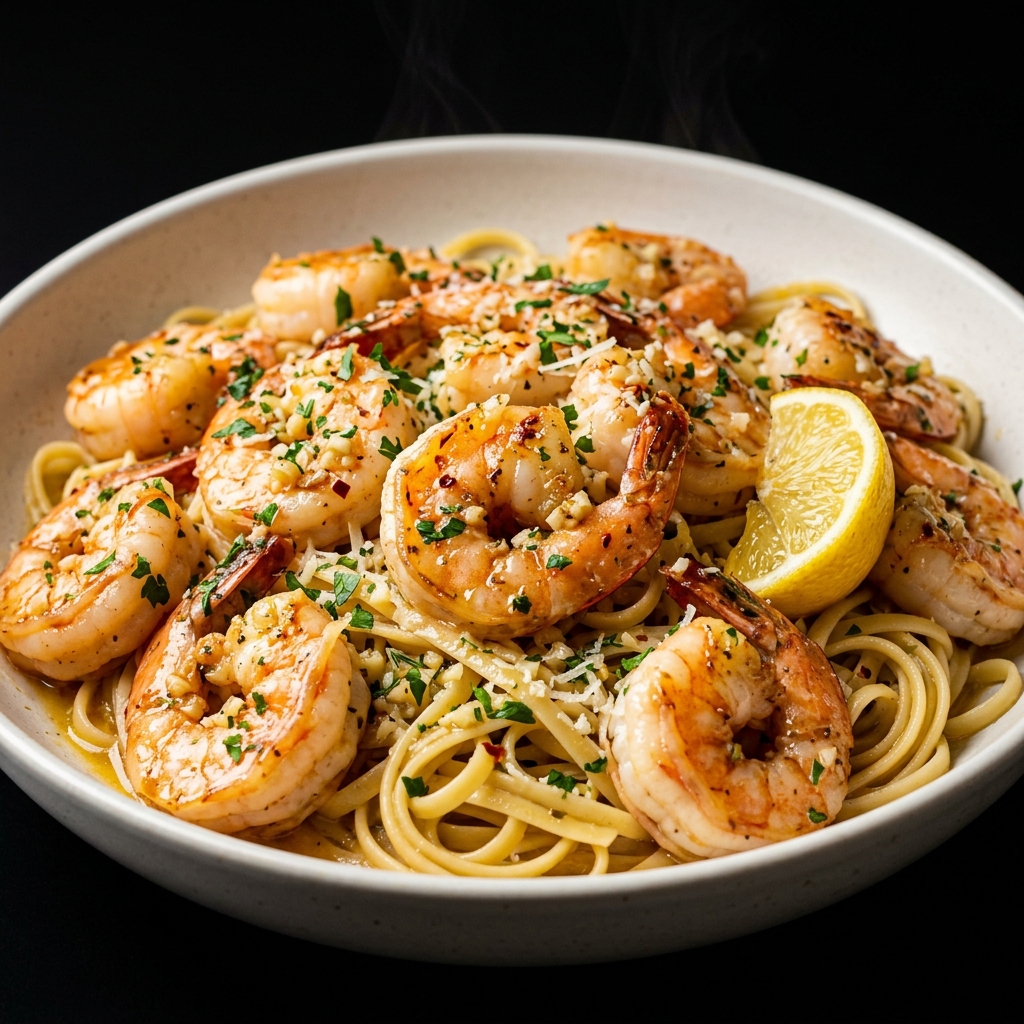
Classic Garlic Butter Shrimp Scampi
Ingredients
Equipment
Method
- Prepare the shrimp: If using frozen shrimp, thaw completely. Pat the shrimp very dry with paper towels, then season both sides lightly with salt and black pepper.
- Cook the linguine: Bring a large pot of generously salted water to a boil. Cook the linguine according to package directions until al dente. Before draining, reserve about 1 cup of the pasta cooking water. Drain the pasta without rinsing.
- Sear the shrimp: Heat the olive oil in a large skillet over medium-high heat. Add the shrimp in a single layer, working in batches if necessary. Cook for about 1½–2 minutes per side, or until the shrimp are opaque and lightly golden. Transfer them to a plate.
- Make the garlic butter base: Reduce the heat to medium and add the butter to the same skillet. Once melted, add the garlic and red pepper flakes. Cook for 30 seconds to 1 minute, stirring frequently, until fragrant. Do not burn the garlic.
- Add lemon: Pour in the fresh lemon juice and scrape the bottom of the skillet with a wooden spoon or spatula to release the flavorful browned bits.
- Create the sauce: Add ¼ cup of reserved pasta water and stir well. Let the mixture gently simmer for 1–2 minutes. Add more pasta water a little at a time if necessary until the sauce becomes silky and glossy.
- Toss with pasta: Add the cooked linguine to the skillet. Using tongs, toss the pasta thoroughly in the garlic butter sauce until the noodles are evenly coated.
- Return the shrimp: Add the cooked shrimp back to the skillet and gently toss for about 30 seconds to 1 minute, just until heated through.
- Finish the dish: Stir in the chopped fresh parsley. Taste and adjust the seasoning with additional salt, black pepper, lemon juice, or red pepper flakes as desired.
- Serve: Divide the shrimp scampi among serving bowls or plates. Garnish with fresh parsley and lemon wedges. Add freshly grated Parmesan if desired and serve immediately.
Notes
Do not overcook the shrimp: Large shrimp generally need only a few minutes. They should be opaque and tender and should curl into a loose C shape.
Reserve pasta water: The starch in the water helps create a silky sauce that coats the linguine.
Watch the garlic: Garlic burns quickly and can become bitter. Cook it only until fragrant and lightly softened.
Adjust the lemon: Start with the recommended amount and add more at the end if you prefer a brighter, more citrus-forward flavor.
For gluten-free: Replace regular linguine with certified gluten-free pasta.
For lower-carb: Replace the linguine with zucchini noodles, shirataki noodles, spaghetti squash, or another low-carb alternative.
Parmesan is optional: The dish is delicious without it, particularly if you prefer a more traditional garlic, butter, lemon, and shrimp flavor.
Best served fresh: Shrimp scampi has its best texture immediately after cooking.

Hi, I’m Clara, the creator of Barakala. I love sharing simple, comforting, and delicious recipes that make everyday cooking easier and more enjoyable for home cooks.