Ingredients
Equipment
Method
Prepare the beef:
- Trim away any large pieces of hard exterior fat from the chuck roast, leaving some marbling for flavor and tenderness. Cut the beef into large, evenly sized chunks and pat dry with paper towels.
Optional—sear the beef:
- For deeper flavor, heat a little neutral oil in a large skillet over medium-high heat. Sear the beef in batches until browned on several sides. Transfer the browned beef to the slow cooker. This step is optional and can be skipped for a simple dump-and-go preparation.
Make the sauce:
- In a medium bowl, whisk together the soy sauce, beef broth, brown sugar, minced garlic, grated ginger, sesame oil, rice vinegar, and red pepper flakes until well combined and the sugar is mostly dissolved.
Combine:
- Place the beef in the slow cooker and pour the prepared sauce evenly over the top. Gently stir to coat the beef.
Slow cook:
- Cover and cook on LOW for 7–8 hours or HIGH for 4–5 hours, until the beef is extremely tender and easily pulls apart with a fork. For the most tender texture, LOW cooking is recommended.
Shred the beef:
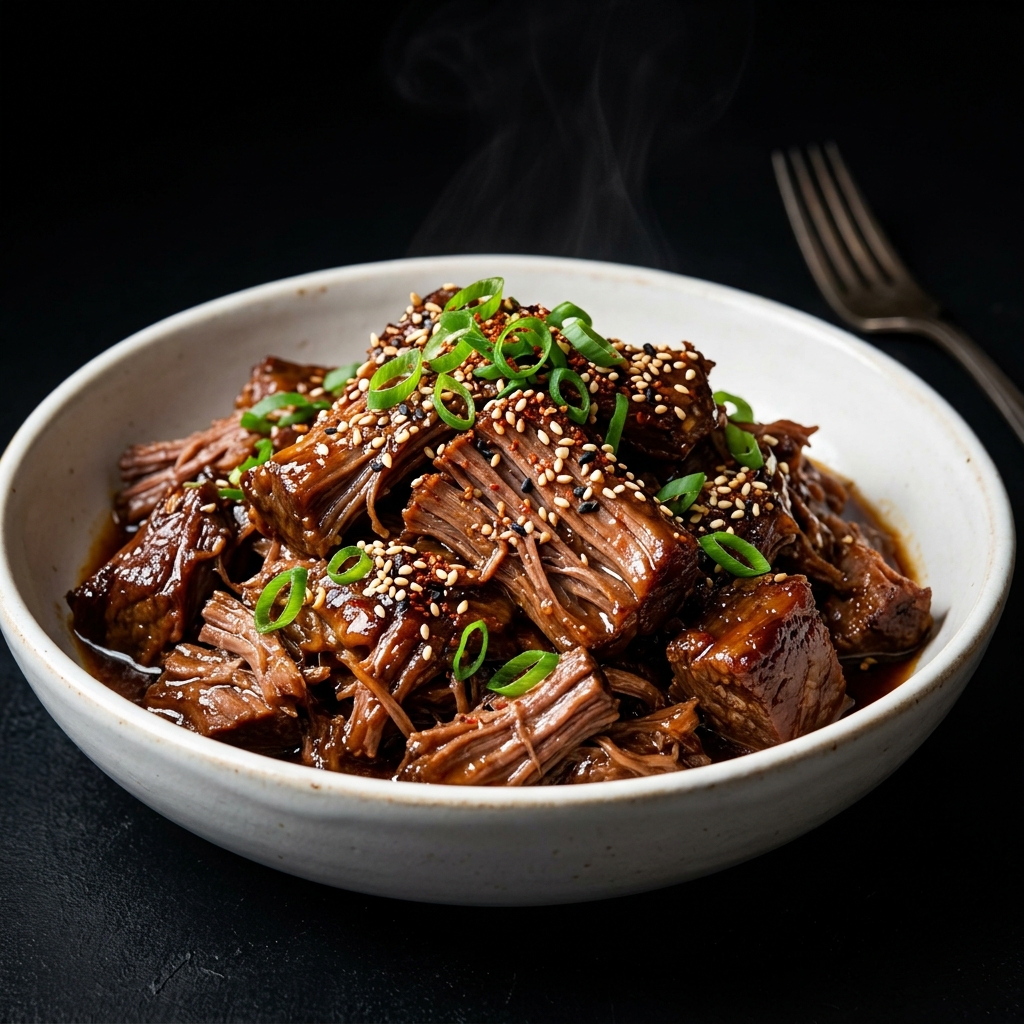
- Transfer the tender beef to a bowl or cutting board. Use two forks to shred it into large, juicy pieces. Avoid shredding it too finely so the meat retains its texture.
Finish the sauce:
- Return the shredded beef to the slow cooker and toss with the cooking liquid. For a thicker, more concentrated sauce, transfer some of the cooking liquid to a saucepan and simmer until slightly reduced before tossing it with the beef.
Garnish:
- Top the Korean beef with sliced green onions and toasted sesame seeds. Add extra red pepper flakes or gochujang if desired.
Serve:
- Serve hot over steamed white rice, brown rice, cauliflower rice, or alongside your favorite vegetables. Spoon plenty of the flavorful sauce over the beef and rice.
Notes
For gluten-free: Use certified gluten-free soy sauce or tamari and verify that all packaged ingredients are gluten-free.
For lower carb: Replace the brown sugar with a suitable low-carb sweetener and serve with cauliflower rice or vegetables instead of regular rice.
For more heat: Increase the red pepper flakes or add gochujang to the sauce.
For the best texture: Choose well-marbled beef chuck rather than an extremely lean cut.
Do not add extra salt too early: Soy sauce already provides significant sodium. Taste the finished sauce before adjusting the seasoning.
For a thicker sauce: Reduce the cooking liquid in a saucepan after the beef is tender, then toss the beef with the concentrated sauce.
Storage: Refrigerate leftovers in an airtight container for 3–4 days. Keep the beef with some sauce to help maintain moisture.
Freezing: Freeze cooked beef with some of its sauce in a freezer-safe container for up to 2–3 months for best quality. Thaw overnight in the refrigerator and reheat gently.
Serving idea: Serve over steamed jasmine rice and garnish generously with green onions and toasted sesame seeds for a simple, colorful Korean-inspired beef bowl.
For lower carb: Replace the brown sugar with a suitable low-carb sweetener and serve with cauliflower rice or vegetables instead of regular rice.
For more heat: Increase the red pepper flakes or add gochujang to the sauce.
For the best texture: Choose well-marbled beef chuck rather than an extremely lean cut.
Do not add extra salt too early: Soy sauce already provides significant sodium. Taste the finished sauce before adjusting the seasoning.
For a thicker sauce: Reduce the cooking liquid in a saucepan after the beef is tender, then toss the beef with the concentrated sauce.
Storage: Refrigerate leftovers in an airtight container for 3–4 days. Keep the beef with some sauce to help maintain moisture.
Freezing: Freeze cooked beef with some of its sauce in a freezer-safe container for up to 2–3 months for best quality. Thaw overnight in the refrigerator and reheat gently.
Serving idea: Serve over steamed jasmine rice and garnish generously with green onions and toasted sesame seeds for a simple, colorful Korean-inspired beef bowl.