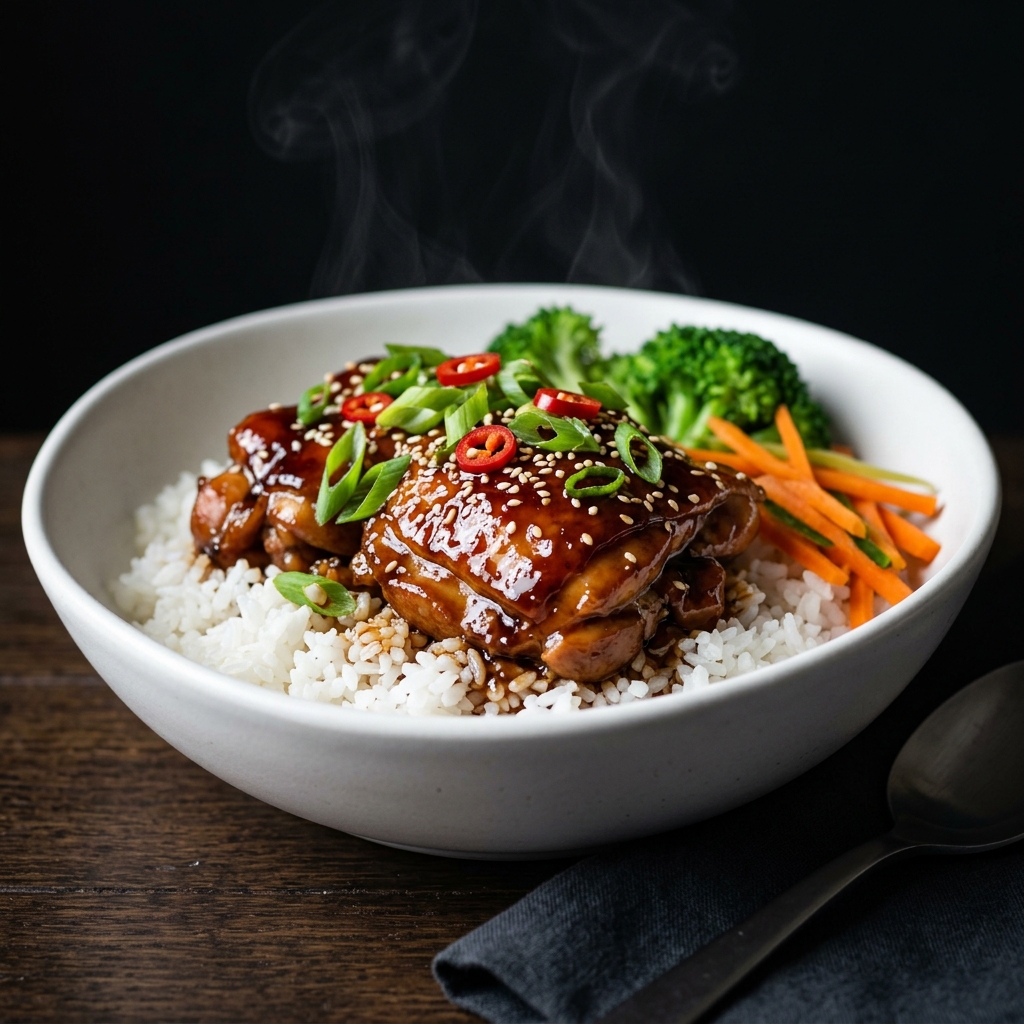
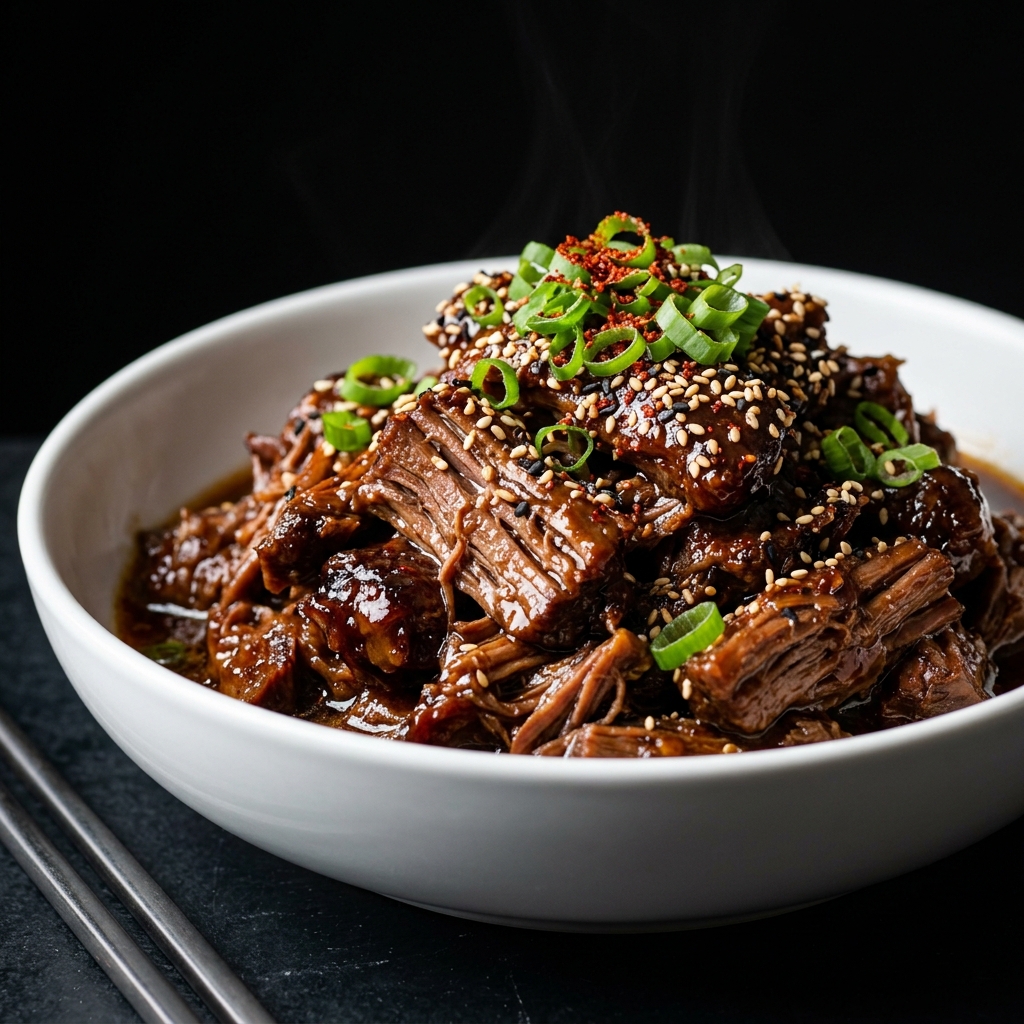
There is something irresistible about beef that cooks low and slow until it becomes incredibly tender, then gets coated in a glossy, sweet-savory Korean-inspired sauce. This Easy Crock Pot Korean Beef delivers exactly that kind of comfort food with very little hands-on work. Toss the ingredients into the slow cooker, let time do the heavy lifting, and you’ll end up with deeply flavorful beef that is perfect over rice, tucked into bowls, or enjoyed straight from the plate.
Ingredients for Easy Crock Pot Korean Beef
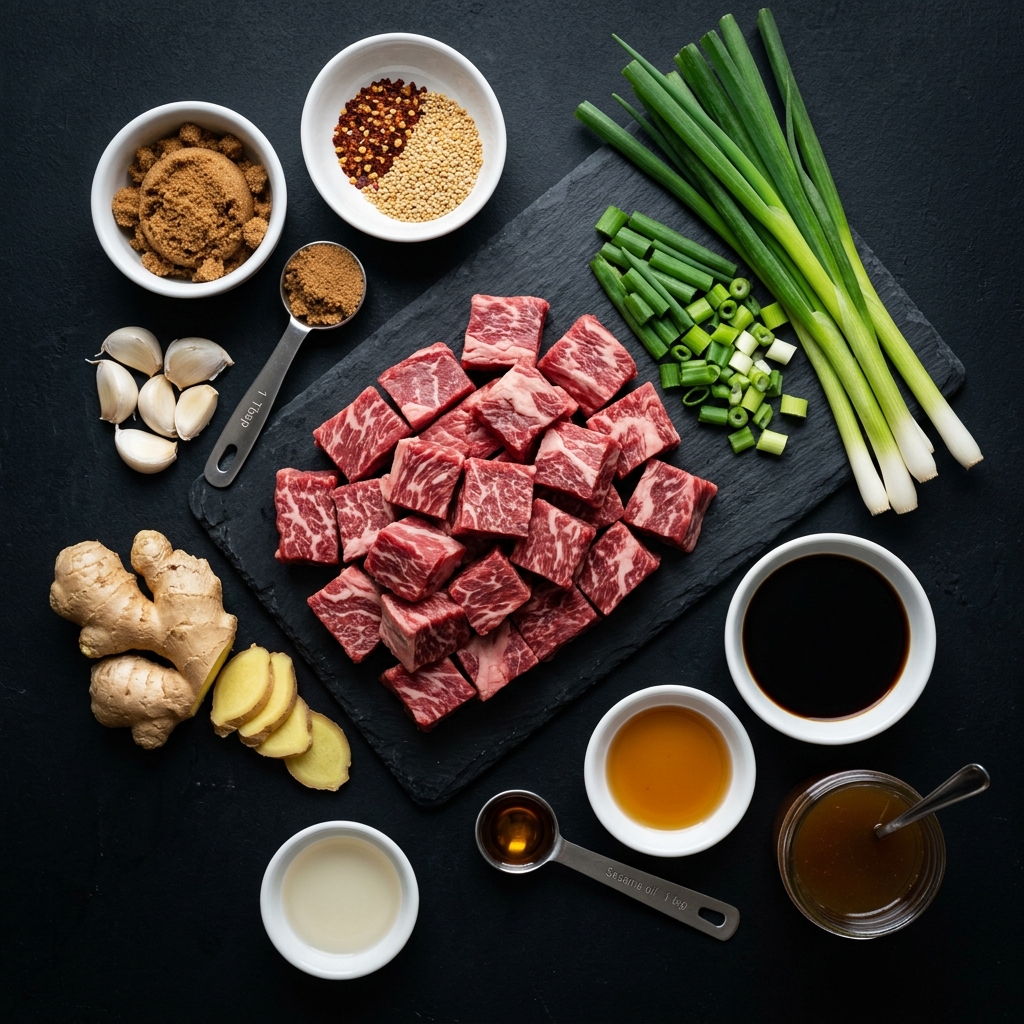
The beauty of this recipe is that most of the ingredients are simple pantry staples, but when combined, they create layers of flavor that taste far more complicated than the preparation suggests.
Beef
2 pounds beef chuck roast, cut into large chunks
Chuck roast is an excellent choice for slow cooking because it contains enough connective tissue and marbling to become wonderfully tender over several hours. As it cooks slowly, the connective tissue breaks down and helps create that soft, almost fall-apart texture that makes crock pot beef so satisfying.
You can also use beef stew meat if you prefer convenience. If using stew meat, choose pieces with some visible marbling rather than extremely lean cuts.
Soy Sauce
½ cup soy sauce
Soy sauce provides the salty, deeply savory foundation for the sauce. For a gluten-free version, use a certified gluten-free soy sauce or tamari.
Because soy sauce varies in saltiness from brand to brand, avoid adding a large amount of extra salt at the beginning. You can always adjust the seasoning after cooking.
Brown Sugar
¼ cup packed brown sugar
Brown sugar gives the sauce its characteristic sweet-savory balance while also helping create a beautiful glossy finish. The sweetness is especially important because it balances the salty soy sauce and sharp aromatics.
For a lower-sugar version, you can substitute an appropriate granulated low-carb sweetener according to its sweetness level.
Beef Broth
½ cup low-sodium beef broth
Beef broth adds moisture and reinforces the meaty flavor of the dish. Low-sodium broth is preferable because the soy sauce already contributes considerable salt.
Garlic
5 cloves garlic, minced
Fresh garlic makes a noticeable difference here. It adds warmth, savory depth, and a fragrant quality that powdered garlic simply cannot reproduce as effectively.
Fresh Ginger
1 tablespoon freshly grated ginger
Ginger gives the sauce a bright, slightly spicy character that cuts through the richness of the beef. Fresh ginger is particularly good in this recipe because its natural aroma remains noticeable after slow cooking.
Sesame Oil
1 tablespoon toasted sesame oil
A little sesame oil goes a long way. It contributes the nutty, aromatic flavor that immediately makes the dish taste distinctly Korean-inspired.
Because toasted sesame oil is quite potent, there is no need to use a large quantity.
Rice Vinegar
1 tablespoon rice vinegar
Rice vinegar adds gentle acidity. This may seem like a small ingredient, but it is important for keeping the sauce from tasting overly heavy or sweet.
The acidity helps brighten the finished beef and brings balance to the richer ingredients.
Red Pepper Flakes
½–1 teaspoon red pepper flakes
Use more or less depending on your preferred level of heat. The goal is not necessarily to make the beef extremely spicy, but to provide a gentle kick that complements the sweetness of the sauce.
Green Onions
3 green onions, thinly sliced
Green onions are used as a finishing garnish and provide freshness, color, and a mild onion flavor.
Sesame Seeds
1 tablespoon toasted sesame seeds
Sesame seeds add a pleasant nutty flavor and subtle crunch while making the finished dish look much more appealing.
For the best flavor, use toasted sesame seeds if available.
How to Make Easy Crock Pot Korean Beef
The preparation is wonderfully straightforward, but a few small techniques will make the finished beef noticeably better.
Step 1: Prepare the Beef
Start by trimming away any unusually large pieces of hard exterior fat from the chuck roast. Do not remove all the fat or marbling because some of it contributes flavor and helps keep the beef moist during slow cooking.
Cut the beef into large, fairly even chunks if it is not already cut. Keeping the pieces similar in size helps them cook more consistently.
Pat the beef dry with paper towels before cooking. This simple step is useful even though the beef will eventually braise in sauce because it removes excess surface moisture and helps the meat develop better flavor if you decide to sear it first.
Step 2: Make the Korean-Inspired Sauce
In a bowl, combine the soy sauce, beef broth, brown sugar, sesame oil, rice vinegar, minced garlic, grated ginger, and red pepper flakes.
Whisk everything together until the brown sugar is mostly dissolved.
Take a moment to taste the sauce before adding it to the slow cooker. You should notice several flavors at once: salty soy sauce, gentle sweetness, aromatic ginger and garlic, nutty sesame oil, and a slight tang from the vinegar.
It should taste flavorful rather than bland because the beef will absorb and dilute some of that intensity during cooking.
Step 3: Add the Beef to the Crock Pot
Place the prepared beef chunks into the slow cooker.
Pour the sauce evenly over the beef, making sure the pieces are coated as much as possible. There is no need for the beef to be completely submerged. Slow cooking creates plenty of moisture as the meat releases its own juices.
Give the beef a gentle stir so the sauce can move around the pieces.
Step 4: Slow Cook Until Tender
Cover the slow cooker with its lid and cook on LOW for approximately 7–8 hours or on HIGH for approximately 4–5 hours.
For the most tender and flavorful result, I strongly recommend the LOW setting when your schedule allows it. Slow cooking gives the collagen in the chuck roast more time to break down, producing beef that is tender enough to pull apart easily with a fork.
Avoid repeatedly opening the lid while the beef cooks. Every time the lid is removed, heat escapes, which can increase the cooking time and interfere with the steady temperature needed for slow cooking.
Step 5: Check the Beef for Tenderness
Begin checking toward the end of the recommended cooking time.
The beef is ready when a fork slides into the thickest pieces easily and the meat pulls apart with little resistance.
Do not judge doneness by time alone. Slow cookers can vary considerably in temperature, and the size of your beef pieces can also affect how quickly they become tender.
If the beef is still chewy or resistant, give it additional cooking time. Toughness often means the connective tissue has not fully broken down yet, rather than meaning the beef has been ruined.
Step 6: Shred or Slice the Beef
Once tender, transfer the beef to a large bowl or cutting board.
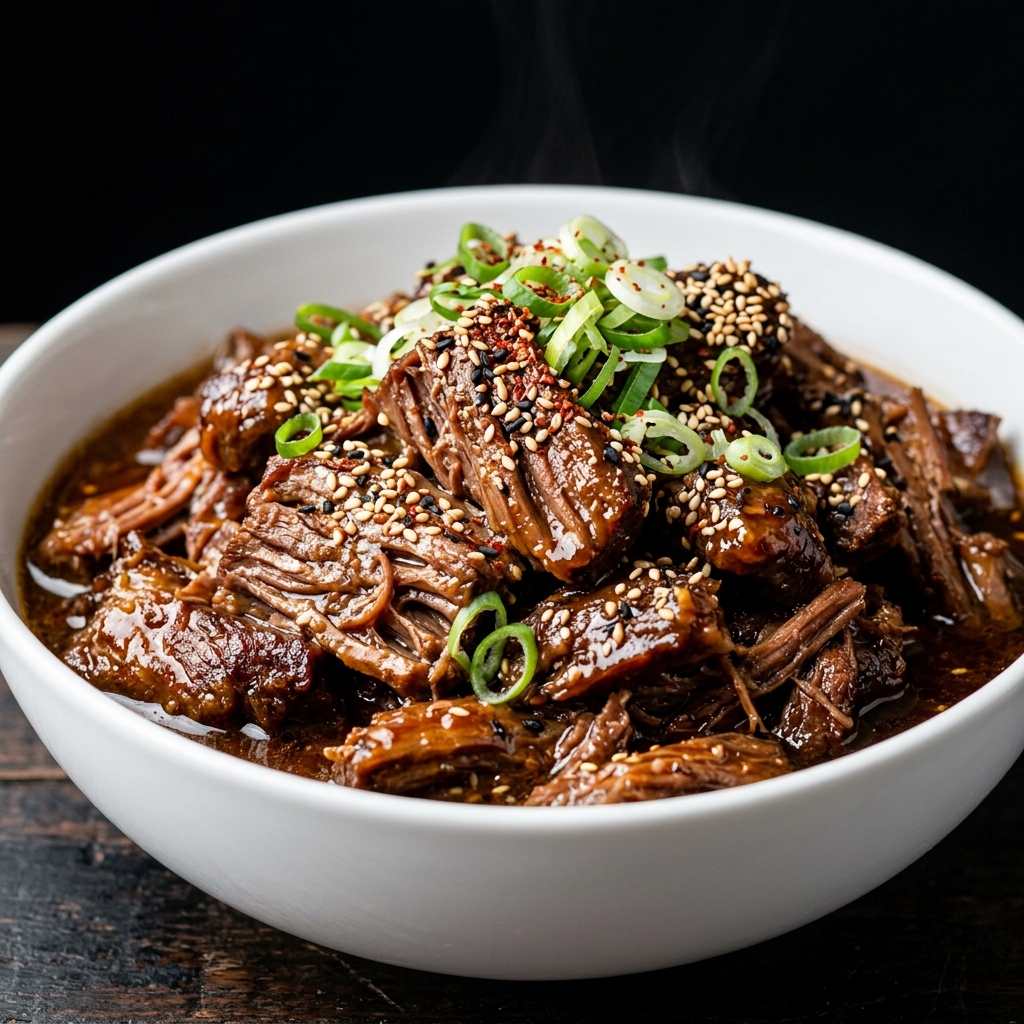
For a classic crock pot presentation, use two forks to gently shred the beef into chunky pieces. You can also leave some larger pieces intact if you prefer a more substantial texture.
Do not shred the beef into tiny strands. Larger, juicy pieces tend to hold onto the sauce better and give the finished dish a more satisfying texture.
Step 7: Finish the Sauce
Taste the sauce remaining in the slow cooker.
If you want a more concentrated flavor, you can transfer the liquid to a saucepan and simmer it briefly until it thickens slightly. This concentrates the soy, ginger, garlic, sesame, and sweet flavors and creates an especially glossy sauce.
Alternatively, you can return the shredded beef directly to the slow cooker and toss it with the cooking liquid.
Let the beef sit in the sauce for a few minutes before serving. This allows the meat to soak up even more of the flavorful liquid.
Step 8: Garnish and Serve
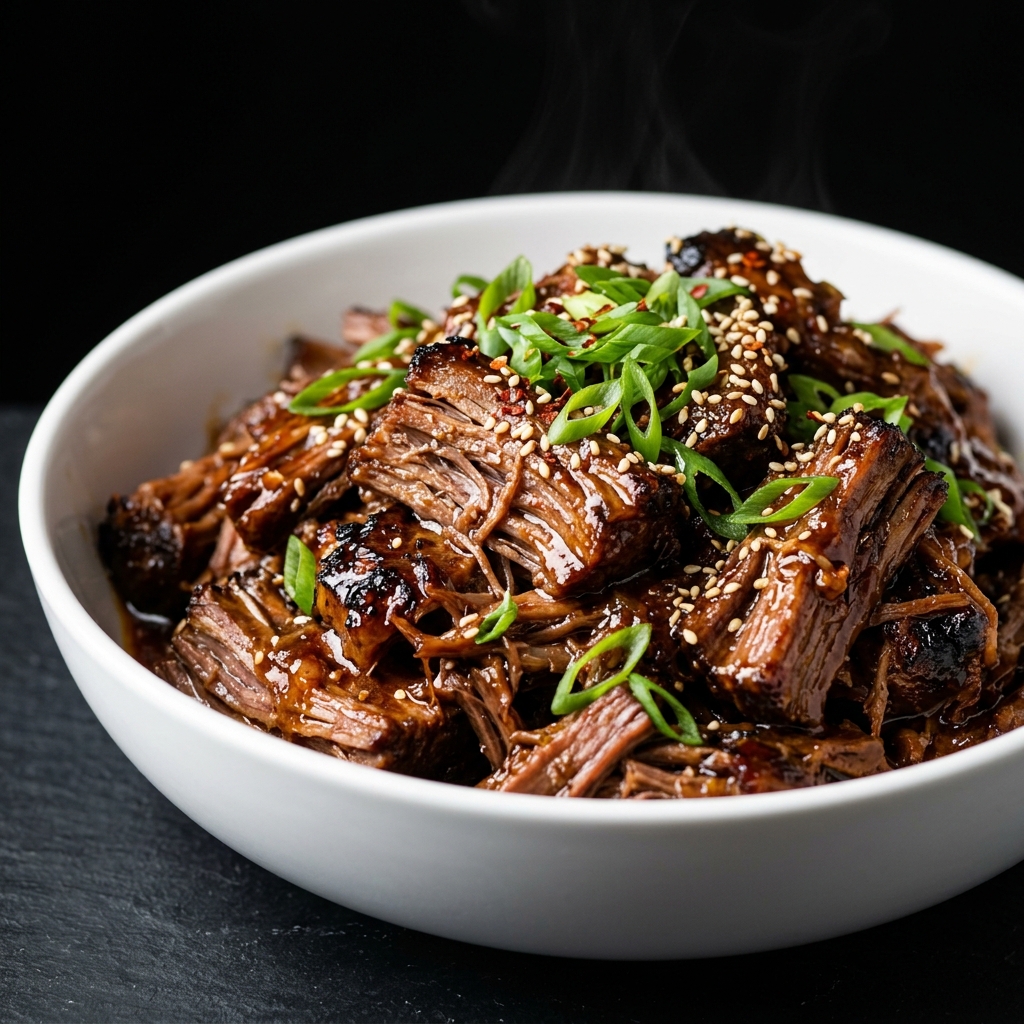
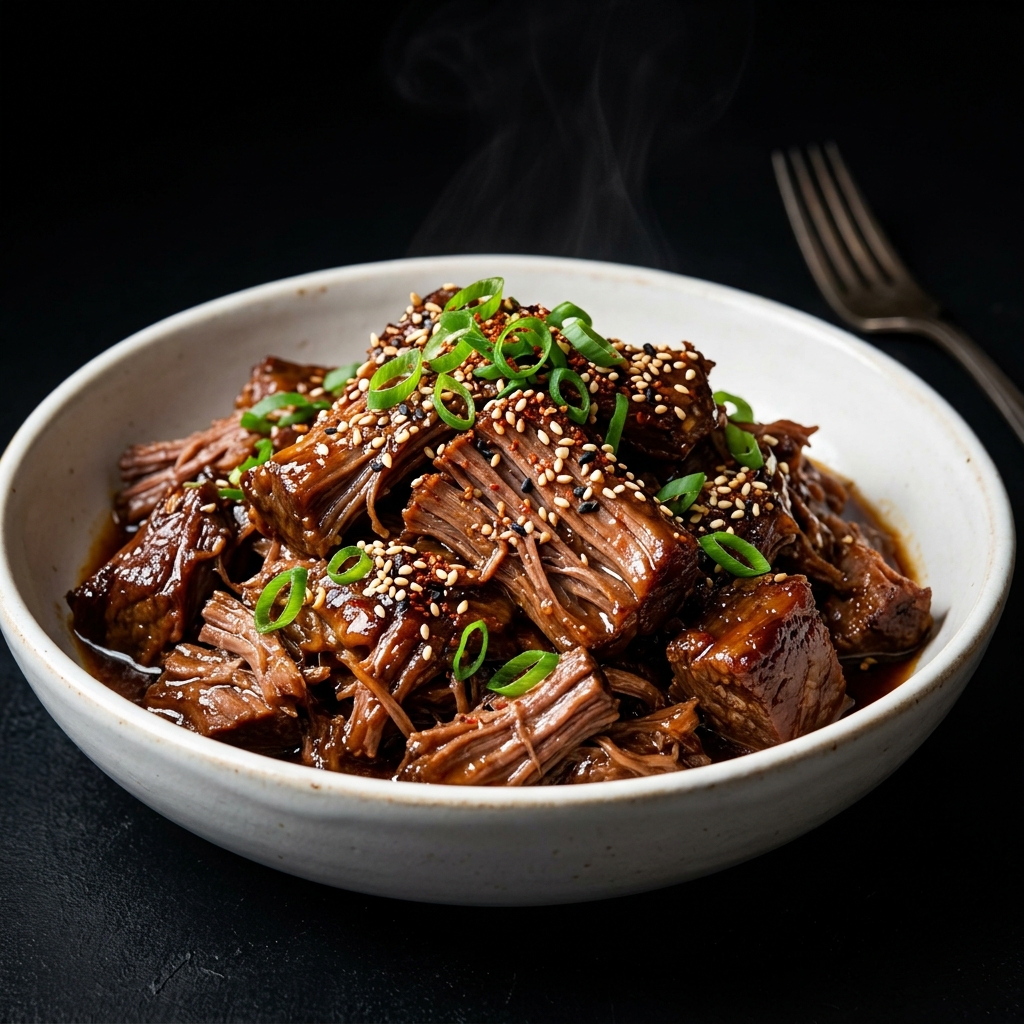
Spoon the Korean beef into a modern serving bowl and generously drizzle it with the flavorful sauce.
Finish with sliced green onions and toasted sesame seeds. Add a few extra red pepper flakes if you enjoy more heat.
The contrast between the dark, glossy beef, bright green onions, and pale sesame seeds makes the dish particularly attractive on the table.
The Secret to Making Slow Cooker Korean Beef Taste Exceptional
A slow cooker can make tender beef almost effortlessly, but tenderness alone does not guarantee a great dish. The real secret is balance.
Korean-inspired beef works because several flavor profiles are constantly playing against one another. The soy sauce provides salt and umami, brown sugar contributes sweetness, garlic and ginger create aromatic depth, sesame oil adds nuttiness, rice vinegar provides acidity, and red pepper flakes bring heat.
If one of those elements overwhelms the others, the finished dish can taste flat. Too much sweetness makes it heavy. Too much soy sauce makes it overly salty. Too little acidity can make the sauce taste dull.
That is why tasting and adjusting the sauce at the end is such an important professional-chef habit. You are not simply checking whether it is “seasoned.” You are looking for balance.
Another important secret is patience. Chuck roast can seem tough for much of the cooking process and then suddenly become beautifully tender as its connective tissue breaks down. Resist the temptation to remove it too early simply because it has reached the minimum cooking time.
Should You Sear the Beef Before Slow Cooking?
You can, and if you have an extra 10–15 minutes, it is a worthwhile upgrade.
Heat a little neutral oil in a large skillet over medium-high heat and sear the beef pieces in batches until browned on several sides. Then transfer them to the slow cooker and continue with the recipe.
Searing does not seal the juices inside the meat, as is sometimes claimed. Instead, it develops additional browned flavors on the surface through the Maillard reaction. Those browned bits can make the finished dish taste deeper and more complex.
However, searing is completely optional for this easy crock pot recipe. If convenience is your priority, skip it. The slow cooker will still produce tender, flavorful Korean-style beef.
Easy Variations to Try
Once you have the basic recipe mastered, it is easy to customize it without losing the character of the dish.
Spicy Korean Beef
For a more pronounced spicy kick, increase the red pepper flakes and add a small amount of gochujang to the sauce.
Gochujang is a Korean fermented chili paste with a distinctive combination of heat, sweetness, saltiness, and umami. Start with a small amount because its flavor is quite concentrated.
Honey Korean Beef
Replace some or all of the brown sugar with honey for a slightly different sweetness and a beautifully glossy sauce.
Honey can caramelize and deepen the sauce’s flavor, although it also increases the sugar content.
Garlic-Forward Korean Beef
If you are a serious garlic lover, increase the fresh garlic. Adding an extra clove or two can create a much more pronounced savory aroma.
Fresh garlic works especially well with ginger and sesame oil, making this variation particularly fragrant.
Vegetable-Packed Korean Beef
Add vegetables toward the end of cooking rather than putting everything into the slow cooker at the beginning.
Thinly sliced bell peppers, mushrooms, carrots, or broccoli can complement the beef beautifully. Adding delicate vegetables later helps prevent them from becoming overly soft.
For broccoli, for example, adding it during the final 20–30 minutes can help it retain some texture.
Expert Tips for the Best Crock Pot Korean Beef
Choose marbled beef. Extremely lean beef can become less satisfying after several hours of slow cooking. Chuck roast is a reliable choice because its connective tissue and marbling work in your favor.
Do not drown the beef in liquid. A slow cooker traps moisture, and the beef releases additional juices as it cooks. You generally need less liquid than you might expect.
Use fresh ginger and garlic. These two ingredients provide much of the aromatic character of the sauce, so fresh ingredients are worth using.
Taste before adding extra salt. Soy sauce is already salty, and reducing the sauce later will intensify its saltiness.
Let the beef rest in its sauce. After shredding, allow the meat to sit in the cooking liquid for a few minutes. This helps redistribute flavor throughout the beef.
Do not rush tough beef. If the beef is still chewy, continue cooking rather than assuming it has been overcooked. Chuck roast often needs additional time for its connective tissue to become tender.
Thicken only when necessary. The sauce can be delicious without being extremely thick. If you want a restaurant-style glossy coating, reduce the liquid separately rather than adding excessive thickener.
Garnish at the last moment. Fresh green onions and sesame seeds provide visual contrast and freshness, so add them immediately before serving.
What to Serve with Easy Crock Pot Korean Beef
One of the best things about Korean-style beef is how easily it becomes a complete meal. The rich, savory-sweet sauce practically begs for something that can soak it up, while fresh vegetables add the crispness and brightness needed to balance the tender beef.
Steamed White Rice
Classic steamed jasmine or long-grain white rice is one of the easiest choices. The fluffy rice absorbs the flavorful sauce without competing with the beef.
For a more aromatic option, try basmati rice, although jasmine rice tends to complement the sweet-savory sauce particularly well.
Brown Rice
Brown rice works well when you want a heartier, more substantial bowl. Its nutty flavor pairs nicely with sesame oil and toasted sesame seeds.
Cauliflower Rice
For a lighter or lower-carbohydrate meal, serve the beef over cauliflower rice. The mild flavor allows the Korean-inspired sauce to remain the star.
Korean-Style Cucumber Salad
A crisp cucumber salad provides a refreshing contrast to the warm, rich beef. Thinly sliced cucumbers tossed with rice vinegar, sesame seeds, green onions, and a touch of chili make an excellent side.
Steamed or Roasted Broccoli
Broccoli is another simple pairing. The slightly bitter, earthy flavor of broccoli balances the sweetness of the beef sauce, while its texture gives the meal some variety.
Sautéed Vegetables
Bell peppers, carrots, mushrooms, snow peas, and cabbage can all be quickly sautéed and served alongside the beef. Keep the vegetables slightly crisp rather than cooking them until soft.
Lettuce Wraps
For something different, spoon the Korean beef into crisp lettuce leaves and top with green onions and sesame seeds. The cool lettuce creates a wonderful contrast with the hot, saucy beef.
Kimchi
A small serving of kimchi adds acidity, fermentation, crunch, and heat. Because both the beef sauce and kimchi can have strong flavors, you do not need a large amount.
How to Build the Perfect Korean Beef Bowl
If you want to turn this recipe into a restaurant-style dinner at home, think of the bowl in layers.
Start with a generous serving of warm rice. Add the tender Korean beef and spoon some of the sauce over the top. Follow with a handful of steamed broccoli or another vegetable.
Then add something fresh and crunchy, such as sliced cucumber or shredded cabbage.
Finish with green onions and toasted sesame seeds. If you enjoy heat, add a small amount of gochujang or red pepper flakes.
This combination gives you several textures in one bite: fluffy rice, tender beef, silky sauce, crisp vegetables, and crunchy sesame seeds.
It is a simple formula that can also turn leftovers into an entirely new meal.
Make-Ahead Options
Easy Crock Pot Korean Beef is particularly convenient for meal preparation because the flavor can become even more developed after resting.
Make It a Day Ahead
Prepare the beef according to the recipe, allow it to cool properly, and refrigerate it in an airtight container with some of its sauce.
The next day, gently reheat it on the stovetop, in the microwave, or in the slow cooker using a low setting.
Keeping the beef with its sauce is important because the liquid helps prevent the meat from drying out during reheating.
Meal Prep Portions
Divide the cooked beef into individual containers along with rice and vegetables.
For the best texture, keep particularly delicate vegetables separate and add them after reheating.
This makes the recipe useful for weekday lunches because you can prepare several meals at once without having to cook beef every day.
Freeze for Later
The cooked beef can also be frozen with some of the sauce.
Allow it to cool before transferring it to freezer-safe containers or bags. Remove as much excess air as practical, label the container with the date, and freeze.
For the best quality, use frozen leftovers within about 2–3 months.
Thaw overnight in the refrigerator before reheating whenever possible.
How to Store Easy Crock Pot Korean Beef
Allow leftover beef to cool promptly, then transfer it to a clean airtight container and refrigerate.
For food safety and best quality, refrigerated leftovers should generally be eaten within 3–4 days.
Store the beef with some of its sauce rather than keeping the meat completely dry. The sauce helps preserve moisture and makes reheating much more successful.
If you have prepared rice alongside the beef, store the rice separately when possible. This gives you better control over the texture when reheating.
How to Reheat
For stovetop reheating, place the beef and some sauce in a saucepan over medium-low heat. Stir occasionally until heated thoroughly.
If using a microwave, place the beef in a microwave-safe dish, add a spoonful of sauce or broth, cover loosely, and heat in short intervals. Stir between intervals so the heat distributes evenly.
Avoid aggressively boiling the beef during reheating. High heat can cause the meat to become firmer and less juicy.
Can You Freeze Korean Beef?
Yes. This is one of the better slow cooker beef recipes for freezing.
The cooked beef freezes well because the sauce helps protect it from drying out. Once thawed and reheated gently, it can still be tender and flavorful.
For the best result, freeze the beef and sauce together and prepare fresh rice and garnishes when you are ready to serve.
Green onions and sesame seeds should preferably be added after reheating rather than frozen with the beef.
Frequently Asked Questions
Can I use a different cut of beef?
Yes. Chuck roast is one of the best options, but beef stew meat can also work well.
You can use other suitable slow-cooking cuts, provided they contain enough connective tissue to benefit from the long cooking process. Avoid very lean cuts when possible because they can become less tender and flavorful during extended cooking.
Do I have to sear the beef first?
No. Searing is optional.
It adds another layer of browned flavor, but the main advantage of this recipe is its convenience. If you want a true dump-and-go slow cooker meal, you can place the beef directly into the crock pot with the sauce ingredients.
Why is my Korean beef tough?
The most common reason is that the beef has not cooked long enough to become tender.
Chuck roast can remain surprisingly firm before its connective tissue fully breaks down. If the beef is cooked but still difficult to pull apart, continue cooking until it becomes fork-tender.
The exact cooking time can vary depending on your slow cooker, the size of the beef pieces, and whether you use LOW or HIGH heat.
Can I make this recipe gluten-free?
Yes, with the right ingredient substitutions.
Regular soy sauce commonly contains wheat, so choose a certified gluten-free soy sauce or tamari. Also check the labels of any prepared sauces or seasonings you add to the recipe.
If gluten-free preparation is important for dietary reasons, verify every packaged ingredient rather than assuming it is gluten-free.
Can I make Korean beef spicy?
Absolutely.
Increase the red pepper flakes or add gochujang for deeper Korean chili flavor. You can also serve additional chili paste at the table so everyone can adjust the heat individually.
This is especially useful when serving a family with different spice preferences.
Can I use honey instead of brown sugar?
Yes. Honey can replace some or all of the brown sugar.
Keep in mind that honey changes both the sweetness and consistency of the sauce, so add it gradually and taste the finished sauce before making further adjustments.
Can I add vegetables directly to the crock pot?
You can, but timing matters.
Dense vegetables such as carrots can tolerate longer cooking, while broccoli and other delicate vegetables can become very soft if added at the beginning.
For vegetables that you want to retain some texture, add them toward the end of cooking or cook them separately.
Can I make this recipe without sesame oil?
Yes, although sesame oil contributes an important nutty aroma.
If you do not have it, the dish will still be flavorful because of the soy sauce, garlic, ginger, and beef. However, if you enjoy Korean-inspired flavors, sesame oil is worth keeping in your pantry.
How to Make the Sauce Thicker
A slow cooker sauce is naturally thinner than a sauce prepared in an uncovered pan because very little liquid evaporates during cooking.
If you want a thicker coating for your Korean beef, there are several approaches.
The easiest is to remove the cooking liquid and simmer it in a saucepan until it reduces and becomes more concentrated.
You can also make a simple cornstarch slurry by mixing a small amount of cornstarch with cold water, then whisking it into the simmering sauce. Add it gradually because a little thickener can change the consistency quickly.
Do not add dry cornstarch directly to hot liquid because it can form lumps.
Once thickened, toss the beef with the sauce before serving.
How to Avoid an Overly Sweet Sauce
Sweetness is part of the appeal of Korean-style beef, but it should never completely overpower the savory ingredients.
If your sauce tastes too sweet, add a small amount of rice vinegar to introduce acidity. You can also add a little soy sauce for salt and umami, but do so carefully.
A tiny amount of additional ginger or red pepper can also make the sauce taste more balanced.
The goal is not simply to reduce sweetness; it is to create enough contrast that the sweetness becomes part of a larger flavor profile.
How to Make the Beef Extra Juicy
There are three simple principles to remember.
First, choose a well-marbled cut such as chuck roast.
Second, avoid unnecessarily extending the cooking time once the beef has become tender.
Third, keep the cooked beef in some of its sauce until you are ready to serve it.
If you shred the beef and leave it exposed to air for an extended period, it can lose moisture. Tossing it back into the cooking liquid keeps the meat succulent and flavorful.
A Few Final Chef’s Notes
The most important thing to remember about Easy Crock Pot Korean Beef is that it is not meant to be complicated. Its appeal comes from turning humble ingredients into something that tastes deeply developed with very little active cooking.
The slow cooker takes care of the difficult part: transforming a relatively inexpensive cut of beef into tender, flavorful meat. Your job is mainly to build a balanced sauce and avoid overcomplicating the dish.
Fresh garlic, ginger, sesame oil, green onions, and toasted sesame seeds are small details, but they make the finished meal feel much more special. They provide aroma, freshness, color, and texture that a slow-cooked dish can otherwise lack.
And don’t underestimate the importance of the finishing touches. A bowl of beef straight from the slow cooker will taste good, but a bowl topped with vibrant green onions, sesame seeds, a little chili, and a spoonful of glossy sauce looks and tastes considerably more exciting.
For an especially memorable dinner, serve the beef over freshly steamed rice with crisp vegetables on the side. Let the sauce run into the rice, add a little sesame and green onion, and take a bite with all the components together. That combination of tender beef, sweet-savory sauce, fluffy rice, fresh vegetables, and aromatic garnish is what makes this simple crock pot meal so satisfying.
Whether you’re preparing dinner for the family, planning weekday meals, or simply looking for a comforting slow cooker recipe that requires minimal effort, this Korean-inspired beef is a recipe worth keeping in your regular rotation. Once you make it, you may find yourself returning to the same basic formula again and again—changing the vegetables, adjusting the heat, or turning leftovers into completely new meals.
Easy, flavorful, tender, and wonderfully saucy, this Crock Pot Korean Beef proves that an impressive dinner doesn’t have to require hours of hands-on cooking.
Easy Crock Pot Korean Beef
Ingredients
Equipment
Method
- Trim away any large pieces of hard exterior fat from the chuck roast, leaving some marbling for flavor and tenderness. Cut the beef into large, evenly sized chunks and pat dry with paper towels.
- For deeper flavor, heat a little neutral oil in a large skillet over medium-high heat. Sear the beef in batches until browned on several sides. Transfer the browned beef to the slow cooker. This step is optional and can be skipped for a simple dump-and-go preparation.
- In a medium bowl, whisk together the soy sauce, beef broth, brown sugar, minced garlic, grated ginger, sesame oil, rice vinegar, and red pepper flakes until well combined and the sugar is mostly dissolved.
- Place the beef in the slow cooker and pour the prepared sauce evenly over the top. Gently stir to coat the beef.
- Cover and cook on LOW for 7–8 hours or HIGH for 4–5 hours, until the beef is extremely tender and easily pulls apart with a fork. For the most tender texture, LOW cooking is recommended.
- Transfer the tender beef to a bowl or cutting board. Use two forks to shred it into large, juicy pieces. Avoid shredding it too finely so the meat retains its texture.
- Return the shredded beef to the slow cooker and toss with the cooking liquid. For a thicker, more concentrated sauce, transfer some of the cooking liquid to a saucepan and simmer until slightly reduced before tossing it with the beef.
- Top the Korean beef with sliced green onions and toasted sesame seeds. Add extra red pepper flakes or gochujang if desired.
- Serve hot over steamed white rice, brown rice, cauliflower rice, or alongside your favorite vegetables. Spoon plenty of the flavorful sauce over the beef and rice.
Notes
For lower carb: Replace the brown sugar with a suitable low-carb sweetener and serve with cauliflower rice or vegetables instead of regular rice.
For more heat: Increase the red pepper flakes or add gochujang to the sauce.
For the best texture: Choose well-marbled beef chuck rather than an extremely lean cut.
Do not add extra salt too early: Soy sauce already provides significant sodium. Taste the finished sauce before adjusting the seasoning.
For a thicker sauce: Reduce the cooking liquid in a saucepan after the beef is tender, then toss the beef with the concentrated sauce.
Storage: Refrigerate leftovers in an airtight container for 3–4 days. Keep the beef with some sauce to help maintain moisture.
Freezing: Freeze cooked beef with some of its sauce in a freezer-safe container for up to 2–3 months for best quality. Thaw overnight in the refrigerator and reheat gently.
Serving idea: Serve over steamed jasmine rice and garnish generously with green onions and toasted sesame seeds for a simple, colorful Korean-inspired beef bowl.

Hi, I’m Clara, the creator of Barakala. I love sharing simple, comforting, and delicious recipes that make everyday cooking easier and more enjoyable for home cooks.