Ingredients
Equipment
Method
- Preheat the oven: Preheat the oven to 400°F (200°C).
- Prepare the squash: Wash and dry the spaghetti squash. Carefully cut it in half lengthwise using a sturdy chef’s knife.
- Remove the seeds: Scoop out the seeds and loose stringy fibers from the center of each squash half with a large spoon.
- Season: Brush the cut sides with approximately 1 tablespoon of olive oil. Season with salt and black pepper.
- Roast: Place the squash halves on a baking sheet. Roast for approximately 35–50 minutes, depending on the size of the squash, until the flesh is tender and easily pierced with a fork.
- Rest briefly: Remove the squash from the oven and allow it to cool for several minutes so it can be handled safely and excess moisture can escape.
- Make the strands: Use a fork to gently scrape the inside of each squash half from edge to center, separating the flesh into spaghetti-like strands. Avoid aggressively mashing the squash.
- Prepare the flavor ingredients: While the squash roasts, halve the cherry tomatoes, mince the garlic, chop the parsley, and grate the Parmesan.
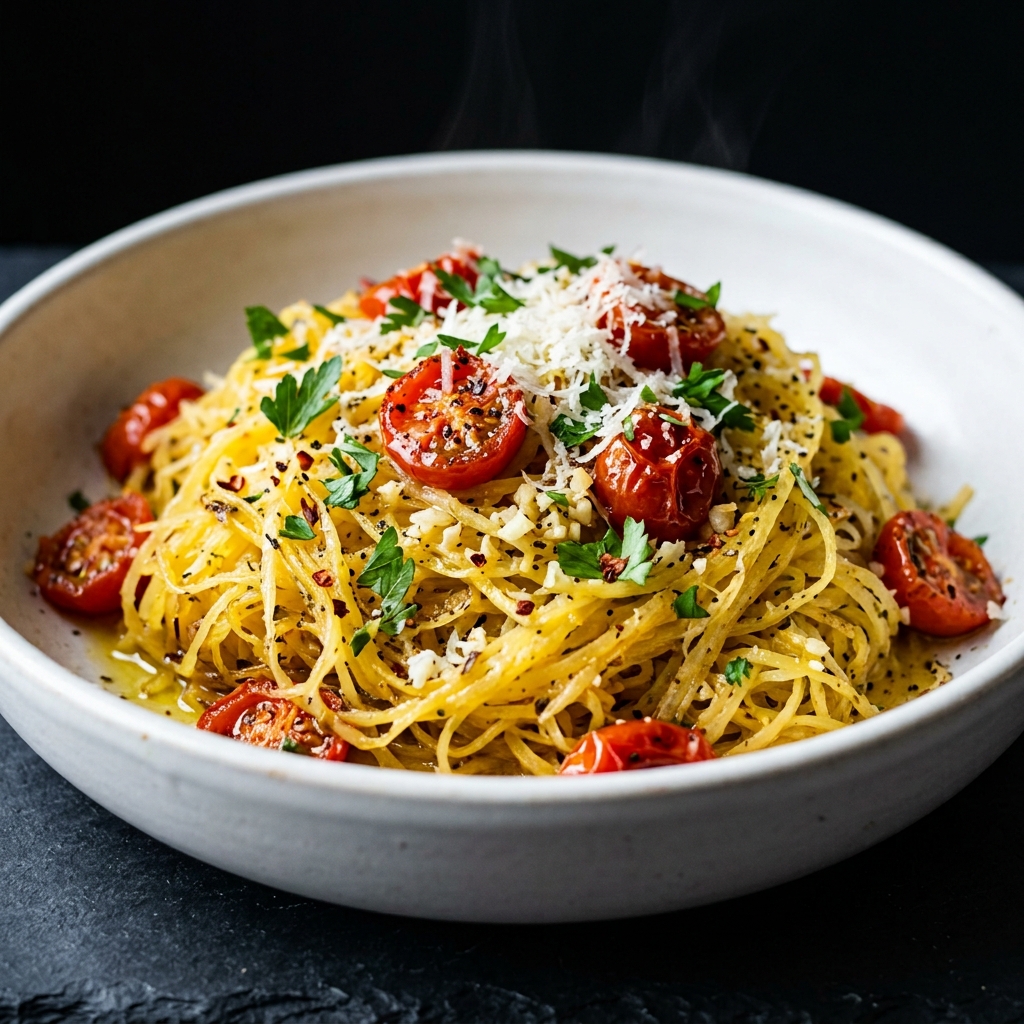
- Combine: Transfer the warm spaghetti squash strands to a large mixing bowl. Add the cherry tomatoes, garlic, remaining olive oil, Parmesan, and parsley.
- Season and toss: Gently toss everything together. Taste and adjust the salt and black pepper as needed. Add red pepper flakes or a small squeeze of lemon juice if desired.
- Serve: Serve immediately while warm, garnished with a little extra Parmesan and fresh parsley if desired.
Notes
For better texture: Avoid overcooking the squash. It should be tender but still firm enough to form distinct strands.
For less watery squash: Let the roasted squash rest briefly before shredding and avoid adding excessive liquid or oil.
For longer strands: Try cutting the squash crosswise rather than lengthwise, then gently scrape the flesh around the interior.
Vegan option: Omit Parmesan and replace it with nutritional yeast or a plant-based Parmesan alternative.
Low-carb option: Keep portions appropriate for your individual carbohydrate needs and avoid adding high-carbohydrate sauces.
Storage: Refrigerate leftovers in an airtight container for up to 3–4 days.
Reheating: Reheat gently in a skillet over medium-low heat or in short microwave intervals to help preserve the texture.