
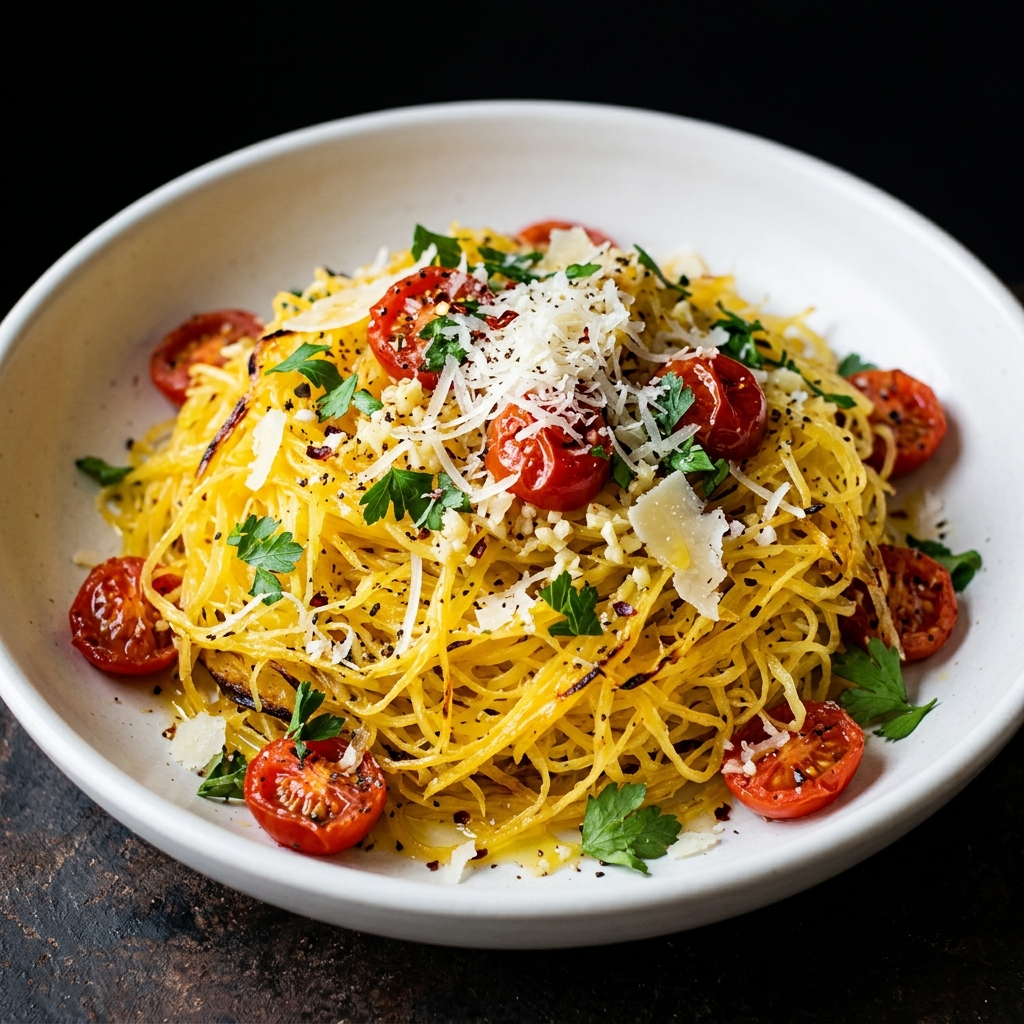
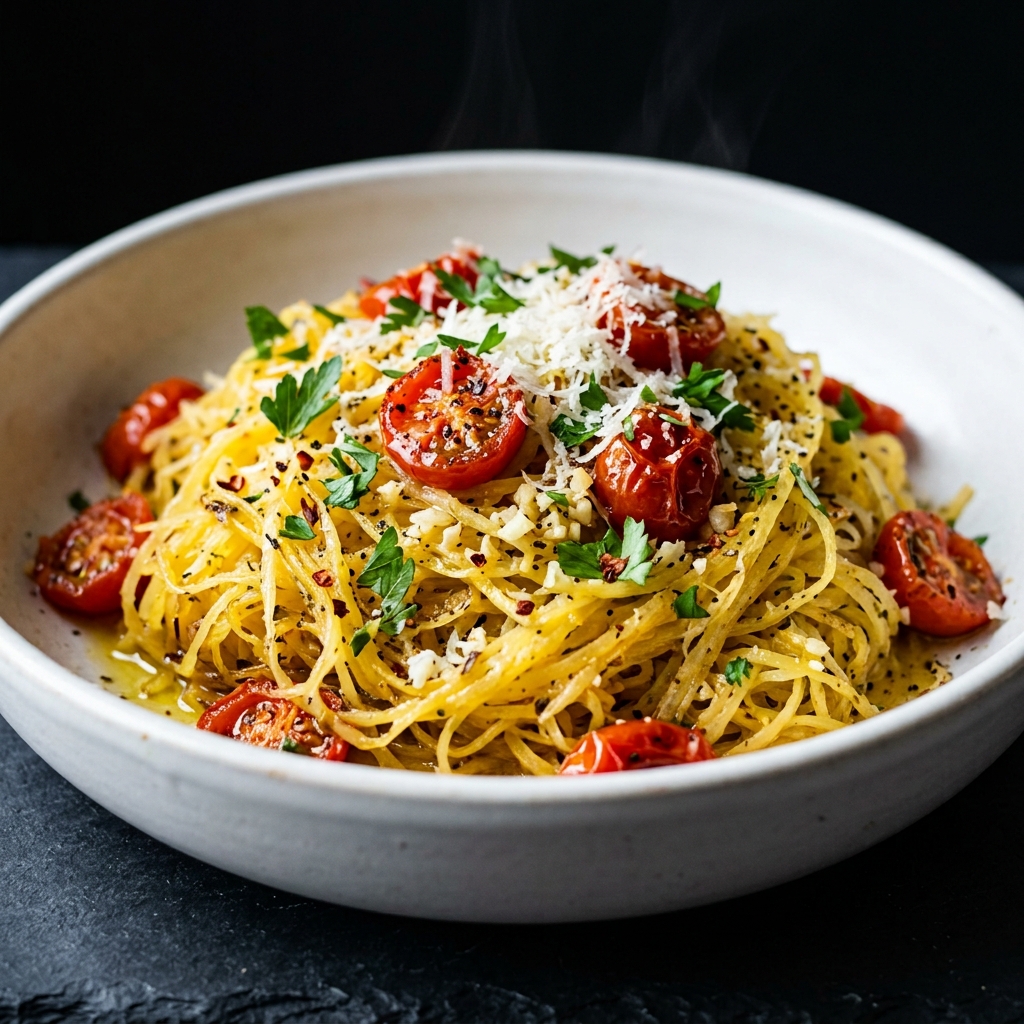
Spaghetti squash is one of those wonderfully simple ingredients that can completely change the way you think about vegetables. Once roasted, its tender golden flesh naturally separates into delicate, pasta-like strands that are perfect for soaking up garlic, olive oil, herbs, cheese, and flavorful sauces. This easy spaghetti squash recipe turns a humble squash into a colorful, satisfying dish with caramelized edges, juicy tomatoes, fresh parsley, and Parmesan. Whether you are looking for a lighter weeknight dinner, a gluten-free alternative to pasta, or simply a delicious new way to enjoy squash, this recipe gives you plenty of flavor without making dinner complicated.
Ingredients You’ll Need

Spaghetti Squash
Choose one medium spaghetti squash that feels firm and heavy for its size. The skin should be free from major soft spots, deep bruises, or mold. A healthy squash should have a firm exterior and feel dense when lifted.
The squash is the star of this recipe, so selecting a good one makes a noticeable difference. Its flesh should become tender enough to separate into strands while retaining a pleasant bite.
Cherry Tomatoes
Cherry tomatoes provide juicy sweetness and a beautiful pop of red against the golden squash. When roasted, they soften and become even more flavorful, sometimes developing slightly blistered edges.
You can substitute grape tomatoes if that is what you have available. For the best flavor, choose tomatoes that are ripe, firm, and naturally sweet.
Garlic
Fresh garlic gives the dish its savory backbone. Because garlic can become bitter when burned, keep an eye on it during roasting and avoid exposing finely minced garlic to excessive heat for too long.
Fresh cloves are preferable to bottled minced garlic for this recipe because they provide a cleaner, more aromatic flavor.
Extra-Virgin Olive Oil
Olive oil helps the squash roast beautifully while adding richness and carrying the flavors of the garlic and herbs throughout the dish. Use a good-quality extra-virgin olive oil when possible.
You do not need to drown the squash in oil. A light, even coating is enough to encourage browning while keeping the finished dish fresh and balanced.
Parmesan Cheese
Freshly grated Parmesan adds savory, salty richness and complements the natural sweetness of the roasted squash. Grating it yourself usually gives a better texture than pre-shredded cheese, which may contain anti-caking ingredients.
For a vegetarian recipe, use Parmesan made with suitable vegetarian rennet if that is important to your dietary requirements.
Fresh Parsley
Fresh parsley brings color and freshness to the finished dish. Its bright flavor helps balance the richness of the cheese and olive oil.
Add most of the parsley near the end rather than roasting all of it. This preserves its fresh flavor and vibrant green color.
Salt and Black Pepper
These simple seasonings are essential. Salt enhances the natural sweetness of the squash, while freshly ground black pepper adds gentle warmth and complexity.
Season in stages rather than adding all the salt at once. This gives you better control over the final flavor, particularly because Parmesan is naturally salty.
Get Recipe: Easy Homemade Irresistible Spaghetti and Meatballs Recipe

How to Prepare Spaghetti Squash
1. Prepare the Oven
Preheat your oven to 400°F (200°C). Allow the oven to become fully heated before putting the squash inside.
A properly preheated oven is important because the initial burst of heat helps the squash begin roasting immediately instead of slowly steaming.
2. Wash and Cut the Squash
Wash the outside of the spaghetti squash and dry it thoroughly. Using a sturdy chef’s knife, carefully cut the squash in half lengthwise.
Spaghetti squash can be quite firm, so take your time. Place it securely on a stable cutting board and keep your fingers away from the knife’s path.
If the squash is particularly difficult to cut, you can carefully make several shallow cuts around the squash before completing the cut. Never rush this step.
3. Remove the Seeds
Use a large spoon to scoop out the seeds and stringy fibers from the center of each squash half.
Do not worry about scraping away every tiny strand. Your goal is simply to remove the seeds and loose fibrous material while leaving as much of the edible flesh intact as possible.
If you enjoy roasted squash seeds, rinse and dry the seeds separately and roast them with your favorite seasonings.
4. Season the Squash
Brush the cut sides lightly with olive oil and season generously but evenly with salt and freshly ground black pepper.
Place the squash halves on a baking sheet. For a slightly deeper caramelized flavor, you can place them cut-side down. This traps some steam inside while allowing the squash to soften.
For more direct browning on the cut surface, place them cut-side up. Both methods work, so the choice depends on whether you prefer softer, steam-assisted strands or more pronounced roasted browning.
5. Roast Until Tender
Roast the squash for approximately 35 to 50 minutes, depending on its size.
The exact cooking time can vary considerably between squash. Instead of relying only on the clock, test the flesh with a fork. It should be tender enough for a fork to penetrate easily, but it should not collapse into a watery purée.
The edges should look lightly browned and caramelized. That browning is where much of the roasted flavor develops, so do not be afraid of a little color.
6. Let It Cool Slightly
Remove the squash from the oven and allow it to cool for several minutes.
This short resting period makes it easier and safer to handle. It also gives some of the excess heat and moisture a chance to dissipate, which can help prevent soggy strands.
7. Create the Spaghetti-Like Strands
Using a fork, gently scrape the flesh from the inside of the squash. Work from the edges toward the center, following the natural direction of the strands.
The flesh should separate into long, spaghetti-like ribbons.
Do not mash the squash aggressively. Gentle scraping produces better-defined strands and gives the finished dish a more pasta-like texture.
8. Prepare the Flavorful Toppings
While the squash is roasting, prepare your tomatoes, garlic, parsley, and Parmesan.
If using larger cherry tomatoes, you can halve them. Mince or finely chop the garlic, grate the Parmesan, and roughly chop the parsley.
Keeping these ingredients ready before the squash comes out of the oven makes the final assembly quick and effortless.
9. Bring Everything Together
Place the warm spaghetti squash strands in a large bowl. Add the roasted or prepared cherry tomatoes, garlic, olive oil, Parmesan, and fresh parsley.
Toss gently until the ingredients are evenly distributed.
Taste before adding more salt. The Parmesan will contribute considerable savory flavor, so you may need less additional seasoning than you expect.
The finished dish should taste balanced: naturally sweet squash, savory garlic, bright tomatoes, salty Parmesan, fresh parsley, and enough olive oil to make every bite feel rich without becoming heavy.
The Secret to Better Spaghetti Squash
Here is the part that can make the difference between spaghetti squash that people politely eat and spaghetti squash they actually ask you to make again: moisture control.
Spaghetti squash naturally contains a significant amount of water. If it is overcooked or handled too aggressively after roasting, the strands can become soft and watery. That is why roasting until just tender is so important. You want the flesh cooked through, but you still want it to retain enough structure to form recognizable strands.
Another important detail is allowing the roasted squash to rest briefly before shredding. If you immediately scrape steaming-hot squash into a bowl and pile on wet ingredients, excess moisture can quickly collect at the bottom.
The goal is not to make spaghetti squash taste exactly like wheat pasta. It has its own subtle sweetness and vegetable character, and that is precisely what makes it special. Treat it as an ingredient with its own personality, rather than simply a substitute, and you will get a much more satisfying result.
Why You’ll Love This Spaghetti Squash Recipe
There is a lot to appreciate about spaghetti squash, especially when it is roasted properly. Unlike boiling, roasting concentrates the squash’s natural sweetness and gives the edges a lightly caramelized flavor. The result is tender strands with enough texture to hold their shape rather than becoming watery or mushy.
This recipe also relies on a short list of familiar ingredients. Garlic adds savory depth, cherry tomatoes bring brightness and natural sweetness, parsley adds freshness, and Parmesan contributes a salty, nutty finish. Olive oil ties everything together while helping the squash develop those irresistible roasted edges.
Perhaps best of all, you do not need complicated culinary techniques to make it. The oven does most of the work. Once the squash is roasted and shredded into strands, a few simple finishing ingredients turn it into a dish that looks impressive enough for guests but is easy enough for a busy weeknight.
Delicious Variations to Try
One of the best things about spaghetti squash is how easily it adapts to different flavors. Once you have mastered the roasting technique, you can change the finishing ingredients to create an entirely different meal.
Garlic Butter Spaghetti Squash
Replace some of the olive oil with melted butter and toss the warm squash with sautéed garlic, Parmesan, parsley, and black pepper. The butter gives the dish a richer, more comforting flavor.
Mediterranean Spaghetti Squash
Add chopped olives, crumbled feta, cherry tomatoes, parsley, and a squeeze of fresh lemon juice. You can also add a little dried oregano for an extra Mediterranean touch.
Spicy Spaghetti Squash
For heat lovers, add red pepper flakes while tossing the cooked squash. A pinch of chili flakes provides warmth without overpowering the delicate flavor of the squash.
Creamy Spaghetti Squash
For a richer dinner, add a small amount of cream cheese, mascarpone, or a light cream sauce to the warm strands. Stir gently until creamy, then finish with Parmesan and black pepper.
Vegan Spaghetti Squash
To make the recipe vegan, omit the Parmesan and replace it with nutritional yeast or a plant-based Parmesan alternative. You can also add toasted nuts or seeds for extra richness and texture.
Lemon Herb Spaghetti Squash
Fresh lemon juice and zest can completely brighten the dish. Toss the roasted strands with olive oil, parsley, basil, garlic, lemon zest, and a small squeeze of lemon juice for a fresh and vibrant variation.
A Simple Trick for More Flavor
If you want to take this recipe from good to exceptional, pay attention to the contrast between roasted, fresh, salty, and acidic flavors.
The roasted squash supplies sweetness and depth. The tomatoes provide juicy acidity. Parmesan delivers salt and umami. Parsley contributes freshness, while olive oil gives the ingredients a smooth, rich finish.
That balance is what prevents a vegetable-based dish from tasting flat or one-dimensional. A final small squeeze of lemon juice can be especially useful if the finished spaghetti squash tastes rich but needs a little brightness.
And do not underestimate freshly ground black pepper. Added at the end, it gives the dish a fragrant bite that works beautifully with Parmesan and roasted vegetables.
Expert Tips for Perfect Spaghetti Squash
The difference between average spaghetti squash and truly delicious spaghetti squash often comes down to a few small details. These professional kitchen tips will help you get better texture, deeper flavor, and more attractive strands every time.
Choose the Right Squash
Look for a spaghetti squash that feels heavy for its size and has firm, intact skin. A little variation in color is normal, but avoid squash with large soft spots, cracks, or obvious signs of spoilage.
A medium-sized squash is generally easier to handle and tends to cook more evenly than an exceptionally large one.
Do Not Overcook It
Overcooking is one of the biggest mistakes people make with spaghetti squash. While you want the flesh tender, cooking it far beyond that point can produce limp, watery strands.
Start checking it toward the earlier end of the suggested cooking time. A fork should enter the flesh easily, but the squash should still have enough structure to separate into strands.
Roast for Better Flavor
Roasting is preferable when you want concentrated flavor and lightly caramelized edges. The dry heat encourages browning and brings out the squash’s natural sweetness.
If you have been boiling spaghetti squash and finding it bland or watery, roasting is one of the simplest changes you can make.
Season the Squash Before Cooking
Do not wait until the squash is completely cooked before seasoning it. Adding olive oil, salt, and pepper before roasting allows the seasoning to become part of the dish rather than simply sitting on the surface afterward.
You can still adjust the seasoning at the end, but early seasoning gives you a much better foundation.
Avoid Oversaturating the Strands
Spaghetti squash is naturally moist, so be thoughtful about how much sauce or oil you add. Begin with a modest amount and add more only if needed.
This keeps the strands light and defined instead of turning the entire dish into a wet mixture.
Use Freshly Grated Parmesan
Fresh Parmesan melts and distributes more naturally over warm spaghetti squash. It also has a stronger savory flavor, meaning a relatively small amount can make the dish taste significantly richer.
Add it while the squash is still warm so that it can soften slightly and cling to the strands.
Finish With Fresh Herbs
Fresh parsley should ideally be added near the end of cooking. Prolonged heat can dull its color and reduce its fresh flavor.
For an even more herb-forward version, combine parsley with fresh basil, oregano, or chives.
Taste Before Serving
Professional cooks rarely rely solely on measurements when finishing a dish. Taste the spaghetti squash after all the ingredients have been combined.
Ask yourself whether it needs more salt, pepper, acidity, richness, or freshness. A small adjustment at this stage can transform the finished recipe.
Make-Ahead Options
Spaghetti squash is a particularly convenient vegetable for meal preparation because the squash can be roasted ahead of time.
Roast the Squash Ahead
You can roast the squash, scrape it into strands, and refrigerate it in an airtight container. Allow it to cool before sealing the container so that excessive trapped steam does not create unnecessary moisture.
For the best texture, prepare the fresh toppings separately and combine everything shortly before serving.
Prepare the Ingredients Ahead
The tomatoes can be washed and cut, garlic can be prepared, Parmesan can be grated, and parsley can be chopped ahead of time. Keep each ingredient refrigerated as appropriate and assemble the dish when you are ready to eat.
This approach is especially useful for busy weeknights because the main cooking step is already finished.
Reheat Gently
When reheating prepared spaghetti squash, use gentle heat. A skillet over medium-low heat is an excellent option because it allows you to control the moisture while warming the strands.
If using a microwave, heat in short intervals and stir between intervals. Avoid overheating, which can make the squash softer and wetter.
What to Serve With Spaghetti Squash
Spaghetti squash can work as a light main course, but it also makes an excellent side dish. Because its flavor is relatively mild, it pairs well with a wide range of proteins, vegetables, and sauces.
Grilled or Roasted Chicken
Herb-seasoned chicken pairs beautifully with the garlic, Parmesan, and parsley flavors in the squash. Serve sliced grilled chicken over the spaghetti squash for a filling dinner.
Baked Salmon
The richness of salmon provides a wonderful contrast to the fresh vegetable flavors. A simple lemon-and-herb salmon is particularly good with spaghetti squash.
Garlic Shrimp
Shrimp cooked with garlic, olive oil, lemon, and herbs can turn the squash into a restaurant-style dinner with very little additional effort.
Italian-Style Meatballs
Serve the squash with homemade or prepared meatballs and a spoonful of marinara sauce. The squash acts as a lighter base for the sauce while adding its own roasted sweetness.
Roasted Vegetables
For a completely vegetable-forward meal, pair the spaghetti squash with roasted zucchini, bell peppers, broccoli, mushrooms, or asparagus.
Simple Green Salad
A crisp green salad with a light vinaigrette adds freshness and acidity, making the overall meal feel balanced without becoming overly heavy.
Crusty Bread
If you are not specifically trying to keep the meal low-carb, a small serving of crusty bread is excellent for soaking up the flavorful olive oil, tomato juices, and Parmesan.
How to Store Spaghetti Squash
Allow leftover spaghetti squash to cool before transferring it to an airtight food-safe container.
Store it in the refrigerator and use it within approximately 3 to 4 days for the best quality.
If you know you will have leftovers, consider keeping delicate fresh toppings such as parsley separate and adding them after reheating. This preserves their color and fresh flavor.
Can You Freeze Spaghetti Squash?
Yes, cooked spaghetti squash can be frozen, although its texture may become somewhat softer after thawing. For that reason, frozen spaghetti squash is best used in cooked dishes rather than preparations where you want perfectly firm strands.
Allow the cooked squash to cool, portion it into freezer-safe containers or bags, remove excess air, and freeze.
When ready to use it, thaw it in the refrigerator and drain any excess liquid before reheating.
How to Reheat Leftover Spaghetti Squash
The stovetop is one of the best methods for reheating spaghetti squash because you have control over the moisture.
Place the squash in a skillet over medium-low heat and warm it gently, stirring occasionally. If the strands seem dry, add a very small amount of olive oil. If they seem wet, allow some moisture to evaporate naturally in the skillet.
For microwave reheating, place a portion in a microwave-safe dish and cover loosely. Heat in short intervals, stirring between each one until warmed through.
Avoid reheating the squash repeatedly. Repeated heating and cooling can gradually reduce its texture and freshness.
Frequently Asked Questions
Is spaghetti squash actually healthy?
Spaghetti squash can be a nutritious addition to a balanced diet. It provides fiber and several vitamins and minerals while naturally containing fewer carbohydrates per serving than traditional wheat-based pasta.
Its nutritional profile will depend on how it is prepared. Adding large amounts of butter, cheese, cream, or other rich ingredients will increase the overall calories and fat of the dish.
Is spaghetti squash keto-friendly?
Spaghetti squash can sometimes fit into a ketogenic eating pattern in carefully controlled portions, but it is not as low in carbohydrates as some other non-starchy vegetables.
If you are following a strict keto diet, check the carbohydrate content of your specific squash and calculate the portion that fits your individual daily carbohydrate target.
Is spaghetti squash gluten-free?
Yes. Plain spaghetti squash is naturally gluten-free, making it a useful alternative for people who avoid wheat and gluten.
However, always check packaged sauces, seasonings, cheese products, and other additions if you need to maintain a strictly gluten-free diet, as processed ingredients can sometimes contain unexpected sources of gluten.
Can I make this recipe vegan?
Absolutely. Simply leave out the Parmesan cheese and replace it with nutritional yeast, vegan Parmesan, or another plant-based savory topping.
You can also add toasted walnuts, almonds, pumpkin seeds, or sunflower seeds for extra texture and richness.
Why is my spaghetti squash watery?
The most common causes are overcooking, excessive moisture, and adding watery ingredients too early.
Roast the squash until just tender rather than cooking it until the flesh becomes mushy. After roasting, let it rest briefly and allow excess moisture to escape. You can also place the shredded squash in a warm skillet for a few minutes to evaporate excess liquid.
How do I get longer spaghetti squash strands?
The direction in which you cut the squash can influence the strand length. Cutting the squash crosswise rather than lengthwise can sometimes produce longer strands because the natural strands run around the circumference of the squash.
If long, pasta-like strands are your priority, experiment with crosswise cutting and gently scrape the flesh around the interior.
Can I eat the spaghetti squash seeds?
Yes. The seeds are edible and can be roasted separately much like pumpkin seeds.
Clean and dry them thoroughly, toss them lightly with oil and seasonings, and roast until crisp. They make a delicious crunchy snack or topping for salads and vegetable dishes.
What is the best way to tell when spaghetti squash is done?
Insert a fork into the flesh. It should penetrate relatively easily, and the flesh should separate into strands when scraped.
Avoid judging doneness by time alone because squash vary considerably in size and density. A smaller squash may cook much faster than a large one.
Can I prepare spaghetti squash without an oven?
Yes. Although roasting provides excellent flavor, spaghetti squash can also be prepared using other cooking methods, including a microwave or pressure cooker.
The important thing is to monitor the texture carefully. Regardless of the cooking method, the squash should become tender enough to shred while retaining enough structure to avoid becoming watery or mushy.
Easy Spaghetti Squash Recipe
Ingredients
Equipment
Method
- Preheat the oven: Preheat the oven to 400°F (200°C).
- Prepare the squash: Wash and dry the spaghetti squash. Carefully cut it in half lengthwise using a sturdy chef’s knife.
- Remove the seeds: Scoop out the seeds and loose stringy fibers from the center of each squash half with a large spoon.
- Season: Brush the cut sides with approximately 1 tablespoon of olive oil. Season with salt and black pepper.
- Roast: Place the squash halves on a baking sheet. Roast for approximately 35–50 minutes, depending on the size of the squash, until the flesh is tender and easily pierced with a fork.
- Rest briefly: Remove the squash from the oven and allow it to cool for several minutes so it can be handled safely and excess moisture can escape.
- Make the strands: Use a fork to gently scrape the inside of each squash half from edge to center, separating the flesh into spaghetti-like strands. Avoid aggressively mashing the squash.
- Prepare the flavor ingredients: While the squash roasts, halve the cherry tomatoes, mince the garlic, chop the parsley, and grate the Parmesan.
- Combine: Transfer the warm spaghetti squash strands to a large mixing bowl. Add the cherry tomatoes, garlic, remaining olive oil, Parmesan, and parsley.
- Season and toss: Gently toss everything together. Taste and adjust the salt and black pepper as needed. Add red pepper flakes or a small squeeze of lemon juice if desired.
- Serve: Serve immediately while warm, garnished with a little extra Parmesan and fresh parsley if desired.
Notes
For less watery squash: Let the roasted squash rest briefly before shredding and avoid adding excessive liquid or oil.
For longer strands: Try cutting the squash crosswise rather than lengthwise, then gently scrape the flesh around the interior.
Vegan option: Omit Parmesan and replace it with nutritional yeast or a plant-based Parmesan alternative.
Low-carb option: Keep portions appropriate for your individual carbohydrate needs and avoid adding high-carbohydrate sauces.
Storage: Refrigerate leftovers in an airtight container for up to 3–4 days.
Reheating: Reheat gently in a skillet over medium-low heat or in short microwave intervals to help preserve the texture.

Hi, I’m Clara, the creator of Barakala. I love sharing simple, comforting, and delicious recipes that make everyday cooking easier and more enjoyable for home cooks.