Ingredients
Equipment
Method
- Prepare the oven: Preheat the oven to 400°F (200°C). Line a baking sheet with parchment paper.
- Cut the squash: Wash and dry the spaghetti squash. Carefully cut it in half lengthwise using a sharp chef’s knife. Scoop out the seeds and stringy center with a spoon.
- Season: Brush the cut sides with olive oil and season with salt, black pepper, and Italian seasoning. Rub some of the minced garlic over the flesh, reserving the remainder for the tomatoes.
- Roast: Place the squash halves cut-side down on the prepared baking sheet. Roast for 35–45 minutes, depending on the size of the squash, until the flesh is tender and can easily be pierced with a fork.
- Prepare the tomatoes: Toss the cherry tomatoes with a little olive oil, the remaining minced garlic, salt, and black pepper. Roast them during the final portion of the squash's cooking time, or sauté them in a skillet until softened and lightly blistered.
- Make the strands: Remove the cooked squash from the oven and let it cool for several minutes. Turn the halves cut-side up and gently scrape the flesh lengthwise with a fork to separate it into spaghetti-like strands.
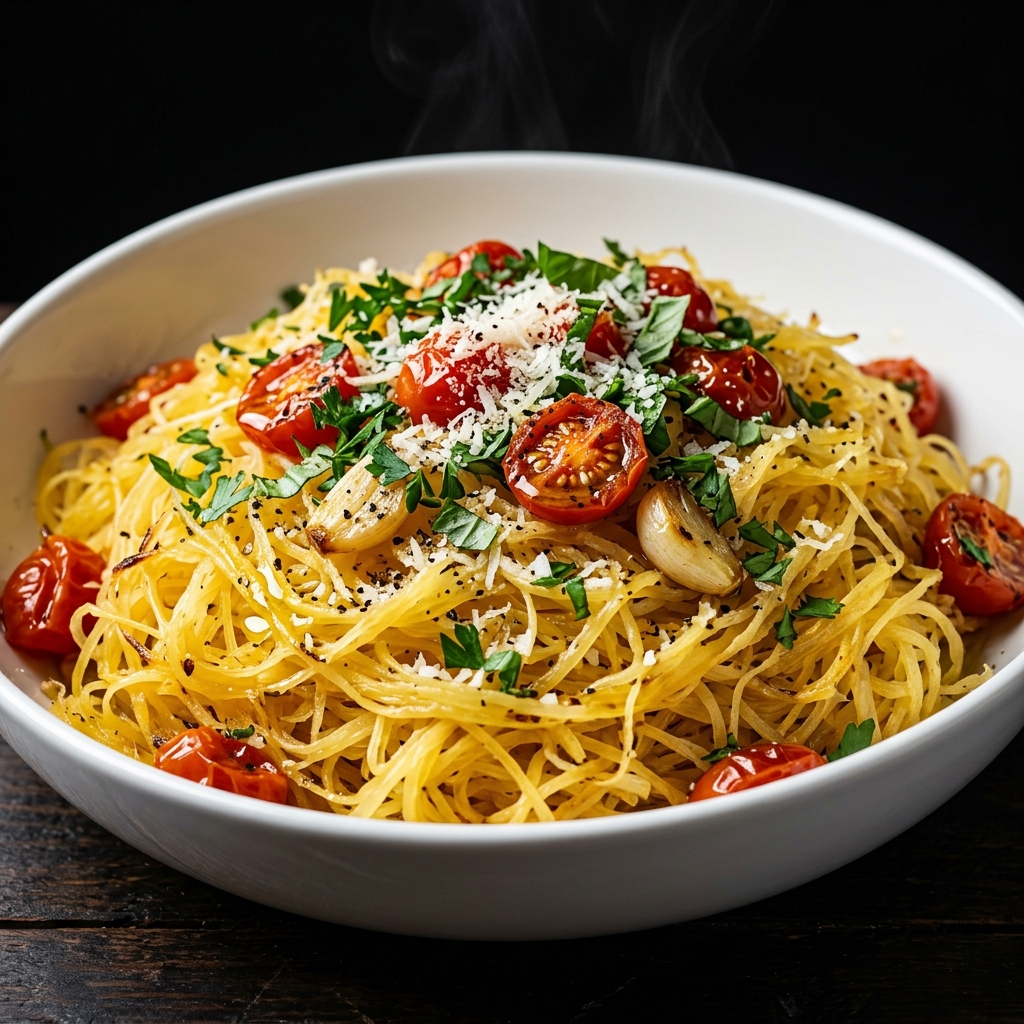
- Combine: Transfer the squash strands to a large bowl. Add the roasted tomatoes and garlic, then gently toss everything together.
- Finish: Add Parmesan cheese, fresh parsley, and basil. Drizzle with the remaining olive oil and add lemon juice or red pepper flakes if desired.
- Taste and serve: Taste and adjust the salt and pepper as needed. Serve warm with additional Parmesan and fresh herbs on top.
Notes
Choose a spaghetti squash that feels firm and heavy for its size and has smooth, undamaged skin.
Do not overcook the squash. It should be tender enough to scrape into strands but not so soft that the strands become mushy.
Roasting helps develop a deeper, sweeter flavor and generally produces a better texture than boiling.
For a vegan version, omit the Parmesan or replace it with a vegan Parmesan alternative or nutritional yeast.
For extra protein, serve with grilled chicken, shrimp, beans, or your preferred protein.
Add red pepper flakes for a spicy variation or fresh lemon juice for a brighter finish.
Store leftovers in an airtight container in the refrigerator for up to 3–4 days.
For the best texture, store the cooked squash separately from particularly watery sauces or toppings.
Do not overcook the squash. It should be tender enough to scrape into strands but not so soft that the strands become mushy.
Roasting helps develop a deeper, sweeter flavor and generally produces a better texture than boiling.
For a vegan version, omit the Parmesan or replace it with a vegan Parmesan alternative or nutritional yeast.
For extra protein, serve with grilled chicken, shrimp, beans, or your preferred protein.
Add red pepper flakes for a spicy variation or fresh lemon juice for a brighter finish.
Store leftovers in an airtight container in the refrigerator for up to 3–4 days.
For the best texture, store the cooked squash separately from particularly watery sauces or toppings.