Ingredients
Equipment
Method
Preheat the Oven:
- Preheat the oven to 400°F (200°C). Line a baking sheet or baking dish with parchment paper or lightly grease it with olive oil.
Prepare the Salmon:
- Pat the salmon fillets thoroughly dry with paper towels. Drizzle lightly with olive oil and season both sides with salt and black pepper. If using skin-on salmon, place the fillets skin-side down.
Make the Honey Garlic Butter Glaze:
- In a small bowl, combine the melted butter, honey, minced garlic, lemon juice, lemon zest, chopped parsley, and paprika. Whisk until thoroughly combined.
Coat the Salmon:
- Spoon the honey garlic butter glaze generously over each salmon fillet. Spread it evenly across the surface, making sure the garlic and herbs are distributed over the fish.
Bake:
- Place the salmon in the preheated oven and bake for approximately 12–18 minutes, depending on the thickness of the fillets. The salmon should be opaque and flake easily when gently tested.
Check for Doneness:
- For the most reliable result, check the thickest part of the salmon with an instant-read thermometer. The FDA-recommended safe internal temperature for fish is 145°F (63°C).
Finish the Salmon:
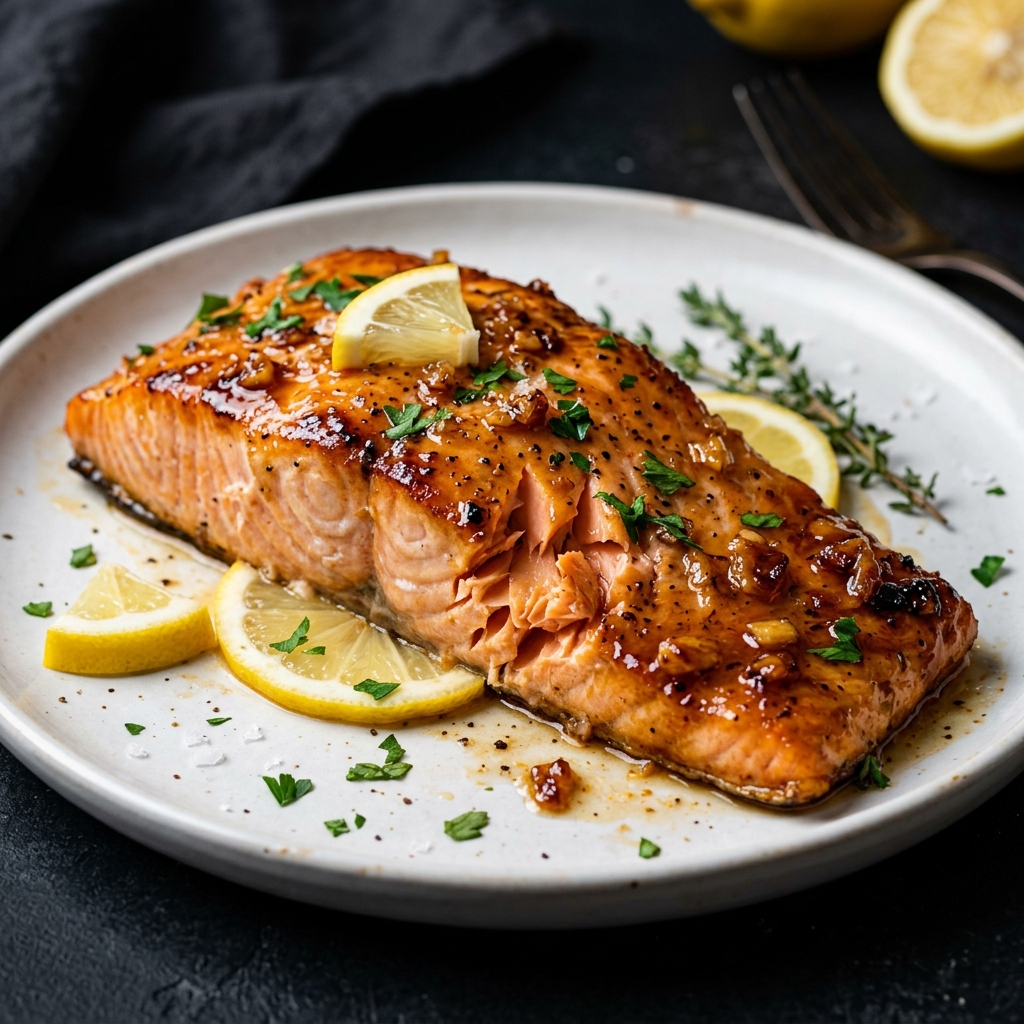
- Remove the salmon from the oven and spoon some of the flavorful honey garlic butter pan juices over the fillets. If desired, briefly broil the salmon for a more caramelized top, watching carefully because the honey can brown quickly.
Garnish and Serve:
- Allow the salmon to rest for a couple of minutes. Garnish with fresh parsley and lemon wedges, then serve warm with your favorite side dishes.
Notes
Use thick salmon fillets when possible: They are less likely to dry out during baking.
Pat the salmon dry: This helps the glaze adhere better and promotes better browning.
Do not overcook: Cooking time varies depending on the thickness of the salmon. Check it toward the lower end of the cooking range.
Honey can burn quickly: If using the broiler for additional caramelization, watch the salmon closely.
Fresh garlic is recommended: It provides a stronger and more aromatic flavor than garlic powder.
For gluten-free preparation: Make sure any optional additions, such as soy sauce or seasoning blends, are certified gluten-free.
For a lower-carb version: Reduce or replace the honey with a suitable low-carb sweetener.
Leftovers: Refrigerate cooked salmon in an airtight container for up to 3–4 days. Reheat gently to help preserve its moisture.
Serving idea: Pair with roasted vegetables, asparagus, rice, mashed potatoes, quinoa, or a fresh green salad.
Pat the salmon dry: This helps the glaze adhere better and promotes better browning.
Do not overcook: Cooking time varies depending on the thickness of the salmon. Check it toward the lower end of the cooking range.
Honey can burn quickly: If using the broiler for additional caramelization, watch the salmon closely.
Fresh garlic is recommended: It provides a stronger and more aromatic flavor than garlic powder.
For gluten-free preparation: Make sure any optional additions, such as soy sauce or seasoning blends, are certified gluten-free.
For a lower-carb version: Reduce or replace the honey with a suitable low-carb sweetener.
Leftovers: Refrigerate cooked salmon in an airtight container for up to 3–4 days. Reheat gently to help preserve its moisture.
Serving idea: Pair with roasted vegetables, asparagus, rice, mashed potatoes, quinoa, or a fresh green salad.