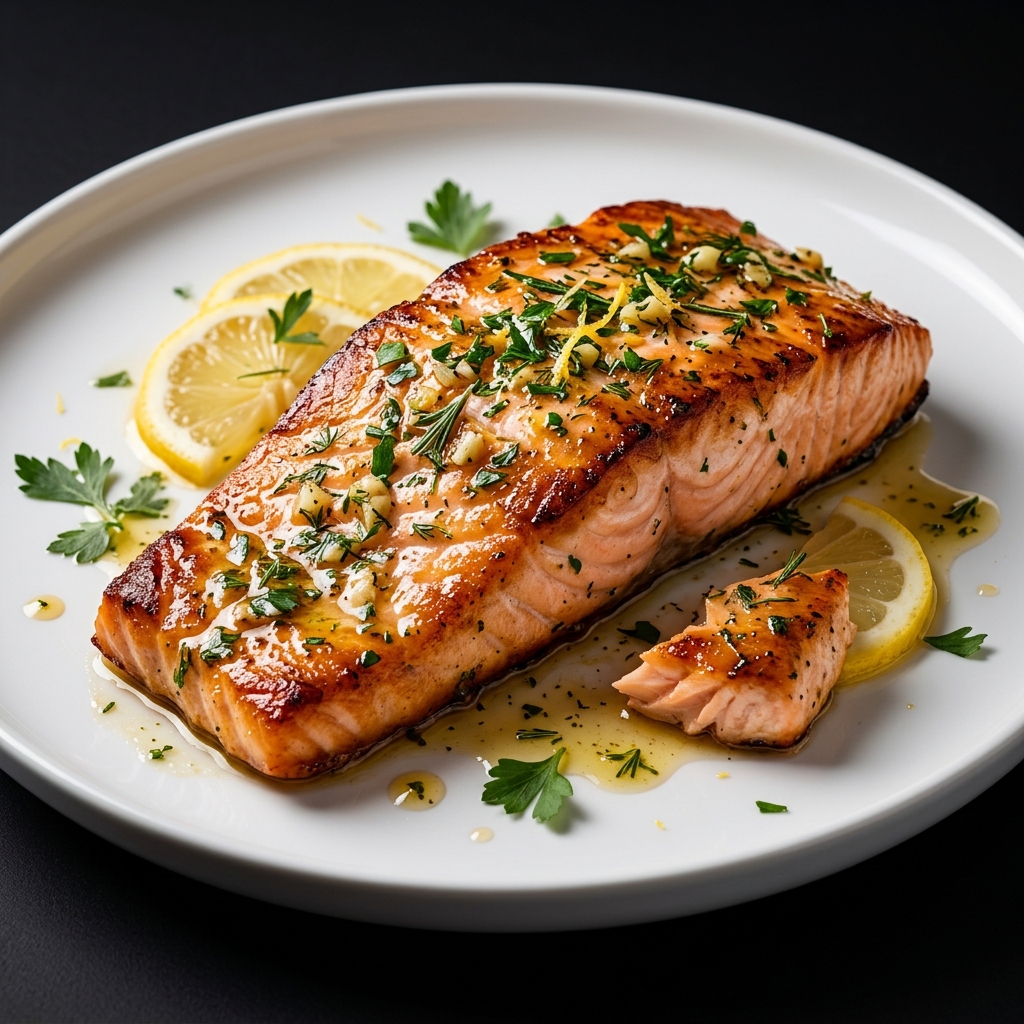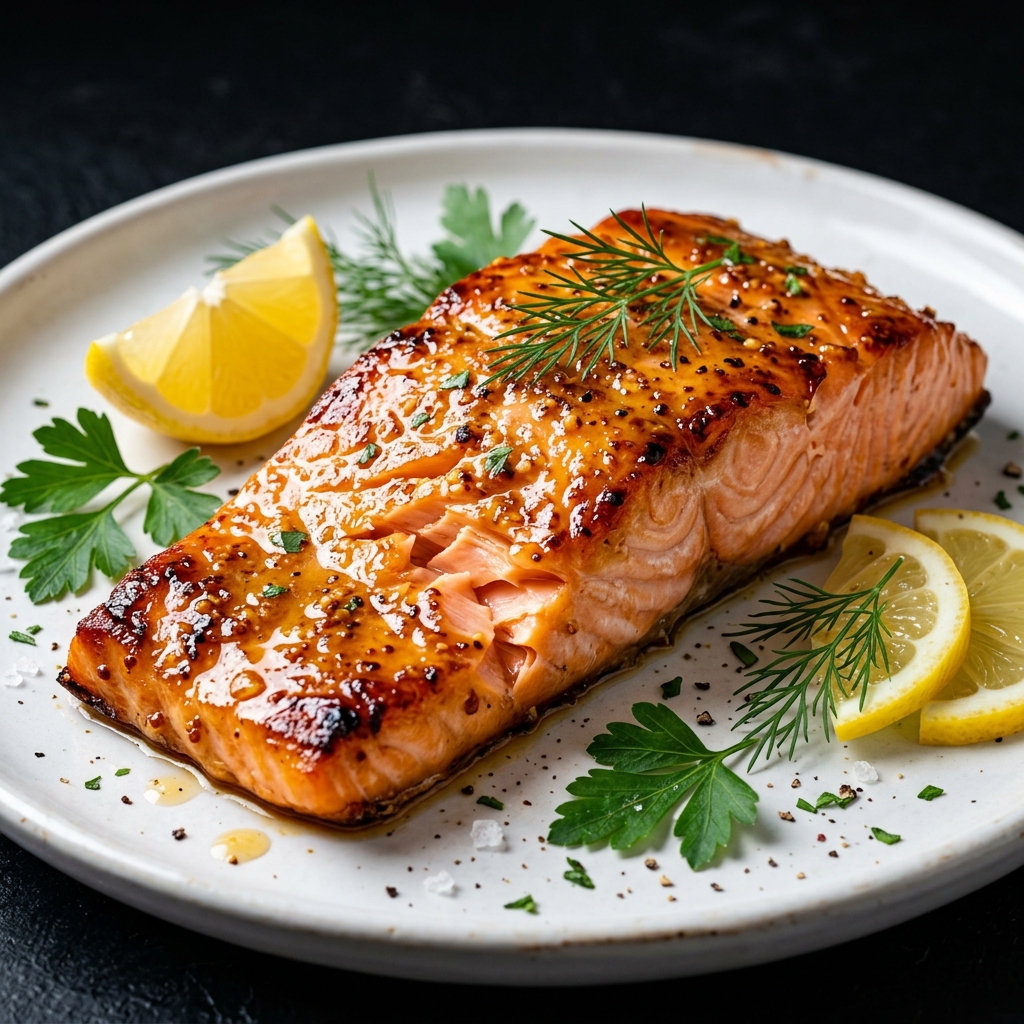
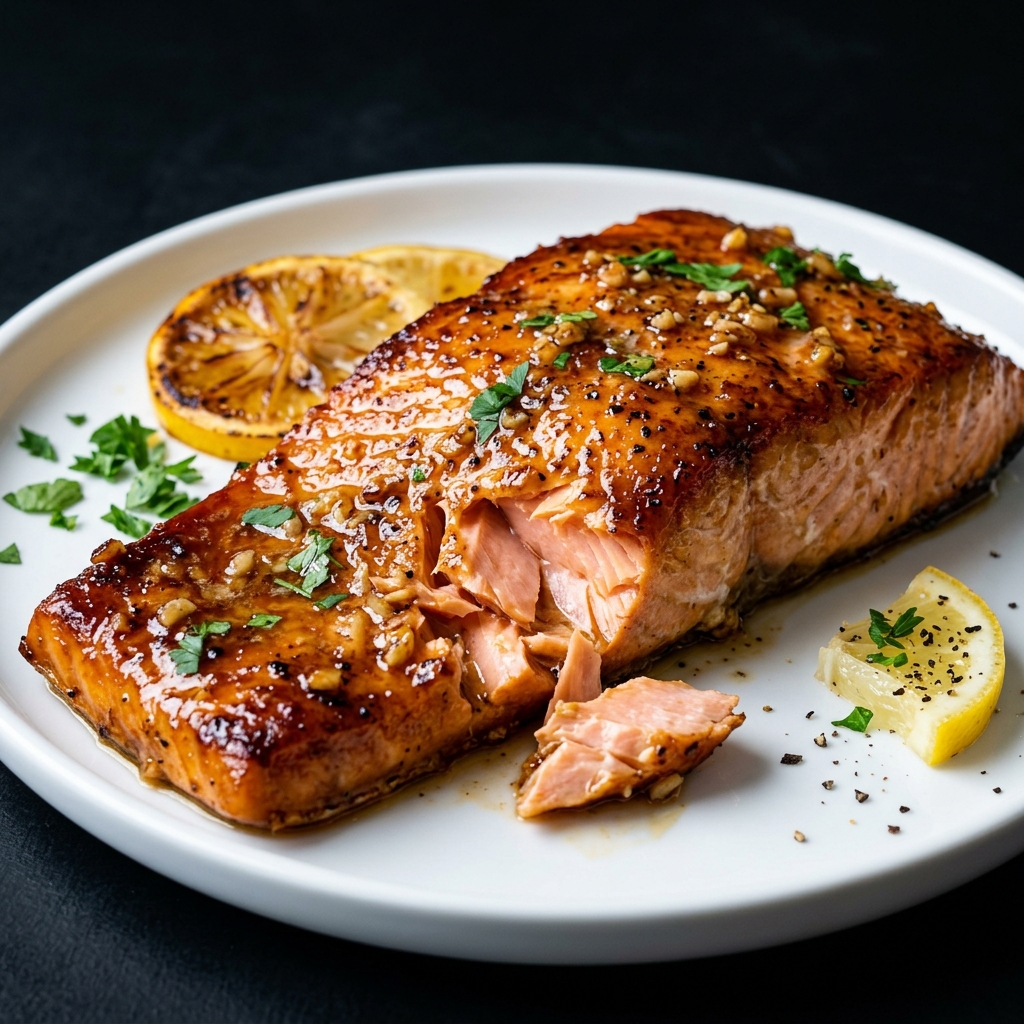
Few dinners can make an ordinary evening feel special quite like a perfectly baked salmon fillet coated in a glossy honey garlic butter sauce. This Honey Garlic Butter Oven Baked Salmon is tender, juicy, flavorful, and incredibly easy to prepare, making it a wonderful choice when you want a restaurant-quality seafood dinner without spending hours in the kitchen.
Ingredients You’ll Need
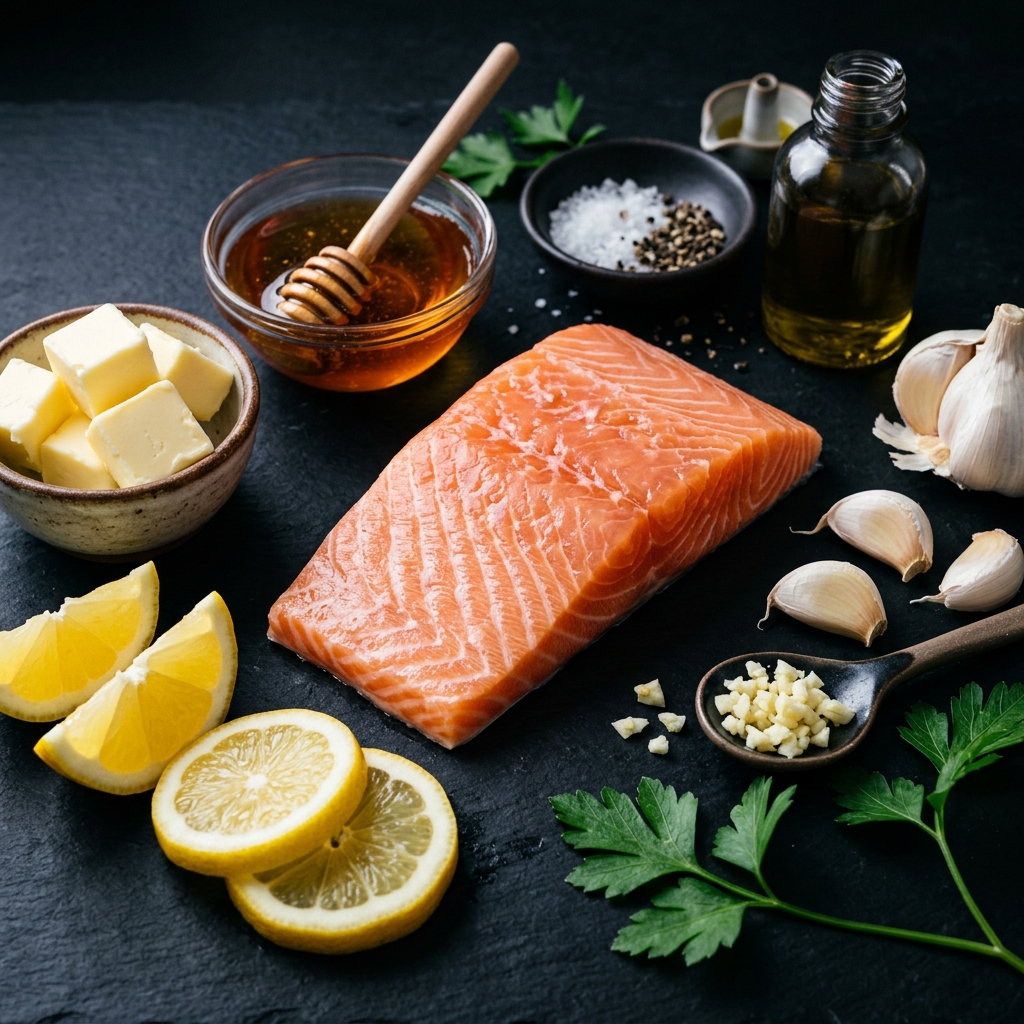
Salmon
- 4 salmon fillets, about 5–6 ounces each: Fresh salmon works beautifully, but good-quality frozen salmon can also be used. If using frozen fillets, thaw them completely and pat them very dry before cooking.
- 1 tablespoon olive oil: Helps lightly coat the fish and encourages even cooking.
- Salt: Enhances the natural flavor of the salmon and balances the sweetness of the glaze.
- Black pepper: Adds a gentle savory bite.
Honey Garlic Butter Glaze
- 4 tablespoons unsalted butter, melted: Creates the rich, silky foundation of the sauce. Unsalted butter gives you better control over the final seasoning.
- 3 tablespoons honey: Provides sweetness and helps the glaze become beautifully glossy and lightly caramelized in the oven.
- 4 cloves garlic, finely minced: Fresh garlic gives this dish much more flavor than pre-minced or powdered garlic.
- 1 tablespoon fresh lemon juice: Cuts through the richness of the butter and balances the honey.
- 1 teaspoon lemon zest: Adds concentrated citrus aroma and makes the salmon taste brighter.
- 1 tablespoon chopped fresh parsley: Adds freshness and a pop of color.
- ½ teaspoon paprika: Gives the glaze a subtle warmth and helps create an appealing golden color.
For finishing, have a few lemon wedges and extra fresh parsley ready. They are optional, but they make the finished salmon look especially inviting.
Choosing the Best Salmon
The salmon is the star of this recipe, so choosing a good fillet makes a noticeable difference.
Look for salmon with a fresh, clean appearance and firm flesh. The color should be vibrant without looking dull or excessively dry. If purchasing skin-on salmon, the skin should look intact and clean.
Different types of salmon can work well here. Atlantic salmon is generally rich and buttery, while wild salmon varieties often have a firmer texture and a more pronounced flavor. The most important thing is to choose salmon you enjoy eating and to avoid fillets that are excessively thin if you want a particularly juicy result.
Thickness matters because salmon cooks according to its size as much as its weight. A thick center-cut fillet will generally take longer than a thin tail portion. For the most reliable results, pay attention to the fish rather than relying entirely on the clock.
How to Make Honey Garlic Butter Oven Baked Salmon
Step 1: Prepare the Oven and Baking Dish
Preheat your oven to 400°F (200°C).
Line a baking sheet or baking dish with parchment paper or lightly grease it with a little olive oil. This makes cleanup easier and helps prevent the glaze from sticking excessively to the pan.
Place the salmon fillets on the prepared baking surface, leaving a little space between each piece so the heat can circulate properly.
Step 2: Prepare the Honey Garlic Butter Sauce
In a small bowl, combine the melted butter, honey, minced garlic, lemon juice, lemon zest, paprika, and chopped parsley.
Whisk everything together until the mixture is smooth and well combined.
Taste a tiny amount of the sauce before adding it to the fish. You can adjust the balance at this stage if needed. If you prefer more citrus flavor, add a little extra lemon zest. If you enjoy a stronger garlic flavor, add another small clove.
The sauce should taste slightly more intense than you might expect because the salmon itself will mellow the flavors as it cooks.
Step 3: Season the Salmon
Pat the salmon fillets dry with paper towels.
This small step is surprisingly important. Removing excess surface moisture allows the seasoning and glaze to cling better to the fish and encourages better browning.
Drizzle the salmon lightly with olive oil, then season both sides with salt and black pepper.
If your fillets have skin, place them skin-side down in the baking dish. The skin can act as a protective layer between the fish and the hot pan, helping the salmon remain moist.
Step 4: Add the Honey Garlic Butter Glaze
Spoon the prepared honey garlic butter mixture generously over each salmon fillet.
Use the back of the spoon to spread the glaze across the surface so that it covers the salmon evenly. Make sure some of the minced garlic and herbs remain on top rather than all settling into the bottom of the bowl.
For an especially flavorful result, allow the glazed salmon to sit for about 5–10 minutes while the oven finishes preheating. This is not a traditional long marinade, but it gives the surface a little time to absorb the flavors.
Step 5: Bake the Salmon
Place the salmon in the preheated oven and bake until the fish is cooked through and flakes easily with a fork.
Depending on the thickness of your fillets, this will generally take around 12–18 minutes.
Avoid treating the cooking time as an absolute rule. Salmon can go from perfectly tender to dry surprisingly quickly, particularly when the fillets are thin.
A reliable way to judge doneness is to use an instant-read thermometer inserted into the thickest part of the fish. For a moist, tender texture, many cooks remove salmon from the oven around 145°F (63°C), which is the FDA’s recommended safe internal temperature for fish.
The center should look opaque and separate into moist flakes when gently tested with a fork.
Step 6: Give It a Final Glaze
When the salmon comes out of the oven, spoon some of the buttery pan juices back over the top.
This simple finishing step makes a big difference. The juices contain honey, butter, garlic, lemon, and salmon flavor that would otherwise remain in the baking dish.
If you want a slightly more caramelized surface, you can briefly place the salmon under the broiler after baking. Watch it very carefully because honey can darken quickly.
Step 7: Garnish and Serve
Let the salmon rest for a couple of minutes before serving.
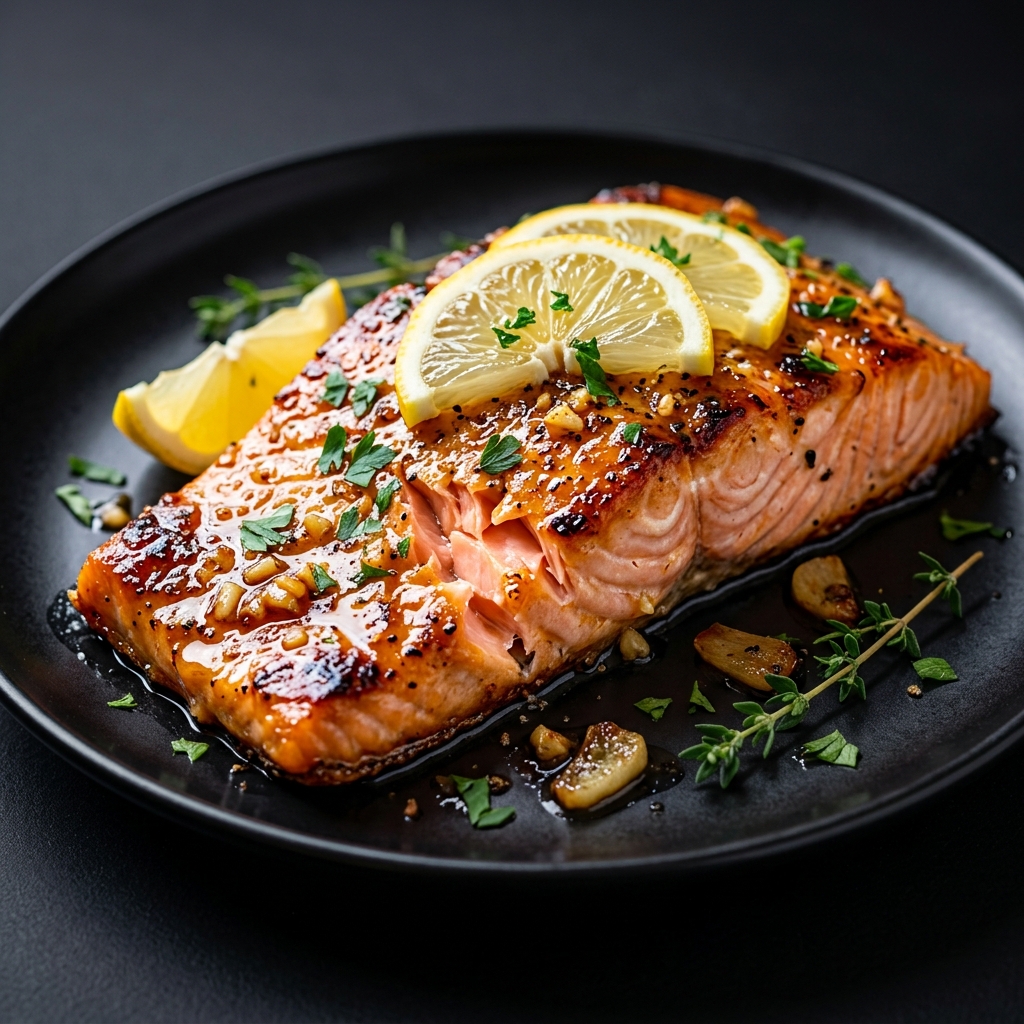
Finish with fresh parsley and lemon wedges. For an especially attractive presentation, place the salmon on a modern white serving plate and spoon a little of the remaining honey garlic butter sauce over the top.
Serve immediately while the fish is warm and juicy.
The Secret to Tender, Flavorful Salmon
The biggest mistake people make when preparing baked salmon is assuming that longer cooking automatically means better cooking. It does not. Salmon has a naturally delicate texture, and overcooking can quickly turn a beautifully rich fillet dry and firm.
The secret is to cook the salmon just until it reaches the desired doneness. Start checking thicker fillets toward the lower end of the expected cooking time, particularly if your oven runs hot. Remember that the fish will continue cooking slightly from residual heat after it leaves the oven.
The second secret is the glaze. Honey and butter are not simply there for sweetness and richness; they create a flavorful coating that helps the salmon develop a beautiful golden appearance. Garlic provides savory depth, while lemon prevents the sauce from becoming overwhelmingly rich.
Together, these ingredients create the sweet, savory, buttery flavor combination that makes this recipe so difficult to resist.
Variations to Try
One of the best things about this baked salmon recipe is how easily you can adjust it to suit your taste.
Spicy Honey Garlic Salmon
For a sweet-and-spicy version, add ¼–½ teaspoon of red pepper flakes or a small amount of cayenne pepper to the glaze. The heat works beautifully with the sweetness of honey.
Lemon Herb Salmon
Increase the lemon zest and add extra fresh parsley, dill, or a small amount of fresh thyme. This variation is particularly refreshing and pairs beautifully with roasted vegetables.
Soy Honey Garlic Salmon
For a deeper savory flavor, add a small splash of soy sauce to the glaze. If you need the recipe to remain gluten-free, use a certified gluten-free soy sauce or tamari.
Dijon Honey Garlic Salmon
Add 1 teaspoon of Dijon mustard to the butter and honey mixture. Dijon introduces a gentle tang and gives the sauce an additional layer of complexity.
Brown Sugar Garlic Butter Salmon
If you want an even richer caramelized finish, replace part of the honey with a small amount of brown sugar. Keep an eye on the salmon while broiling because the additional sugar can brown quickly.
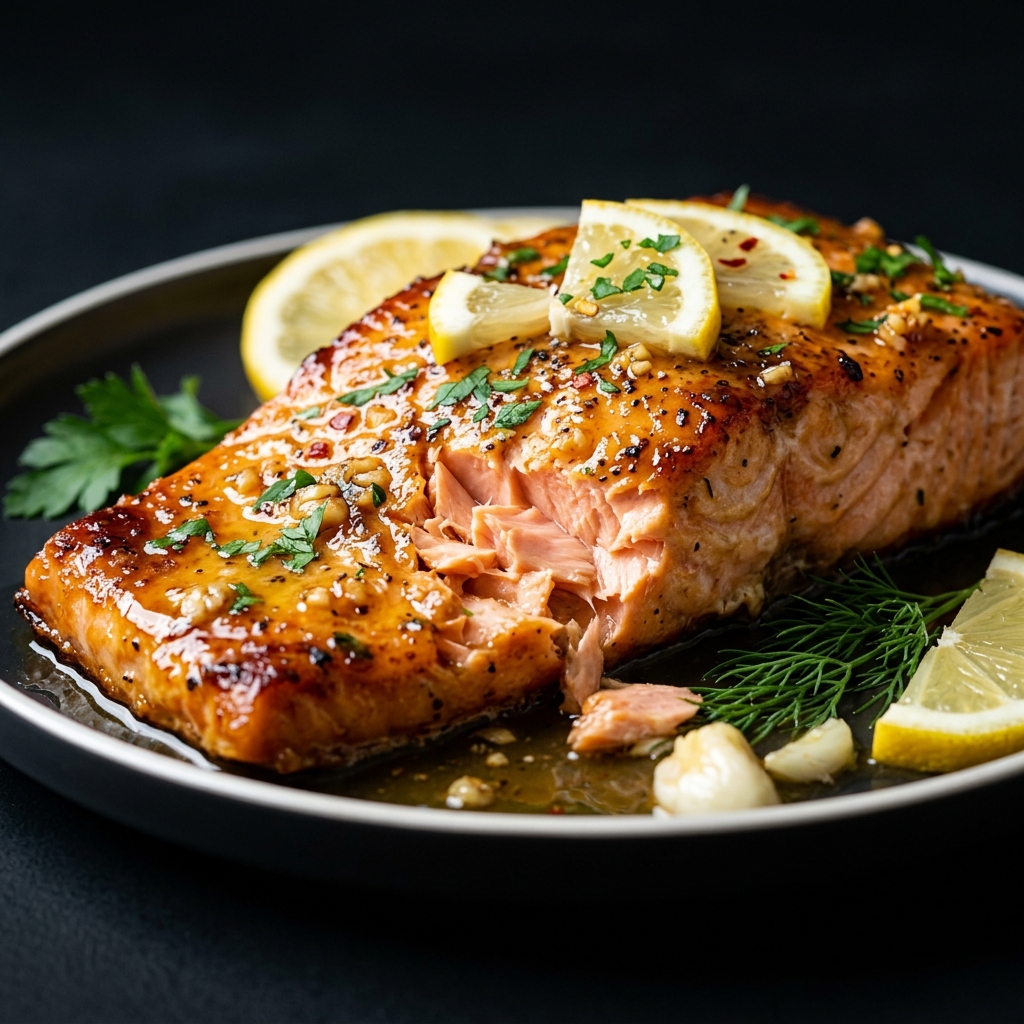
Expert Tips for Perfect Oven-Baked Salmon
Pat the Salmon Dry
Never underestimate this simple step. Excess moisture on the surface can dilute the seasoning and prevent the glaze from adhering properly.
Use Fresh Garlic
Freshly minced garlic gives the sauce a much more aromatic and vibrant flavor. Garlic powder can work in an emergency, but it will not provide the same texture or intensity.
Don’t Drown the Salmon
The salmon should be generously coated, but it does not need to be submerged in sauce. Too much liquid in the baking dish can make the fish steam rather than roast.
Watch the Honey
Honey caramelizes beautifully, but it can burn if exposed to intense heat for too long. If you use the broiler for a final golden finish, stay close to the oven and watch the salmon carefully.
Let the Fish Rest Briefly
A short resting period allows the juices to settle and makes the salmon easier to serve without immediately falling apart.
Use a Thermometer When in Doubt
A thermometer is one of the most useful tools for cooking salmon consistently. Because fillets vary considerably in thickness, temperature is often more reliable than a fixed cooking time.
What Makes This Recipe So Special?
At first glance, honey, garlic, butter, and salmon may seem like a simple combination. But that simplicity is exactly what makes it work.
The rich salmon provides a naturally buttery foundation. Honey brings gentle sweetness and caramelization. Garlic adds savory depth, while butter ties everything together into a glossy sauce. Lemon then steps in to brighten the entire dish.
The finished result has several flavors happening at once without becoming complicated. You get sweetness first, followed by savory garlic and rich butter, then a fresh citrus finish. Every bite has a little bit of everything.
And perhaps best of all, this is the kind of recipe that looks far more complicated than it actually is. The finished salmon can be placed on a beautiful serving platter, surrounded with lemon wedges and fresh herbs, and brought directly to the table. Your family or guests may think you spent much longer preparing dinner than you actually did.
A Few Things to Know Before You Serve It
If you are preparing this recipe for guests, try to have your side dishes nearly finished before the salmon goes into the oven. Salmon cooks relatively quickly, and it is best served immediately rather than sitting around while you finish everything else.
You can also prepare the honey garlic butter sauce in advance and keep it covered in the refrigerator until you are ready to cook. Bring it back toward room temperature or gently loosen it before spreading it over the fish.
For the best presentation, reserve a little fresh parsley and a few lemon wedges for the very end. Fresh garnishes added after baking make the dish look brighter and more vibrant than garnishes that have been exposed to heat.
Most importantly, do not be afraid to keep the presentation simple. A beautifully glazed salmon fillet on a clean white plate, finished with fresh herbs and lemon against a dark serving background, is already visually striking.
The real magic, however, happens when you take that first forkful and discover just how tender the center is beneath that glossy garlic butter glaze.
Make-Ahead Options
This Honey Garlic Butter Oven Baked Salmon is best when baked shortly before serving, but several parts of the recipe can be prepared ahead of time to make dinner much easier.
The honey garlic butter sauce can be mixed several hours in advance and stored covered in the refrigerator. If the butter becomes firm, allow the sauce to sit at room temperature briefly and stir it well before using. You can also prepare your lemon wedges, parsley, and other garnishes ahead of time.
For a busy weeknight, season the salmon and prepare the sauce earlier in the day. Keep the salmon refrigerated until you are ready to cook it, then add the glaze just before baking.
I do not recommend fully baking the salmon several hours ahead if you want the best texture. Reheating cooked salmon can cause it to become dry, especially when the fillets are thin. Freshly baked salmon has a much more tender and juicy texture.
What to Serve With Honey Garlic Butter Salmon
This salmon is flavorful enough to be the centerpiece of a meal, but pairing it with the right side dishes can turn it into a complete and satisfying dinner.
Garlic Butter Rice
Fluffy white rice, jasmine rice, or basmati rice is an excellent choice because it absorbs the honey garlic butter sauce beautifully. Spoon some of the flavorful pan juices over the rice just before serving.
Roasted Vegetables
Roasted broccoli, carrots, zucchini, asparagus, bell peppers, or Brussels sprouts add color and texture to the plate. Their slightly caramelized edges also complement the sweetness of the salmon glaze.
Mashed Potatoes
Creamy mashed potatoes make this salmon especially comforting. The buttery potatoes provide a mild base that allows the garlic, honey, lemon, and salmon flavors to stand out.
Roasted Baby Potatoes
Crispy roasted potatoes are another excellent pairing. Toss baby potatoes with olive oil, salt, pepper, and herbs before roasting them until golden and crisp.
Steamed Asparagus
For a lighter meal, steamed or roasted asparagus is an easy choice. A squeeze of fresh lemon over the asparagus ties it together with the citrus in the salmon glaze.
Green Salad
A crisp green salad provides a refreshing contrast to the richness of the honey garlic butter sauce. Try lettuce, cucumber, tomatoes, avocado, and a simple lemon vinaigrette.
Quinoa
Quinoa is a great option when you want something hearty but slightly lighter than potatoes or white rice. Its subtle nutty flavor works particularly well with baked salmon.
Crusty Bread
Never underestimate the value of good bread with a saucy dinner. A slice of crusty bread can be used to soak up the remaining honey garlic butter sauce from the plate.
How to Store Leftover Salmon
If you have leftover salmon, allow it to cool slightly before transferring it to an airtight container.
Refrigerate the salmon promptly and use it within 3–4 days for best quality and food safety.
Keep the salmon and any extra sauce together when possible. The sauce helps protect the fish from drying out during storage.
If you know you will have leftovers, consider storing individual portions. This makes reheating easier and means you only need to warm the amount you plan to eat.
How to Reheat Baked Salmon
The microwave is convenient, but it can heat salmon unevenly and leave it dry or rubbery if overheated.
For better results, reheat the salmon gently in the oven. Place it in a baking dish, add a small splash of water or a little extra butter, cover loosely with foil, and warm it at a moderate temperature until heated through.
The goal is not to cook the salmon again. You are simply warming it.
If using a microwave, cover the salmon and heat it in short intervals at reduced power. Check it between intervals so you do not accidentally overcook it.
Leftover honey garlic salmon can also be transformed into completely different meals. Flake it over a salad, add it to rice bowls, tuck it into wraps, or serve it over pasta with some of the remaining sauce.
Can You Freeze Honey Garlic Butter Salmon?
Yes, cooked salmon can be frozen, although freshly baked salmon will always have the best texture.
Allow the cooked salmon to cool, then place individual portions in airtight freezer-safe containers or wrap them carefully before freezing. Label the container with the date so you can keep track of storage time.
Thaw frozen salmon in the refrigerator rather than leaving it at room temperature. Once thawed, reheat it gently to prevent the fish from becoming excessively dry.
For the best quality, freezing is particularly useful when you have a large amount of leftover salmon that you know you will not eat within a few days.
Common Mistakes to Avoid
Overcooking the Salmon
This is the most common problem. Salmon does not need excessive cooking time. Watch the fish carefully toward the end of baking and use an instant-read thermometer when possible.
Using Too Much Honey
Honey is delicious, but too much can make the glaze overwhelmingly sweet and increase the risk of burning. The purpose of honey is to balance the savory ingredients, not overpower them.
Adding Garlic Too Aggressively
Fresh garlic has a powerful flavor, especially when concentrated on the surface of the fish. Four cloves provide a noticeable garlic flavor, but you can adjust the quantity according to your preference.
Skipping the Lemon
The lemon is more important than it may initially seem. Butter and honey are both rich ingredients, and acidity gives the finished dish balance.
Putting Wet Salmon in the Oven
Always pat the salmon dry first. A dry surface gives the glaze something to cling to and helps the fish develop a more appealing baked exterior.
Cutting Into the Salmon Repeatedly
Constantly opening the oven or cutting into the fish to check its progress can make cooking less consistent. Check near the end of the estimated cooking time instead.
How to Tell When Salmon Is Done
There are several ways to determine whether your salmon is ready.
The thickest part should appear opaque rather than translucent, and the fish should separate into moist flakes when gently pressed with a fork.
However, appearance alone can sometimes be misleading. Salmon fillets vary in thickness, and different ovens cook at different rates.
For consistent results, an instant-read thermometer is the best tool. Insert it into the thickest part of the fillet without touching the baking dish.
For food safety, the FDA recommends cooking fish to an internal temperature of 145°F (63°C).
Remember that carryover cooking can continue briefly after the salmon leaves the oven, so avoid unnecessarily extending the cooking time once the fish has reached a safe temperature.
Frequently Asked Questions
Can I use frozen salmon for this recipe?
Yes. Frozen salmon works well, provided it is thawed completely before cooking. Thaw it in the refrigerator, then pat the fillets thoroughly dry with paper towels before seasoning and glazing.
Cooking salmon while it is still frozen can make the outside and center cook at different rates, which is not ideal for this particular recipe.
Should I use salmon with the skin on or off?
Either works.
Skin-on salmon can be particularly helpful when baking because the skin provides a protective layer between the fish and the hot baking surface. It can also help the fillet hold together.
If you prefer skinless salmon, simply place the fillet directly on the prepared baking surface.
Can I use salted butter instead of unsalted butter?
Yes, but reduce the additional salt you add to the salmon. Salt levels vary between butter brands, so taste and adjust carefully.
Unsalted butter is generally preferable for cooking because it gives you more control over seasoning.
Can I make this recipe without honey?
Yes. Honey provides sweetness and helps the glaze caramelize, but you can replace it with another sweetener that suits your dietary preferences.
For a lower-sugar variation, use an appropriate low-carb sweetener designed for cooking. Keep in mind that substitutions can change the flavor, texture, and browning of the glaze.
Can I make this recipe dairy-free?
Yes. Replace the butter with a suitable dairy-free butter alternative or another cooking fat that works well with salmon.
The final flavor will be slightly different because traditional butter contributes a distinctive richness to the glaze.
How can I make the salmon more spicy?
Add red pepper flakes, cayenne pepper, hot sauce, or a small amount of chili powder to the glaze.
For the best balance, start with a small amount of heat. You can always increase it, but once the glaze becomes too spicy, it is harder to correct.
Why did my honey garlic sauce burn?
Honey contains natural sugars that can brown quickly under high heat. Excessive broiling, very high oven temperatures, or leaving the salmon in the oven too long can cause the glaze to burn.
If you want extra caramelization, use the broiler only briefly and keep a close eye on the salmon.
Can I use a large salmon fillet instead of individual portions?
Absolutely. A large salmon side can make a beautiful centerpiece for a family dinner or gathering.
The cooking time will depend heavily on its thickness, so use the internal temperature and visual cues rather than relying on the cooking time for individual fillets.
Can I prepare the glaze ahead of time?
Yes. The honey garlic butter glaze can be prepared ahead and refrigerated in a covered container. Stir it well before using.
If the butter has solidified, allow the mixture to soften enough to become spreadable before applying it to the salmon.
How to Turn This Into a Complete Weeknight Dinner
One of the easiest ways to make this recipe part of a regular meal rotation is to think of it as a flexible main dish rather than a standalone recipe.
Start the side dish that takes the longest to cook first. If you are serving roasted potatoes, for example, get them into the oven before preparing the salmon. While the potatoes roast, mix the glaze and prepare the fish.
If you are serving rice, begin the rice first and prepare the salmon while it cooks. By the time the salmon comes out of the oven, the rice should be ready to serve.
For vegetables, choose something that requires minimal preparation. Asparagus, broccoli, zucchini, and green beans can all be roasted or steamed quickly.
This approach allows you to get an impressive dinner onto the table without having several complicated recipes competing for your attention.
A Restaurant-Style Presentation at Home
Presentation does not have to be complicated to look impressive.
Start with a clean, modern white plate. Place the salmon slightly off-center rather than directly in the middle. Spoon a little of the honey garlic butter sauce over the top, then add a few fresh parsley leaves and a lemon wedge.
If serving with vegetables, arrange them beside the salmon rather than piling everything on top of the fish. This keeps the golden glaze visible and makes the salmon remain the visual centerpiece.
For a more elegant dinner, drizzle a small amount of the remaining sauce around the plate rather than pouring a large amount over everything.
The contrast between the golden salmon, green herbs, bright lemon, and clean white plate creates an attractive presentation with very little effort.
Why This Recipe Belongs in Your Dinner Rotation
A good recipe should not only taste delicious; it should make cooking easier.
That is where Honey Garlic Butter Oven Baked Salmon really shines. It requires a relatively short ingredient list, minimal preparation, and one baking dish, yet it delivers a meal that feels far more elaborate than the effort involved.
It is also easy to customize. Want heat? Add chili flakes. Prefer more citrus? Increase the lemon. Looking for deeper savory flavor? Add Dijon or a splash of soy sauce. Need a lighter meal? Pair it with vegetables and a fresh salad. Want something comforting? Serve it with mashed potatoes or rice.
That flexibility means you can make the recipe repeatedly without it feeling exactly the same every time.
More importantly, it is a recipe that teaches a valuable cooking principle: balance matters more than complexity. The richness of butter needs acidity from lemon. The sweetness of honey needs savory garlic and seasoning. The delicate salmon needs careful cooking rather than excessive heat.
When those elements are balanced correctly, a handful of everyday ingredients can create something genuinely memorable.
Conclusion
Honey Garlic Butter Oven Baked Salmon is the kind of recipe that earns its place in a dependable home-cooking collection. It is fast enough for a weeknight, elegant enough for company, and flavorful enough to satisfy anyone who loves a good seafood dinner.
The combination of flaky salmon, buttery richness, sweet honey, aromatic garlic, and bright lemon creates a dish that feels comforting without being heavy. The glossy glaze gives every bite plenty of flavor, while fresh herbs and lemon keep the finished meal vibrant.
Once you master the basic method, you can easily adapt the recipe to your own kitchen and preferences. Experiment with herbs, add a little spice, change the side dishes, or turn leftovers into salads and rice bowls.
And remember the most important lesson: do not overcook the salmon. Start checking it as it approaches the expected cooking time, use a thermometer when possible, and let the natural richness of the fish do most of the work.
Serve it hot, spoon those flavorful pan juices over the top, add a squeeze of fresh lemon, and bring it straight to the table. That first bite of tender salmon beneath the glossy honey garlic butter glaze is exactly what makes this simple oven-baked recipe so special.
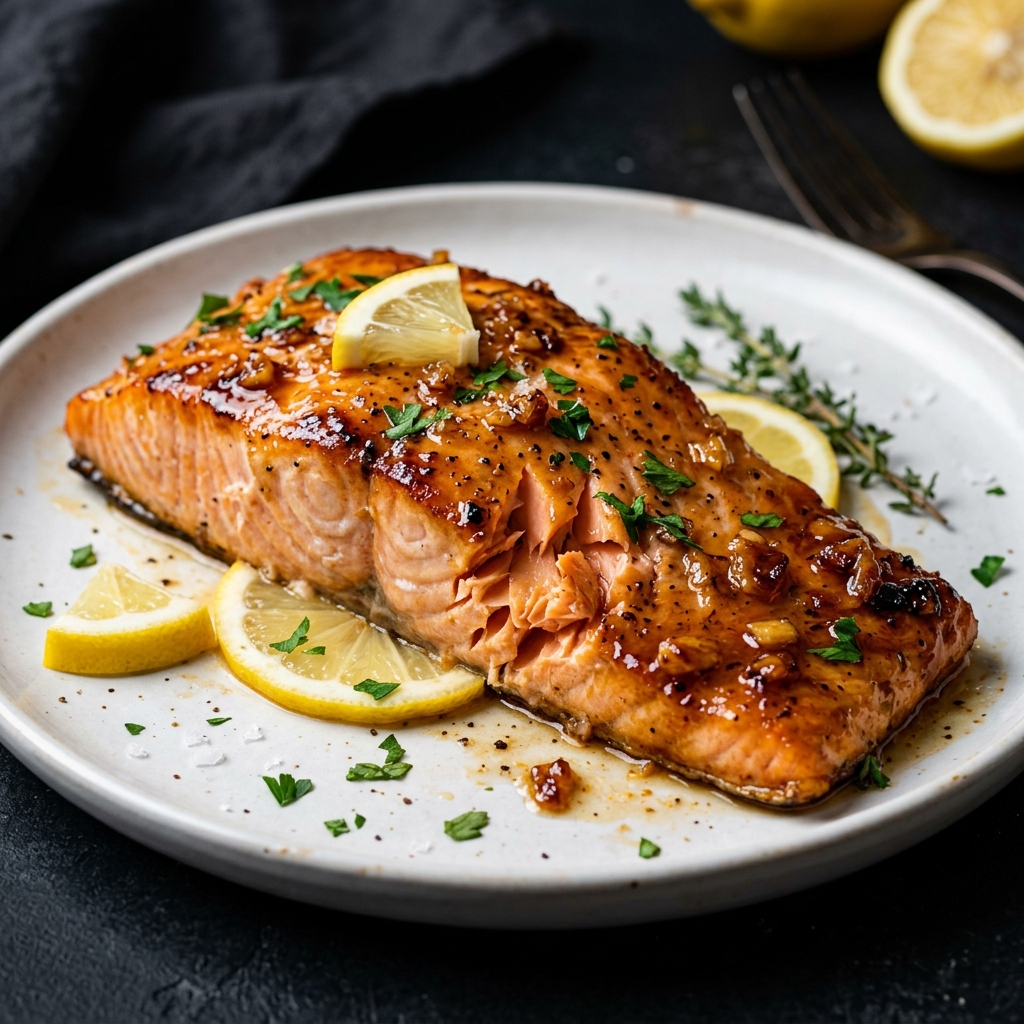
Honey Garlic Butter Oven Baked Salmon
Ingredients
Equipment
Method
- Preheat the oven to 400°F (200°C). Line a baking sheet or baking dish with parchment paper or lightly grease it with olive oil.
- Pat the salmon fillets thoroughly dry with paper towels. Drizzle lightly with olive oil and season both sides with salt and black pepper. If using skin-on salmon, place the fillets skin-side down.
- In a small bowl, combine the melted butter, honey, minced garlic, lemon juice, lemon zest, chopped parsley, and paprika. Whisk until thoroughly combined.
- Spoon the honey garlic butter glaze generously over each salmon fillet. Spread it evenly across the surface, making sure the garlic and herbs are distributed over the fish.
- Place the salmon in the preheated oven and bake for approximately 12–18 minutes, depending on the thickness of the fillets. The salmon should be opaque and flake easily when gently tested.
- For the most reliable result, check the thickest part of the salmon with an instant-read thermometer. The FDA-recommended safe internal temperature for fish is 145°F (63°C).
- Remove the salmon from the oven and spoon some of the flavorful honey garlic butter pan juices over the fillets. If desired, briefly broil the salmon for a more caramelized top, watching carefully because the honey can brown quickly.
- Allow the salmon to rest for a couple of minutes. Garnish with fresh parsley and lemon wedges, then serve warm with your favorite side dishes.
Notes
Pat the salmon dry: This helps the glaze adhere better and promotes better browning.
Do not overcook: Cooking time varies depending on the thickness of the salmon. Check it toward the lower end of the cooking range.
Honey can burn quickly: If using the broiler for additional caramelization, watch the salmon closely.
Fresh garlic is recommended: It provides a stronger and more aromatic flavor than garlic powder.
For gluten-free preparation: Make sure any optional additions, such as soy sauce or seasoning blends, are certified gluten-free.
For a lower-carb version: Reduce or replace the honey with a suitable low-carb sweetener.
Leftovers: Refrigerate cooked salmon in an airtight container for up to 3–4 days. Reheat gently to help preserve its moisture.
Serving idea: Pair with roasted vegetables, asparagus, rice, mashed potatoes, quinoa, or a fresh green salad.

Hi, I’m Clara, the creator of Barakala. I love sharing simple, comforting, and delicious recipes that make everyday cooking easier and more enjoyable for home cooks.