Ingredients
Equipment
Method
- Roast the Spaghetti Squash
- Preheat the oven to 400°F (200°C).
- Carefully cut the spaghetti squash in half lengthwise. Scoop out and discard the seeds and loose fibrous strands from the center.
- Brush the cut sides lightly with olive oil and season with salt and black pepper. Place the squash cut-side down on a baking sheet.
- Roast for approximately 35–50 minutes, depending on the size of the squash, until the flesh is tender and can be easily separated with a fork.
- Make the Squash Strands
- Remove the roasted squash from the oven and allow it to cool for several minutes until it is safe to handle.
- Turn the squash halves cut-side up. Using a fork, gently scrape the flesh lengthwise to create spaghetti-like strands.
- Transfer the strands to a large mixing bowl. If the squash seems particularly wet, allow the strands to drain briefly to remove excess moisture.
- Prepare the Parmesan Sauce
- Melt the butter in a medium saucepan over medium-low heat.
- Add the minced garlic and cook for about 30–60 seconds, stirring frequently, until fragrant. Do not allow the garlic to burn.
- Pour in the heavy cream and gently warm it.
- Gradually add about ¾ cup of the grated Parmesan, stirring continuously until melted and incorporated into a smooth, creamy sauce.
- Season with black pepper and taste before adding additional salt, since Parmesan is naturally salty.
- Combine the Squash and Sauce
- Pour the creamy Parmesan sauce over the spaghetti squash strands.
- Using tongs or a large spoon, gently toss until the squash is evenly coated. Avoid vigorous stirring so the strands remain intact.
- If using mozzarella, you can stir a small amount into the mixture for extra creaminess and reserve the rest for the topping.
- Assemble the Gratin
- Lightly grease a 9 × 13-inch baking dish or similarly sized oven-safe casserole dish.
- Transfer the creamy spaghetti squash mixture into the dish and spread it into an even layer.
- Sprinkle the remaining Parmesan over the top. Add the mozzarella if using.
- Bake Until Golden
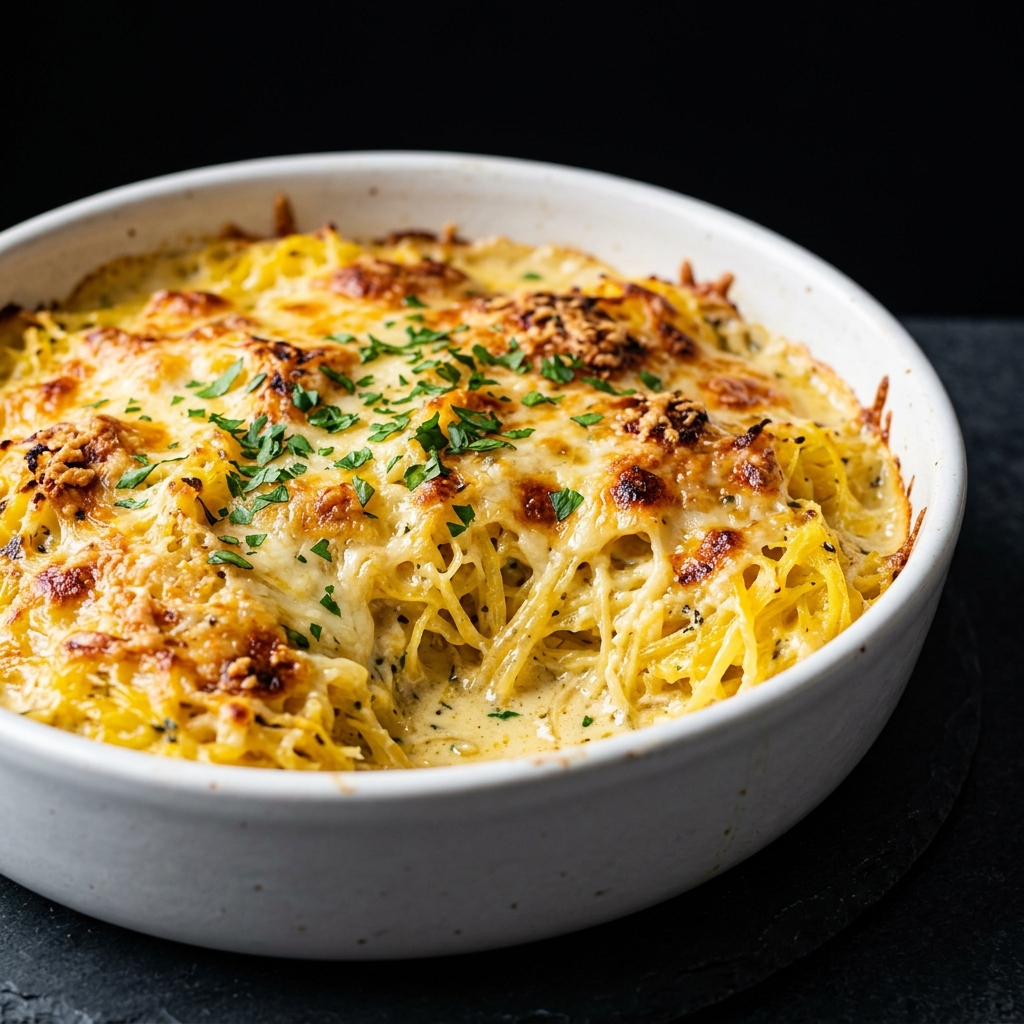
- Place the baking dish in the 400°F (200°C) oven and bake for approximately 10–15 minutes, or until the cheese is melted, bubbling, and lightly golden.
- For a deeper golden crust, place the gratin under the broiler for 1–2 minutes at the end. Watch it closely to prevent the cheese from burning.
- Rest and Serve
- Remove the gratin from the oven and allow it to rest for 5–10 minutes.
- Garnish with freshly chopped parsley and serve warm.
Notes
For the best texture: Avoid overcooking the spaghetti squash. It should be tender enough to separate into strands while still retaining some structure.
Control moisture: If your squash releases a lot of water, let the strands drain briefly before mixing them with the sauce.
Use freshly grated Parmesan: It melts more smoothly and provides better flavor than many pre-shredded varieties.
Watch the salt: Parmesan is naturally salty, so taste the sauce before adding extra salt.
For extra browning: Broil the assembled gratin for 1–2 minutes at the end, watching carefully.
Make ahead: The roasted squash and Parmesan sauce can be prepared separately up to 1 day ahead and refrigerated. Assemble and bake when ready.
Storage: Refrigerate leftovers in an airtight container for up to 3–4 days.
Reheating: Reheat gently in the oven or microwave. For the best texture, use the oven and uncover during the final few minutes.
Vegetarian: This recipe is vegetarian, although strict vegetarians should check the Parmesan label for the type of rennet used.
Gluten-free: The basic recipe is naturally gluten-free, but check packaged ingredients if gluten contamination is a concern.
Low-carb: Spaghetti squash is lower in carbohydrates than traditional pasta, making this a lighter alternative to conventional pasta gratins. Exact carbohydrate content depends on serving size.
Keto: Whether it fits a strict ketogenic diet depends on the portion size and the individual's carbohydrate target.
Control moisture: If your squash releases a lot of water, let the strands drain briefly before mixing them with the sauce.
Use freshly grated Parmesan: It melts more smoothly and provides better flavor than many pre-shredded varieties.
Watch the salt: Parmesan is naturally salty, so taste the sauce before adding extra salt.
For extra browning: Broil the assembled gratin for 1–2 minutes at the end, watching carefully.
Make ahead: The roasted squash and Parmesan sauce can be prepared separately up to 1 day ahead and refrigerated. Assemble and bake when ready.
Storage: Refrigerate leftovers in an airtight container for up to 3–4 days.
Reheating: Reheat gently in the oven or microwave. For the best texture, use the oven and uncover during the final few minutes.
Vegetarian: This recipe is vegetarian, although strict vegetarians should check the Parmesan label for the type of rennet used.
Gluten-free: The basic recipe is naturally gluten-free, but check packaged ingredients if gluten contamination is a concern.
Low-carb: Spaghetti squash is lower in carbohydrates than traditional pasta, making this a lighter alternative to conventional pasta gratins. Exact carbohydrate content depends on serving size.
Keto: Whether it fits a strict ketogenic diet depends on the portion size and the individual's carbohydrate target.