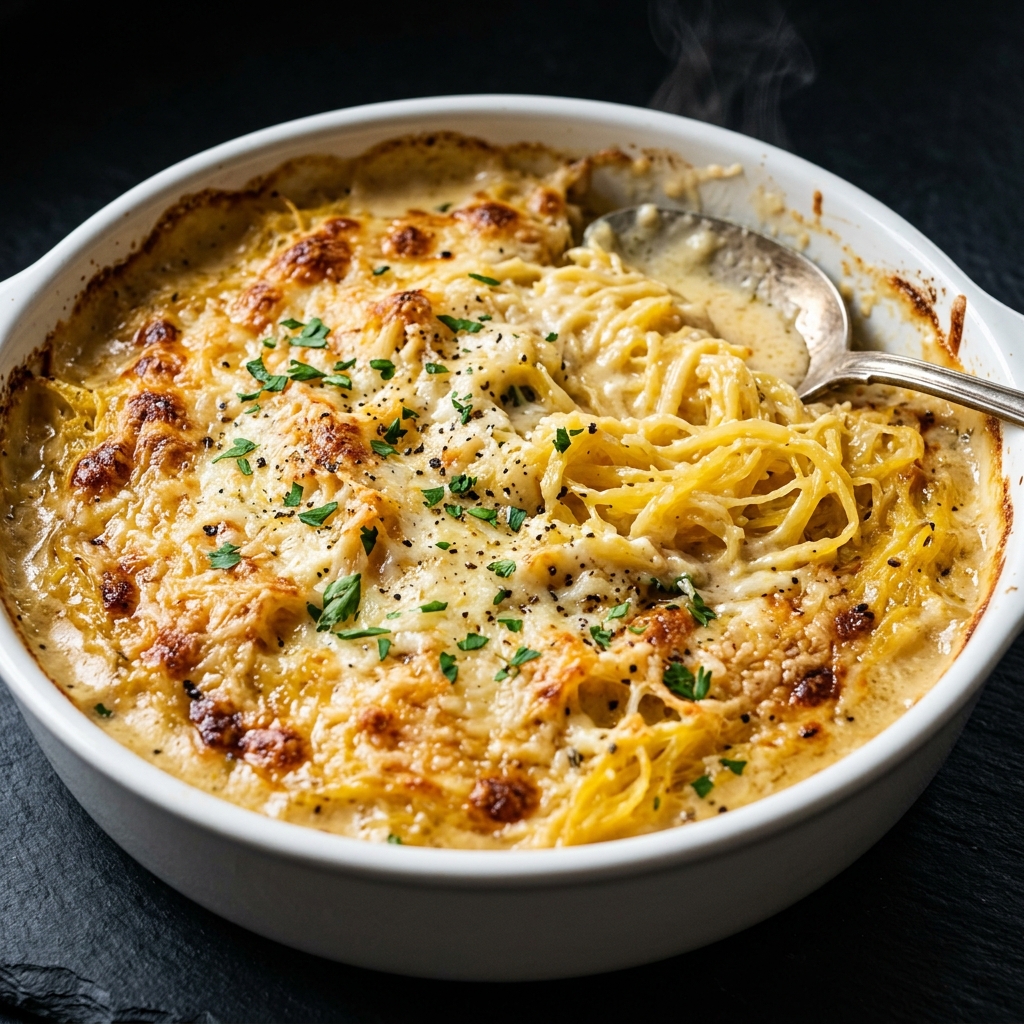
If you love cozy, cheesy comfort food but want something lighter than a traditional pasta bake, this Parmesan Spaghetti Squash Gratin is a recipe worth keeping close. Tender strands of spaghetti squash are coated in a creamy Parmesan sauce, tucked into a modern baking dish, and finished with a golden, bubbling cheese topping that becomes irresistibly crisp around the edges. It is comforting, savory, satisfying, and surprisingly simple to make.
Ingredients You’ll Need
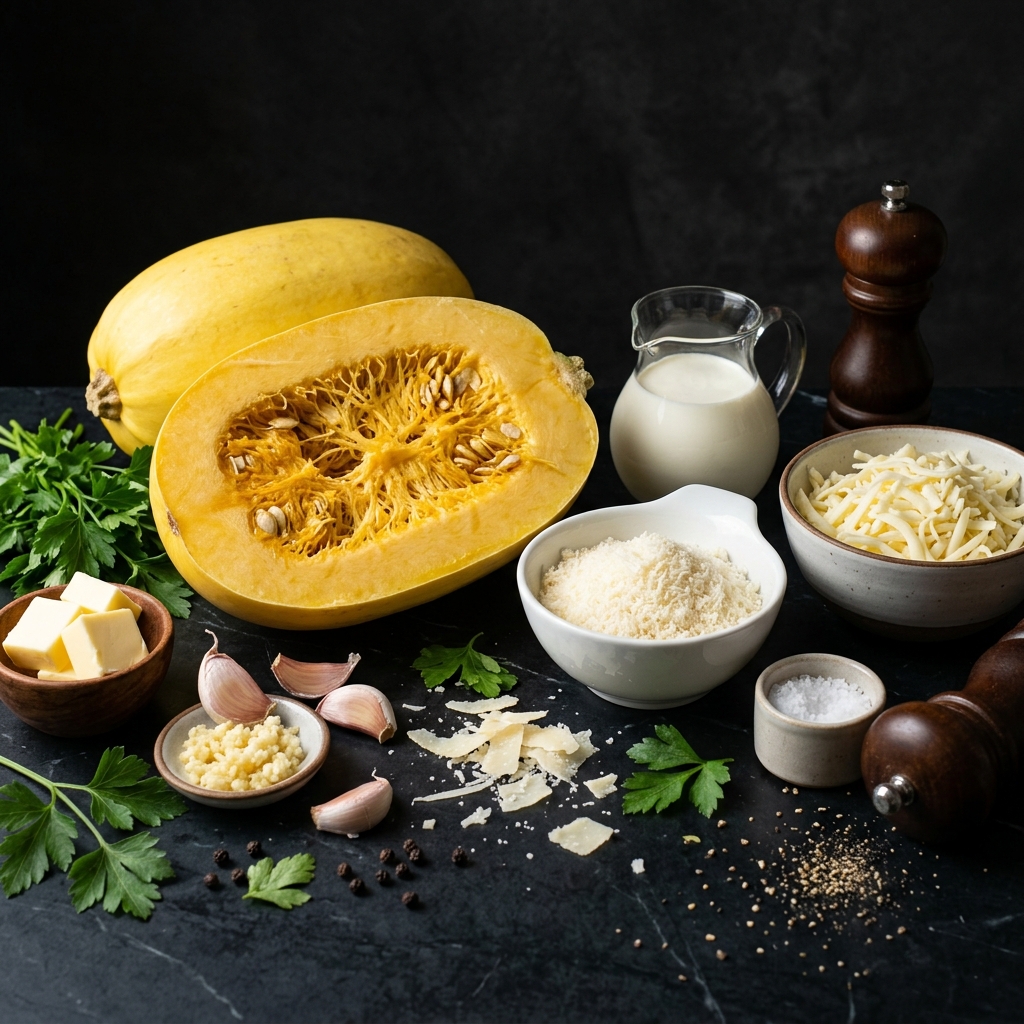
Spaghetti Squash
You will need one medium-sized spaghetti squash. Look for one that feels heavy for its size, has firm skin, and does not have large soft spots or significant bruising.
The squash is the foundation of the entire recipe, so choosing a good one makes a noticeable difference. After cooking, its flesh should pull away into tender strands without becoming watery or mushy.
Parmesan Cheese
Freshly grated Parmesan is one of the most important ingredients here. It provides the salty, nutty flavor that makes the gratin taste rich and savory.
For the smoothest sauce and best flavor, grate Parmesan from a wedge rather than relying entirely on pre-shredded cheese. Freshly grated cheese melts more naturally and blends beautifully into the creamy mixture.
You can also reserve a little Parmesan for the top. That small extra layer is what helps create the golden, toasted crust that makes a gratin so appealing.
Heavy Cream
Heavy cream gives the gratin its luxurious texture and helps carry the Parmesan and garlic flavors throughout the squash.
Because spaghetti squash naturally contains moisture, avoid adding excessive liquid. The goal is a creamy coating rather than a loose sauce pooling at the bottom of the baking dish.
Butter
Butter adds richness and helps round out the sharper flavor of the Parmesan. It is particularly useful when sautéing the garlic before combining it with the cream.
Garlic
Fresh garlic brings savory depth to the dish. A small amount goes a long way, especially when it is gently cooked in butter rather than browned heavily.
For the best flavor, mince the garlic finely so it distributes evenly through the creamy sauce.
Mozzarella or Melting Cheese
A modest amount of mozzarella can be added if you want a particularly stretchy, gooey topping. It is not the main flavor of the dish—the Parmesan should remain prominent—but it contributes wonderful melting quality.
Fresh Parsley
Fresh parsley adds a bright green contrast to the golden gratin and helps balance the richness of the cheese and cream. Add some before serving rather than baking all of it, so its fresh flavor remains noticeable.
Salt and Freshly Ground Black Pepper
Season carefully. Parmesan is naturally salty, so taste the creamy mixture before adding a large amount of additional salt.
Freshly ground black pepper adds gentle heat and helps bring out the nutty character of the cheese.
Olive Oil
A little olive oil is useful when roasting the squash. It helps the cut surface roast evenly and encourages flavorful browning.
How to Prepare Parmesan Spaghetti Squash Gratin
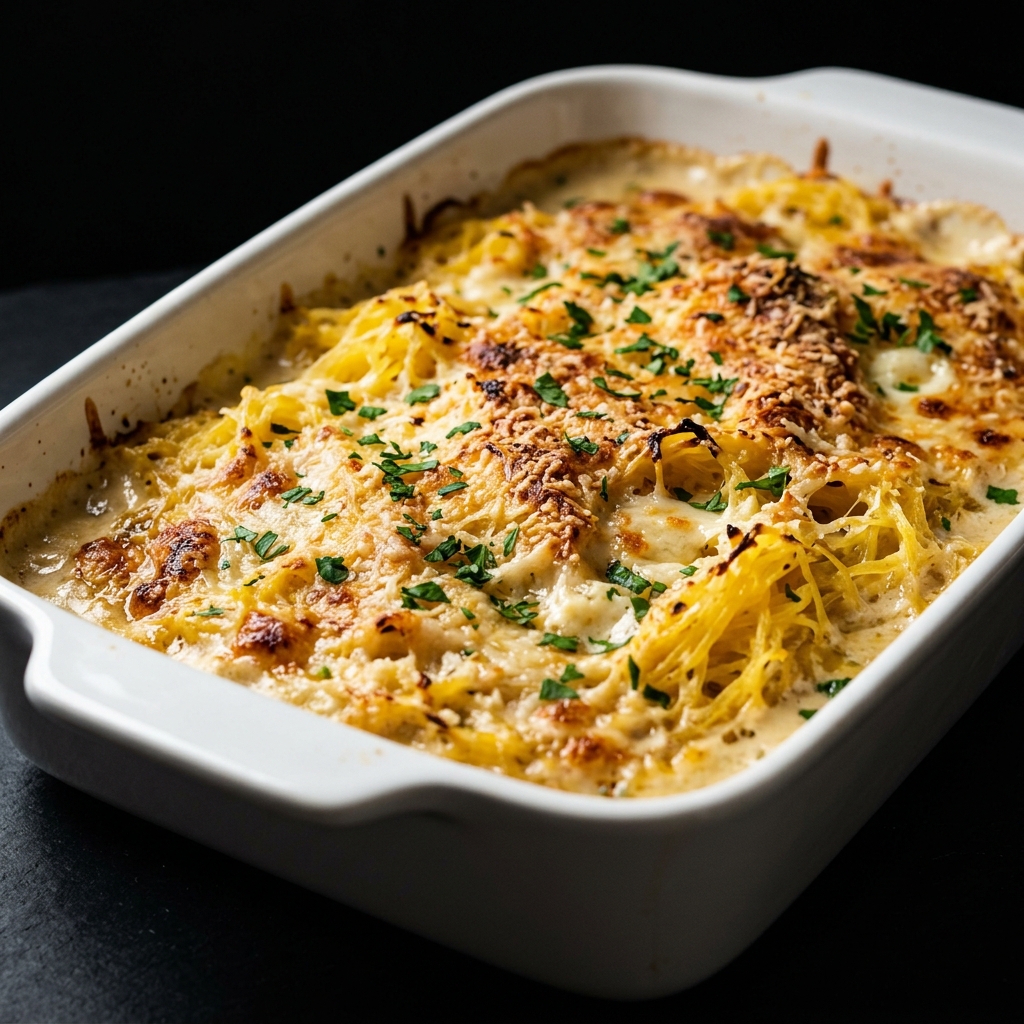
1. Prepare the Spaghetti Squash
Start by preheating your oven and preparing a baking sheet or roasting pan.
Carefully cut the spaghetti squash in half lengthwise. Because the skin can be quite firm, use a sturdy chef’s knife and work slowly. If the squash is particularly difficult to cut, you can soften it slightly in the microwave first, but always pierce it several times before microwaving.
Use a large spoon to scoop out the seeds and stringy center. You do not need to remove a thick layer of flesh; simply clean out the loose seeds and fibrous strands.
Brush the cut surfaces lightly with olive oil and season with a little salt and pepper.
2. Roast Until Tender
Place the squash cut-side down on the baking sheet. Roast until the flesh is tender enough to separate easily with a fork.
Depending on the size of your squash and the exact heat of your oven, this usually takes around 35 to 50 minutes.
One important point is to avoid overcooking it. Spaghetti squash should be tender enough to scrape into strands but should still have some structure. If it becomes extremely soft and watery, the finished gratin may lack the texture you want.
Once cooked, allow the squash to cool just enough to handle safely.
3. Separate the Squash Into Strands
Turn the roasted squash halves over and use a fork to gently scrape the flesh from the skin.
Work from one side to the other, pulling the fork lengthwise through the flesh to create long strands.
Transfer the squash strands to a large bowl. If the squash appears particularly wet, allow some excess moisture to drain before continuing.
This step is worth taking your time with. Long, distinct strands give the gratin a much more satisfying texture than squash that has been mashed or aggressively stirred.
4. Prepare the Creamy Parmesan Sauce
Melt the butter in a saucepan over medium-low heat. Add the minced garlic and cook gently until fragrant.
Do not let the garlic become dark brown. Burnt garlic can introduce a bitter flavor that overwhelms the delicate cream and Parmesan.
Pour in the heavy cream and warm it gently. Add freshly grated Parmesan gradually, stirring as you go, until the cheese melts into a creamy mixture.
Season with freshly ground black pepper and taste before adding more salt.
If using mozzarella, you can stir a small amount into the sauce or reserve it primarily for the topping.
5. Combine the Squash and Sauce
Pour the creamy Parmesan mixture over the spaghetti squash strands.
Using tongs or a large spoon, gently toss everything together until the squash is evenly coated.
Avoid aggressively stirring or crushing the strands. The goal is to keep the squash recognizable while ensuring every bite receives some of the creamy Parmesan mixture.
At this stage, taste the mixture once more. This is your opportunity to adjust the seasoning before the gratin goes into the oven.
6. Transfer to a Baking Dish
Lightly grease a modern ceramic or oven-safe baking dish and transfer the coated squash into it.
Spread everything into an even layer without compressing it too firmly. A little space between the strands allows the creamy mixture to remain distributed throughout the dish.
Sprinkle the remaining Parmesan over the surface. If you are using mozzarella, add it now as well.
For an especially attractive finish, make sure the cheese reaches close to the edges of the dish. Those outer edges tend to brown beautifully during baking.
7. Bake Until Golden and Bubbling
Return the assembled gratin to the oven and bake until the cheese is melted, bubbling, and lightly golden.
For a deeper golden crust, you can briefly place the dish under the broiler at the end. Watch it carefully because cheese can go from perfectly browned to burnt very quickly.
Once finished, remove the gratin and let it rest for several minutes before serving.
That short resting period matters. It allows the creamy sauce to settle around the squash strands instead of immediately running to the bottom of the dish.
The Secret to a Creamy, Not Watery Gratin
The biggest challenge when making a spaghetti squash gratin is managing moisture.
Unlike dried pasta, spaghetti squash naturally contains a significant amount of water. That is wonderful for keeping the vegetable tender, but too much moisture can dilute the cheese sauce and leave you with a watery gratin.
The first solution is proper roasting. Roast the squash until tender but not collapsed, and allow excess moisture to escape rather than trapping it inside the strands.
The second solution is moderation with the cream. You want enough cream to create a luxurious coating, but not so much that the squash is swimming in sauce.
Finally, give the finished gratin a few minutes to rest after baking. The sauce will thicken slightly as it cools, giving you that creamy, scoopable texture that makes this dish so satisfying.
What Makes This Gratin So Irresistible?
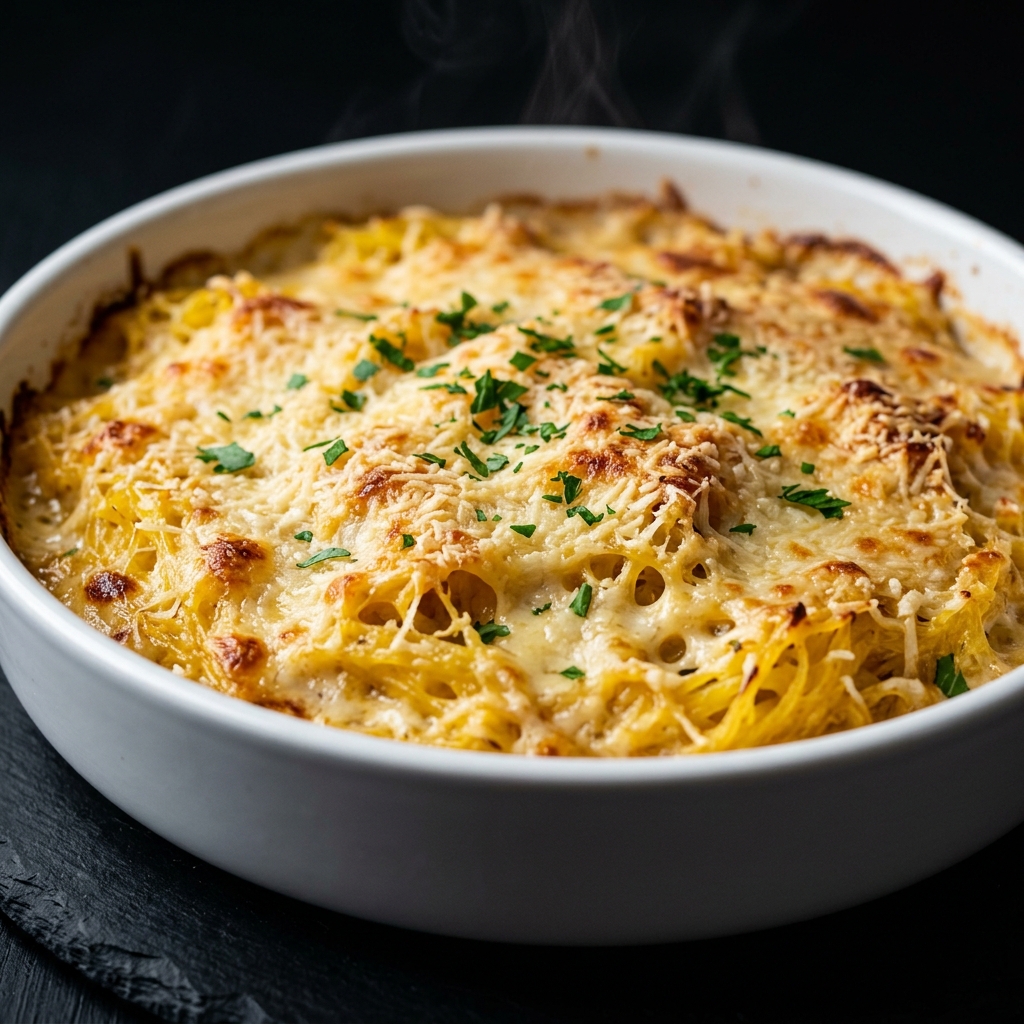
The magic is in the contrast. The spaghetti squash becomes tender and silky while the Parmesan creates a rich, savory backbone. On top, the cheese develops golden toasted spots and crisp edges, while the center remains creamy and soft.
Every forkful gives you several textures at once. You get tender squash strands, a velvety cheese coating, and little caramelized bits of Parmesan from the top.
That contrast is also why presentation matters. Serve the gratin while it is still warm, with a little freshly chopped parsley scattered over the top. The bright green against the golden cheese immediately makes the dish look fresher and more inviting.
And although this recipe is comforting enough for a holiday table or Sunday dinner, it is simple enough to prepare for an ordinary weeknight. That combination of special-occasion appearance and practical preparation is one of the reasons this recipe deserves a place in your regular rotation.
Variations to Try
Garlic and Herb Parmesan Gratin
For a more herb-forward version, add fresh thyme, rosemary, or Italian parsley to the creamy Parmesan mixture. Use the herbs moderately so they enhance rather than overpower the cheese.
Extra-Cheesy Spaghetti Squash Gratin
If you want an especially decadent result, combine Parmesan with mozzarella or another good melting cheese. Parmesan provides the nutty flavor while the melting cheese creates a gooier topping.
Spinach Parmesan Gratin
Add a handful of cooked, well-drained spinach to the squash mixture. Make sure as much excess water as possible has been squeezed from the spinach before adding it so you do not introduce unnecessary moisture.
Mushroom Parmesan Gratin
Sauté sliced mushrooms until deeply browned before folding them into the squash. Properly browned mushrooms add an earthy, savory flavor that works beautifully with Parmesan.
Spicy Parmesan Gratin
For a little heat, add crushed red pepper flakes or a pinch of cayenne to the cream sauce. Start with a small amount and adjust according to your preference.
Expert Tips for the Best Results
Choose the right squash. A medium spaghetti squash with firm skin and no obvious soft spots is usually easier to roast evenly and produces a good amount of usable strands.
Do not drown the squash in sauce. The sauce should coat the strands generously without turning the dish into a liquid-heavy casserole.
Grate your Parmesan fresh. Freshly grated Parmesan generally melts more smoothly and delivers better flavor than many pre-grated alternatives.
Keep the garlic gentle. Garlic should become fragrant and lightly softened. Dark, burnt garlic can make the entire sauce taste bitter.
Do not skip the resting time. Five to ten minutes after baking gives the gratin time to settle and makes serving much easier.
Use the broiler carefully. If you want a deeply golden cheese crust, broil briefly at the end and stay nearby. The difference between beautifully browned cheese and burnt cheese can happen in seconds.
Season in stages. Parmesan already contains plenty of salt, so season the squash lightly and adjust the sauce after the cheese has been incorporated.
Let the squash remain strand-like. Gentle handling creates a more attractive and satisfying gratin. Overmixing can turn the squash into a soft, mashed mixture.
Do not rush the roasting stage. Properly roasted squash is the foundation of the recipe. If the strands are still firm and crunchy, they will not magically become perfect during the short final baking period.
Serve it warm. This is when the cheese is at its most appealing, the sauce is creamy, and the topping still has its freshly baked texture.
Make-Ahead Options
Parmesan Spaghetti Squash Gratin is a convenient dish to prepare ahead of time, especially when you are planning a family dinner, holiday meal, or gathering where you do not want every dish competing for your attention at the last minute.
You can roast the spaghetti squash a day ahead, separate it into strands, and refrigerate it in an airtight container. You can also prepare the creamy Parmesan mixture ahead of time and refrigerate it separately. When you are ready to assemble the gratin, gently combine the squash and sauce, transfer everything to the baking dish, add the cheese topping, and bake until hot and golden.
For the best texture, I recommend assembling the gratin no more than a day ahead. If it sits assembled for too long, the squash can gradually release moisture into the sauce.
If baking directly from the refrigerator, allow the dish to sit at room temperature briefly while the oven preheats, then expect to add a few extra minutes to the baking time. The center should be thoroughly hot and bubbling before serving.
What to Serve With Parmesan Spaghetti Squash Gratin
Although this gratin is substantial enough to enjoy as a vegetarian main dish, it is particularly versatile as a side. Its creamy Parmesan flavor pairs beautifully with simple proteins and fresh vegetables.
Roasted Chicken
A simple roasted chicken is an excellent match. The mild, savory flavor of the chicken allows the creamy Parmesan squash to remain the star of the side dish without creating too many competing flavors.
Grilled Chicken
For a lighter dinner, serve the gratin with grilled chicken seasoned with garlic, herbs, black pepper, and a little lemon. The fresh acidity from the lemon helps balance the richness of the cheese.
Roast Beef
The earthy flavor of roast beef works particularly well with the nutty Parmesan topping. Add a simple green vegetable or crisp salad to complete the meal.
Grilled or Baked Fish
For a lighter combination, pair the gratin with salmon, cod, or another mild fish. A squeeze of fresh lemon over the fish adds brightness and cuts through the creamy texture of the gratin.
Green Salad
A crisp salad is one of the easiest ways to balance this dish. Try mixed greens with cucumber, tomatoes, thinly sliced red onion, and a light lemon vinaigrette.
Roasted Vegetables
Roasted broccoli, asparagus, Brussels sprouts, or green beans can turn the gratin into part of a colorful vegetable-focused dinner.
Crusty Bread
If you are not specifically trying to keep the meal lower in carbohydrates, a piece of warm crusty bread is wonderful for scooping up any creamy Parmesan sauce left on the plate.
How to Store Parmesan Spaghetti Squash Gratin
Allow leftover gratin to cool before transferring it to an airtight container. Refrigerate promptly and use within about 3 to 4 days for the best quality.
If you have a large amount remaining, you can divide it into individual portions before refrigerating. This makes reheating much easier and means you only warm what you intend to eat.
For longer storage, the gratin can be frozen, although the texture may change slightly after thawing. The cream-based sauce and squash can release some moisture during freezing and reheating, so the freshly baked version will always have the best texture.
If freezing, place cooled portions in freezer-safe containers, seal well, and label them with the date. Thaw overnight in the refrigerator before reheating.
How to Reheat It Without Drying It Out
The oven is generally the best option when reheating a larger portion because it allows the gratin to warm gradually while helping the cheese topping regain some of its baked texture.
Place the gratin in an oven-safe dish and cover it loosely with foil. Warm it until heated through, then remove the foil for the final few minutes so the surface can become lightly crisp again.
For an individual serving, the microwave is faster. Heat it in short intervals, stirring gently if appropriate, until warm. Avoid overheating because excessive microwave time can cause the creamy sauce to separate and the squash to become softer.
If the gratin seems slightly dry after refrigeration, a very small splash of cream or milk can help restore some moisture before reheating.
Can You Freeze Spaghetti Squash Gratin?
Yes, but freezing is best considered a convenience option rather than the ideal method for preserving the original texture.
Spaghetti squash contains a lot of natural moisture, and freezing can cause some of that moisture to separate when the squash thaws. The creamy sauce may also become slightly less smooth.
For the best frozen result, cool the gratin completely, portion it into airtight freezer-safe containers, and freeze promptly. Thaw it overnight in the refrigerator rather than leaving it on the counter.
Reheat gently in the oven and finish uncovered so excess moisture can evaporate and the cheese topping can regain some color.
Common Mistakes to Avoid
Using Too Much Liquid
This is probably the most common problem with spaghetti squash gratin. Remember that the squash itself contributes moisture, so the sauce should be creamy and concentrated rather than excessively thin.
Overcooking the Squash
If the squash becomes overly soft before the gratin is assembled, it can lose its noodle-like structure. Roast it until tender enough to scrape into strands while still retaining some body.
Adding Too Much Salt
Parmesan is naturally salty. Season gradually and taste the sauce before adding additional salt.
Burning the Garlic
Garlic should be gently softened and fragrant. If it becomes dark brown or black, its bitterness can dominate the delicate cream sauce.
Skipping the Browning
The golden top is more than decoration. Browning creates additional roasted, nutty flavors and gives the gratin a wonderful textural contrast.
Serving Immediately
Give the gratin a few minutes to rest. This allows the sauce to settle and makes the portions easier to serve neatly.
Frequently Asked Questions
Do I need to peel spaghetti squash before cooking?
No. Spaghetti squash is normally roasted in its skin. Once cooked, the flesh can be scraped away from the skin with a fork.
The skin is not typically eaten in this preparation, but it acts as a natural container while the squash roasts.
Can I use pre-shredded Parmesan?
You can, but freshly grated Parmesan is preferable. Freshly grated cheese generally melts more smoothly and has a more pronounced nutty flavor.
If pre-shredded Parmesan is what you have available, use it, but check the package because some pre-shredded cheeses contain additives designed to prevent clumping, which can affect how smoothly they melt.
Why is my spaghetti squash gratin watery?
Excess moisture usually comes from the squash itself or from adding too much cream. Spaghetti squash naturally releases water as it cooks.
Roast the squash properly, allow excess moisture to escape, and avoid using more cream than necessary. You can also let the scraped squash strands sit briefly in a colander before combining them with the sauce.
Can I make this recipe without heavy cream?
Yes. You can experiment with half-and-half or whole milk, although the resulting sauce will generally be lighter and less rich.
If using a thinner dairy product, be especially careful not to add too much liquid. The goal is still a thick, creamy coating rather than a loose sauce.
Is Parmesan Spaghetti Squash Gratin vegetarian?
A traditional version is vegetarian because it contains vegetables, dairy, and cheese rather than meat.
However, if strict vegetarian requirements are important, check the Parmesan you purchase. Some traditionally produced Parmesan-style cheeses use animal-derived rennet.
Is spaghetti squash keto-friendly?
Spaghetti squash is lower in carbohydrates than conventional wheat pasta, which is why it is often used as a pasta alternative. However, it is not automatically suitable for every ketogenic diet.
The total carbohydrate content depends on the amount of squash and other ingredients used, as well as the serving size. Anyone following a strict ketogenic plan should calculate the nutrition for the exact ingredients and portion they consume.
Can I add meat to the gratin?
Absolutely. Cooked bacon, diced chicken, Italian sausage, or shredded rotisserie chicken can be incorporated if you want to turn the gratin into a heartier meal.
If adding meat, make sure it is fully cooked before mixing it into the squash. Crispy bacon is particularly good because its salty, smoky flavor contrasts beautifully with the creamy Parmesan sauce.
Can I add other vegetables?
Yes. Mushrooms, spinach, broccoli, roasted peppers, and caramelized onions can all work well.
The key is to cook vegetables that contain significant moisture before adding them. Sautéing or roasting them first helps prevent the final gratin from becoming watery.
What cheese can I use instead of Parmesan?
Pecorino Romano can provide a sharper, saltier flavor, while Asiago offers a slightly milder nutty character. For additional meltability, mozzarella can be combined with Parmesan rather than replacing it entirely.
A combination of a flavorful hard cheese and a good melting cheese often produces the best balance of taste and texture.
How do I get an extra-crispy topping?
Use freshly grated Parmesan and make sure the surface of the gratin is exposed to sufficient heat. You can also add a small amount of mozzarella for additional browning.
For an even more textured crust, a light sprinkle of seasoned breadcrumbs can be added before baking, although this will change the recipe from a strictly low-carb preparation.
A Few Final Chef’s Notes
The most important thing to remember about this recipe is that great spaghetti squash gratin depends on balance.
You want enough cream to make the squash luxurious, but not so much that the dish becomes watery. You want plenty of Parmesan for flavor, but enough restraint that the saltiness does not overpower the squash. You want the top beautifully browned, but the interior should remain creamy and tender.
Think of the final dish as a combination of textures rather than simply a baked vegetable. The squash should still have recognizable strands. The sauce should cling to them rather than pool around them. And the top should provide that irresistible contrast of melted and lightly crisp cheese.
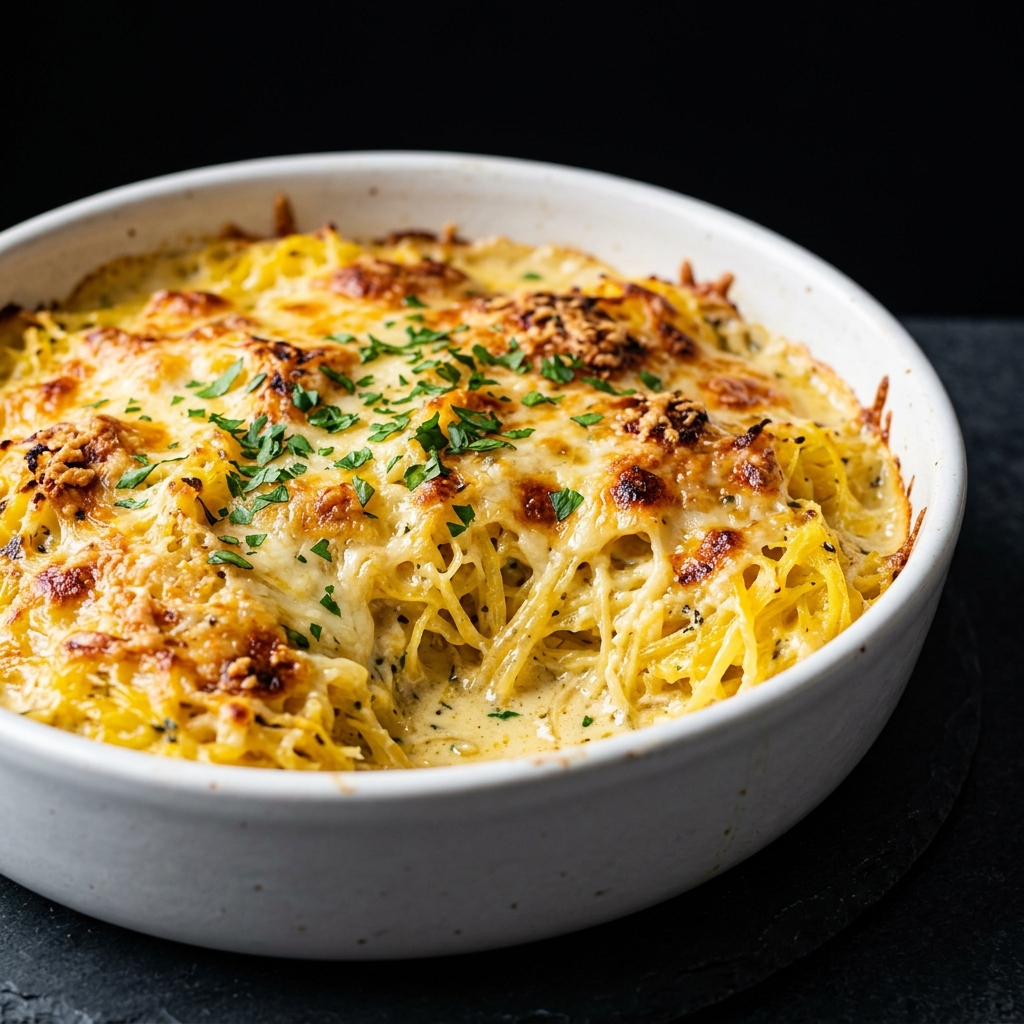
For the best presentation, bring the gratin to the table while it is still warm, garnish it with fresh parsley, and let everyone see the golden Parmesan crust before serving.
If you are making it for guests, bake it in an attractive white ceramic dish. The contrast between the golden squash, browned cheese, green herbs, and white dish makes the gratin especially inviting.
And don’t underestimate leftovers. While the gratin is at its absolute best fresh from the oven, refrigerated leftovers make an excellent next-day lunch or easy dinner. Reheat gently and give the top a few minutes of uncovered heat to bring back some of that freshly baked character.
Parmesan Spaghetti Squash Gratin
Ingredients
Equipment
Method
- Roast the Spaghetti Squash
- Preheat the oven to 400°F (200°C).
- Carefully cut the spaghetti squash in half lengthwise. Scoop out and discard the seeds and loose fibrous strands from the center.
- Brush the cut sides lightly with olive oil and season with salt and black pepper. Place the squash cut-side down on a baking sheet.
- Roast for approximately 35–50 minutes, depending on the size of the squash, until the flesh is tender and can be easily separated with a fork.
- Make the Squash Strands
- Remove the roasted squash from the oven and allow it to cool for several minutes until it is safe to handle.
- Turn the squash halves cut-side up. Using a fork, gently scrape the flesh lengthwise to create spaghetti-like strands.
- Transfer the strands to a large mixing bowl. If the squash seems particularly wet, allow the strands to drain briefly to remove excess moisture.
- Prepare the Parmesan Sauce
- Melt the butter in a medium saucepan over medium-low heat.
- Add the minced garlic and cook for about 30–60 seconds, stirring frequently, until fragrant. Do not allow the garlic to burn.
- Pour in the heavy cream and gently warm it.
- Gradually add about ¾ cup of the grated Parmesan, stirring continuously until melted and incorporated into a smooth, creamy sauce.
- Season with black pepper and taste before adding additional salt, since Parmesan is naturally salty.
- Combine the Squash and Sauce
- Pour the creamy Parmesan sauce over the spaghetti squash strands.
- Using tongs or a large spoon, gently toss until the squash is evenly coated. Avoid vigorous stirring so the strands remain intact.
- If using mozzarella, you can stir a small amount into the mixture for extra creaminess and reserve the rest for the topping.
- Assemble the Gratin
- Lightly grease a 9 × 13-inch baking dish or similarly sized oven-safe casserole dish.
- Transfer the creamy spaghetti squash mixture into the dish and spread it into an even layer.
- Sprinkle the remaining Parmesan over the top. Add the mozzarella if using.
- Bake Until Golden
- Place the baking dish in the 400°F (200°C) oven and bake for approximately 10–15 minutes, or until the cheese is melted, bubbling, and lightly golden.
- For a deeper golden crust, place the gratin under the broiler for 1–2 minutes at the end. Watch it closely to prevent the cheese from burning.
- Rest and Serve
- Remove the gratin from the oven and allow it to rest for 5–10 minutes.
- Garnish with freshly chopped parsley and serve warm.
Notes
Control moisture: If your squash releases a lot of water, let the strands drain briefly before mixing them with the sauce.
Use freshly grated Parmesan: It melts more smoothly and provides better flavor than many pre-shredded varieties.
Watch the salt: Parmesan is naturally salty, so taste the sauce before adding extra salt.
For extra browning: Broil the assembled gratin for 1–2 minutes at the end, watching carefully.
Make ahead: The roasted squash and Parmesan sauce can be prepared separately up to 1 day ahead and refrigerated. Assemble and bake when ready.
Storage: Refrigerate leftovers in an airtight container for up to 3–4 days.
Reheating: Reheat gently in the oven or microwave. For the best texture, use the oven and uncover during the final few minutes.
Vegetarian: This recipe is vegetarian, although strict vegetarians should check the Parmesan label for the type of rennet used.
Gluten-free: The basic recipe is naturally gluten-free, but check packaged ingredients if gluten contamination is a concern.
Low-carb: Spaghetti squash is lower in carbohydrates than traditional pasta, making this a lighter alternative to conventional pasta gratins. Exact carbohydrate content depends on serving size.
Keto: Whether it fits a strict ketogenic diet depends on the portion size and the individual's carbohydrate target.

Hi, I’m Clara, the creator of Barakala. I love sharing simple, comforting, and delicious recipes that make everyday cooking easier and more enjoyable for home cooks.