Ingredients
Equipment
Method
Prepare the Lamb
- Pat the lamb shoulder dry with paper towels. Trim away any excessive surface fat, but leave some fat intact to help keep the meat rich and flavorful during slow cooking.
- Season all sides generously with salt and freshly ground black pepper.
Sear the Lamb
- Heat the olive oil in a large skillet over medium-high heat.
- Place the seasoned lamb shoulder in the skillet and sear it on all major sides until nicely browned. This should take approximately 8–10 minutes in total, depending on the size of the lamb.
- Searing is optional, but it adds a deeper, more savory flavor to the finished dish.
Prepare the Slow Cooker
- Arrange the sliced onion, chopped carrots, celery, garlic, rosemary, and thyme in the bottom of the slow cooker.
- Place the seared lamb shoulder on top of the vegetables.
Add the Stock and Seasonings
- Pour the lamb or beef stock around the lamb rather than directly over the top.
- Add the Worcestershire sauce, if using, along with the smoked paprika and oregano.
- The lamb does not need to be completely submerged in liquid. The slow cooker will retain moisture, and the lamb will release additional juices as it cooks.
Slow Cook the Lamb
- Cover the slow cooker with its lid.
- Cook on LOW for approximately 8 hours, or until the lamb is exceptionally tender and pulls apart easily with a fork.
- Cooking time may vary depending on the size of the lamb, whether it is bone-in or boneless, and the performance of your slow cooker.
- The lamb is ready when it shreds easily without significant resistance.
Rest the Lamb
- Carefully transfer the cooked lamb to a large plate or cutting board.
- Allow it to rest for approximately 10–15 minutes before shredding.
- This makes the meat easier to handle and helps preserve its juices.
Shred the Lamb
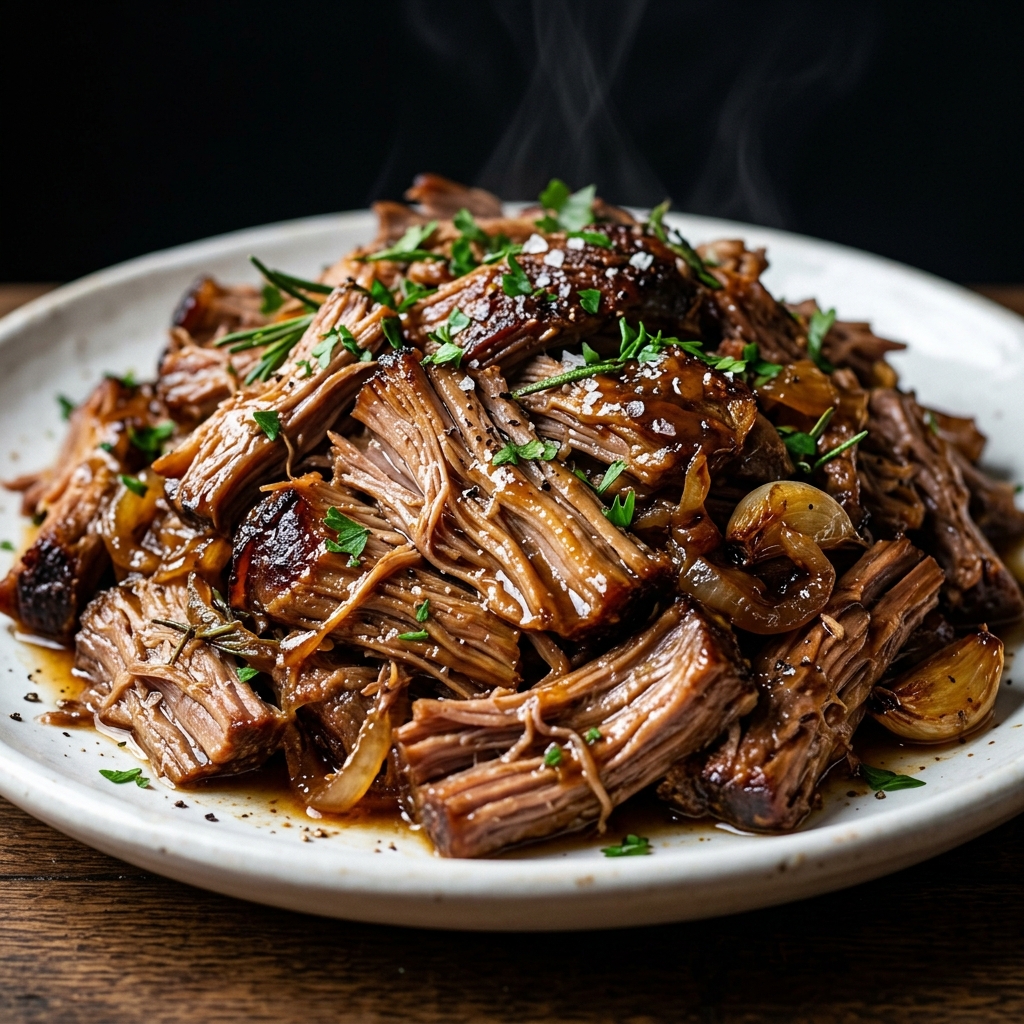
- Use two forks to pull the lamb apart into tender strands.
- Remove any bones, large pieces of excess fat, or tough connective tissue.
- Avoid shredding the meat too finely; slightly larger strands provide a more satisfying texture.
Prepare the Cooking Juices
- If desired, strain the cooking liquid to remove the vegetables and herb stems.
- Taste the juices and adjust the seasoning as needed.
- For a richer sauce, transfer the liquid to a saucepan and simmer it for several minutes to concentrate the flavor.
Combine and Serve
- Return some of the shredded lamb to the slow cooker or a serving dish.
- Toss it gently with a little of the reserved cooking liquid to keep the meat moist and flavorful.
- Garnish with fresh parsley, rosemary, or thyme, and serve warm with your favorite side dishes.
Notes
Best cut: Lamb shoulder is recommended because its fat and connective tissue make it especially suitable for slow cooking.
Searing: Browning the lamb before slow cooking adds depth of flavor but can be skipped when you are short on time.
Cooking time: Use tenderness as your guide. If the lamb is still tough, continue cooking until it pulls apart easily.
Cooking liquid: Avoid adding excessive stock. The lamb will release its own juices during cooking.
Flavor adjustment: Add lemon juice just before serving for a brighter flavor that balances the richness of the lamb.
Storage: Refrigerate leftovers in an airtight container for 3–4 days. Store the lamb with some of its cooking juices to help retain moisture.
Freezing: Freeze in airtight, freezer-safe containers with some cooking liquid for up to approximately 2–3 months for best quality.
Serving ideas: Enjoy with mashed potatoes, roasted vegetables, rice, couscous, warm flatbread, fresh salad, or coleslaw.
Gluten-free option: Use certified gluten-free stock and check the label of any Worcestershire sauce or prepared seasoning blends.
Low-carb and keto option: Serve with cauliflower mash, roasted low-carb vegetables, or a fresh green salad instead of potatoes, rice, or bread.
Searing: Browning the lamb before slow cooking adds depth of flavor but can be skipped when you are short on time.
Cooking time: Use tenderness as your guide. If the lamb is still tough, continue cooking until it pulls apart easily.
Cooking liquid: Avoid adding excessive stock. The lamb will release its own juices during cooking.
Flavor adjustment: Add lemon juice just before serving for a brighter flavor that balances the richness of the lamb.
Storage: Refrigerate leftovers in an airtight container for 3–4 days. Store the lamb with some of its cooking juices to help retain moisture.
Freezing: Freeze in airtight, freezer-safe containers with some cooking liquid for up to approximately 2–3 months for best quality.
Serving ideas: Enjoy with mashed potatoes, roasted vegetables, rice, couscous, warm flatbread, fresh salad, or coleslaw.
Gluten-free option: Use certified gluten-free stock and check the label of any Worcestershire sauce or prepared seasoning blends.
Low-carb and keto option: Serve with cauliflower mash, roasted low-carb vegetables, or a fresh green salad instead of potatoes, rice, or bread.