Ingredients
Equipment
Method
- Prepare the chicken: Pat the chicken thighs thoroughly dry with paper towels. Trim away any large pieces of excess fat, then season both sides with salt, black pepper, and garlic powder.
- Prepare the teriyaki sauce: In a bowl, whisk together the soy sauce, honey or brown sugar, rice vinegar, sesame oil, minced garlic, grated ginger, and ½ cup water.
- Make the slurry: In a separate small bowl, whisk the cornstarch with 2 tablespoons of cold water until completely smooth. Set aside.
- Heat the skillet: Place a large skillet over medium-high heat and add the cooking oil. Allow the oil to become hot before adding the chicken.
- Brown the chicken: Arrange the chicken thighs in a single layer without overcrowding the pan. Cook for about 4–6 minutes on the first side, until deeply golden brown. Turn and cook for another 3–5 minutes.
- Add the sauce: Reduce the heat to medium and pour the prepared teriyaki sauce into the skillet. Use a wooden spoon or spatula to gently scrape up the browned bits from the bottom of the pan.
- Simmer: Allow the chicken to simmer gently in the sauce, turning the thighs occasionally so the sauce coats all sides. Continue cooking until the chicken reaches an internal temperature of at least 165°F (74°C).
- Thicken the glaze: Stir the cornstarch slurry again, then gradually pour it into the simmering sauce while stirring. Continue cooking for 1–2 minutes, or until the sauce becomes thick, glossy, and sticky.
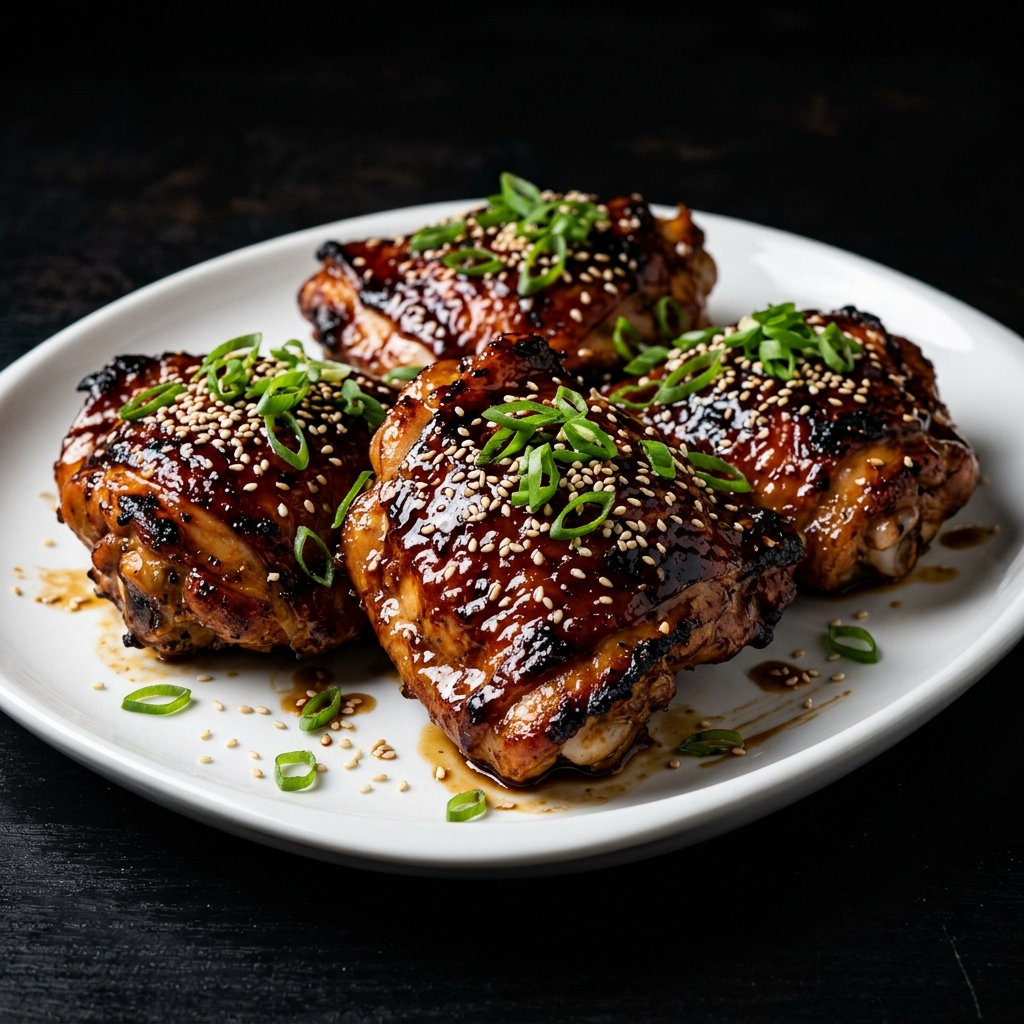
- Glaze the chicken: Turn the chicken thighs several times in the thickened sauce, spooning the glaze over the top until every piece is generously coated.
- Garnish: Remove the skillet from the heat and allow the chicken to rest for a few minutes. Transfer to a serving plate and garnish with sliced green onions and toasted sesame seeds.
- Serve: Spoon any remaining teriyaki glaze over the chicken and serve immediately with steamed rice, vegetables, noodles, or your favorite side dishes.
Notes
Chicken thighs: Boneless, skinless thighs are recommended because they stay exceptionally juicy. Bone-in thighs can also be used but require additional cooking time.
Soy sauce: Low-sodium soy sauce gives you better control over the saltiness. Regular soy sauce can be used, but you may want to reduce or omit the added salt.
Gluten-free option: Use certified gluten-free soy sauce or tamari if needed.
Sweetener: Honey produces an especially glossy glaze, while brown sugar provides a deeper caramelized flavor.
For extra heat: Add red pepper flakes, sriracha, chili garlic sauce, or finely sliced fresh chili.
For the best browning: Pat the chicken dry and avoid overcrowding the skillet.
Sauce consistency: If the glaze becomes too thick, loosen it with a small splash of water. If it is too thin, simmer it uncovered for another minute or two.
Storage: Refrigerate leftovers in an airtight container for up to 3–4 days. Reheat gently in a skillet with a splash of water to loosen the glaze.
Serving suggestion: Serve over jasmine or white rice with steamed broccoli, green beans, carrots, bell peppers, or stir-fried vegetables.
Soy sauce: Low-sodium soy sauce gives you better control over the saltiness. Regular soy sauce can be used, but you may want to reduce or omit the added salt.
Gluten-free option: Use certified gluten-free soy sauce or tamari if needed.
Sweetener: Honey produces an especially glossy glaze, while brown sugar provides a deeper caramelized flavor.
For extra heat: Add red pepper flakes, sriracha, chili garlic sauce, or finely sliced fresh chili.
For the best browning: Pat the chicken dry and avoid overcrowding the skillet.
Sauce consistency: If the glaze becomes too thick, loosen it with a small splash of water. If it is too thin, simmer it uncovered for another minute or two.
Storage: Refrigerate leftovers in an airtight container for up to 3–4 days. Reheat gently in a skillet with a splash of water to loosen the glaze.
Serving suggestion: Serve over jasmine or white rice with steamed broccoli, green beans, carrots, bell peppers, or stir-fried vegetables.