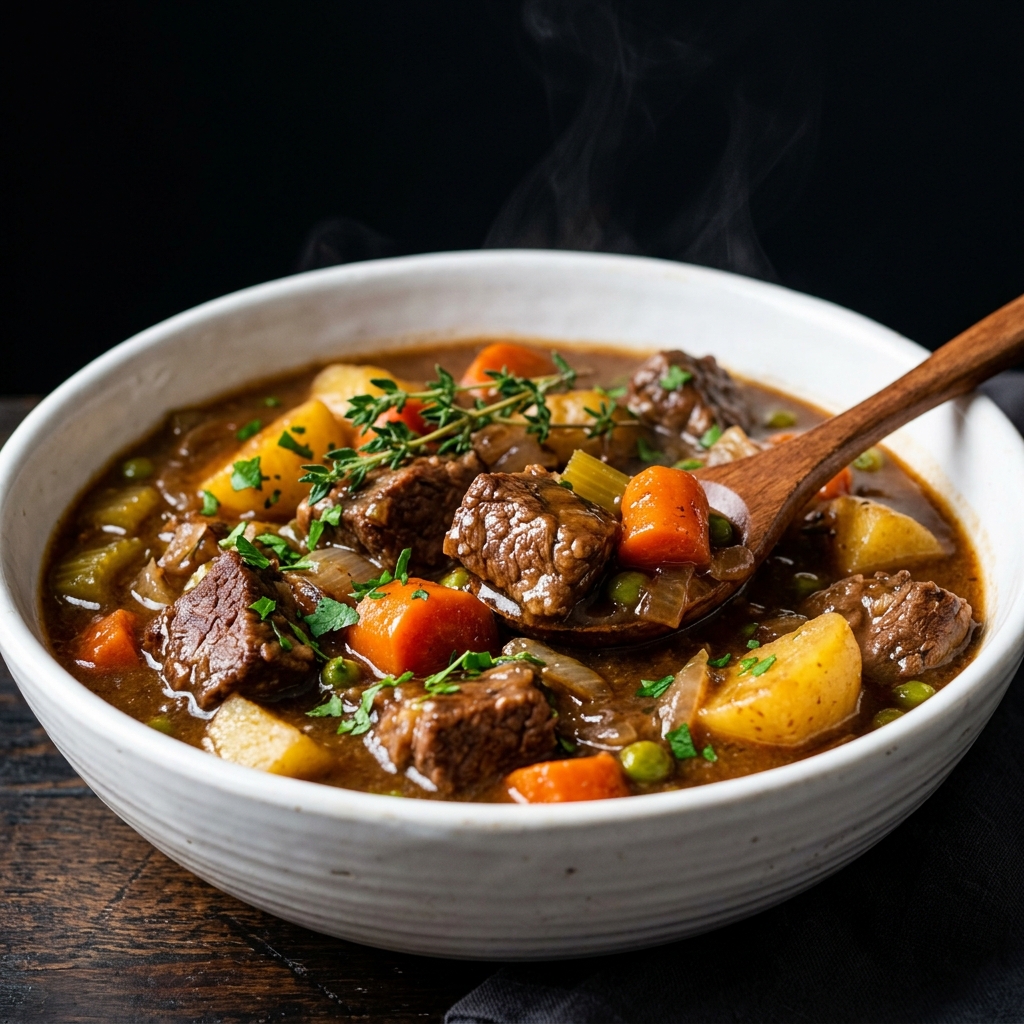
There are few meals as comforting as a pot of classic beef stew slowly simmering until the beef is tender, the vegetables are perfectly cooked, and the gravy becomes rich and deeply savory. This is the kind of homemade dinner that fills the kitchen with an irresistible aroma and turns simple ingredients into something truly special.
Ingredients for Classic Beef Stew

The ingredient list is straightforward, but choosing the right ingredients makes a noticeable difference in the finished stew.
Beef Stew Meat
Use about 2 pounds of beef chuck, cut into bite-sized chunks. Chuck roast is one of the best choices because it contains enough connective tissue and fat to become exceptionally tender during slow cooking.
You can purchase pre-cut stew meat for convenience, but cutting your own chuck roast allows you to control the size of the pieces. Aim for roughly 1½-inch chunks so the beef remains substantial after cooking.
Carrots
Use about 3 to 4 medium carrots, peeled and cut into thick slices or chunks. Carrots provide natural sweetness and a beautiful orange color.
Avoid cutting them too thinly, especially if you plan to simmer the stew for a long time. Larger pieces hold their shape better and provide a pleasant texture.
Potatoes
About 1½ pounds of Yukon Gold or other waxy potatoes work beautifully. Cut them into similarly sized chunks.
Yukon Gold potatoes are particularly good because they become tender and creamy without falling apart as easily as some starchy potatoes.
Onion
One large yellow onion provides the aromatic foundation of the stew. Dice it fairly small so it softens into the gravy and contributes sweetness and depth.
Garlic
Use 3 to 4 cloves of fresh garlic, minced. Fresh garlic gives the stew a much more rounded aroma than garlic powder.
Celery
Two to three celery stalks add another layer of savory flavor. Slice them into bite-sized pieces.
Tomato Paste
About 2 tablespoons of tomato paste adds color, richness, and subtle acidity. One important chef’s trick is to cook the tomato paste briefly with the aromatics rather than simply stirring it into the liquid.
That short cooking step helps develop a deeper, more rounded flavor.
Beef Broth
Use approximately 4 cups of beef broth. Choose a flavorful broth or stock because it becomes the foundation of your gravy.
If your broth is particularly salty, wait until later in the cooking process before adding additional salt.
Flour
About ¼ cup all-purpose flour helps coat the beef and contributes to a thicker, more traditional stew gravy.
For a gluten-free version, use a suitable gluten-free flour blend or another gluten-free thickening method.
Fresh or Dried Herbs
Classic seasonings include 1 teaspoon dried thyme and 1 to 2 bay leaves. Fresh thyme can also be used if available.
You can add a small amount of fresh parsley at the end for freshness and color.
Seasonings
Keep the seasoning simple: kosher salt and freshly ground black pepper are essential. The long cooking time allows the beef, vegetables, broth, herbs, and aromatics to create most of the flavor.
Cooking Oil
Use a neutral high-heat oil such as avocado, canola, or vegetable oil for browning the beef.
How to Make Classic Beef Stew
The preparation is simple, but the order of the steps matters. Don’t rush the browning stage—it is one of the most important parts of creating a deeply flavorful stew.
1. Prepare the Beef
Pat the beef chunks thoroughly dry with paper towels.
This small step is easy to overlook, but it makes a major difference. Wet beef tends to steam instead of brown, while dry beef develops a much better seared crust.
Season the beef generously with salt and black pepper.
If you’re using flour to thicken the stew, lightly toss the beef with the flour, shaking off any excess.
2. Heat the Pot
Place a large heavy-bottomed Dutch oven or stew pot over medium-high heat.
Add a thin layer of cooking oil and allow it to become hot but not smoking.
A heavy pot is ideal because it distributes heat evenly and maintains a steady temperature throughout cooking.
3. Brown the Beef in Batches
Add the beef in a single layer, making sure you don’t overcrowd the pot.
Brown the pieces for several minutes on each side until they develop a deep golden-brown crust.
Don’t worry about cooking the beef through at this point. The goal is to develop color, not finish the meat.
Transfer the browned beef to a plate and repeat with the remaining pieces.
Chef’s tip: If the pot becomes crowded, the beef releases moisture and begins steaming. Cooking in batches takes a little longer, but the additional flavor is absolutely worth it.
4. Sauté the Aromatics
Reduce the heat slightly and add the diced onion and celery to the same pot.
Cook for several minutes, stirring occasionally and scraping up some of the browned bits from the bottom.
Those browned bits are packed with flavor. As the vegetables release moisture, they help loosen them from the bottom of the pot.
Add the minced garlic and cook for about 30 seconds, just until fragrant.
5. Cook the Tomato Paste
Add the tomato paste and stir it into the vegetables.
Cook for approximately 1 to 2 minutes.
The tomato paste should darken slightly. This helps remove some of its raw sharpness and develops a richer flavor.
6. Deglaze the Pot
Slowly pour in some of the beef broth while scraping the bottom of the pot with a wooden spoon.
Make sure you loosen as many browned bits as possible.
This is one of the easiest ways to capture all the flavor created during browning rather than leaving it stuck to the bottom of the pot.
7. Return the Beef to the Pot
Add the browned beef and any juices that accumulated on the plate back into the pot.
Pour in the remaining beef broth and add the thyme and bay leaves.
The liquid should come close to covering the beef, although it doesn’t necessarily need to completely submerge every piece.
8. Bring the Stew to a Gentle Simmer
Increase the heat briefly until the liquid reaches a gentle simmer.
Then reduce the heat to low.
You want small, steady bubbles rather than aggressive boiling.
Cover the pot partially and allow the stew to simmer gently for approximately 1½ hours, stirring occasionally.
9. Add the Potatoes and Carrots
After the beef has had time to begin tenderizing, add the potatoes and carrots.
Adding them later prevents the vegetables from becoming excessively soft during the long cooking process.
Continue simmering for another 30 to 45 minutes, or until the beef is fork-tender and the vegetables are cooked through.
10. Check the Gravy
Remove the bay leaves and check the consistency.
The gravy should be rich and thick enough to coat the back of a spoon while still being loose enough to ladle comfortably.
If it seems too thin, allow the stew to simmer uncovered for several minutes.
If it becomes too thick, add a small amount of additional beef broth.
Taste and adjust the salt and black pepper as needed.
11. Finish and Serve
Turn off the heat and let the stew rest for about 5 to 10 minutes.
Taste it one final time before serving.
Scatter freshly chopped parsley over the top for a bright finishing touch.
Serve the stew hot while the beef is tender and the gravy is rich and fragrant.
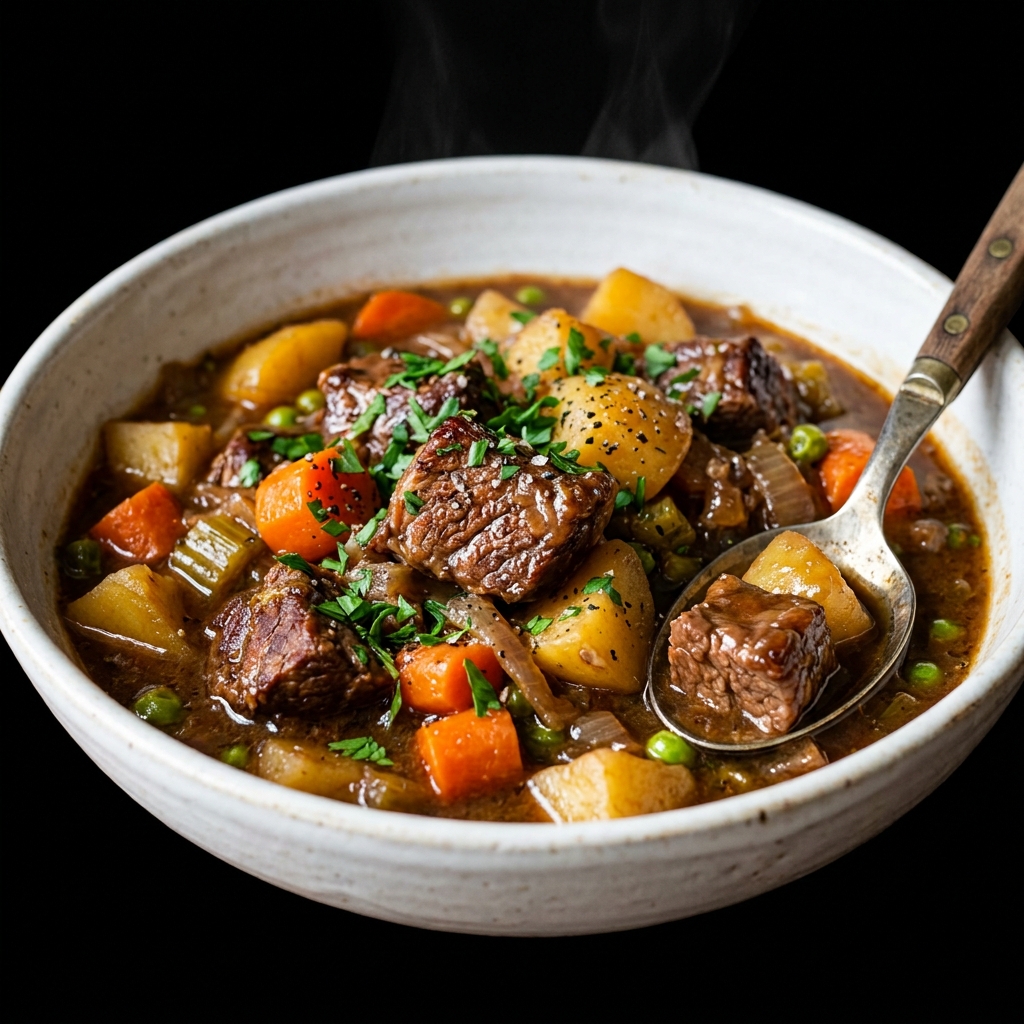
The Secret to Truly Tender Beef
Here’s something many home cooks discover after making beef stew a few times: tough beef isn’t necessarily bad beef—it may simply need more time.
Cuts such as chuck contain connective tissue that gradually breaks down during slow cooking. If the beef still feels chewy after the recommended cooking time, don’t immediately assume something went wrong. Give it more gentle cooking time.
The key is maintaining a gentle simmer rather than a hard boil. Vigorous boiling can make the exterior of the meat tighten while also causing the vegetables to break down too quickly. Low, steady heat gives the connective tissue time to transform into gelatin, creating the tender, succulent texture that makes an exceptional beef stew.
Another important detail is not to skip browning. Slow cooking creates tenderness, but browning creates the deep roasted flavors that make the finished gravy taste like it has been simmering all day.
Variations to Try
Classic beef stew is wonderfully adaptable. Once you’ve mastered the traditional version, you can make a few changes depending on what you have available or the flavor you’re craving.
Mushroom Beef Stew
Add sliced mushrooms along with the onions or brown them separately before adding them to the stew. Mushrooms contribute an earthy, savory flavor that pairs naturally with beef.
Herb-Loaded Beef Stew
For a more aromatic version, add fresh rosemary along with thyme. Use rosemary sparingly because its flavor can become dominant during long cooking.
Red Wine Beef Stew
Replace part of the beef broth with dry red wine. The wine adds acidity and depth and pairs beautifully with the richness of the beef.
For the best flavor, add the wine during the deglazing stage and allow it to simmer briefly before adding the remaining broth.
Vegetable-Heavy Beef Stew
Increase the amount of carrots, celery, peas, mushrooms, or other sturdy vegetables. This is an excellent option when you want a stew with more vegetables without changing its comforting character.
Gluten-Free Beef Stew
To make the recipe gluten-free, replace regular all-purpose flour with a certified gluten-free alternative and carefully check the beef broth and other packaged ingredients for gluten-containing additives.
Expert Tips for the Best Beef Stew
Don’t overcrowd the pot. Brown the beef in batches whenever necessary. Proper browning is one of the biggest flavor builders in this recipe.
Dry the beef first. Excess moisture prevents the beef from developing that deeply browned exterior.
Use a heavy pot. A Dutch oven or similarly heavy pot helps maintain consistent heat and is ideal for slow braising.
Keep the simmer gentle. You want the stew to cook slowly and steadily, not aggressively boil.
Add delicate vegetables later. Potatoes and carrots don’t need as much cooking time as the beef, so adding them later helps preserve their shape and texture.
Taste before adding more salt. Beef broth, tomato paste, and seasoning all contribute salt. The stew becomes more concentrated as it cooks, so seasoning gradually is safer.
Let it rest before serving. Even a short resting period allows the flavors to settle and the gravy to slightly thicken.
Don’t underestimate the leftovers. Beef stew often tastes even better the next day because the flavors have additional time to meld together.
What Makes This Stew Taste Better the Next Day?
One of the most rewarding things about classic beef stew is that its flavor doesn’t stop developing when the cooking ends.
As the stew cools and rests, the beef, vegetables, herbs, and gravy continue to mingle. When reheated gently the following day, those individual flavors become even more unified. The broth becomes deeply savory, the beef remains tender, and the potatoes absorb even more of the flavorful sauce.
That is why beef stew is such a smart meal for busy households. You aren’t simply preparing dinner for one evening—you can prepare a meal that becomes even more enjoyable as leftovers.
And when you finally spoon that rich gravy over something warm and crisp, you’ll understand why this humble dish has remained a classic for generations.
Make-Ahead Options
Classic Beef Stew is an excellent make-ahead meal because its flavor often becomes even better after resting overnight.
Make It a Day Ahead
Prepare the stew completely, allow it to cool safely, and refrigerate it in a covered container. The next day, reheat it gently over medium-low heat until steaming hot throughout.
If the gravy has thickened considerably in the refrigerator, add a splash of beef broth or water while reheating. Stir gently so the potatoes and beef remain intact.
Making the stew ahead also makes it an excellent choice for Sunday meal preparation, dinner parties, family gatherings, and busy weeknights.
Freezing the Stew
For longer storage, beef stew can be frozen. Allow it to cool before transferring it into freezer-safe containers, leaving a little room for expansion.
For the best texture, consider freezing the beef and gravy separately from the potatoes if you know you’ll be storing it for an extended period. Potatoes can sometimes become slightly grainy or mealy after freezing and thawing.
When ready to eat, thaw the stew in the refrigerator and reheat gently on the stovetop. Add a little broth if necessary to restore the original consistency.
What to Serve With Classic Beef Stew
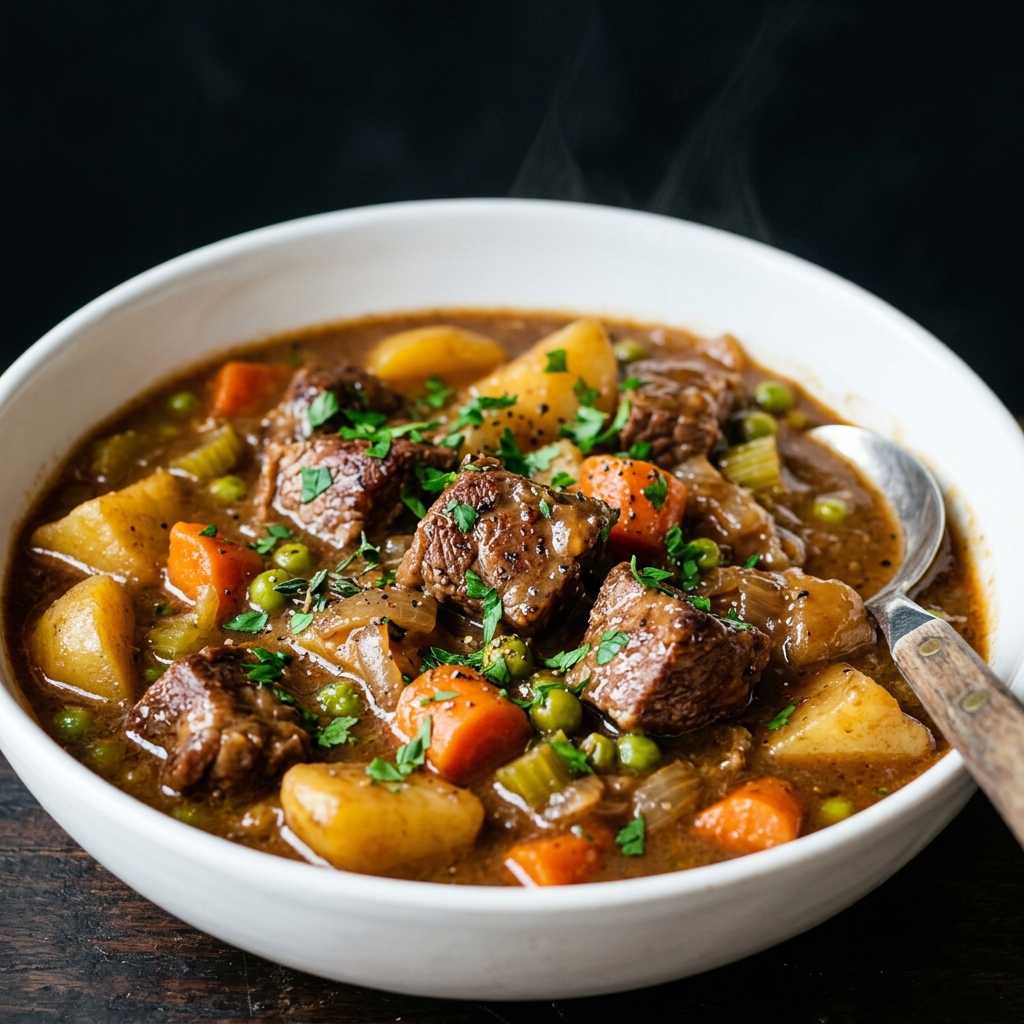
A hearty stew already contains beef and vegetables, but the right side dish can turn it into an unforgettable meal. The rich gravy is especially good with something that can soak it up.
Crusty Bread
A warm loaf of crusty French bread, sourdough, or a rustic dinner roll is one of the simplest and best choices. Tear off a piece and use it to soak up every drop of gravy.
Garlic Bread
Garlic bread adds buttery, garlicky flavor and a crisp texture that contrasts beautifully with the soft beef and vegetables.
Mashed Potatoes
For an especially indulgent dinner, serve the stew over creamy mashed potatoes. The gravy sinks into the potatoes, creating an incredibly comforting combination.
Buttered Egg Noodles
Wide egg noodles provide another excellent base for the stew. Spoon the beef and gravy over the noodles immediately before serving.
Simple Green Salad
A crisp green salad dressed with a light vinaigrette can provide a refreshing contrast to the richness of the stew.
Steamed Green Beans
Green beans add freshness, color, and a little crunch without competing with the main dish.
Roasted Vegetables
Roasted Brussels sprouts, broccoli, or seasonal vegetables can complement the savory flavors while adding another layer of texture.
How to Store Classic Beef Stew
Proper storage helps preserve both the quality and safety of your leftovers.
Allow the stew to cool appropriately before transferring it to shallow airtight containers. Refrigerate promptly rather than leaving the entire pot sitting at room temperature for an extended period.
Stored properly in the refrigerator, leftover beef stew is best enjoyed within 3 to 4 days.
For longer storage, freeze it in airtight freezer-safe containers or bags. Label the container with the date so you know how long it has been stored.
When reheating refrigerated stew, warm it thoroughly on the stovetop or in the microwave, stirring as needed. If the gravy has become too thick, loosen it with a little beef broth or water.
Common Mistakes to Avoid
Even a simple recipe can turn out differently depending on how it is prepared. These are some of the most common mistakes that can keep beef stew from reaching its full potential.
Skipping the Beef Browning
This is probably the biggest mistake.
Putting raw beef directly into the broth may still produce a tasty meal, but you’ll miss the deeply browned flavors that make the gravy taste rich and complex.
Take the extra time to brown the beef properly.
Cooking Everything at Once
Adding the potatoes and carrots at the beginning and cooking them for the entire duration can leave you with vegetables that are overly soft while you’re still waiting for the beef to become tender.
Adding sturdier vegetables later gives you much better control over texture.
Boiling Too Aggressively
A rolling boil is not necessary.
A gentle simmer is much better for stew because it allows the beef to cook slowly and tenderize without unnecessarily breaking apart the vegetables.
Adding Too Much Liquid
A stew should be thick and substantial rather than resembling a thin soup.
Start with enough broth to create plenty of gravy, but avoid drowning the ingredients. You can always add more liquid later if necessary.
Cutting the Beef Too Small
Tiny pieces of beef can become difficult to manage after prolonged cooking. Larger, uniform chunks provide a much more satisfying bite.
Not Tasting at the End
Seasoning should not be considered finished simply because salt and pepper were added at the beginning.
Taste the stew after cooking and adjust the seasoning. The broth reduces during cooking, changing the intensity of the flavors.
Frequently Asked Questions
What Is the Best Cut of Beef for Classic Beef Stew?
Beef chuck is one of the best choices. It contains connective tissue and enough marbling to become tender and flavorful during slow cooking. Chuck roast cut into chunks is especially good because you can control the size of each piece.
Why Is My Beef Stew Meat Tough?
If your beef is tough, it may simply need more cooking time. Beef chuck becomes tender as its connective tissue gradually breaks down during slow cooking.
Continue cooking gently and check it periodically. Avoid turning the heat excessively high in an attempt to speed things up.
How Do I Make Beef Stew Gravy Thicker?
You can simmer the stew uncovered to allow excess liquid to evaporate. If you need additional thickening, a slurry made from a suitable starch and cold water can also be incorporated gradually.
Remember that the gravy will thicken somewhat as the stew cools.
Can I Make Beef Stew in a Slow Cooker?
Yes. Beef stew adapts very well to slow-cooker cooking.
For the best flavor, brown the beef and sauté the aromatics in a skillet before transferring everything to the slow cooker. This extra step takes a little time but creates much more depth than simply adding raw ingredients to the slow cooker.
Can I Use Frozen Vegetables?
Yes, although fresh vegetables generally provide the best texture. Frozen peas are particularly convenient and can be stirred in near the end of cooking so they remain bright and tender.
Can I Leave Out the Potatoes?
Absolutely. You can increase the amount of other vegetables or serve the stew over mashed potatoes, rice, noodles, or another favorite side.
Leaving out potatoes also makes it easier to adapt the recipe toward a lower-carbohydrate style, although the traditional recipe itself is not considered low-carb or keto.
Can I Make This Beef Stew Gluten-Free?
Yes. Replace regular flour with a gluten-free thickener and use gluten-free beef broth and other certified gluten-free ingredients where necessary.
Always check packaged ingredients carefully, particularly broth, seasoning blends, and sauces.
Is Classic Beef Stew Keto-Friendly?
Traditional beef stew is generally not keto-friendly because potatoes and other higher-carbohydrate ingredients are commonly included, and flour may also be used to thicken the gravy.
A modified version can be made more keto-friendly by omitting potatoes and flour and using lower-carbohydrate vegetables and an appropriate thickening method.
How Can I Make My Beef Stew More Flavorful?
Build flavor in layers. Brown the beef well, sauté the onions and celery, cook the tomato paste briefly, deglaze the pot, use a flavorful beef broth, and season gradually.
Fresh herbs added toward the end can also brighten the finished stew.

Classic Beef Stew
Ingredients
Equipment
Method
- Prepare the beef: Pat the beef chunks thoroughly dry with paper towels. Season with salt and black pepper, then lightly toss with the flour, shaking off any excess.
- Heat the pot: Place a large Dutch oven over medium-high heat. Add the cooking oil and allow it to heat.
- Brown the beef: Add the beef in batches, making sure not to overcrowd the pot. Brown each piece on several sides until deeply golden. Transfer the browned beef to a plate.
- Cook the aromatics: Reduce the heat slightly. Add the diced onion and celery to the same pot and cook until softened. Add the minced garlic and cook for about 30 seconds.
- Add tomato paste: Stir in the tomato paste and cook for 1–2 minutes, allowing it to darken slightly and develop a richer flavor.
- Deglaze: Slowly add some of the beef broth while scraping the browned bits from the bottom of the pot with a wooden spoon.
- Start the stew: Return the browned beef and any accumulated juices to the pot. Add the remaining beef broth, dried thyme, and bay leaves.
- Simmer: Bring the mixture to a gentle simmer, then reduce the heat to low. Cover partially and simmer for approximately 1½ hours, stirring occasionally.
- Add vegetables: Add the potatoes and carrots. Continue simmering for another 30–45 minutes, or until the beef is fork-tender and the vegetables are cooked through.
- Add peas: Stir in the green peas during the final few minutes of cooking so they remain bright and tender.
- Adjust the gravy: Remove the bay leaves. If the gravy is too thin, simmer the stew uncovered for several minutes. If it is too thick, add a small amount of beef broth. Taste and adjust the salt and pepper.
- Rest and serve: Remove the stew from the heat and let it rest for 5–10 minutes. Garnish with fresh parsley and serve hot with crusty bread, mashed potatoes, or your favorite side.
Notes
Don't skip browning: Browning the beef creates the deep savory flavor that makes the stew especially rich.
Cook in batches: Overcrowding the pot can cause the beef to steam instead of brown.
For gluten-free: Use gluten-free flour or another suitable thickener and verify that the beef broth is certified gluten-free.
For thicker gravy: Simmer uncovered toward the end of cooking to reduce the liquid naturally.
For leftovers: Store cooled stew in an airtight container in the refrigerator for 3–4 days.
Freezing: Beef stew can be frozen, although potatoes may become slightly softer or grainier after thawing.
Flavor tip: Beef stew often tastes even better the following day after the flavors have had additional time to develop.

Hi, I’m Clara, the creator of Barakala. I love sharing simple, comforting, and delicious recipes that make everyday cooking easier and more enjoyable for home cooks.