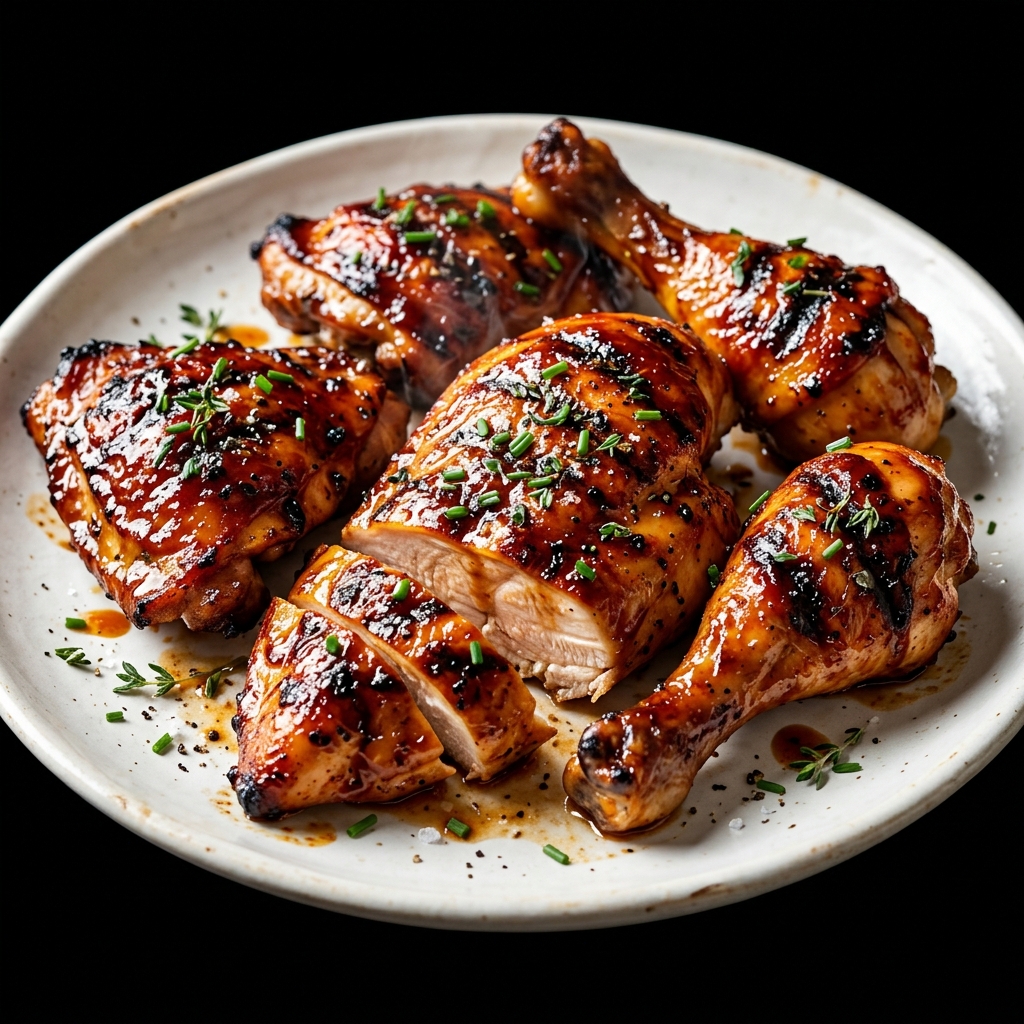
There is something irresistible about chicken coated in smoky, glossy barbecue sauce and cooked until the edges become beautifully caramelized. This BBQ Chicken Recipe delivers juicy, flavorful chicken with that crave-worthy balance of sweet, savory, smoky, and tangy flavors, making it an easy dinner, cookout favorite, or comforting family meal you will want to make again and again.
Ingredients You’ll Need
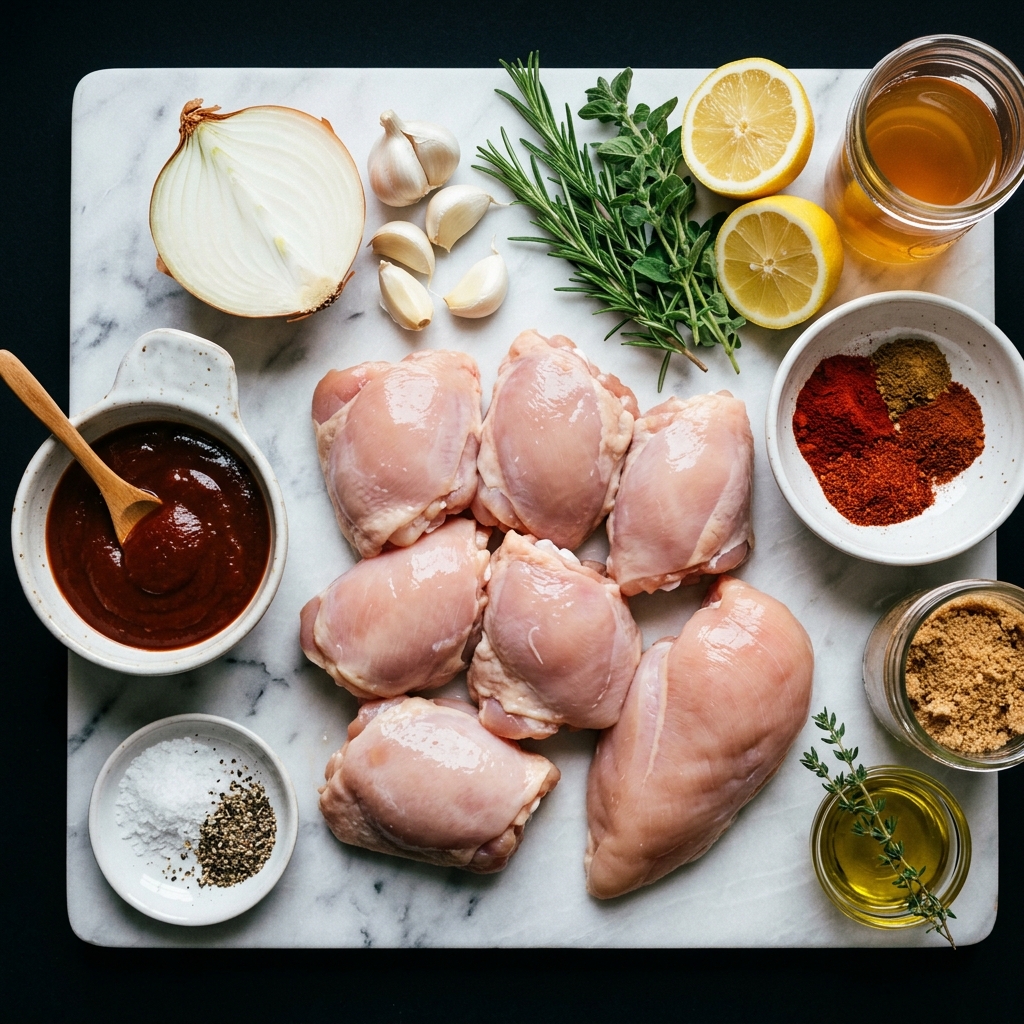
Chicken
- 2 pounds boneless, skinless chicken breasts or chicken thighs – Chicken breasts are lean and mild, while thighs contain more fat and tend to stay particularly juicy during cooking. If using breasts that are very thick, consider pounding them gently to an even thickness so they cook more evenly.
- 1 tablespoon olive oil – Helps the seasonings adhere to the chicken and encourages better browning.
BBQ Seasoning
- 1 teaspoon smoked paprika – Adds a subtle smoky flavor and beautiful color.
- 1 teaspoon garlic powder – Gives the chicken a savory, aromatic base.
- 1 teaspoon onion powder – Adds depth without overpowering the barbecue sauce.
- 1 teaspoon chili powder – Provides warmth and a mild peppery flavor.
- 1 teaspoon salt – Enhances the natural flavor of the chicken and balances the sweetness of the sauce.
- ½ teaspoon black pepper – Adds a gentle bite.
- ½ teaspoon dried oregano – Brings a light herbal note that works particularly well with grilled chicken.
BBQ Sauce
- 1 cup barbecue sauce – Use your favorite bottled sauce or a homemade BBQ sauce. A sauce with a good balance of sweetness, acidity, and smokiness works especially well.
- 1 tablespoon brown sugar – Optional, but useful if you want an especially sticky, caramelized finish.
- 1 tablespoon apple cider vinegar – Adds acidity and keeps the sauce from tasting overly sweet.
- 1 teaspoon Worcestershire sauce – Adds savory depth and umami.
- 2 cloves garlic, minced – Gives the sauce a fresher, more pronounced garlic flavor.
The barbecue sauce is the personality of this dish, so choose one you genuinely enjoy. If your sauce is already quite sweet, you may want to reduce or omit the brown sugar. If it is very thick, a small splash of water can make it easier to brush onto the chicken without using too much.
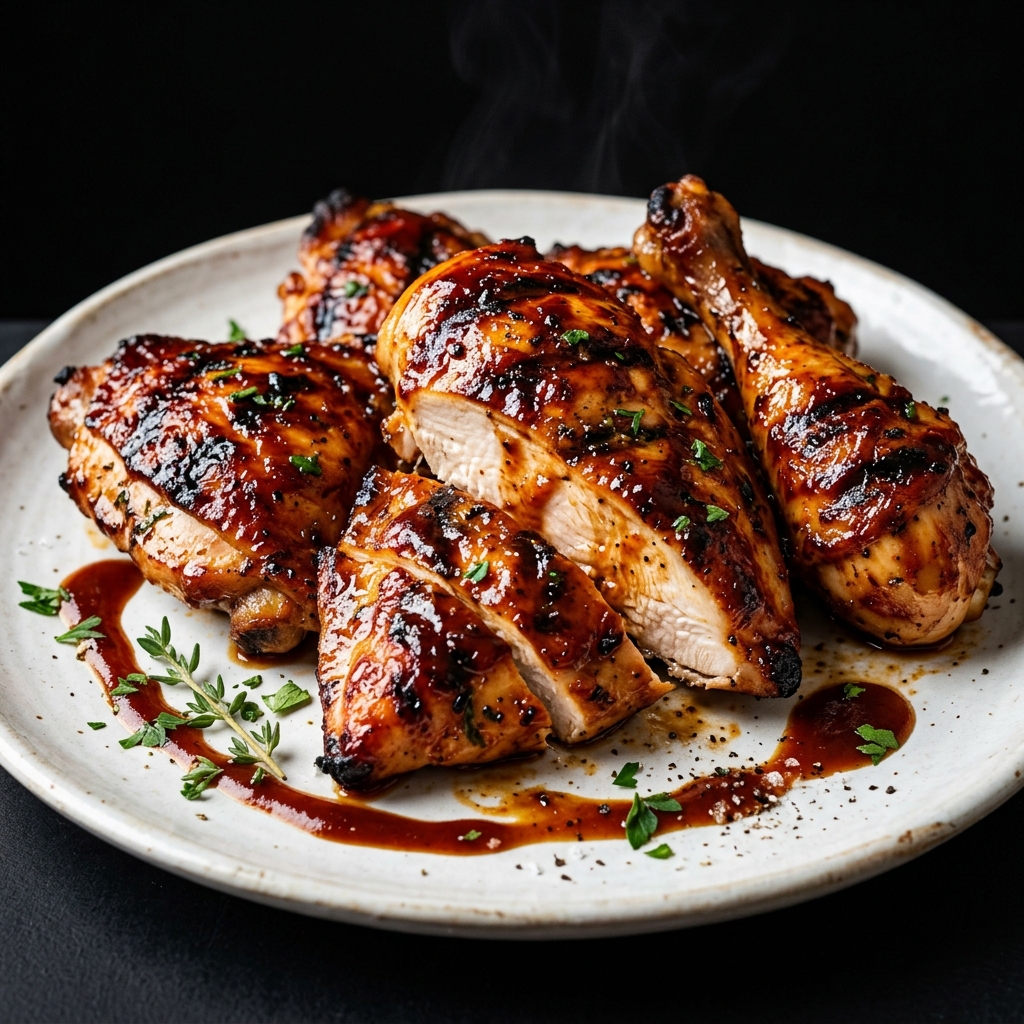
How to Make BBQ Chicken
1. Prepare the Chicken
Start by patting the chicken dry with paper towels. This small step is easy to overlook, but removing excess surface moisture helps the seasoning adhere better and encourages browning during cooking.
If you are using chicken breasts, check their thickness. Very thick breasts can cook unevenly, leaving the outside finished before the center reaches the desired temperature. Gently pound them to a more uniform thickness if necessary.
Place the chicken in a large bowl or shallow dish and drizzle with olive oil.
2. Season the Chicken Generously
In a small bowl, combine the smoked paprika, garlic powder, onion powder, chili powder, salt, black pepper, and dried oregano.
Sprinkle the seasoning mixture evenly over both sides of the chicken. Rub it gently into the meat so every piece receives a good coating.
For the best flavor, allow the seasoned chicken to sit for about 15 to 30 minutes before cooking. This gives the seasoning a little time to settle into the surface of the meat.
3. Prepare the BBQ Sauce Mixture
While the chicken rests, prepare the sauce.
Combine the barbecue sauce, brown sugar, apple cider vinegar, Worcestershire sauce, and minced garlic in a small bowl. Stir thoroughly until smooth.
Taste the sauce before using it. If it is too sweet, add a little more vinegar. If it needs more sweetness, add a small amount of brown sugar. If you prefer more heat, a pinch of cayenne pepper or a few drops of hot sauce can transform it.
Remember that the sauce will become more concentrated as it cooks, so avoid making it excessively salty or sweet at this stage.
4. Preheat Your Cooking Surface
For grilled BBQ chicken, preheat your grill to medium-high heat. Give the grates enough time to become properly hot before adding the chicken.
A properly preheated grill helps create attractive grill marks and reduces the likelihood of the chicken sticking.
If you do not have access to an outdoor grill, you can use a grill pan, skillet, or oven. The recipe is flexible, and the barbecue sauce will still provide plenty of flavor.
5. Start Cooking the Chicken
Place the seasoned chicken on the hot grill.
Cook the chicken without constantly moving it. Allowing it to remain in contact with the hot grates helps develop those beautiful browned grill marks and a flavorful exterior.
Cook for several minutes on the first side, then turn the chicken and continue cooking on the other side. The exact cooking time depends on the thickness and cut of the chicken, so use temperature rather than time alone to determine doneness.
6. Add the BBQ Sauce at the Right Time
This is one of the most important steps in the entire recipe.
Do not coat the chicken heavily with barbecue sauce right at the beginning of cooking. Most BBQ sauces contain sugar, and sugar can burn over high heat before the chicken has finished cooking.
Instead, cook the chicken most of the way first. During the final portion of cooking, brush one side generously with BBQ sauce, turn it, and brush the other side.
Continue cooking briefly, turning as needed and applying another thin layer of sauce. This builds a glossy, sticky coating without allowing the sauce to burn.
You are looking for a deep, caramelized exterior with slightly charred edges—not black, bitter sauce.
7. Check the Internal Temperature
The safest way to determine whether chicken is properly cooked is to check its internal temperature with an instant-read thermometer.
Insert the thermometer into the thickest part of the chicken without touching the bone if you are using bone-in pieces.
Chicken should reach 165°F (74°C) internally for safe consumption.
Avoid cutting into the chicken repeatedly to check whether it is done. Doing so releases juices and makes it harder to judge accurately. A thermometer provides a much more reliable answer.
8. Let the Chicken Rest
Once the chicken has finished cooking, transfer it to a clean plate or cutting board.
Let it rest for about 5 minutes before slicing or serving.
This short resting period gives the juices time to redistribute throughout the meat. Cutting into the chicken immediately can cause some of those flavorful juices to run onto the plate instead of remaining in the chicken.
For an especially attractive presentation, brush the chicken with one final light layer of BBQ sauce just before serving.
The Secret to Juicy, Flavorful BBQ Chicken
One of the biggest mistakes people make with BBQ chicken is treating the sauce as the main source of flavor. While a delicious sauce is important, properly seasoning the chicken underneath it is what gives every bite depth.
The second secret is controlling the heat. Barbecue sauce often contains sugar, which makes it wonderfully sticky and caramelized but also means it can burn quickly. Cooking the chicken first and adding the sauce toward the end allows you to develop smoky, charred flavor without turning the sauce bitter.
There is also a useful distinction between charred and burned. A few dark edges and grill marks can add wonderful smoky complexity. Burned sauce, however, tastes bitter and can overwhelm the chicken. The goal is controlled caramelization: a deeply colored, glossy exterior with juicy meat underneath.
Delicious Variations to Try
Spicy BBQ Chicken
For a hotter version, add cayenne pepper, crushed red pepper flakes, or your favorite hot sauce to the seasoning or BBQ sauce.
You can also use a spicy barbecue sauce and finish the chicken with sliced fresh jalapeños.
Honey BBQ Chicken
For a sweeter variation, add a tablespoon or two of honey to the BBQ sauce. Honey creates an exceptionally glossy coating and works beautifully with smoky grilled chicken.
Because honey contains sugar, apply this version toward the end of cooking and watch it carefully to prevent burning.
Smoky BBQ Chicken
If you love deep smoky flavor, increase the smoked paprika slightly or choose a barbecue sauce with a pronounced smoky profile.
A small amount of chipotle powder can also provide both smoky flavor and heat.
Garlic Herb BBQ Chicken
For a more savory variation, increase the fresh garlic and add chopped parsley, rosemary, or thyme after cooking.
The herbs provide a fresh contrast to the rich barbecue sauce.
Oven-Baked BBQ Chicken
No grill? No problem.
Season the chicken as directed and arrange it in a lightly oiled baking dish or on a lined baking sheet. Bake in a preheated 400°F (200°C) oven, adding the BBQ sauce during the latter part of cooking.
Continue baking until the chicken reaches an internal temperature of 165°F (74°C). For extra caramelization, you can briefly place the chicken under the broiler at the end, watching it carefully because the sauce can darken quickly.
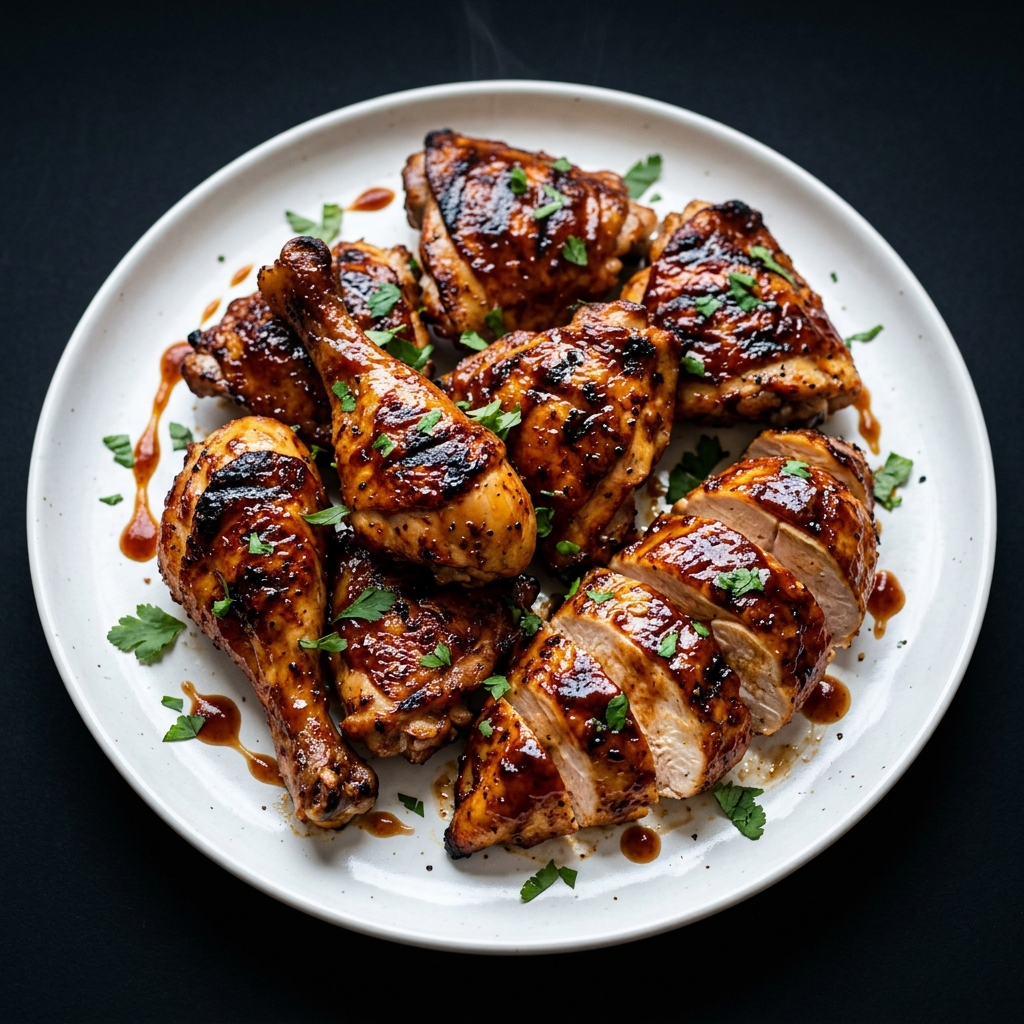
Expert Tips for Better BBQ Chicken
Choose the Right Cut
Chicken thighs are naturally forgiving because their higher fat content helps them remain juicy. Chicken breasts are leaner and can produce an excellent result too, but they benefit from even thickness and careful cooking.
Pat the Chicken Dry
Moisture on the surface can interfere with browning. A quick pat with paper towels before seasoning makes a noticeable difference.
Don’t Drown the Chicken in Sauce
More sauce does not necessarily mean better BBQ chicken. Several thin layers usually produce a better texture than one extremely thick coating.
Thin layers caramelize beautifully and allow the seasoning and smoky chicken flavor to remain noticeable.
Keep Some Sauce Separate
Always reserve a portion of your clean BBQ sauce for serving rather than repeatedly dipping cooked chicken into sauce that has touched raw chicken.
This gives you a fresh, flavorful finishing sauce and makes serving more convenient.
Avoid Constant Flipping
Give the chicken enough uninterrupted cooking time to brown properly. Excessive flipping can interfere with grill marks and browning.
Watch the Sauce Carefully
Once BBQ sauce is added, stay attentive. The difference between beautifully caramelized sauce and burnt sauce can happen quickly, especially over direct high heat.
Use a Meat Thermometer
This is perhaps the most useful tool for consistently successful chicken. Cooking by appearance alone can be misleading, while an instant-read thermometer gives you a much more dependable indication of doneness.
Don’t Skip the Resting Period
Those few minutes after cooking are worth it. Resting helps the chicken retain more of its juices and makes it easier to slice neatly.
What Makes This Recipe So Versatile?
The beauty of BBQ chicken is that it can move effortlessly from a casual weeknight dinner to a full backyard barbecue spread. The same basic chicken can be served with different sides, sauces, toppings, and salads depending on the occasion.
For a simple family dinner, pair it with something fresh and crisp. For a cookout, build a larger spread around it with classic barbecue sides. And if you have leftovers, don’t think of them as simply reheated chicken—they can become the starting point for another meal entirely.
What to Serve with BBQ Chicken
BBQ chicken pairs particularly well with sides that balance its rich, smoky, slightly sweet flavor.
- Creamy coleslaw – The cool, crunchy texture provides a refreshing contrast.
- Corn on the cob – Sweet corn complements the caramelized BBQ sauce beautifully.
- Baked beans – A classic barbecue pairing that adds hearty, savory sweetness.
- Potato salad – Creamy potato salad makes the meal especially satisfying.
- Macaroni and cheese – Ideal when you want a rich, comforting barbecue dinner.
- Roasted vegetables – A lighter option that adds color and freshness.
- Green salad – Crisp greens and a tangy dressing help balance the richness.
- Cornbread – Excellent for soaking up extra barbecue sauce.
- Grilled vegetables – Keep the grill going and cook peppers, zucchini, onions, or corn alongside the chicken.
- French fries or potato wedges – A simple crowd-pleaser for casual dinners.
The combination I particularly like for a complete barbecue-style plate is BBQ chicken, creamy coleslaw, grilled corn, and a small serving of baked beans. It gives you smoky, sweet, creamy, crunchy, and savory elements in one meal.
How to Store BBQ Chicken
Allow leftover chicken to cool before transferring it to an airtight container. Refrigerate promptly and keep it refrigerated.
For the best texture, store the chicken with any extra BBQ sauce separately when possible. This allows you to reheat the chicken without making the exterior excessively wet.
When reheating, use the oven, air fryer, or stovetop over moderate heat rather than blasting the chicken with very high heat. The goal is to warm it without drying it out.
Leftover BBQ chicken can also be sliced and used in sandwiches, wraps, salads, quesadillas, rice bowls, or loaded baked potatoes.
FAQs About BBQ Chicken
Can I use chicken breasts instead of chicken thighs?
Absolutely. Chicken breasts work very well, but because they are leaner, they require more attention to prevent overcooking. Try to use breasts of similar thickness and monitor their internal temperature carefully.
When should I put BBQ sauce on chicken?
BBQ sauce is best added toward the end of cooking. Applying it too early can cause the sugars in the sauce to burn before the chicken is fully cooked.
How do I keep BBQ chicken from drying out?
Avoid overcooking it, use evenly sized pieces, and check the internal temperature with a meat thermometer. Allowing the chicken to rest after cooking also helps retain its juices.
Can I make BBQ chicken without a grill?
Yes. You can make it in the oven, on a grill pan, or in a skillet. The cooking environment changes the texture slightly, but you can still achieve flavorful, caramelized BBQ chicken.
Can I use bottled BBQ sauce?
Yes. A good-quality bottled barbecue sauce makes this recipe especially convenient. Choose a sauce whose sweetness, smokiness, and acidity match your taste.
Can I make the chicken spicy?
Definitely. Add cayenne pepper, chili flakes, hot sauce, diced jalapeños, or a spicy BBQ sauce to increase the heat.
How can I get more caramelization?
Apply several thin layers of sauce during the final minutes of cooking rather than one heavy layer. Keep the heat controlled and watch the chicken closely so the sauce caramelizes instead of burning.
Can I use bone-in chicken?
Yes. Bone-in chicken can be exceptionally flavorful and juicy, but it generally requires a longer cooking time. Always rely on the internal temperature rather than a fixed cooking time to determine when it is ready.
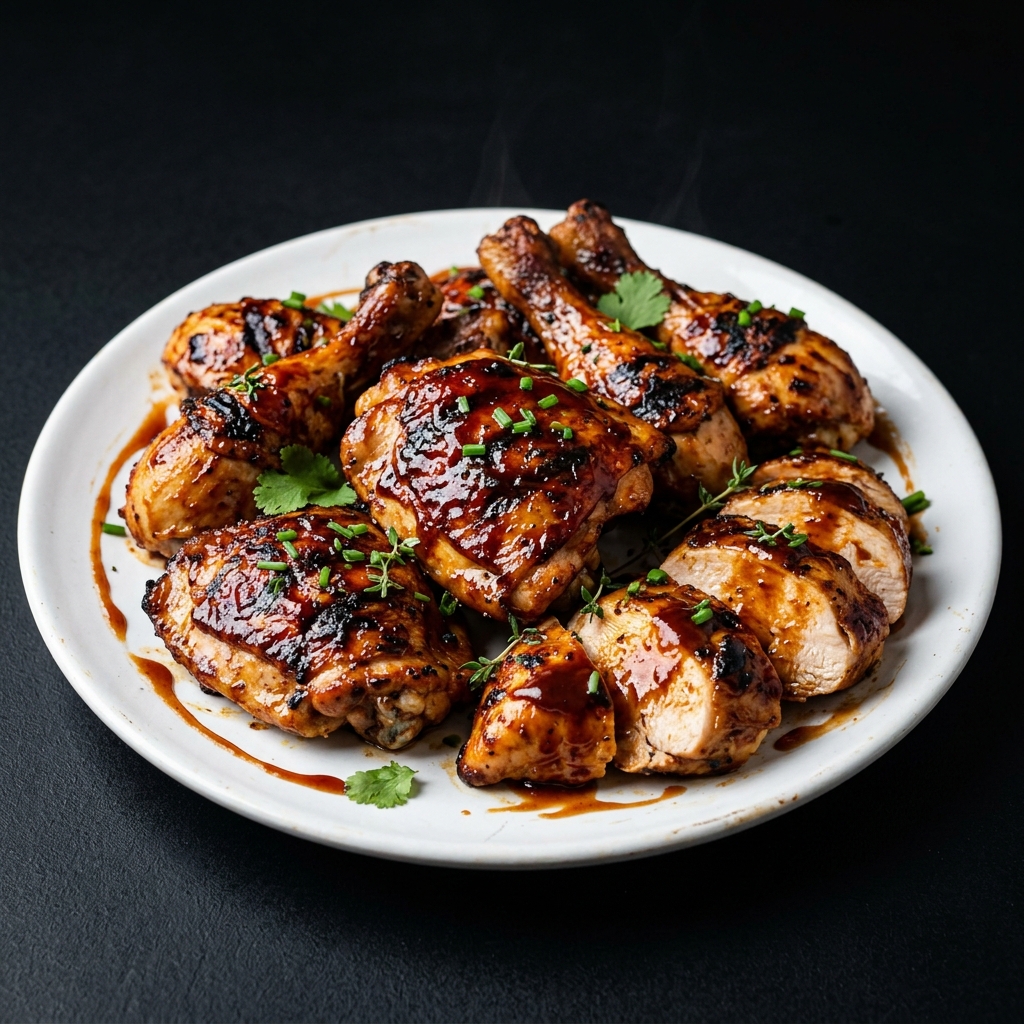
BBQ Chicken Recipe
Ingredients
Equipment
Method
- Prepare the Chicken: Pat the chicken dry with paper towels. If using thick chicken breasts, gently pound them to an even thickness for more uniform cooking.
- Season: Place the chicken in a large bowl and drizzle with olive oil. In a separate bowl, combine smoked paprika, garlic powder, onion powder, chili powder, salt, black pepper, and oregano. Sprinkle the seasoning evenly over the chicken and rub it into both sides.
- Rest the Seasoned Chicken: Let the seasoned chicken sit for 15–30 minutes at room temperature while you prepare the sauce and preheat the grill.
- Make the BBQ Sauce: Mix the barbecue sauce, brown sugar, apple cider vinegar, Worcestershire sauce, and minced garlic in a small bowl until well combined.
- Preheat the Grill: Heat an outdoor grill or grill pan over medium-high heat. Make sure the cooking surface is properly hot before adding the chicken.
- Cook the Chicken: Place the chicken on the hot grill and cook for several minutes on each side, allowing it to develop attractive grill marks and a browned exterior.
- Add the BBQ Sauce: During the final portion of cooking, brush the chicken generously with BBQ sauce. Turn the chicken and brush the other side. Continue cooking while applying another thin layer of sauce as needed.
- Check for Doneness: Cook until the thickest part of the chicken reaches an internal temperature of 165°F (74°C) when checked with an instant-read thermometer.
- Rest: Transfer the cooked chicken to a clean plate or cutting board and let it rest for about 5 minutes before slicing and serving.
- Serve: Brush with a final light layer of BBQ sauce if desired and serve hot with your favorite barbecue sides.
Notes
Chicken breasts: For best results, use pieces of similar thickness and avoid overcooking.
BBQ sauce: Use your favorite bottled sauce or homemade barbecue sauce. If your sauce is already sweet, reduce or omit the brown sugar.
Sauce timing: Add BBQ sauce toward the end of cooking because its sugar content can burn over high heat.
Extra smoky flavor: Use smoked paprika or a smoky BBQ sauce for deeper barbecue flavor.
Spicy version: Add cayenne pepper, hot sauce, crushed red pepper flakes, or diced jalapeños.
Oven option: Bake at 400°F (200°C), adding the BBQ sauce toward the end, and cook until the chicken reaches 165°F (74°C).
Food safety: Keep a portion of BBQ sauce separate for serving rather than reusing sauce that has come into contact with raw chicken.
Storage: Refrigerate leftovers in an airtight container and use within 3–4 days for best quality.

Hi, I’m Clara, the creator of Barakala. I love sharing simple, comforting, and delicious recipes that make everyday cooking easier and more enjoyable for home cooks.