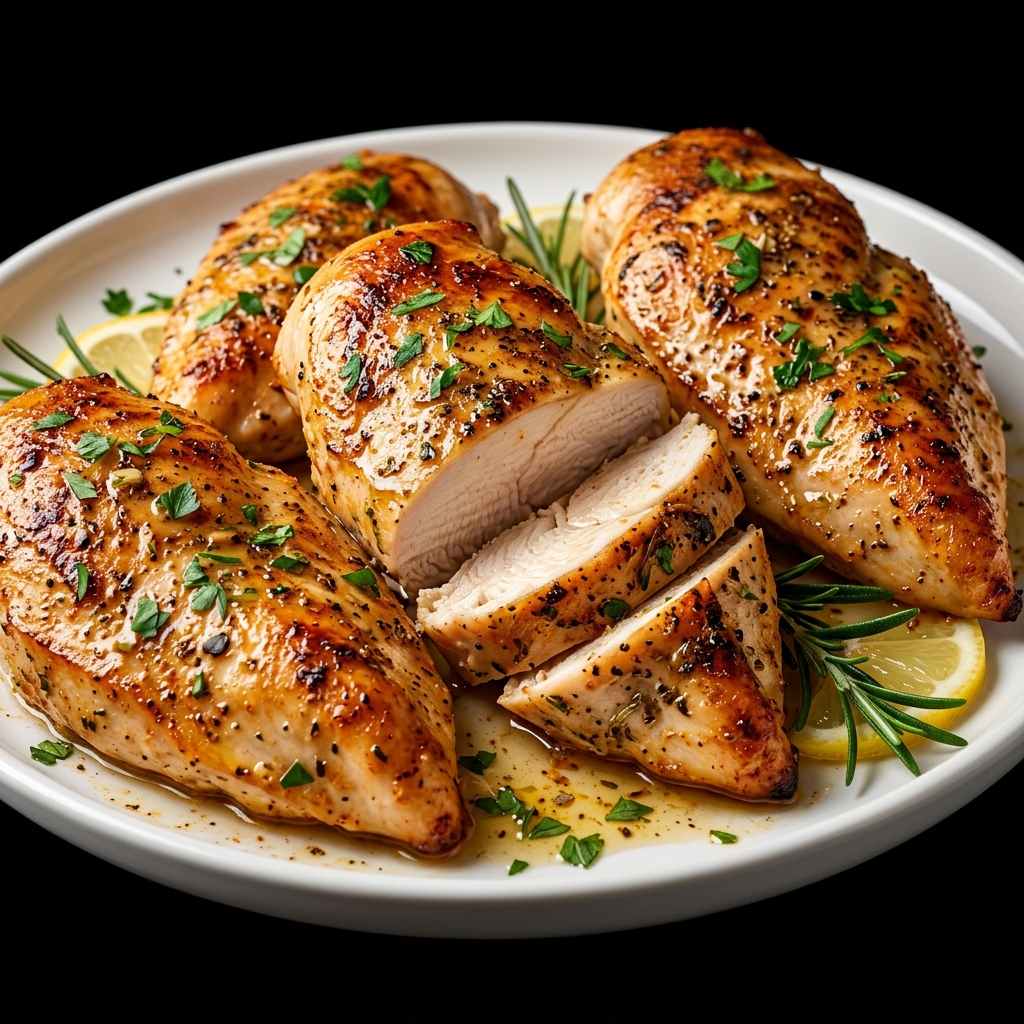
Juicy, tender, beautifully seasoned, and irresistibly golden, this Baked Chicken Breast turns a simple everyday ingredient into a dinner everyone will look forward to. With a handful of pantry-friendly seasonings, a little olive oil, and the right oven technique, you can make chicken breasts that are flavorful and moist instead of dry and bland.
Ingredients You’ll Need
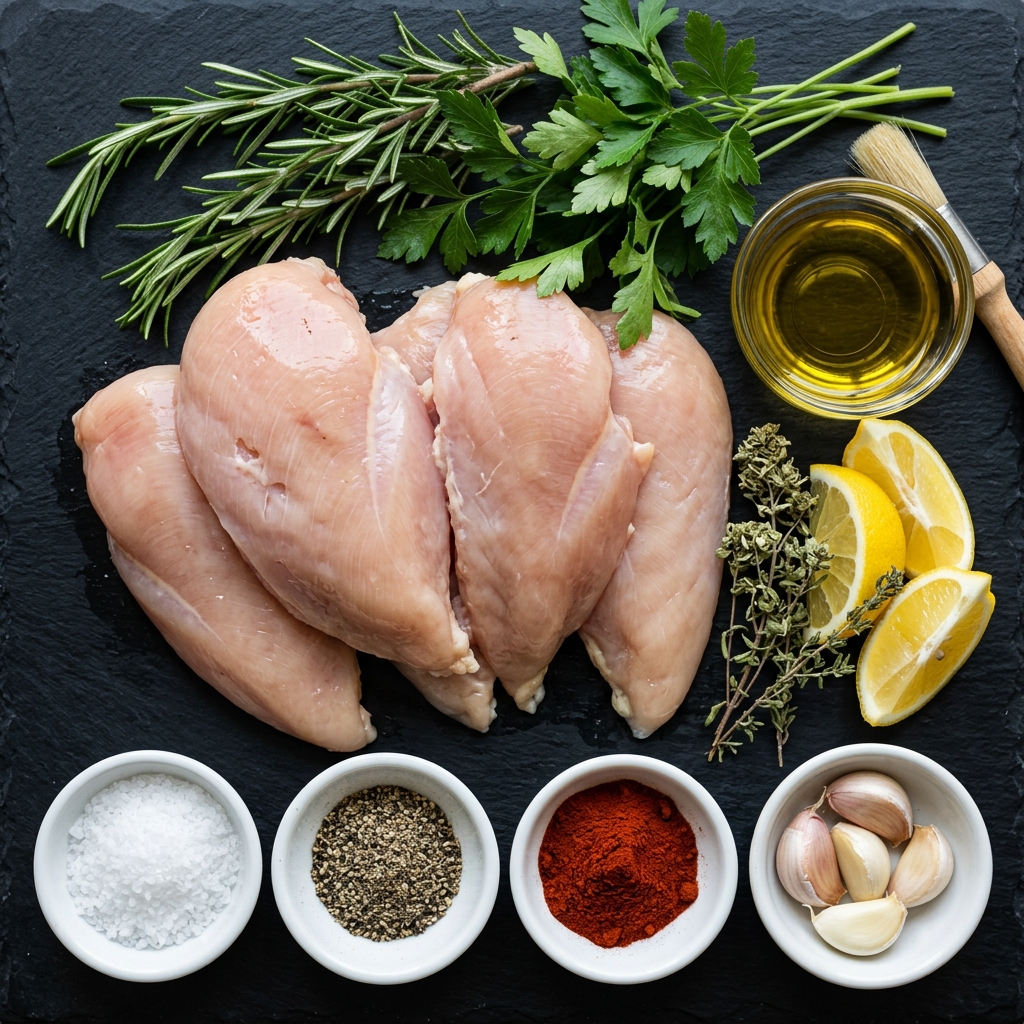
Chicken Breast
Use boneless, skinless chicken breasts for this recipe. Choose pieces that are similar in size and thickness so they cook at roughly the same rate.
Very thick chicken breasts can take considerably longer to cook than smaller pieces. If some pieces are dramatically thicker than others, gently pounding the thickest parts to create a more even thickness is one of the easiest ways to encourage even cooking.
Olive Oil
Olive oil helps the seasonings adhere to the chicken while contributing moisture and a subtle richness. It also encourages the surface to brown beautifully during baking.
You do not need a large amount. A light coating is enough to cover the chicken and help create a flavorful exterior.
Paprika
Paprika provides beautiful color and a mild, earthy flavor. As the chicken bakes, it helps develop the appetizing golden-red crust that makes the finished dish look as good as it tastes.
Regular paprika works well, while smoked paprika can be used when you want a deeper, slightly smoky flavor.
Garlic
Fresh minced garlic gives the chicken a savory aroma and unmistakable depth. Garlic powder can also be used, particularly if you want the seasoning distributed very evenly across the chicken.
For the best flavor, fresh garlic is an excellent choice.
Italian Herbs
A combination of dried Italian herbs adds a fragrant, savory character to the chicken. You can use a prepared Italian seasoning blend or combine herbs such as oregano, basil, thyme, and rosemary.
Fresh herbs can be added toward the end of cooking or used as a garnish.
Black Pepper
Freshly ground black pepper adds gentle heat and balances the richness of the olive oil and savory seasonings.
Salt
Salt is essential because it enhances the natural flavor of the chicken and brings the other seasonings together. Season the chicken evenly rather than concentrating the salt in one area.
Lemon
Fresh lemon adds brightness to the finished dish. A little lemon juice can be incorporated into the seasoning, while lemon wedges can be served alongside the chicken.
The acidity helps balance the savory flavors and keeps the overall dish from tasting heavy.
Fresh Parsley
Fresh parsley is optional but highly recommended for finishing. Its bright green color creates a beautiful contrast against the golden chicken, while its fresh flavor provides a pleasant finishing note.
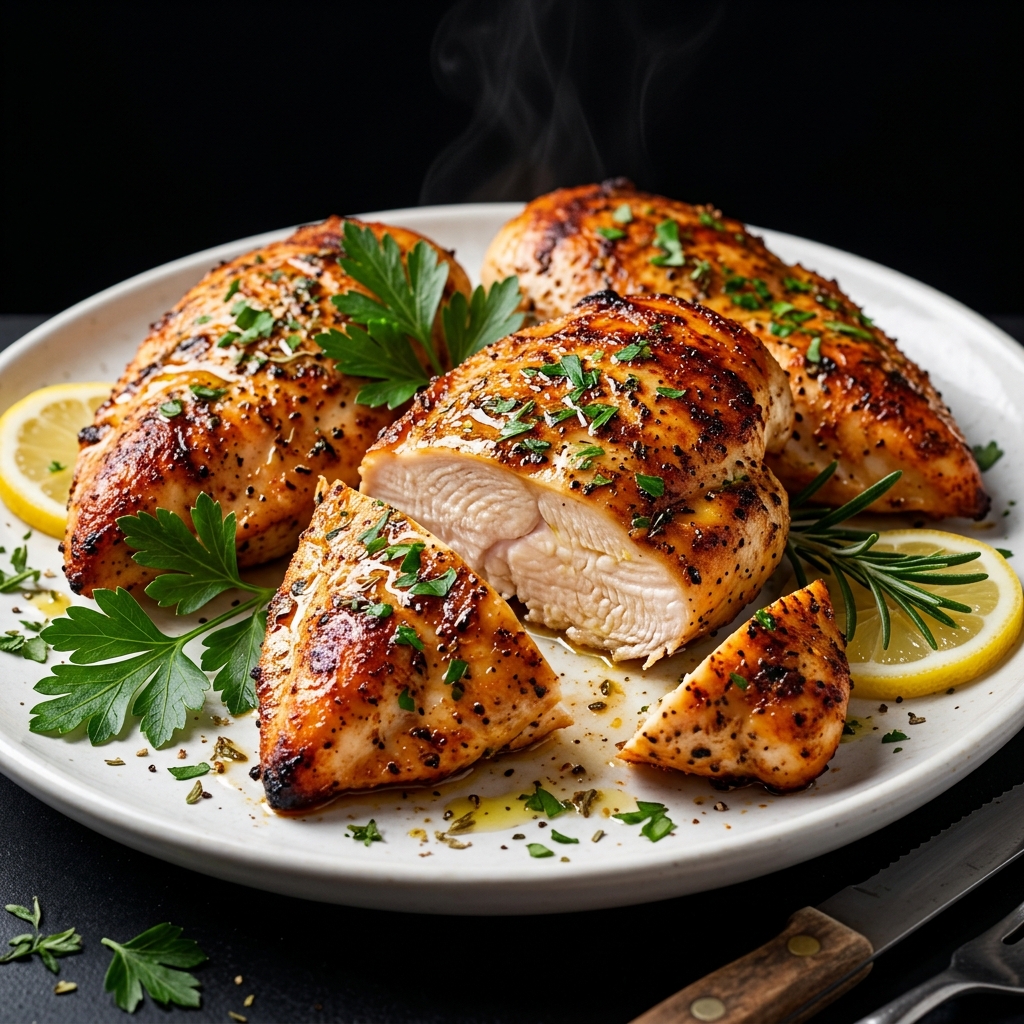
How to Make Baked Chicken Breast
The secret to excellent baked chicken is not complicated. It is about preparing the meat evenly, seasoning it thoroughly, and paying attention to its internal temperature.
Step 1: Prepare the Chicken
Preheat your oven and prepare a baking dish or sheet pan. Pat the chicken breasts dry with paper towels.
This small step is worth doing because removing excess surface moisture helps the oil and seasonings cling to the chicken more effectively. It also encourages better browning while the chicken cooks.
If the chicken breasts are very thick at one end, gently pound them until they have a more even thickness. Do not flatten them excessively. The goal is simply to create a more uniform piece of meat.
Step 2: Season the Chicken
Place the chicken breasts in a bowl or on a clean preparation surface. Drizzle them lightly with olive oil and rub it over both sides.
Combine the paprika, garlic, Italian herbs, black pepper, and salt, then distribute the seasoning mixture evenly over the chicken.
Use your hands or a clean brush to coat every surface. The seasoning should not be concentrated only on the top because every bite should be flavorful.
For even better results, allow the seasoned chicken to sit for several minutes before baking. This gives the seasoning a little time to settle into the surface of the meat.
Step 3: Arrange the Chicken
Place the seasoned chicken breasts in your prepared baking dish, leaving a little space between each piece.
Avoid stacking or tightly overlapping the chicken. Adequate space allows heat to circulate around the meat and helps the exterior cook more evenly.
Add a few lemon slices or fresh herbs around the chicken if desired. These are primarily for aroma and presentation, but they can also add subtle flavor during cooking.
Step 4: Bake Until Tender
Transfer the chicken to the preheated oven and bake until it is fully cooked.
The exact cooking time will depend on the thickness and size of the chicken breasts, as well as the characteristics of your oven. This is why cooking by time alone is not the most reliable approach.
Instead, use an instant-read meat thermometer inserted into the thickest part of the chicken. The chicken should reach a safe internal temperature of 165°F (74°C).
This is one of the most important steps in the entire recipe. Chicken can go from perfectly juicy to noticeably dry in a surprisingly short period, particularly when the breasts are small.
Step 5: Let the Chicken Rest
Once the chicken reaches the appropriate internal temperature, remove it from the oven and allow it to rest for several minutes before slicing.
Do not skip this step.
Resting gives the juices time to redistribute throughout the meat. If you immediately cut into piping-hot chicken, more of those juices can escape onto the plate instead of remaining inside the meat.
A short resting period can make a noticeable difference in texture.
Step 6: Finish and Serve
After resting, garnish the chicken with fresh parsley and a squeeze of lemon juice if desired.
For a beautiful presentation, slice one chicken breast diagonally and arrange it alongside whole pieces. The sliced portion reveals the tender interior while the whole pieces maintain the visual appeal of the finished dish.
Serve immediately with your favorite sides.
The Most Important Trick for Juicy Chicken Breast
There is one lesson worth remembering every time you make baked chicken breast: do not rely exclusively on the clock.
Chicken breasts vary considerably in size and thickness, and ovens can also differ in how accurately they maintain temperature. Two chicken breasts that look similar may not actually cook at exactly the same rate.
An instant-read thermometer removes much of the guesswork. Insert it into the thickest section of the meat, avoiding contact with the baking pan or any bone. Once the chicken reaches the safe internal temperature, take it out and allow it to rest.
This simple habit is one of the biggest differences between chicken that is merely cooked and chicken that is genuinely enjoyable to eat.
What Makes This Chicken So Flavorful?
The seasoning combination works because each ingredient contributes something different.
Paprika provides color and a mild earthy sweetness. Garlic supplies savory depth, while the herbs contribute fragrance. Black pepper adds gentle spice, and olive oil carries the seasonings across the surface of the chicken while helping the exterior brown.
Then comes the lemon.
A small amount of fresh lemon cuts through the savory richness and wakes up the flavors. You do not need to drown the chicken in lemon juice. A modest squeeze immediately before serving is often enough.
The result is chicken that tastes flavorful without requiring a complicated marinade, heavy sauce, or long list of ingredients.
Recipe Variations
One of the best things about this basic baked chicken breast recipe is how easily you can change the flavor profile while keeping the same cooking method.
Garlic Herb Chicken Breast
Increase the garlic and use a generous combination of thyme, rosemary, oregano, and parsley. This version has a classic savory flavor that pairs particularly well with roasted potatoes and vegetables.
Smoky Paprika Chicken
Replace some or all of the regular paprika with smoked paprika. The result has a deeper, smoky character without requiring a barbecue sauce.
Lemon Herb Chicken
Add extra lemon zest to the seasoning and finish the cooked chicken with fresh lemon juice and chopped parsley. This variation is especially good with rice, couscous, roasted vegetables, or a crisp green salad.
Spicy Baked Chicken Breast
For a little heat, add cayenne pepper, crushed red pepper flakes, or a favorite chili seasoning to the spice mixture. Start conservatively and increase the amount according to your preferred heat level.
Parmesan Herb Chicken
For a richer variation, combine the herbs with finely grated Parmesan and add it during the latter portion of baking so it develops a savory, lightly browned topping.
Mediterranean-Style Chicken
Season the chicken with oregano, garlic, paprika, black pepper, and lemon, then serve it with cucumber, tomatoes, olives, salad greens, and a creamy or tangy sauce.
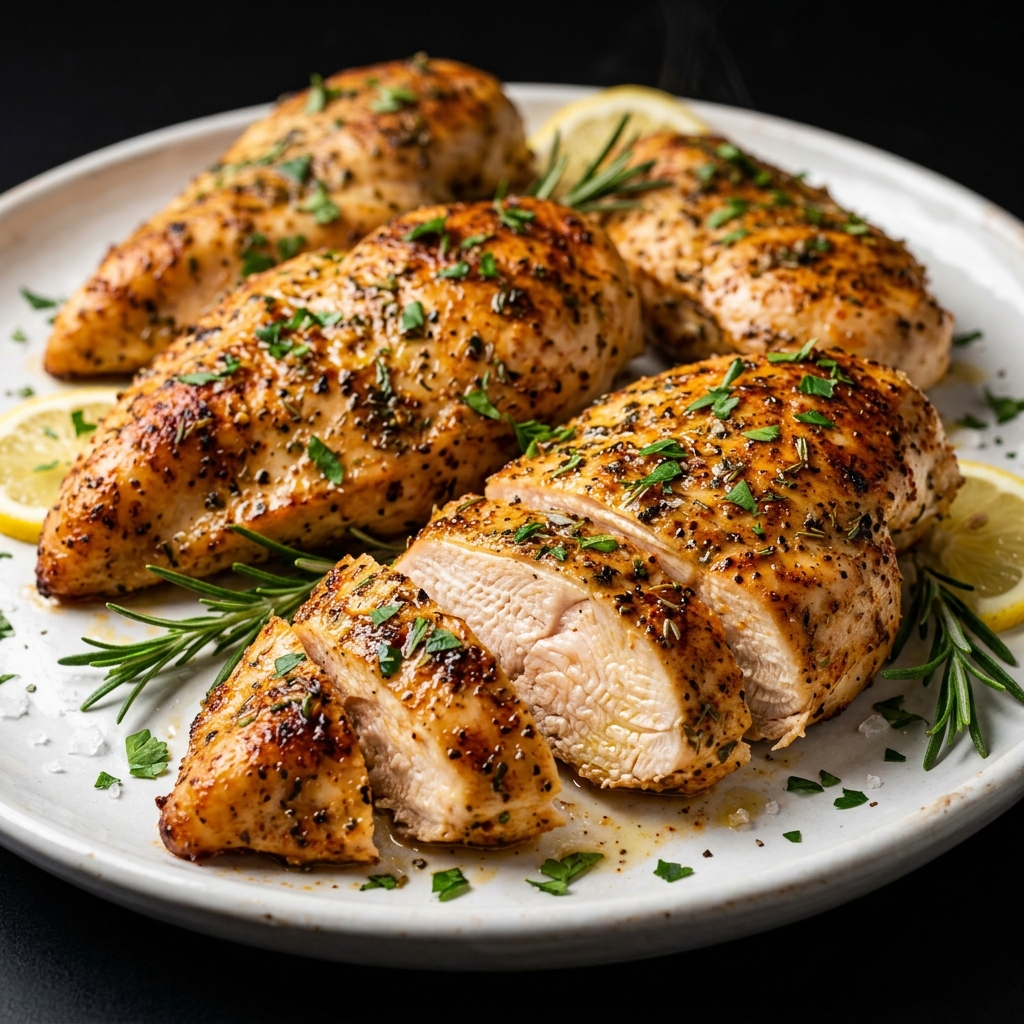
Expert Tips for Better Baked Chicken Breast
Pound Uneven Chicken Breasts
If one end of a chicken breast is significantly thicker than the other, the thinner portion may become overcooked before the thickest section is ready. Gently flattening the thickest area helps the meat cook more evenly.
Pat the Chicken Dry
A dry surface gives the oil and seasoning something to cling to and encourages better browning. It takes only a few seconds but can improve the final texture.
Season Every Surface
Do not season only the top of the chicken. Coat both sides and the edges when possible. Even seasoning makes every bite more flavorful.
Use a Meat Thermometer
This deserves repeating because it is one of the most useful tools for cooking chicken breast. An instant-read thermometer gives you much more control than simply guessing whether the chicken is done.
Do Not Overcrowd the Pan
Give each chicken breast some breathing room. Overcrowding can interfere with even cooking and may prevent the exterior from developing the appealing roasted finish you want.
Let It Rest
Resting is not wasted time. It gives the meat a chance to settle and helps preserve its juices when you eventually slice it.
Slice Against the Grain
When serving sliced chicken, identify the direction of the muscle fibers and cut across them rather than along them. This shortens the muscle fibers and can make each bite feel more tender.
A Simple Way to Make This Recipe Work for Meal Prep
Baked chicken breast is particularly useful for meal preparation because the finished meat can become the foundation for several different meals.
Rather than serving every portion exactly the same way, cook a batch of chicken and change the accompaniments throughout the week.
One day, serve it with roasted vegetables and potatoes. Another day, slice it over a salad. You can also chop the chicken and add it to wraps, grain bowls, sandwiches, pasta dishes, or rice.
The key is to keep the chicken itself simply seasoned enough to complement different meals. A flavorful garlic-herb chicken breast can work with an impressive range of ingredients without overwhelming them.
What to Look for When the Chicken Comes Out of the Oven
Beautiful baked chicken should have a lightly browned, seasoned exterior and a moist interior. The meat should feel firm but not hard, and slicing through the thickest section should reveal tender meat rather than a dry, fibrous texture.
Remember that appearance alone is not a reliable indicator of doneness. Color can vary depending on the seasoning, oven, and cooking method. The most dependable way to determine whether chicken is safely cooked is to check its internal temperature with a food thermometer.
Once you have confirmed that the chicken is cooked properly, give it those few precious minutes of resting time before serving.
That small pause is often what separates a juicy dinner from a disappointing one.
What to Serve With Baked Chicken Breast
This chicken is extremely adaptable, so you can build the meal around whatever you have available.
Roasted Vegetables
Roasted broccoli, carrots, zucchini, bell peppers, asparagus, or Brussels sprouts make excellent companions. Their caramelized edges complement the savory chicken beautifully.
Potatoes
Roasted potatoes, mashed potatoes, baby potatoes, or crispy smashed potatoes turn the chicken into a hearty and comforting dinner.
Rice
Steamed white rice, brown rice, garlic rice, or herbed rice can soak up the flavorful juices from the chicken and make the meal more filling.
Fresh Salad
For a lighter meal, pair the chicken with a crisp green salad containing lettuce, cucumber, tomatoes, carrots, and a bright lemon-based dressing.
Pasta
Slice the chicken and serve it over pasta with vegetables and a light garlic or herb sauce for an easy dinner that feels completely different from the original meal.
Steamed Vegetables
If you want something simple, steamed broccoli, green beans, peas, or cauliflower are easy choices that keep the meal balanced without requiring much additional preparation.
How to Store Baked Chicken Breast
Allow leftover chicken to cool appropriately before placing it in an airtight container and refrigerating it.
For best quality, keep the chicken refrigerated and use it within 3 to 4 days. When reheating, warm only the amount you plan to eat rather than repeatedly reheating the entire batch.
Chicken breast can lose moisture during reheating, so using moderate heat and adding a small splash of broth or water can help prevent it from becoming excessively dry.
For longer storage, cooked chicken can also be frozen in airtight, freezer-safe containers or tightly wrapped portions. Label the container with the date so you can keep track of how long it has been stored.
When you are ready to use frozen chicken, thaw it safely in the refrigerator and reheat it thoroughly before serving.
Before You Move On
A great Baked Chicken Breast is not about using dozens of ingredients or complicated culinary techniques. It comes down to a few fundamentals: choose evenly sized chicken, season it properly, avoid overcooking it, use a thermometer, and let it rest.
Once those principles become second nature, chicken breast becomes one of the most dependable ingredients in your kitchen.
And there is another reason this recipe is worth keeping close: the same perfectly baked chicken can become several completely different meals simply by changing what you serve alongside it. That makes this more than just another chicken dinner—it is a reliable starting point for quick weeknight meals, meal prep, salads, wraps, bowls, and satisfying family dinners.
Make-Ahead Options
Baked chicken breast is an excellent recipe to prepare ahead because the chicken can be seasoned well before it goes into the oven.
Season Ahead
You can season the chicken several hours before cooking and keep it covered in the refrigerator until you are ready to bake it. This allows the herbs, garlic, paprika, salt, and pepper to mingle with the surface of the chicken and gives you one less task to handle when dinner time arrives.
If you are preparing the chicken ahead, keep it refrigerated and avoid leaving raw chicken at room temperature.
Prepare a Batch for the Week
For meal prep, bake several chicken breasts at once, allow them to rest, then portion them into individual containers.
Keep the chicken whole if you expect to use it in different meals. You can slice or chop individual portions when needed rather than cutting the entire batch immediately.
This makes the chicken more versatile. Whole pieces work well with vegetables and potatoes, while sliced chicken can quickly become the protein for salads, wraps, sandwiches, rice bowls, and pasta.
Prepare the Seasoning Mix Ahead
You can also combine the dry seasonings in advance. Mix the paprika, garlic powder or dried garlic, Italian herbs, black pepper, and salt in a small airtight container.
When it is time to cook, simply coat the chicken with olive oil, sprinkle on the prepared seasoning mixture, and bake.
This is particularly convenient when you make this recipe regularly.
How to Keep Baked Chicken Breast Moist When Reheating
One of the biggest challenges with leftover chicken breast is maintaining its moisture.
The first step is to avoid overheating it. Chicken that was perfectly juicy on the first day can become dry and chewy if it is reheated for too long at a high temperature.
For oven reheating, place the chicken in a baking dish and add a small splash of chicken broth or water. Cover the dish loosely to help retain moisture, then heat until the chicken is warmed through.
For sliced chicken, reheating gently in a covered skillet with a small amount of broth can also work well.
If using a microwave, place the chicken in a microwave-safe dish and cover it with a microwave-safe lid or damp paper towel. Heat in short intervals rather than using one long heating cycle.
The goal is simple: warm the chicken, don’t cook it all over again.
How to Tell If You’ve Overcooked Chicken Breast
Overcooked chicken usually gives you several clues.
The texture becomes noticeably firm or rubbery rather than tender. When sliced, the meat may appear dry and fibrous, and there may be very little moisture left on the cutting board or plate.
This is why temperature control matters so much.
Chicken breast contains relatively little fat compared with darker cuts of chicken. Once it is exposed to excessive heat for too long, there is less natural richness available to compensate for moisture loss.
A thermometer gives you a much better chance of catching the chicken at the right moment.
It is also important to remember that the chicken can continue cooking slightly after it comes out of the oven because of residual heat. Allowing it to rest is therefore an important part of the cooking process rather than an optional finishing step.
Can You Use Frozen Chicken Breast?
For the most predictable results, thaw chicken breast safely in the refrigerator before preparing this recipe.
Thawed chicken allows you to season the meat more evenly and makes it easier to judge thickness and cooking progress.
If you have frozen chicken, transfer it from the freezer to the refrigerator and allow it to thaw gradually. Avoid thawing raw chicken on the kitchen counter.
Once thawed, pat the chicken dry, season it, and proceed with the recipe.
Should You Marinate the Chicken?
You do not need a long marinade to make this Baked Chicken Breast flavorful.
The olive oil, garlic, herbs, paprika, pepper, salt, and lemon already provide plenty of flavor. However, if you have extra time, a short marinade can be used to create a slightly different result.
A simple mixture of olive oil, lemon juice, garlic, herbs, paprika, salt, and pepper works beautifully.
If you use lemon juice in a marinade, avoid letting the chicken sit in a strongly acidic mixture for an excessively long period. The surface can begin to change texture.
For everyday cooking, a well-applied seasoning mixture is often more convenient and gives you excellent results without requiring extensive preparation.
Can You Make This Recipe Without Olive Oil?
Yes.
Olive oil contributes flavor and helps the seasoning adhere to the chicken, but it is not the only option.
You can use another neutral cooking oil that is appropriate for oven cooking. Alternatively, you can use a small amount of melted butter for a richer flavor.
Butter can contribute beautiful browning and a more indulgent taste, while olive oil keeps the flavor lighter and works particularly well with lemon and herbs.
The important thing is to avoid coating the chicken excessively. A thin, even layer is enough.
Can You Use Bone-In Chicken Breast?
Yes, but the cooking characteristics will be different.
Bone-in chicken breasts generally require a different cooking time than boneless, skinless breasts. They are also often thicker and may retain moisture differently during cooking.
If substituting bone-in chicken, do not simply follow the cooking time intended for boneless chicken. Use the internal temperature as your primary guide and check the thickest portion of the meat without touching the bone with the thermometer.
The same seasoning blend can still be used.
Can You Use Chicken Thighs Instead?
Absolutely.
Chicken thighs are naturally richer and contain more fat than chicken breast, so they are generally more forgiving if cooked for a little longer.
You can use the same garlic, paprika, herb, lemon, and olive oil seasoning mixture with boneless or bone-in chicken thighs.
However, because thighs have different sizes, shapes, and cooking characteristics, adjust the cooking time accordingly and use a thermometer rather than relying exclusively on the recipe timing.
Frequently Asked Questions
1. How long does it take to bake chicken breast?
The cooking time depends primarily on the thickness and size of the chicken breasts and the temperature of your oven. Smaller, thinner pieces will cook more quickly than large, thick breasts.
Rather than depending on a specific number of minutes, check the thickest part of the chicken with an instant-read thermometer. The chicken should reach 165°F (74°C) for safe consumption.
2. Why is my baked chicken breast dry?
The most common reason is overcooking.
Chicken breast is relatively lean, so it can lose moisture quickly when exposed to excessive heat. Other factors can include very thin chicken breasts, inconsistent thickness, or leaving the chicken in the oven after it has already reached the appropriate internal temperature.
Using a thermometer and removing the chicken when it reaches the correct temperature can make a major difference.
3. Should I cover chicken breast while baking?
You can bake chicken breast uncovered, which allows the seasoned exterior to brown nicely.
If you are particularly concerned about moisture, covering the chicken during part of the cooking process can help reduce moisture loss. However, uncovered baking works very well for this recipe when the chicken is properly seasoned and not overcooked.
4. Should I wash raw chicken before cooking?
No. Washing raw chicken is unnecessary and can spread potentially harmful bacteria around the sink, countertops, utensils, and other surfaces through splashing water.
Instead, handle the chicken carefully, keep raw poultry separate from ready-to-eat foods, wash your hands and preparation surfaces properly, and cook the chicken to a safe internal temperature.
5. How do I know when baked chicken breast is done?
The safest and most reliable method is to use an instant-read thermometer.
Insert the thermometer into the thickest part of the chicken, making sure the probe is not touching the baking dish or any bone. The chicken should reach 165°F (74°C).
Do not rely solely on the color of the meat because appearance can vary depending on the seasoning and cooking conditions.
6. Can I freeze baked chicken breast?
Yes. Allow the cooked chicken to cool appropriately, then place it in an airtight freezer-safe container or wrap individual portions securely.
Portioning the chicken before freezing makes it easier to thaw only what you need.
For the best quality, protect the chicken well from air exposure to minimize freezer burn. Label the package with the date before placing it in the freezer.
7. How long does cooked chicken breast last in the refrigerator?
Properly stored cooked chicken should generally be used within 3 to 4 days when refrigerated at 40°F (4°C) or below.
Store it promptly in a clean, airtight container and refrigerate leftovers rather than allowing them to sit at room temperature for extended periods.
8. Can I make this chicken spicy?
Yes. Add cayenne pepper, crushed red pepper flakes, chili powder, or another preferred chili seasoning to the spice mixture.
For a balanced spicy version, combine the heat with paprika, garlic, herbs, olive oil, and lemon. Start with a small amount of chili seasoning and increase it if you prefer a stronger kick.
9. Can I use chicken breasts of different sizes?
You can, but they will not necessarily finish cooking at the same time.
For the most consistent results, choose chicken breasts that are relatively similar in size and thickness. If you have a mixture of sizes, begin checking the smaller pieces first and remove them when they reach the appropriate temperature.
This prevents smaller breasts from remaining in the oven simply because a larger piece still needs additional cooking time.
Common Mistakes to Avoid
Skipping the Seasoning
Chicken breast has a mild natural flavor, so seasoning the surface thoroughly is important. Make sure the seasoning reaches both sides and the edges.
Baking by Time Alone
A recipe might provide an estimated cooking time, but your chicken may be thicker or thinner than the pieces used to develop that estimate.
Use the cooking time as a guide and internal temperature as the final measure of doneness.
Cutting Immediately
It can be tempting to slice the chicken as soon as it comes out of the oven, especially when you are hungry.
Give it a few minutes to rest instead. This small amount of patience can improve the texture and help retain more of the juices.
Using Excessive Oil
More oil does not automatically mean juicier chicken. A light coating is enough to help the seasoning adhere and encourage browning.
Overcrowding the Baking Dish
If the chicken breasts are pressed tightly together, they may cook less evenly. Leave enough room for heat to circulate around the pieces.
Forgetting About Carryover Cooking
The chicken does not instantly stop cooking the moment it leaves the oven. Residual heat can continue affecting the interior during the resting period.
This is another reason why monitoring internal temperature is more useful than blindly following the clock.
How to Turn Leftover Chicken Into New Meals
One of the best features of this recipe is how easily leftovers can be transformed.
Slice cold or gently reheated chicken over a green salad with cucumber, tomatoes, red onion, and a lemon dressing.
For lunch, tuck sliced chicken into a wrap with lettuce, tomato, avocado, and a creamy dressing.
You can also chop the chicken and combine it with cooked rice, roasted vegetables, and a flavorful sauce to create a simple grain bowl.
For a quick dinner, add sliced chicken to pasta with garlic, herbs, vegetables, and a light sauce.
You can even use it as a protein topping for baked potatoes or add chopped pieces to a warm vegetable skillet.
This is why preparing a larger batch can be so useful: you are not simply making one dinner. You are preparing a versatile protein that can become the foundation of several meals.
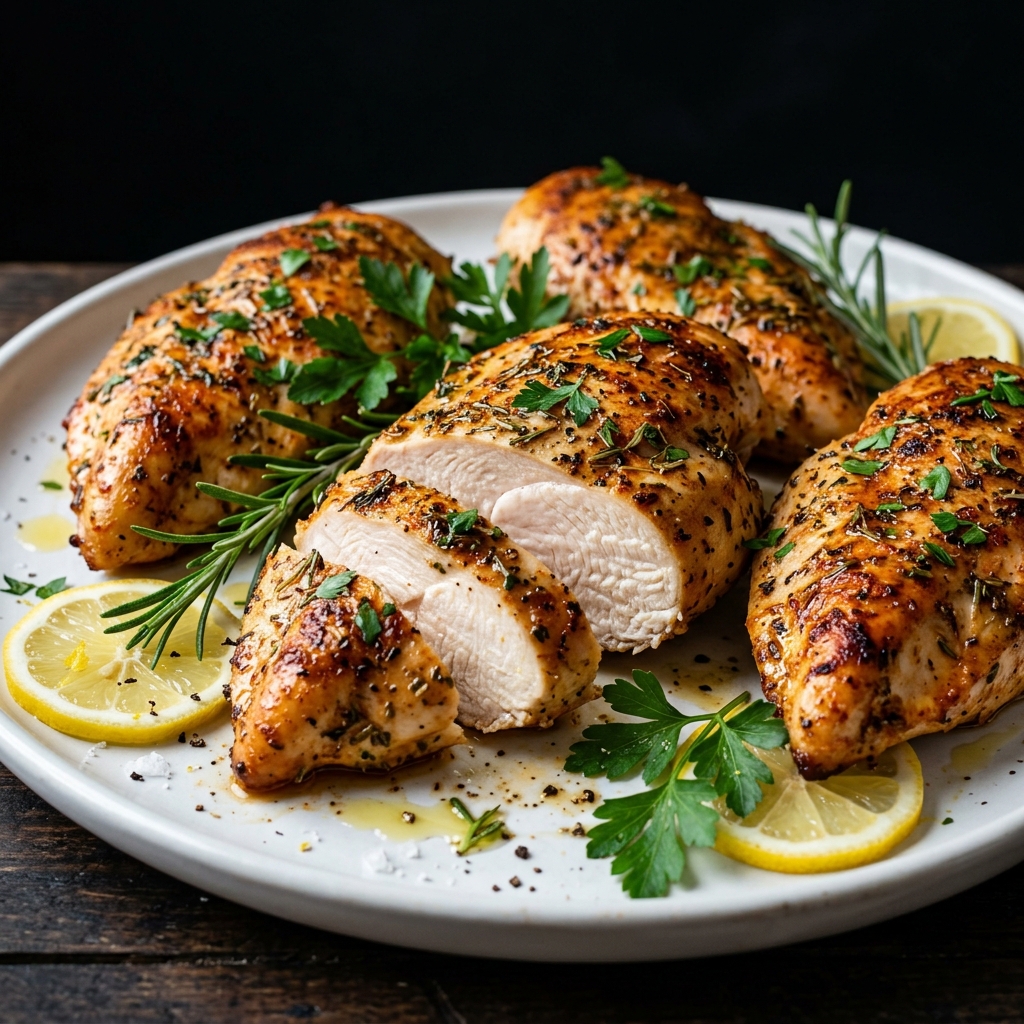
Baked Chicken Breast
Ingredients
Equipment
Method
- Preheat the Oven: Preheat the oven to 400°F (200°C). Lightly grease a baking dish or line a rimmed baking sheet with parchment paper.
- Prepare the Chicken: Pat the chicken breasts dry with paper towels. If the breasts are very thick or uneven, gently pound the thickest portions to create a more uniform thickness.
- Make the Seasoning: In a small bowl, combine paprika, garlic, Italian seasoning, black pepper, salt, and oregano if using.
- Coat the Chicken: Place the chicken breasts in a large bowl. Drizzle with olive oil and rub it evenly over both sides. Sprinkle the seasoning mixture over the chicken, coating both sides and the edges.
- Arrange for Baking: Place the seasoned chicken breasts in the prepared baking dish, leaving a little space between each piece. Add lemon slices and fresh herbs around the chicken if desired.
- Bake: Place the chicken in the preheated oven and bake for approximately 20–30 minutes, depending on the thickness and size of the chicken breasts.
- Check the Temperature: Insert an instant-read thermometer into the thickest part of the chicken. The chicken is safely cooked when it reaches an internal temperature of 165°F (74°C).
- Rest: Remove the chicken from the oven and let it rest for 5 minutes before slicing. This helps the juices redistribute throughout the meat.
- Finish and Serve: Drizzle with fresh lemon juice and garnish with chopped parsley and additional herbs. Slice against the grain and serve warm with your favorite sides.
Notes
Use a thermometer: Cooking time can vary considerably depending on the thickness of the chicken. An instant-read thermometer is the most reliable way to check doneness.
Even thickness matters: If the chicken breasts vary greatly in thickness, gently pound the thicker portions so everything cooks more evenly.
Fresh garlic option: Fresh minced garlic provides a stronger, more aromatic flavor than garlic powder.
Smoky variation: Substitute smoked paprika for regular paprika for a deeper smoky flavor.
Spicy variation: Add a pinch of cayenne pepper or red pepper flakes for extra heat.
Storage: Refrigerate leftovers in an airtight container for up to 3–4 days. Cooked chicken can also be frozen for longer storage.
Serving idea: Pair with roasted vegetables, mashed potatoes, rice, salad, steamed broccoli, or your favorite low-carb side.

Hi, I’m Clara, the creator of Barakala. I love sharing simple, comforting, and delicious recipes that make everyday cooking easier and more enjoyable for home cooks.