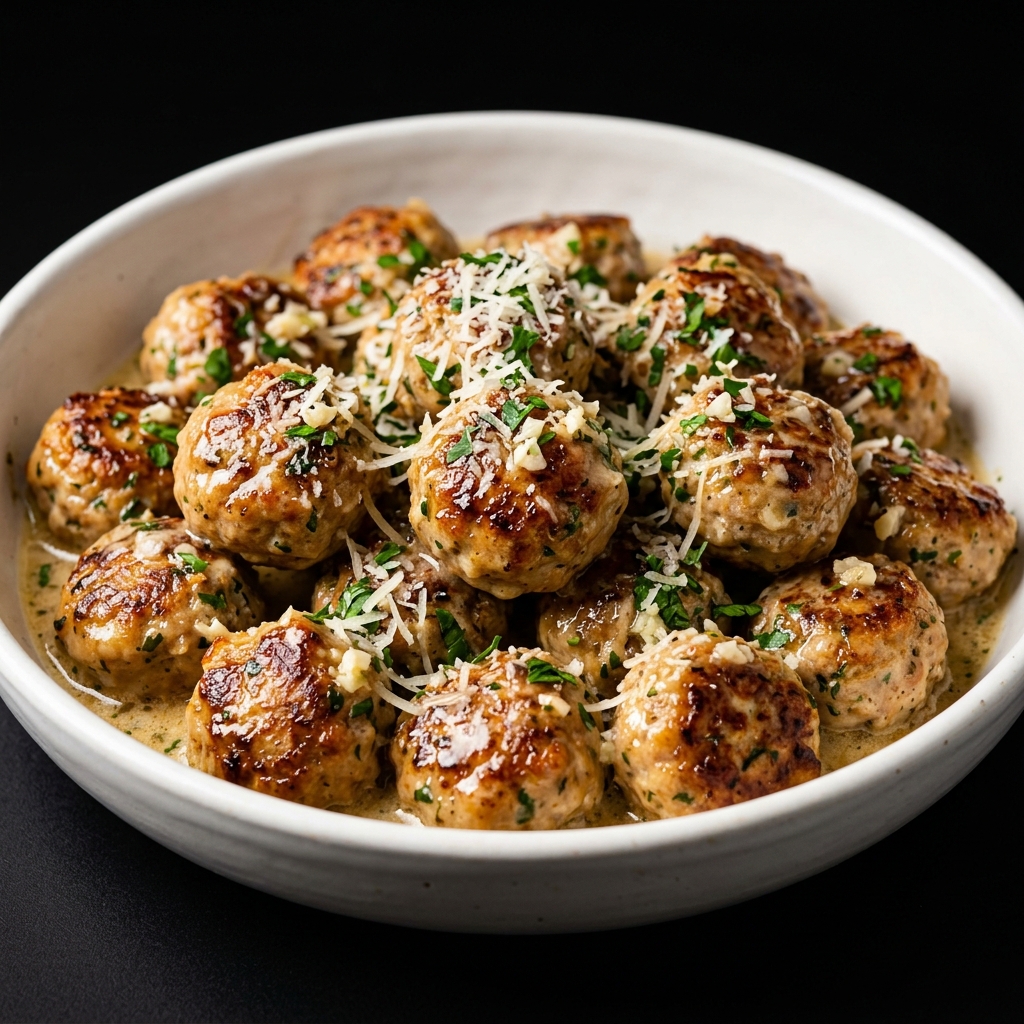
These Garlic Parmesan Turkey Meatballs are about to become your new favorite comfort food. Tender, golden-brown turkey meatballs meet a rich, creamy garlic parmesan sauce in a dinner that feels restaurant-worthy but is surprisingly easy to make at home. Whether you need a cozy weeknight meal, a family-friendly dinner, or a delicious way to turn ground turkey into something extraordinary, this recipe delivers savory flavor, juicy texture, and plenty of cheesy goodness in every bite.
Ingredients You’ll Need
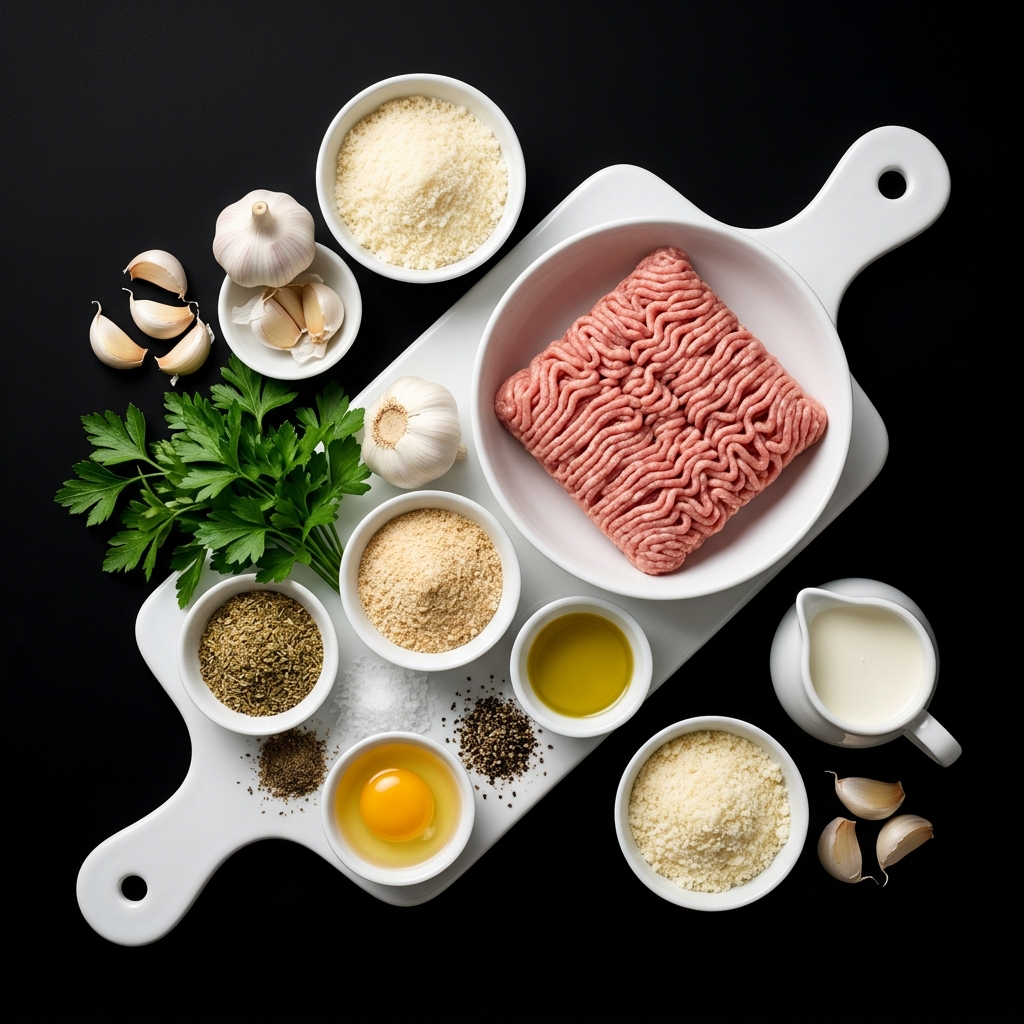
The beauty of this recipe is that most of the ingredients are easy to find at your local grocery store. For the best results, use fresh garlic, good-quality parmesan cheese, and ground turkey with enough moisture and fat to produce tender meatballs.
For the Turkey Meatballs
Ground turkey — 1 pound (450 g)
This is the main protein for the recipe. Ground turkey is mild in flavor, which makes it perfect for absorbing the garlic, parmesan, and herbs. Ground turkey with some fat is generally more forgiving than extra-lean turkey and can produce juicier meatballs.
Parmesan cheese — ½ cup finely grated
Parmesan adds savory, nutty flavor and helps give the meatballs a deliciously rich taste. Freshly grated parmesan melts and blends more naturally than many pre-shredded varieties.
Breadcrumbs — ½ cup
Breadcrumbs help absorb moisture and create a tender, cohesive meatball. Plain or Italian-seasoned breadcrumbs work well. If you need a gluten-free version, use certified gluten-free breadcrumbs.
Egg — 1 large
The egg helps bind the ingredients together so the meatballs hold their shape during cooking.
Garlic — 3 to 4 cloves, finely minced
Fresh garlic is one of the stars of this recipe. It gives the meatballs their signature savory aroma and flavor. For a stronger garlic taste, you can add another clove, but avoid overpowering the delicate turkey.
Fresh parsley — 2 tablespoons, chopped
Parsley adds freshness and a touch of green color. It balances the richness of the parmesan and cream.
Italian seasoning — 1 teaspoon
A blend of herbs such as oregano, basil, and thyme adds warmth and depth to the meatballs.
Salt — ½ teaspoon, or to taste
Salt brings out the flavor of the turkey, cheese, and herbs. Since parmesan is already salty, season carefully.
Black pepper — ¼ teaspoon
Freshly ground black pepper adds a gentle bite and complements the creamy sauce.
Olive oil — 1 to 2 tablespoons
Use olive oil for browning the meatballs in the skillet. It helps create a beautiful golden crust and adds a subtle richness.
For the Creamy Garlic Parmesan Sauce
Butter — 2 tablespoons
Butter forms the flavorful base of the sauce and helps carry the garlic aroma throughout the dish.
Garlic — 3 cloves, minced
Additional garlic creates the rich, fragrant flavor that makes the sauce so irresistible.
Heavy cream — 1 cup (240 ml)
Heavy cream creates the smooth, luxurious texture of the sauce. It helps the parmesan melt into a rich coating for the meatballs.
Chicken broth — ½ cup (120 ml)
Chicken broth adds savory flavor and loosens the sauce to the right consistency. Use low-sodium broth if possible so you can control the salt.
Parmesan cheese — ½ cup finely grated
This is what gives the sauce its signature cheesy flavor. Freshly grated parmesan usually melts more smoothly than pre-grated cheese.
Italian seasoning — ½ teaspoon
A little extra seasoning helps the sauce complement the meatballs.
Fresh parsley — 1 tablespoon, chopped
Use this for finishing the dish. It adds freshness and makes the final presentation more attractive.
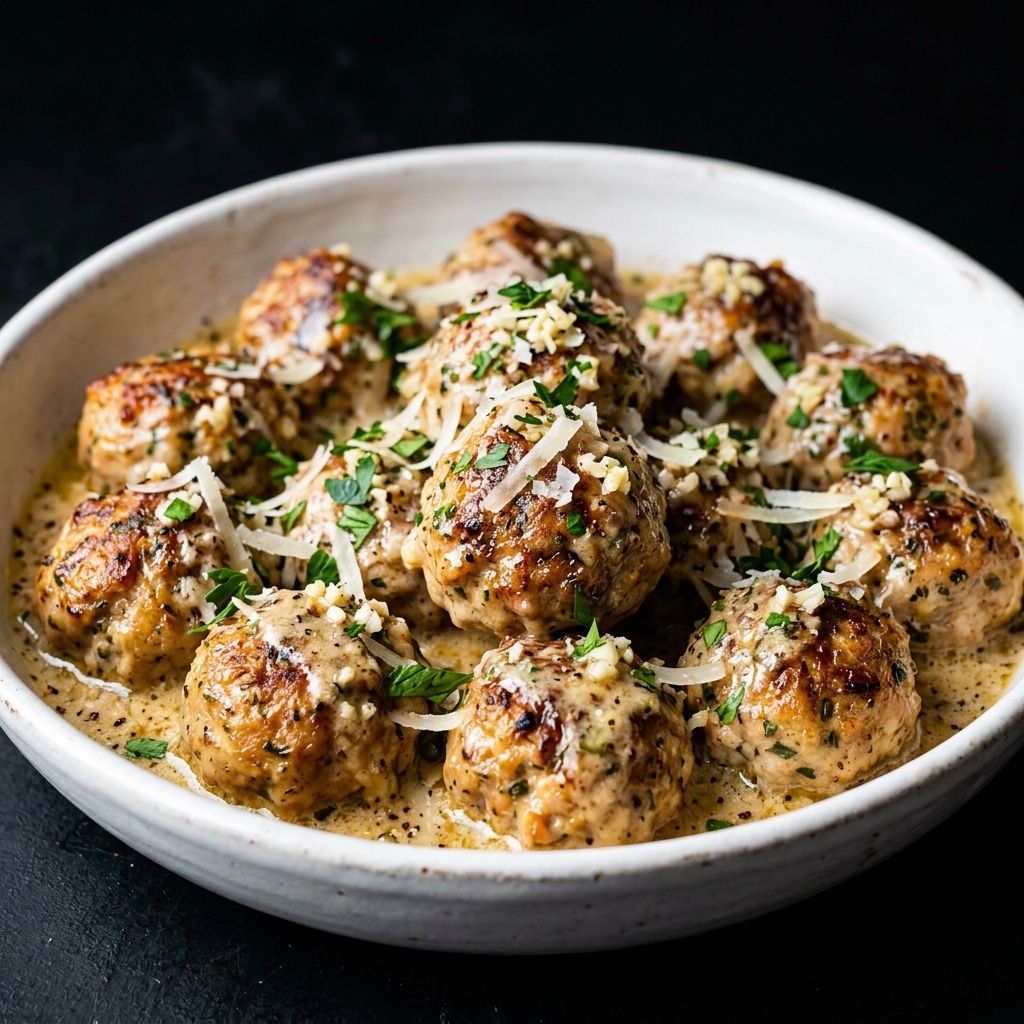
How to Make Garlic Parmesan Turkey Meatballs
Follow these steps carefully for tender meatballs, beautiful browning, and a creamy sauce that clings to every bite.
Step 1: Prepare the Meatball Mixture
In a large mixing bowl, combine the ground turkey, finely grated parmesan cheese, breadcrumbs, egg, minced garlic, chopped parsley, Italian seasoning, salt, and black pepper.
Using clean hands or a wooden spoon, gently mix everything until just combined. Avoid overmixing the turkey. This is one of the most important secrets to tender meatballs.
When ground meat is mixed too aggressively, the proteins can become tightly packed, creating a firm or rubbery texture after cooking. Mix only until the ingredients are evenly distributed.
Step 2: Shape the Meatballs
Using a cookie scoop or tablespoon, portion the mixture into approximately 1½-inch meatballs.
Gently roll each portion between your palms to form a round shape. Try to keep the meatballs similar in size so they cook evenly.
You should get approximately 16 to 20 meatballs, depending on their size.
If the mixture feels very sticky, lightly dampen your hands with water or apply a small amount of oil. Avoid adding excessive breadcrumbs, as this can make the meatballs dense.
Step 3: Heat the Skillet
Place a large skillet over medium heat. Add the olive oil and allow it to heat until shimmering but not smoking.
A properly heated skillet helps the meatballs develop a golden-brown crust instead of sticking or steaming.
For the best browning, avoid overcrowding the pan. If necessary, cook the meatballs in batches.
Step 4: Brown the Turkey Meatballs
Carefully place the meatballs in the skillet, leaving a little space between each one.
Cook for approximately 3 to 4 minutes per side, turning gently with tongs or a spatula until the outside is golden brown on several sides.
The goal at this stage is to develop flavor and color. The meatballs do not need to be fully cooked through yet because they will finish cooking in the sauce.
Once browned, transfer the meatballs to a clean plate.
Step 5: Make the Garlic Butter Base
Reduce the heat to medium-low. Add the butter to the same skillet, allowing it to melt.
Add the minced garlic and sauté for approximately 30 to 60 seconds, stirring frequently. The garlic should become fragrant without turning dark brown.
Garlic burns quickly, and burnt garlic can make the entire sauce taste bitter. Keep the heat moderate and stir continuously.
Step 6: Add the Cream and Broth
Pour the chicken broth into the skillet, gently scraping up the flavorful browned bits from the bottom of the pan.
These browned bits contain concentrated flavor from the turkey meatballs and help make the sauce taste richer.
Add the heavy cream and Italian seasoning. Stir gently until the ingredients are combined.
Allow the sauce to come to a gentle simmer. Avoid boiling it aggressively, as high heat can cause cream-based sauces to separate.
Step 7: Stir in the Parmesan
Reduce the heat to low and gradually add the finely grated parmesan cheese.
Stir continuously until the cheese melts into the sauce, creating a smooth, creamy consistency.
If the sauce becomes too thick, add a small splash of chicken broth. If it seems too thin, allow it to simmer gently for another minute or two.
For the smoothest sauce, use freshly grated parmesan and keep the heat low while it melts.
Step 8: Return the Meatballs to the Sauce
Carefully place the browned turkey meatballs back into the skillet.
Spoon some of the creamy garlic parmesan sauce over the top of each meatball. Cover the skillet loosely with a lid and allow the meatballs to simmer gently for approximately 8 to 12 minutes, or until cooked through.
The exact cooking time depends on the size of the meatballs and how thoroughly they were browned.
For food safety, ground turkey should reach an internal temperature of 165°F (74°C), measured with a food thermometer inserted into the center of a meatball.
Once cooked, remove the skillet from the heat and allow the meatballs to rest for a few minutes.
Step 9: Finish and Garnish
Sprinkle the meatballs with freshly chopped parsley and a little extra grated parmesan cheese.
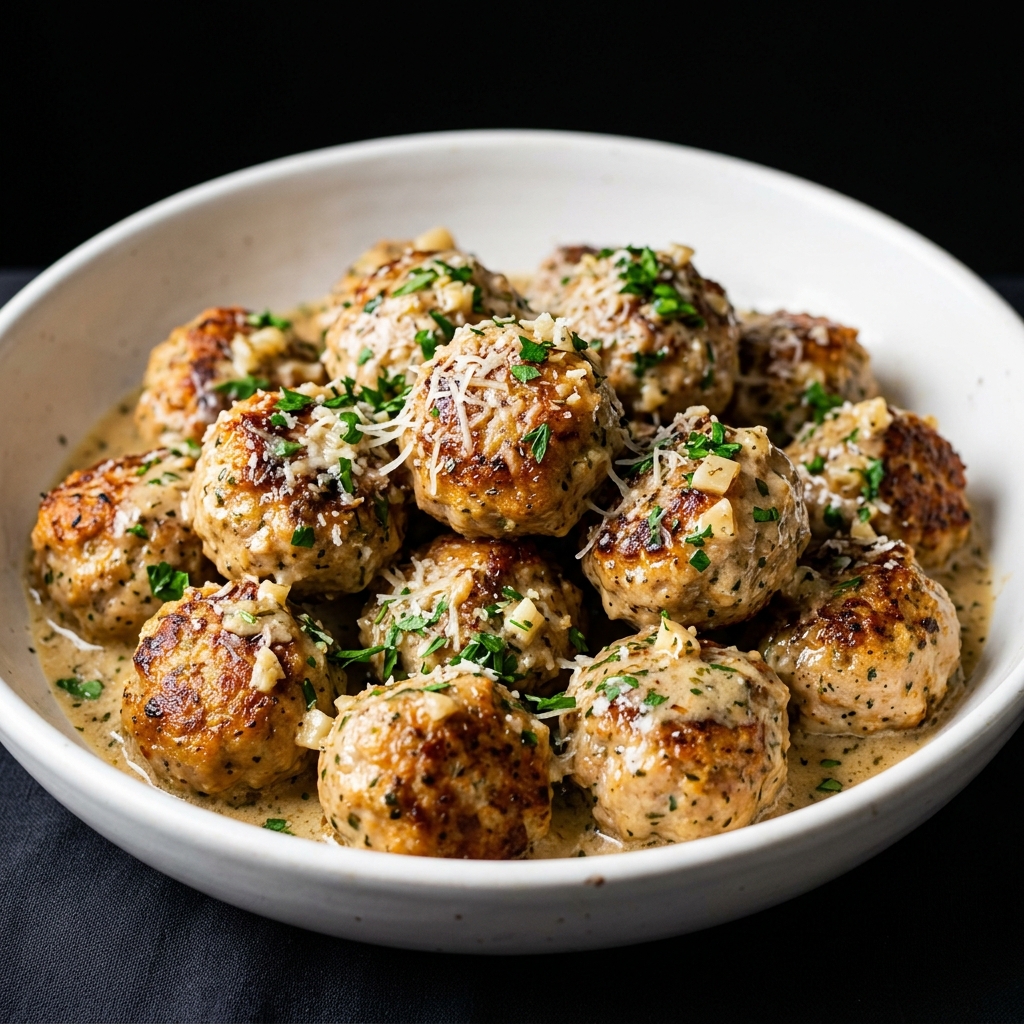
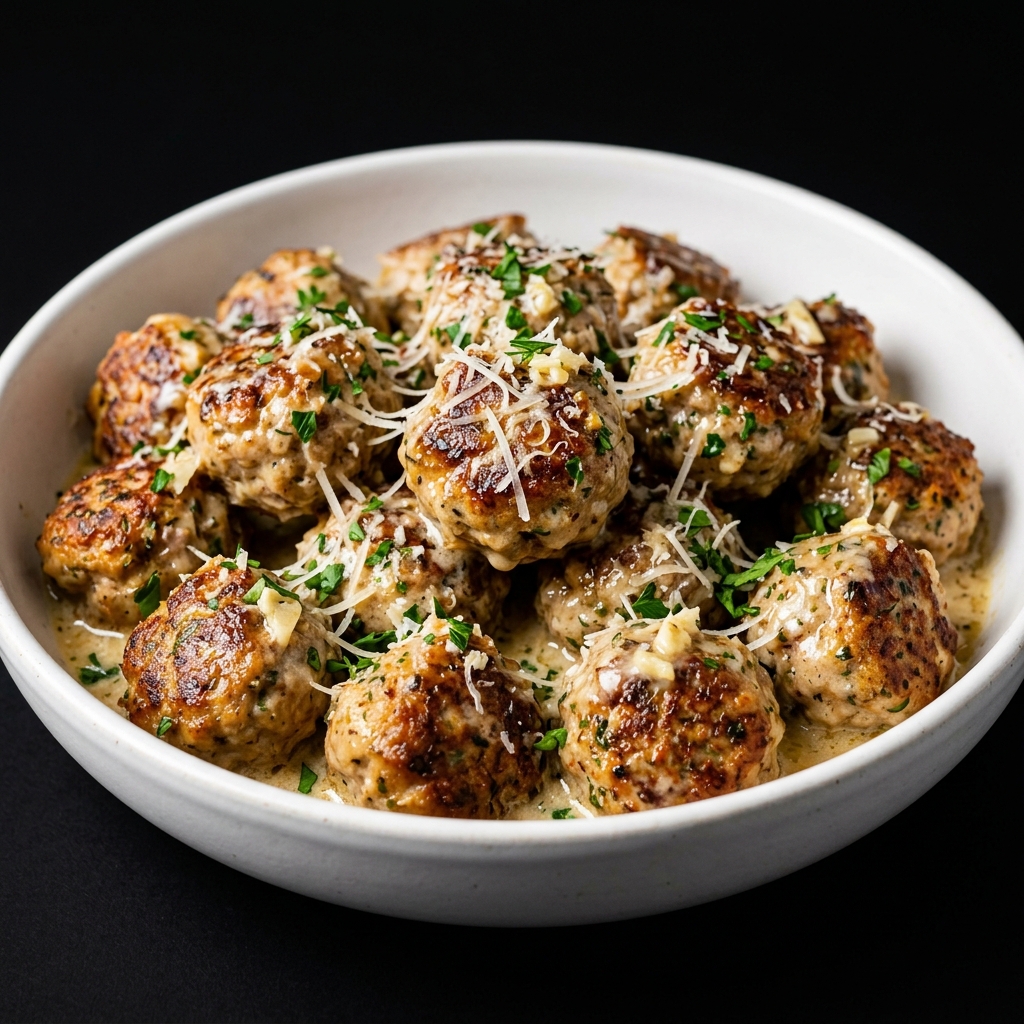
The contrast between the creamy white sauce, golden turkey meatballs, green parsley, and black pepper creates a beautiful presentation.
Serve immediately while the sauce is warm and silky.
What Makes These Meatballs So Tender and Flavorful?
The secret to exceptional turkey meatballs is not simply adding more ingredients. It is about balancing moisture, seasoning, and cooking technique.
Ground turkey has a mild flavor and can become dry when overcooked. The egg and breadcrumbs help retain moisture, while parmesan adds richness and savory depth. Fresh garlic and herbs bring the flavor forward without overwhelming the turkey.
Browning the meatballs before simmering them is another important step. The golden crust develops deeper savory notes, and the browned bits left in the skillet become part of the sauce. This is why cooking everything in one skillet can produce such a flavorful result.
The creamy garlic parmesan sauce also plays a major role. It adds moisture to the meatballs while creating a rich coating that brings all the flavors together. Every bite should have a little turkey, garlic, parmesan, and sauce.
The final texture should be tender and juicy, never tough or dry. If you cut into a meatball and see a moist, fully cooked center with a golden exterior, you are on the right track.
Variations to Try
One of the best things about Garlic Parmesan Turkey Meatballs is how easy they are to customize. You can change the seasoning, sauce, or serving style depending on your preferences.
1. Spinach Garlic Parmesan Turkey Meatballs
Add finely chopped fresh spinach to the meatball mixture for extra color and a subtle vegetable flavor. Squeeze out excess moisture from cooked spinach before mixing it into the turkey.
This variation works well for families looking to add more vegetables to dinner.
2. Spicy Garlic Parmesan Turkey Meatballs
For a little heat, add ¼ to ½ teaspoon of red pepper flakes to the meatball mixture or sauce.
You can also add a pinch of cayenne pepper for a stronger kick. The heat pairs beautifully with the creamy parmesan sauce.
3. Mushroom Garlic Parmesan Turkey Meatballs
Sauté sliced mushrooms in the skillet before preparing the sauce. Mushrooms add an earthy, savory flavor that complements the turkey and garlic.
For an especially rich dinner, serve the meatballs with mashed potatoes or buttered noodles.
4. Gluten-Free Turkey Meatballs
Replace regular breadcrumbs with certified gluten-free breadcrumbs. Make sure your broth and seasonings are also suitable for a gluten-free diet.
The meatballs can still be tender and flavorful without traditional wheat breadcrumbs.
5. Low-Carb Garlic Parmesan Turkey Meatballs
To make a lower-carb version, omit the breadcrumbs or replace them with a suitable low-carb binder, such as finely crushed pork rinds.
Check the ingredients in your broth and seasonings, and serve with cauliflower mash, zucchini noodles, or roasted vegetables.
Expert Tips for Perfect Turkey Meatballs
Don’t Overmix the Meat
This is the number one tip for tender meatballs. Mix the ingredients just until combined. Overworking the mixture can lead to dense, firm meatballs.
Use Freshly Grated Parmesan
Fresh parmesan melts more smoothly into the sauce and offers a fuller flavor. It also gives the dish a more authentic restaurant-style finish.
Brown Before Simmering
Even if you are in a hurry, do not skip browning. It creates flavor and gives the meatballs an appetizing golden color.
Keep the Sauce at a Gentle Simmer
Cream-based sauces need gentle heat. A rolling boil can cause the sauce to separate or become grainy.
Use a Meat Thermometer
The safest way to determine whether turkey meatballs are done is to check that the center reaches 165°F (74°C). This is more reliable than judging doneness by cooking time alone.
Don’t Add Too Much Salt
Parmesan and chicken broth can both contain salt. Taste the sauce before adding extra seasoning, especially if you use regular-sodium broth.
Let the Meatballs Rest Briefly
A short rest after cooking allows the meatballs to settle and makes them easier to serve without falling apart.
Make-Ahead Options
These turkey meatballs are a convenient choice for meal preparation because you can prepare several components ahead of time.
Prepare the Meatballs in Advance
Shape the uncooked meatballs and place them on a lined tray. Cover and refrigerate for up to 24 hours before cooking.
This makes the recipe easier to manage on busy evenings.
Freeze the Uncooked Meatballs
Arrange shaped meatballs in a single layer on a tray and freeze until firm. Transfer them to a freezer-safe container or bag.
For best quality, use within approximately 2 to 3 months. Thaw safely in the refrigerator before cooking, or adjust the cooking method to ensure the center reaches 165°F (74°C).
Make the Cooked Meatballs Ahead
You can cook the meatballs and sauce in advance, then refrigerate them in an airtight container. Reheat gently on the stovetop, adding a splash of broth if the sauce thickens.
For the best texture, avoid repeatedly reheating the entire batch.
How to Store Garlic Parmesan Turkey Meatballs
Proper storage helps preserve the flavor, texture, and quality of your homemade turkey meatballs.
Refrigerating Leftovers
Allow the cooked meatballs and sauce to cool slightly, then transfer them into a clean, airtight container.
Refrigerate within 2 hours of cooking, or within 1 hour if the surrounding temperature is above 90°F (32°C).
Store in the refrigerator for 3 to 4 days.
Keep the meatballs together with the sauce so they remain moist and flavorful.
Freezing Cooked Turkey Meatballs
You can freeze cooked turkey meatballs with their garlic parmesan sauce.
Place the cooled meatballs and sauce in a freezer-safe airtight container. Leave a little space for expansion, seal tightly, and label with the date.
For best quality, use within approximately 2 to 3 months.
The cream sauce may change texture slightly after freezing and thawing. Stir gently during reheating to help bring it back together.
How to Reheat
Stovetop Method
Place the meatballs and sauce in a saucepan or skillet over low to medium-low heat.
Add a splash of chicken broth, milk, or cream if the sauce has thickened.
Cover and heat gently, stirring occasionally, until the meatballs are steaming hot throughout.
Microwave Method
Place a serving of meatballs and sauce in a microwave-safe bowl.
Cover loosely and heat in short intervals, stirring between intervals to distribute the heat.
Make sure the center reaches 165°F (74°C) when reheating leftovers.
Avoid overheating the sauce, as this can cause it to separate.
Frequently Asked Questions
1. How do I keep turkey meatballs from becoming dry?
The key is to avoid overcooking and overmixing the meat.
Use a balanced amount of breadcrumbs and egg, mix gently, and simmer the meatballs in the sauce until they reach 165°F (74°C).
Using ground turkey with some fat can also help maintain a juicy texture.
2. Can I use ground chicken instead of ground turkey?
Yes. Ground chicken can be substituted for ground turkey in this recipe.
The flavor will be slightly different, but the garlic parmesan sauce works beautifully with both proteins.
Ground chicken can also become dry when overcooked, so use a thermometer to check doneness.
3. Can I make these meatballs without breadcrumbs?
Yes, but the texture may change.
Breadcrumbs help absorb moisture and hold the meatballs together. If you omit them, the mixture may be softer and more delicate.
You can try certified gluten-free breadcrumbs, finely crushed pork rinds, or another suitable binder depending on your dietary needs.
4. Can I bake the turkey meatballs instead of frying them?
Absolutely.
Arrange the shaped meatballs on a lightly greased or parchment-lined baking sheet.
Bake in a preheated oven at 400°F (200°C) until the centers reach 165°F (74°C). The exact cooking time depends on their size.
Baking can be convenient when preparing a larger batch, although pan-browning provides a more pronounced golden crust.
5. Why is my garlic parmesan sauce grainy?
A grainy sauce can happen when parmesan is added over excessive heat or when the cheese does not melt smoothly.
To help prevent this, use finely grated parmesan, reduce the heat to low, and stir gradually as the cheese melts.
Avoid boiling the sauce aggressively.
6. Can I use pre-shredded parmesan cheese?
You can, but freshly grated parmesan is generally preferable for a smooth, flavorful sauce.
Some pre-shredded cheeses contain anti-caking ingredients that can affect how smoothly they melt.
If using pre-shredded parmesan, add it slowly over low heat and stir well.
7. Can I make this recipe gluten-free?
Yes, with the right ingredient substitutions.
Use certified gluten-free breadcrumbs or another gluten-free binder. Check your chicken broth, seasoning blends, and other packaged ingredients for gluten-containing additives.
The turkey, garlic, parmesan, egg, and cream themselves are naturally gluten-free, but packaged ingredients can vary.
8. Is this recipe keto-friendly?
The standard recipe is not necessarily keto-friendly because regular breadcrumbs contain carbohydrates.
For a keto version, omit the breadcrumbs or use an appropriate low-carb alternative. Choose a sauce with ingredients that fit your carbohydrate goals.
Serve with cauliflower mash, zucchini noodles, or roasted low-carb vegetables.
9. Can I make the sauce without heavy cream?
Yes, although the texture and richness will change.
You can use half-and-half for a lighter sauce, but it may be thinner and less rich. Another option is to use milk with a small amount of cream cheese, depending on the desired consistency.
For a naturally creamy sauce, keep the heat gentle and adjust the liquid gradually.
10. How do I know when turkey meatballs are fully cooked?
The safest way is to use an instant-read food thermometer.
Insert the thermometer into the center of the largest meatball. Ground turkey should reach 165°F (74°C).
Do not rely only on the outside color or cooking time, as meatball sizes and cooking conditions vary.
Nutrition Information
The following is an approximate estimate for one serving of Garlic Parmesan Turkey Meatballs, assuming the recipe makes 4 servings and includes the meatballs and creamy sauce.
|
Nutrient |
Approximate amount per serving |
|---|---|
|
Calories |
450–550 kcal |
|
Protein |
30–35 g |
|
Carbohydrates |
10–18 g |
|
Fat |
28–38 g |
|
Saturated fat |
12–18 g |
|
Fiber |
1–2 g |
|
Sodium |
700–1,000 mg |
These values are estimates, not laboratory-tested nutrition information. The actual amounts depend on the fat content of the turkey, the type and quantity of parmesan, the cream used, the broth, and the serving size.
For more accurate nutrition information, calculate the recipe using the exact ingredients and brands you use.
Garlic Parmesan Turkey Meatballs
Ingredients
Equipment
Method
- In a large bowl, combine ground turkey, parmesan cheese, breadcrumbs, egg, minced garlic, parsley, Italian seasoning, salt, and black pepper. Mix gently until just combined. Avoid overmixing to keep the meatballs tender.
- Use a cookie scoop or tablespoon to portion the mixture into 16–20 meatballs, approximately 1½ inches in size. Roll gently between your palms.
- Heat olive oil in a large skillet over medium heat. Add the meatballs, leaving space between them. Cook for approximately 3–4 minutes per side, turning gently until golden brown. Transfer to a plate. They will finish cooking in the sauce.
- Reduce the heat to medium-low. Add butter to the same skillet. Once melted, add minced garlic and sauté for 30–60 seconds until fragrant. Do not let the garlic burn.
- Pour in the chicken broth, scraping up the browned bits from the bottom of the pan. Add heavy cream and Italian seasoning. Stir and bring to a gentle simmer.
- Reduce the heat to low. Gradually stir in the grated parmesan cheese until melted and the sauce becomes creamy. If the sauce is too thick, add a splash of broth.
- Return the browned meatballs to the skillet. Spoon the sauce over them, cover loosely, and simmer gently for 8–12 minutes, or until the centers reach 165°F (74°C).
- Remove from heat. Sprinkle with fresh parsley and extra parmesan cheese. Serve warm with pasta, mashed potatoes, rice, or vegetables.
Notes

Hi, I’m Clara, the creator of Barakala. I love sharing simple, comforting, and delicious recipes that make everyday cooking easier and more enjoyable for home cooks.