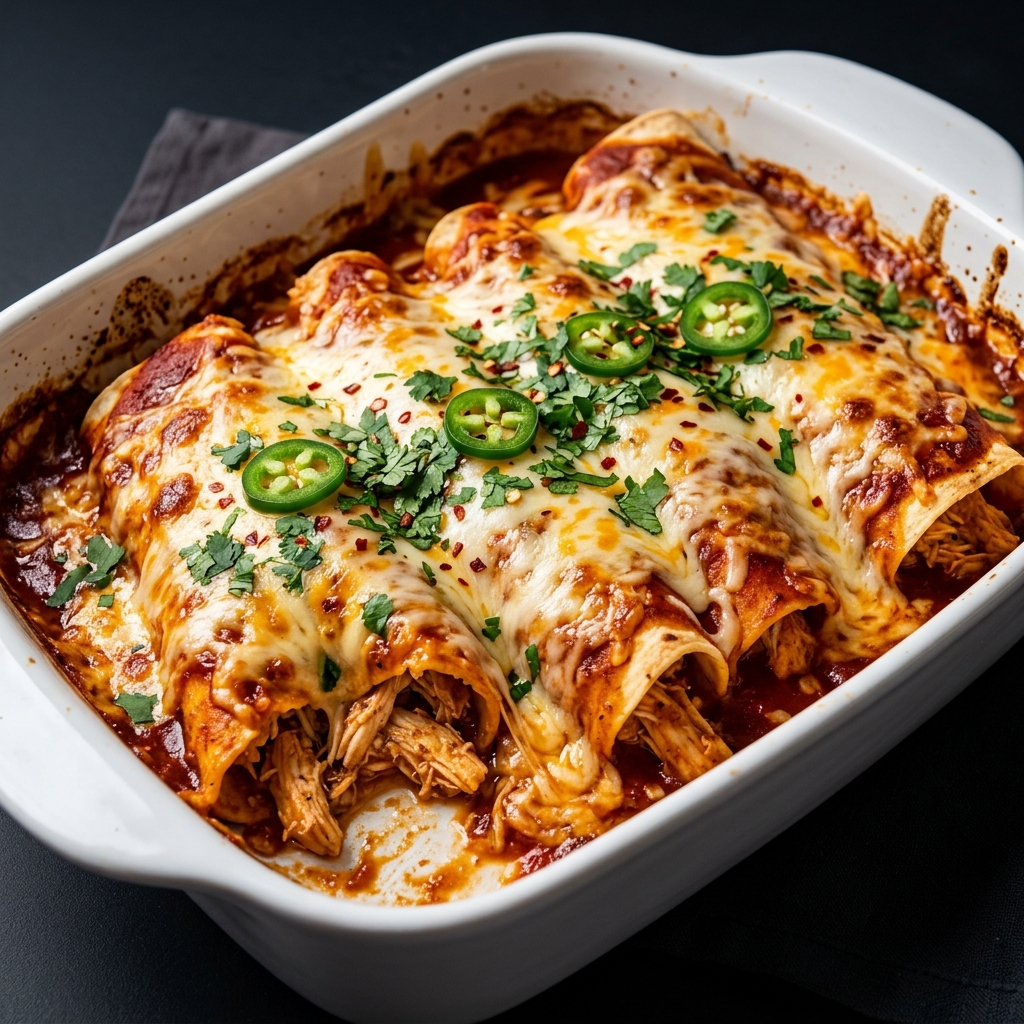
Few dinners are as satisfying as tender shredded chicken wrapped in soft tortillas, covered in rich enchilada sauce, and buried beneath a blanket of bubbling melted cheese. These Homemade Chicken Enchiladas with Melted Cheese bring all of those comforting flavors together in one irresistible dish that is hearty enough for a family dinner yet special enough to serve when guests come over.
Ingredients You’ll Need
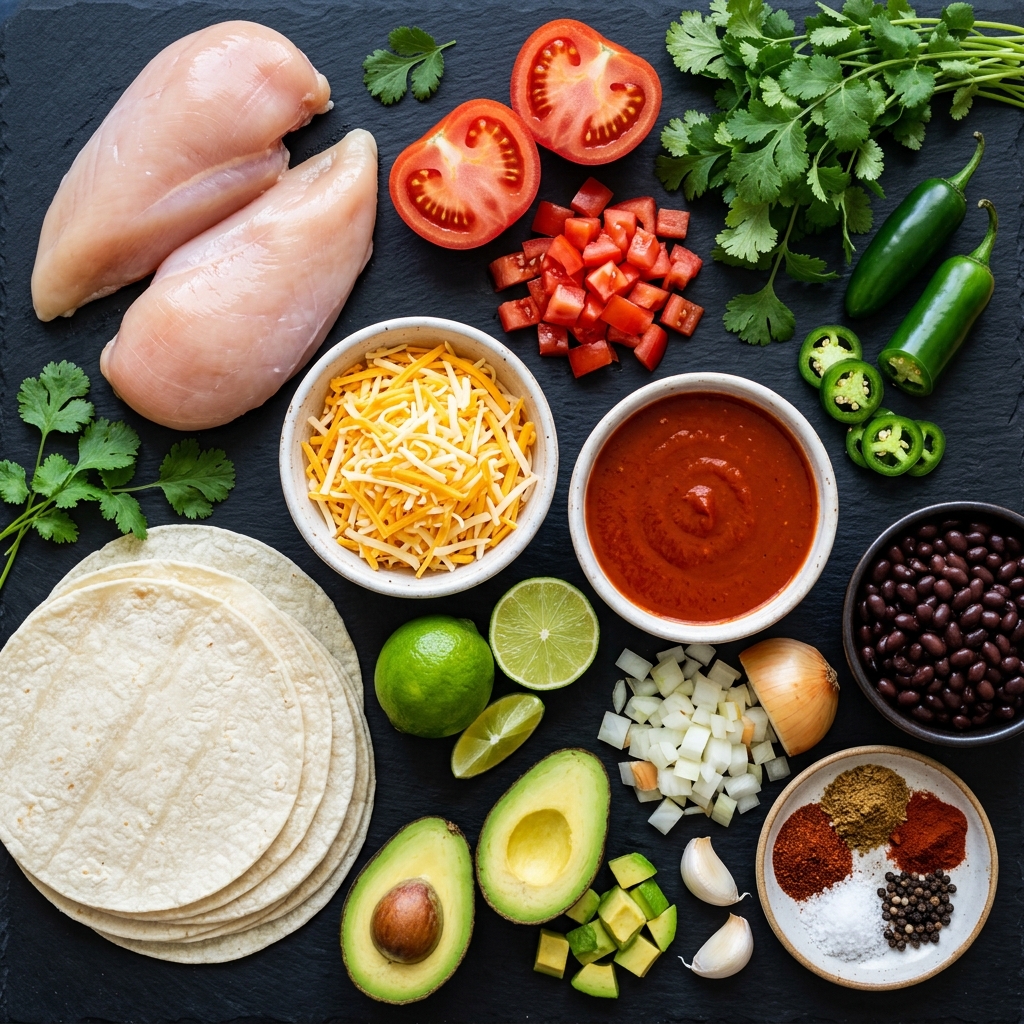
For the Chicken Filling
2 pounds boneless, skinless chicken breasts
Chicken breasts are lean, tender, and easy to shred. You can also use boneless chicken thighs if you prefer darker meat with a richer flavor. For the juiciest filling, avoid overcooking the chicken.
1 tablespoon olive oil
A small amount of oil helps sauté the aromatics and spices while adding richness to the filling.
1 small yellow onion, finely diced
Onion adds sweetness and savory depth. Dice it fairly small so that it blends naturally into the chicken rather than creating large crunchy pieces.
3 cloves garlic, minced
Fresh garlic gives the filling a much deeper flavor than garlic powder alone. Add it after the onion has softened so it doesn’t burn.
1 teaspoon ground cumin
Cumin contributes a warm, earthy flavor that works beautifully with chicken and enchilada sauce.
1 teaspoon chili powder
Chili powder adds mild heat, color, and a classic Mexican-inspired flavor to the filling. Adjust the amount depending on your preferred level of spice.
1/2 teaspoon smoked paprika
Smoked paprika adds subtle smokiness and makes the chicken taste as though it has been cooked over a flame.
1/2 teaspoon salt
Salt helps bring all the other flavors into balance. Remember that the enchilada sauce and cheese may also contain salt, so season gradually.
1/4 teaspoon black pepper
Freshly ground black pepper adds a gentle bite and rounds out the seasoning.
1/2 cup chicken broth
A little broth keeps the shredded chicken moist and helps the seasonings coat every piece.
For the Enchiladas
8–10 medium flour or corn tortillas
Both work well. Flour tortillas tend to be soft and pliable, while corn tortillas provide a more traditional flavor. If using corn tortillas, warming them first makes them much easier to roll without cracking.
3 cups red enchilada sauce
Use your favorite store-bought sauce for convenience or a homemade sauce if you want more control over the flavor and spice level. A flavorful sauce makes a major difference because it coats both the tortillas and the bottom of the baking dish.
2 cups shredded Mexican cheese blend
A combination of cheeses such as Monterey Jack, cheddar, and Colby Jack melts beautifully. You can also use shredded Monterey Jack or cheddar on its own.
1/2 cup shredded cheddar cheese
Adding a little extra cheddar on top creates a beautiful golden finish and a more pronounced cheesy flavor.
Optional Toppings
Fresh cilantro, chopped
Cilantro adds freshness and a bright contrast to the rich sauce and cheese.
1 jalapeño, thinly sliced
Use fresh jalapeño for a crisp, fresh heat. Remove the seeds and inner membrane for a milder result.
1 avocado, sliced or diced
Creamy avocado provides a cooling contrast to the spicy, cheesy enchiladas.
Sour cream
A spoonful of cool sour cream balances the richness of the dish.
Fresh lime wedges
A squeeze of lime just before serving adds acidity and helps brighten the entire dish.
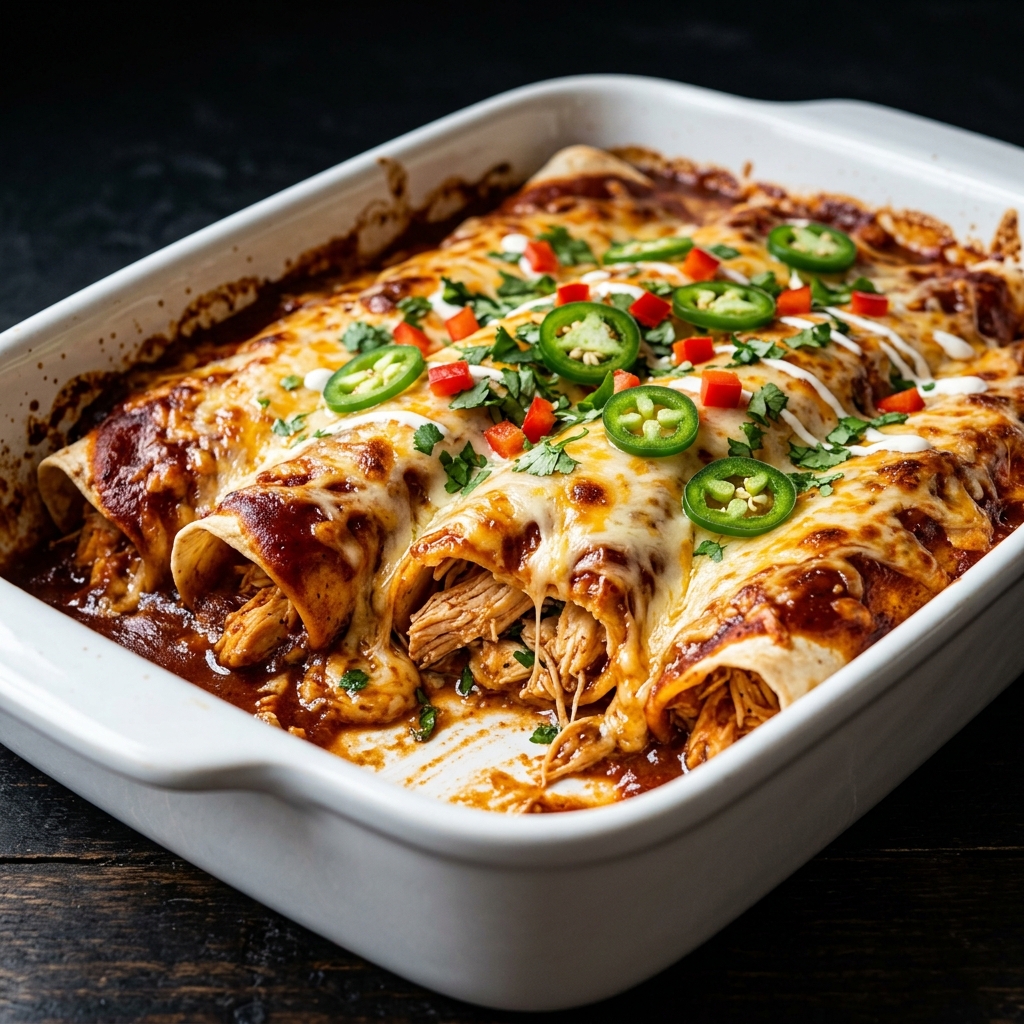
How to Make Homemade Chicken Enchiladas
Step 1: Prepare the Chicken
Start by seasoning the chicken breasts lightly with salt, pepper, cumin, chili powder, and smoked paprika.
Heat the olive oil in a large skillet over medium heat. Add the diced onion and cook for approximately 3–4 minutes, stirring occasionally, until it begins to soften.
Add the minced garlic and cook for another 30–60 seconds. You want the garlic to become fragrant without allowing it to brown heavily.
Add the seasoned chicken and chicken broth. Cover the skillet and cook until the chicken is completely cooked through and reaches an internal temperature of 165°F (74°C).
Remove the chicken from the pan and allow it to rest for a few minutes. Resting is important because it allows the juices to redistribute instead of immediately running out when the chicken is shredded.
Step 2: Shred the Chicken
Once the chicken is cool enough to handle, shred it using two forks.
For a quicker method, place the cooked chicken in a large bowl and use a hand mixer on low speed for a few seconds. This creates evenly shredded chicken very quickly, although you should avoid overmixing it into a paste.
Return the shredded chicken to the skillet and toss it with the onions, garlic, and flavorful cooking juices.
Taste the filling at this stage.
This is one of the most important moments in the recipe because the filling should taste delicious before it ever reaches the tortilla. If it tastes flat, add a small pinch of salt, another sprinkle of cumin, or a little more chili powder.
Step 3: Warm the Tortillas
Tortillas are much easier to roll when they are warm and flexible.
For flour tortillas, heat them briefly in a dry skillet or microwave them under a slightly damp kitchen towel.
For corn tortillas, warming is particularly important because cold corn tortillas tend to crack when rolled. You can heat them individually in a dry skillet for a few seconds per side or warm a stack under a damp towel.
Do not overheat them until they become crisp. You want them soft and flexible.
Step 4: Prepare the Baking Dish
Preheat your oven to 375°F (190°C).
Lightly grease a modern white ceramic or glass baking dish with a small amount of oil or cooking spray.
Spread approximately 1 cup of enchilada sauce across the bottom of the dish.
This layer serves two purposes: it adds flavor underneath the enchiladas and prevents the tortillas from sticking to the baking dish.
Step 5: Fill and Roll the Enchiladas
Place one warm tortilla on a clean work surface.
Spoon a generous but manageable amount of shredded chicken down the center. Sprinkle a little shredded cheese over the chicken.
Avoid overfilling the tortilla. It can be tempting to add as much filling as possible, but an overloaded tortilla is difficult to roll and more likely to split.
Fold the sides slightly inward, then roll the tortilla firmly from one end to the other.
Place it seam-side down in the prepared baking dish.
Repeat with the remaining tortillas and chicken, arranging the enchiladas closely together. Keeping them snug helps them maintain their shape while baking.
Step 6: Cover With Enchilada Sauce
Pour the remaining enchilada sauce evenly over the rolled tortillas.
Use the back of a spoon or spatula to spread the sauce so that most of the tortillas are covered.
Do not leave large dry areas exposed. The sauce is what keeps the tortillas tender and infuses them with flavor as they bake.
Step 7: Add Plenty of Cheese
Now comes the part that makes these enchiladas especially irresistible.
Sprinkle the shredded Mexican cheese blend evenly over the entire surface, followed by the cheddar.
Try to distribute the cheese all the way toward the edges rather than piling it only in the center. The edges will become beautifully browned and bubbly in the oven.
Step 8: Bake Until Bubbling and Golden
Cover the baking dish loosely with aluminum foil and place it in the preheated oven.
Bake for approximately 20 minutes.
Remove the foil and continue baking for another 8–12 minutes, or until the cheese is completely melted and beginning to develop golden-brown spots.
For an especially attractive finish, place the enchiladas under the broiler for 1–2 minutes at the end.
Watch them closely during this step. Cheese can move from beautifully golden to burnt surprisingly quickly under a broiler.
Step 9: Rest Before Serving
Remove the enchiladas from the oven and allow them to rest for approximately 5–10 minutes.
This short resting period is worth the wait. It allows the sauce to settle and the cheese to cool slightly, making the enchiladas easier to serve without everything sliding apart.
Finish with fresh cilantro, sliced jalapeños, avocado, sour cream, and a squeeze of fresh lime if desired.
The Secret to Enchiladas That Don’t Turn Soggy
The difference between good enchiladas and excellent enchiladas often comes down to moisture control.
Because tortillas naturally absorb sauce, it is important to use enough enchilada sauce to keep them tender without completely drowning them. A thick, flavorful sauce works especially well because it clings to the tortillas rather than pooling excessively in the bottom of the dish.
Another useful trick is to avoid soaking the tortillas completely before rolling. Warm them until flexible, fill them, roll them, and let the sauce do its work during baking.
The cheese also plays an important role. A good melting cheese creates a protective, rich layer across the top while adding texture and flavor. If you want beautifully browned cheese, leave the dish uncovered during the final portion of baking.
What Makes the Chicken Filling So Flavorful?
A common mistake with chicken enchiladas is treating the chicken as nothing more than a neutral filling. That means all the flavor has to come from the sauce and cheese.
Instead, season the chicken from the beginning.
Cumin, chili powder, garlic, onion, smoked paprika, salt, and pepper create a savory foundation that complements the enchilada sauce. Cooking the chicken with a small amount of broth also helps prevent the meat from becoming dry while giving the seasonings something flavorful to cling to.
For an even richer filling, you can stir a small amount of enchilada sauce into the shredded chicken before filling the tortillas. This ensures that every bite contains flavorful, saucy chicken rather than a dry pocket of meat surrounded by sauce.
Delicious Variations to Try
Creamy Chicken Enchiladas
For a richer variation, stir a few spoonfuls of cream cheese or sour cream into the shredded chicken before filling the tortillas. The result is exceptionally creamy and comforting.
Spicy Chicken Enchiladas
If you love heat, add diced jalapeños, a pinch of cayenne pepper, or chopped green chiles to the chicken filling. You can also use a spicy enchilada sauce.
For maximum freshness, finish the baked enchiladas with thinly sliced jalapeños just before serving.
Chicken and Black Bean Enchiladas
Add drained and rinsed black beans to the chicken mixture. Beans make the filling more substantial while adding fiber and a pleasant texture.
This is also a useful way to stretch the filling when feeding a larger family.
Chicken and Corn Enchiladas
Sweet corn pairs beautifully with smoky spices and savory chicken. Stir a small amount of corn into the filling before rolling the tortillas.
For even more flavor, lightly char the corn in a skillet first.
Green Chicken Enchiladas
Instead of traditional red enchilada sauce, use green enchilada sauce made with tomatillos and green chiles. The bright, tangy flavor works particularly well with chicken.
Top with Monterey Jack cheese, cilantro, avocado, and a squeeze of lime.
Extra-Cheesy Enchiladas
For serious cheese lovers, add cheese inside the tortillas as well as on top. Monterey Jack, cheddar, Oaxaca-style cheese, or a Mexican cheese blend can all work beautifully.
The key is balance: enough cheese to make the filling rich and creamy without overpowering the seasoned chicken and sauce.
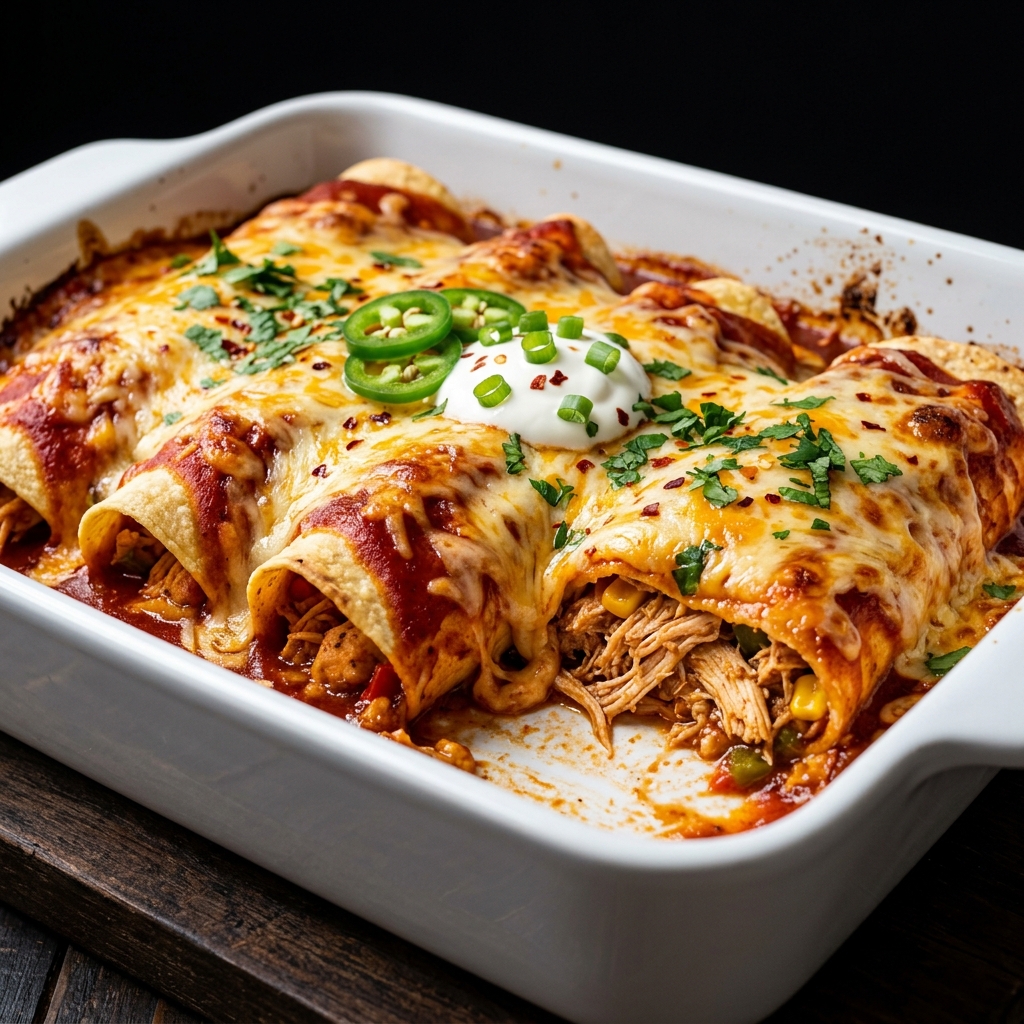
Expert Tips for the Best Chicken Enchiladas
Making enchiladas is fairly straightforward, but a few professional techniques can make a noticeable difference in the final dish. These are the small details that turn a good pan of enchiladas into one that people remember.
Don’t Overcook the Chicken
The chicken is the foundation of the filling, so keeping it juicy is essential. Chicken breasts can become dry when cooked for too long, particularly because they will continue cooking slightly from residual heat.
Use a meat thermometer whenever possible and cook the chicken until it reaches 165°F (74°C) at the thickest part. Once cooked, let it rest briefly before shredding.
If you’re using leftover cooked chicken or rotisserie chicken, you can skip the initial cooking step and simply warm the shredded meat with the onion, garlic, spices, and a little chicken broth.
Season the Filling Before You Roll
Always taste the chicken filling before assembling the enchiladas.
This is your opportunity to correct the seasoning. Once the filling is inside the tortillas and covered with sauce and cheese, adjusting its flavor becomes much more difficult.
The filling should taste savory, aromatic, and slightly more seasoned than you might normally eat on its own. The tortillas, sauce, and cheese will balance that intensity once everything is combined.
Warm Tortillas Are Easier to Work With
If your tortillas crack while you’re rolling them, they probably aren’t warm enough.
A few seconds of gentle heating makes tortillas considerably more flexible. Corn tortillas especially benefit from this step.
For particularly delicate corn tortillas, warm them in a skillet one at a time and keep the warmed tortillas covered with a clean kitchen towel while you work. This keeps them soft while preventing them from drying out.
Don’t Overfill the Tortillas
More filling isn’t necessarily better.
Overstuffed enchiladas are difficult to roll and often split in the baking dish. They can also make the dish difficult to serve neatly.
A moderate line of chicken filling through the center of each tortilla is enough. Add a little cheese inside, roll firmly, and let the enchilada sauce and melted cheese provide the rest of the richness.
Use Enough Sauce, but Not Too Much
Enchilada sauce is essential for keeping the tortillas tender and flavorful, but excessive sauce can make the finished dish watery.
Coat the bottom of the baking dish, cover the rolled enchiladas generously, and make sure there are no large dry patches.
If your sauce is particularly thin, use slightly less than you would with a thick sauce. If it is very thick, you can loosen it with a small amount of chicken broth.
Shred Your Own Cheese When Possible
Pre-shredded cheese is convenient, but freshly shredded cheese often melts more smoothly.
Many packaged shredded cheeses contain anti-caking ingredients that can slightly affect the way they melt. A block of Monterey Jack, cheddar, Colby Jack, or another good melting cheese can give you a smoother, creamier topping.
For the most attractive finish, use a combination of cheeses rather than relying on only one.
Give the Cheese Room to Brown
Covering the enchiladas for the entire baking time keeps them moist, but it prevents the cheese from developing those beautiful golden spots.
That’s why removing the foil near the end is important.
If you want deeply browned cheese, use the broiler briefly after baking. Stay nearby and watch carefully because the cheese can brown very quickly.
Let the Enchiladas Rest
It’s tempting to serve enchiladas immediately when they come out of the oven, especially when the cheese is bubbling.
However, waiting 5–10 minutes makes serving much easier. The sauce settles slightly, the cheese becomes less runny, and each enchilada is more likely to hold its shape when transferred to a plate.
Make-Ahead Options
Chicken enchiladas are an excellent make-ahead dinner because most of the preparation can be completed before the dish goes into the oven.
You can prepare the chicken filling, shred the cheese, and assemble the entire dish earlier in the day. Cover the assembled enchiladas tightly and refrigerate them until you’re ready to bake.
If the dish has been refrigerated, allow a little additional baking time because it will be starting from a colder temperature.
For the best texture, don’t leave the assembled enchiladas refrigerated for too long before baking. Ideally, assemble them the same day or the evening before.
You can also prepare the chicken filling up to a couple of days ahead and keep it refrigerated in an airtight container. When you’re ready to make dinner, warm the filling slightly, prepare the tortillas, assemble the enchiladas, and bake.
This approach can make homemade enchiladas surprisingly convenient for busy weeknights.
What to Serve With Chicken Enchiladas
Chicken enchiladas are filling enough to serve as a complete meal, but adding a few fresh or colorful side dishes can make dinner feel more complete.
Mexican Rice
Fluffy Mexican rice is a classic companion. Its savory tomato flavor complements the enchilada sauce without competing with the chicken and cheese.
Refried Beans
Creamy refried beans provide a hearty side and work especially well when served alongside saucy enchiladas.
Black Beans
For a lighter bean option, serve seasoned black beans with a little lime and fresh cilantro.
Guacamole
Creamy avocado-based guacamole provides a refreshing contrast to the hot, cheesy enchiladas.
The cool, buttery texture is particularly good with spicy enchilada sauce.
Fresh Salsa
Tomato salsa, pico de gallo, or a roasted salsa can add acidity and freshness to the meal.
A fresh salsa is especially useful if your enchiladas are rich and heavily covered with cheese.
Simple Green Salad
A crisp salad with lettuce, cucumber, tomatoes, avocado, and a bright lime dressing can balance the richness of the main dish.
Mexican Street Corn
For a more indulgent dinner, serve the enchiladas with Mexican-style street corn. The sweet corn, creamy dressing, lime, cheese, and chili flavors pair naturally with the enchiladas.
Lime and Avocado
If you don’t want to prepare an additional side dish, keep things simple with avocado slices and fresh lime wedges.
Sometimes a few fresh toppings are all the enchiladas need.
How to Store Chicken Enchiladas
Allow leftover enchiladas to cool slightly before storing them.
Transfer the leftovers to an airtight container or cover the baking dish tightly with food-safe wrap or a suitable lid. Refrigerate promptly.
Properly refrigerated leftovers are best enjoyed within 3–4 days.
For the best quality, store toppings such as avocado, fresh cilantro, salsa, and sour cream separately. This prevents them from becoming watery or losing their fresh texture.
If you know you will have leftovers, you can also portion the enchiladas into individual containers. This makes reheating quick and convenient for lunches or easy dinners.
How to Reheat Chicken Enchiladas
Oven Method
The oven is generally the best method when you want to preserve the texture of the tortillas and melted cheese.
Place the enchiladas in an oven-safe dish and cover them loosely with foil. Heat at approximately 350°F (175°C) until warmed through.
Remove the foil during the final few minutes if you want the cheese to become bubbly again.
Microwave Method
For a quick single serving, the microwave works well.
Place one or two enchiladas on a microwave-safe plate and cover loosely with a microwave-safe cover or damp paper towel. Heat in short intervals until hot throughout.
The microwave is convenient, although the tortillas may become softer than when reheated in the oven.
Can You Freeze Chicken Enchiladas?
Yes, chicken enchiladas can be frozen, although their texture may be slightly softer after thawing and reheating.
For best results, assemble the enchiladas in a freezer-safe baking dish and cover them extremely well to prevent freezer burn.
You can freeze the dish before baking or freeze fully cooked leftovers.
If freezing before baking, it is generally preferable to thaw the dish in the refrigerator before baking so the center heats evenly. Add extra baking time as necessary and make sure the enchiladas reach a safe, thoroughly heated temperature before serving.
Fresh toppings should always be added after reheating rather than frozen with the enchiladas.
Common Mistakes to Avoid
Using Cold, Brittle Tortillas
Cold tortillas are much more likely to crack when rolled. Warm them first, particularly when using corn tortillas.
Using Dry Chicken
Overcooked chicken can make the filling unpleasantly dry. Cook just until done and combine the shredded meat with flavorful cooking juices or a little enchilada sauce.
Adding Too Much Filling
An enchilada should be generously filled, but not so full that it cannot be rolled securely.
Forgetting to Sauce the Bottom
A layer of sauce underneath the tortillas helps prevent sticking and keeps the bottoms tender.
Adding Cheese Too Early
If the cheese is exposed to high heat for the entire baking time, it can become overly dark or dry. Cover the dish initially and uncover it toward the end.
Serving Immediately
Give the finished dish a few minutes to rest. It will be easier to portion and serve neatly.
Frequently Asked Questions
Can I use rotisserie chicken for chicken enchiladas?
Absolutely. Rotisserie chicken is one of the easiest shortcuts for this recipe.
Remove the skin and bones, shred the meat, and combine it with the sautéed onion, garlic, spices, and a little chicken broth or enchilada sauce. Because rotisserie chicken is already seasoned, taste the filling before adding additional salt.
It is particularly useful when you want homemade enchiladas on the table quickly.
Should I use flour or corn tortillas?
Either can work.
Flour tortillas are soft, flexible, and easy to roll. Corn tortillas offer a more traditional flavor and pair beautifully with red enchilada sauce.
If using corn tortillas, warming them properly is especially important because they are more likely to crack when cold.
How do I keep my enchiladas from getting soggy?
Use enough sauce to coat the tortillas without drowning them.
Avoid using an excessively thin sauce, don’t soak the tortillas before assembly, and bake the enchiladas uncovered during the final portion of cooking so excess surface moisture can evaporate.
Allowing the finished dish to rest for several minutes before serving also helps.
Can I make these enchiladas spicy?
Yes. The spice level is easy to customize.
Add diced jalapeño or green chiles to the chicken filling, use a hotter chili powder, add cayenne pepper, or choose a spicy enchilada sauce.
For a more controlled heat level, keep the filling relatively mild and serve sliced fresh jalapeños or hot sauce at the table so everyone can adjust their own portion.
What cheese melts best on chicken enchiladas?
Monterey Jack, Colby Jack, cheddar, Oaxaca-style cheese, and Mexican cheese blends are all excellent choices.
Monterey Jack is particularly good when you want a smooth, creamy melt, while cheddar contributes stronger flavor and attractive golden-brown spots.
Combining two cheeses often gives you the best balance of meltability and flavor.
Can I use leftover chicken?
Yes. Leftover roasted, baked, grilled, or poached chicken can all be turned into enchilada filling.
Simply shred the chicken and warm it with onion, garlic, cumin, chili powder, and a little enchilada sauce or broth. This is a great way to transform leftovers into an entirely different dinner.
Can I make chicken enchiladas gluten-free?
They can be made gluten-free with the right ingredient choices.
Use certified gluten-free corn tortillas and verify that your enchilada sauce, seasonings, broth, and other packaged ingredients are gluten-free. Ingredient labels are important because sauces and seasoning blends can vary by brand.
Are chicken enchiladas keto or low-carb?
Traditional chicken enchiladas made with regular tortillas are generally not considered keto or low-carb.
However, a lower-carbohydrate version can be made using suitable low-carb tortillas and adjusting the other ingredients accordingly. If strict dietary requirements matter, check the nutrition information and ingredient labels for every packaged ingredient.
How do I make the top extra cheesy?
Use a generous, even layer of freshly shredded cheese and uncover the dish toward the end of baking.
For an especially attractive golden top, broil briefly after the enchiladas are fully heated. Keep a close eye on them because the cheese can brown quickly.
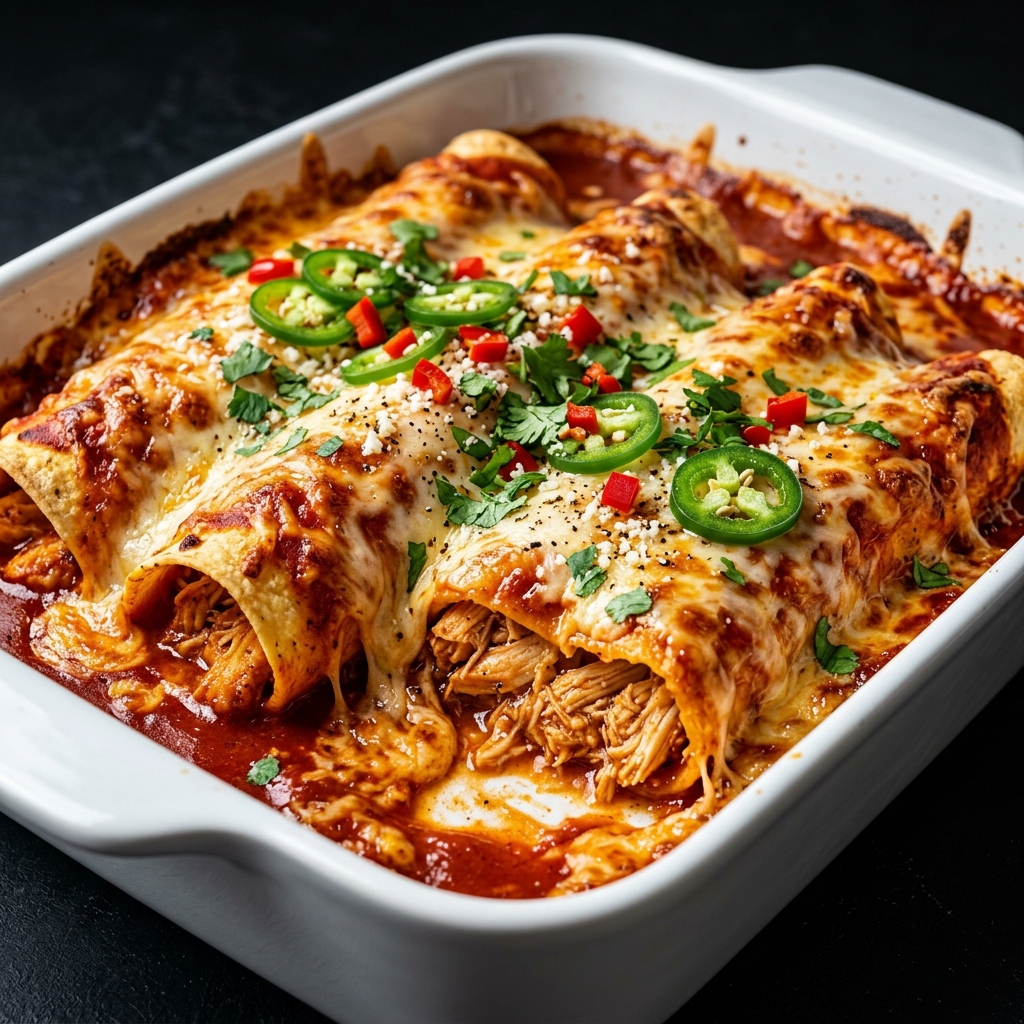
Homemade Chicken Enchiladas with Melted Cheese
Ingredients
Equipment
Method
- Season the chicken breasts with cumin, chili powder, smoked paprika, salt, and black pepper.
- Heat olive oil in a large skillet over medium heat. Add the diced onion and sauté for 3–4 minutes, until softened. Add the minced garlic and cook for about 30–60 seconds, until fragrant.
- Add the seasoned chicken and chicken broth. Cover and cook until the chicken reaches an internal temperature of 165°F (74°C) and is fully cooked.
- Remove the chicken from the skillet and let it rest for several minutes.
- Shred the cooked chicken using two forks.
- Return the shredded chicken to the skillet and toss it with the sautéed onion, garlic, and cooking juices. Taste and adjust the seasoning if necessary.
- For an especially flavorful filling, stir in a few spoonfuls of enchilada sauce.
- Warm the tortillas gently in a dry skillet or microwave until soft and flexible.
- If using corn tortillas, do not skip this step because warming helps prevent them from cracking when rolled.
- Preheat the oven to 375°F (190°C).
- Lightly grease a 9 × 13-inch baking dish. Spread approximately 1 cup of enchilada sauce evenly across the bottom.
- Place a warm tortilla on a clean surface. Add a portion of the shredded chicken down the center and sprinkle with a small amount of shredded cheese.
- Roll the tortilla firmly and place it seam-side down in the baking dish.
- Repeat with the remaining tortillas and filling, arranging the enchiladas snugly beside one another.
- Pour the remaining enchilada sauce evenly over the rolled tortillas, making sure most of the surface is covered.
- Sprinkle the Mexican cheese blend and cheddar evenly over the top.
- Cover the baking dish loosely with aluminum foil and bake for approximately 20 minutes.
- Remove the foil and continue baking for another 8–12 minutes, or until the cheese is completely melted, bubbling, and beginning to turn golden brown.
- For an extra-golden top, broil for 1–2 minutes at the end, watching carefully to prevent burning.
- Remove the enchiladas from the oven and let them rest for 5–10 minutes.
- Garnish with fresh cilantro and sliced jalapeño. Serve with avocado, sour cream, fresh salsa, and lime wedges if desired.
Notes
Chicken: Rotisserie chicken or leftover cooked chicken can be substituted for freshly cooked chicken. Adjust the seasoning because prepared chicken may already contain salt.
Cheese: Monterey Jack, cheddar, Colby Jack, Oaxaca-style cheese, or a Mexican cheese blend all work well.
Spice level: Add jalapeños, green chiles, cayenne, or hot enchilada sauce for a spicier version.
Sauce: Avoid using an excessive amount of very thin sauce, as it can make the enchiladas watery.
Make ahead: The assembled, unbaked enchiladas can be covered and refrigerated before baking. Add some extra baking time if starting from cold.
Storage: Refrigerate leftovers in an airtight container for up to 3–4 days.
Freezing: Assemble in a freezer-safe dish, cover tightly, and freeze. Thaw in the refrigerator before baking for more even heating.
Gluten-free option: Use certified gluten-free corn tortillas and verify that the enchilada sauce, broth, seasonings, and other packaged ingredients are gluten-free.
Best result: Allow the baked enchiladas to rest for 5–10 minutes before serving so the sauce and cheese can settle and the enchiladas hold together better.

Hi, I’m Clara, the creator of Barakala. I love sharing simple, comforting, and delicious recipes that make everyday cooking easier and more enjoyable for home cooks.