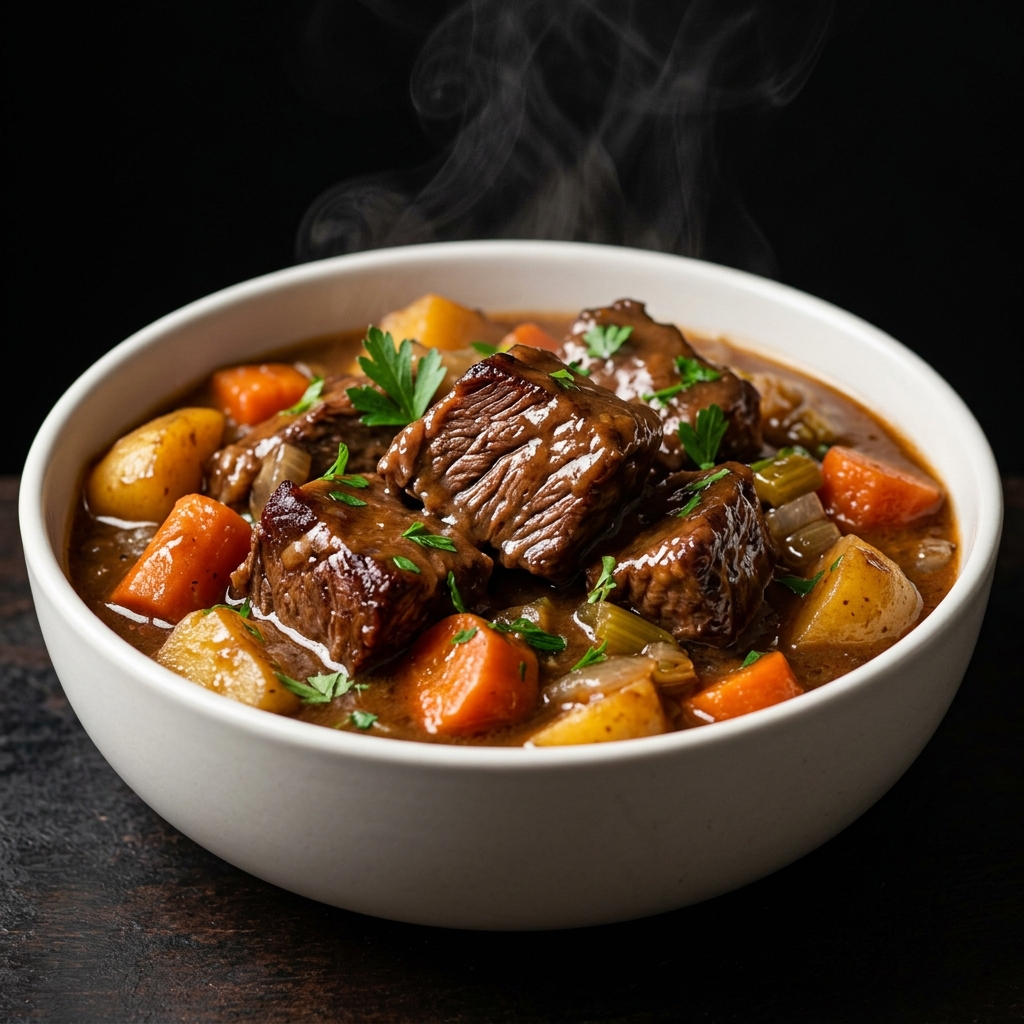
There is something irresistible about a pot of beef stew slowly simmering until the beef becomes fork-tender and the gravy turns thick, glossy, and deeply savory. This Tender Beef Stew with Rich Gravy is the kind of comforting homemade dinner that fills the kitchen with an incredible aroma and rewards you with every spoonful.
Ingredients for Tender Beef Stew
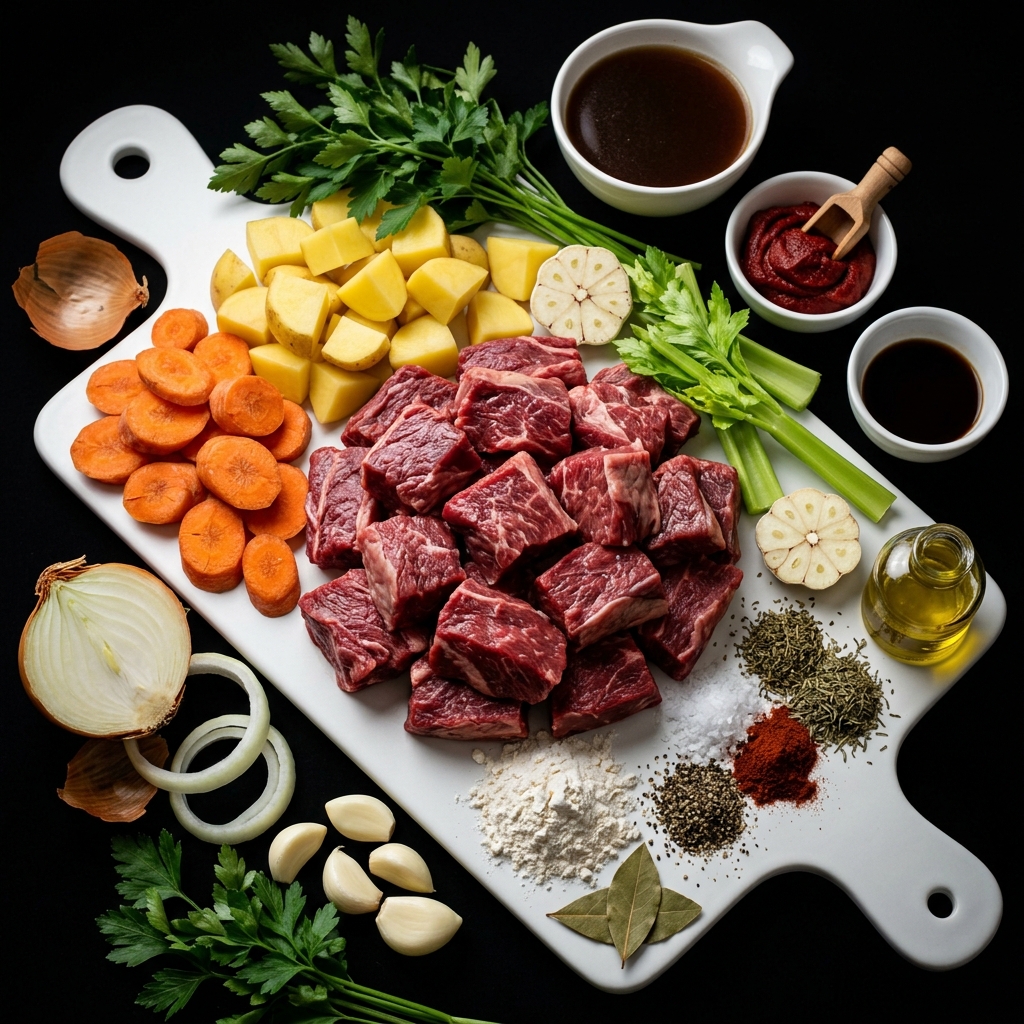
Beef
2 pounds (900 g) beef chuck roast or stewing beef, cut into bite-sized chunks
Beef chuck is one of the best choices for stew because it contains enough connective tissue and marbling to remain flavorful during a long, gentle cooking process. As the stew simmers, the connective tissue gradually breaks down and helps create that luxurious texture we associate with excellent beef stew.
Avoid very lean cuts of beef when possible. Lean meat can become dry and chewy after prolonged cooking, whereas chuck becomes beautifully tender.
Vegetables
3 medium carrots, peeled and cut into thick slices or chunks
Carrots contribute natural sweetness and a beautiful orange color. Cutting them into relatively large pieces prevents them from completely falling apart during the long cooking time.
1½ pounds (680 g) potatoes, peeled and cut into chunks
Yukon Gold or another waxy-to-medium-starch potato works especially well. The potatoes should be large enough to maintain their shape while becoming tender.
1 large yellow onion, diced
Onion forms an important part of the stew’s flavor base. Take your time when sautéing it because properly softened onions contribute much more flavor than onions simply tossed into the pot raw.
2–3 cloves garlic, minced
Garlic adds aromatic depth and complements the beef beautifully. Add it after the onions have softened rather than cooking it from the beginning, as minced garlic can burn quickly.
2 celery stalks, chopped
Celery adds subtle savory and herbal notes while rounding out the vegetable base.
For the Rich Gravy
3 tablespoons all-purpose flour
Flour helps thicken the stew and gives the gravy its characteristic body. It should be cooked properly with the beef and vegetables so the finished sauce does not taste floury.
2 tablespoons tomato paste
Tomato paste is a small ingredient with a major impact. It adds concentrated tomato flavor, umami, acidity, and a deeper color to the gravy.
4 cups (960 ml) beef broth
Use a flavorful beef broth or stock. Since the broth becomes the foundation of the gravy, choosing one with good flavor makes a noticeable difference.
1 tablespoon Worcestershire sauce
Worcestershire sauce adds a savory, slightly tangy complexity that makes the gravy taste richer without making it obviously taste like Worcestershire sauce.
2 tablespoons cooking oil
Use a neutral oil with a reasonably high smoke point for browning the beef.
Seasonings
1½ teaspoons salt, plus more to taste
1 teaspoon freshly ground black pepper
1 teaspoon dried thyme
1 teaspoon paprika
2 bay leaves
You can adjust the seasoning toward the end of cooking. It is better to season gradually than to add too much salt before the broth reduces.
For Finishing
2 tablespoons chopped fresh parsley
Fresh parsley adds brightness and a pop of color against the dark, rich gravy. It also helps balance the heaviness of the stew.
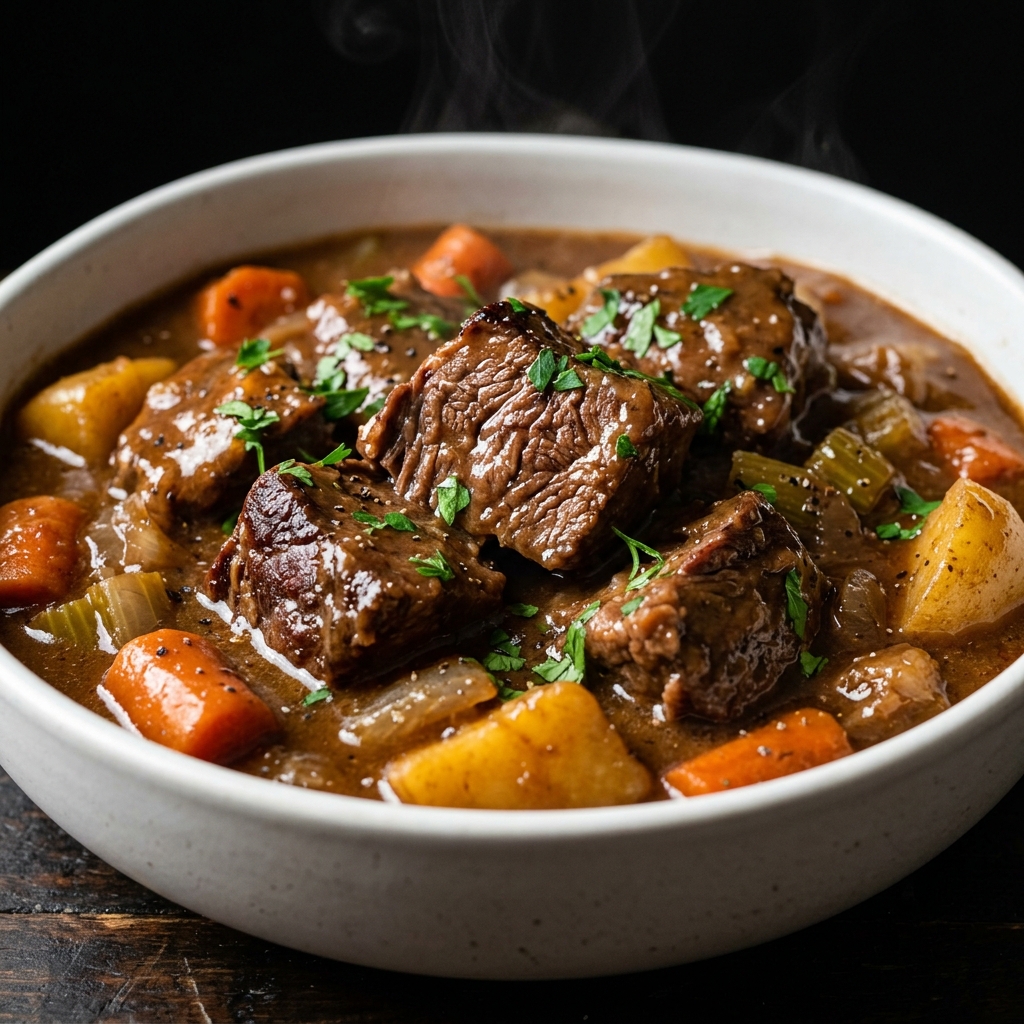
How to Make Tender Beef Stew with Rich Gravy
1. Prepare the Beef
Pat the beef chunks thoroughly dry with paper towels before seasoning.
This step may seem insignificant, but it is one of the most important details in the recipe. Wet beef tends to steam when it hits a hot pan instead of developing the deep brown crust you want.
Season the beef with salt, black pepper, and paprika, making sure the pieces are evenly coated.
If the beef has been refrigerated, allowing it to sit for a few minutes while you prepare the remaining ingredients can take some of the chill off, but don’t leave raw meat at room temperature for an extended period.
2. Brown the Beef Properly
Heat the cooking oil in a large heavy-bottomed pot or Dutch oven over medium-high heat.
Add the beef in batches, making sure not to overcrowd the pot.
Brown the pieces on several sides until they develop a deep golden-brown crust. This should take roughly 2–4 minutes per side depending on the size of the pieces and the heat of your pan.
Once browned, transfer the beef to a plate and continue with the remaining batches.
Do not rush this step.
The browned bits left on the bottom of the pot are not something to discard. They are concentrated flavor waiting to become part of your gravy.
If you put all the beef into the pot at once and the pan becomes overcrowded, the temperature will drop and the meat will release moisture. Instead of browning, it will steam.
3. Build the Aromatic Base
Reduce the heat to medium and add the diced onion and celery to the same pot.
Cook for approximately 5–7 minutes, stirring occasionally, until the vegetables soften and the onions begin to turn lightly golden.
Add the minced garlic and cook for another 30–60 seconds.
At this point, your kitchen should already smell incredible.
The goal isn’t to brown the garlic heavily. You simply want to release its aroma while keeping it from becoming bitter.
4. Cook the Tomato Paste
Add the tomato paste to the vegetables and stir thoroughly.
Cook it for about 1–2 minutes.
This is another small technique that makes a significant difference. Cooking tomato paste briefly helps deepen its flavor and removes some of the raw, sharp character it can have straight from the container.
The tomato paste should become darker and begin to coat the bottom of the pot.
5. Create the Gravy Base
Sprinkle the flour over the vegetables and tomato paste.
Stir continuously for approximately 1 minute to combine everything.
The flour should coat the vegetables and become lightly toasted. Don’t leave it cooking for too long, but make sure it is incorporated before adding the liquid.
This step creates the foundation for a smooth, rich gravy.
6. Deglaze the Pot
Slowly pour in a small amount of beef broth while scraping the bottom of the pot with a wooden spoon.
Keep stirring as you gradually add the remaining broth.
Those browned pieces stuck to the bottom of the pot should loosen and dissolve into the liquid. This process is called deglazing, and it is one of the easiest ways to turn ordinary stew into something that tastes restaurant-quality.
Add the Worcestershire sauce and stir well.
7. Return the Beef to the Pot
Place the browned beef and any accumulated juices back into the pot.
Add the thyme and bay leaves.
Bring the liquid to a gentle simmer.
Avoid boiling the stew aggressively. A vigorous boil can cause the exterior of the beef to toughen while also making the vegetables break down too quickly.
Once the stew reaches a gentle simmer, reduce the heat to low.
8. Simmer Until the Beef Is Tender
Cover the pot partially with a lid and allow the stew to simmer gently for approximately 1½–2 hours, stirring occasionally.
The exact cooking time can vary depending on the size and cut of the beef.
The most important indicator is not the clock but the texture of the meat.
When properly cooked, the beef should be tender enough that a fork can slide into it easily. If the beef still feels firm or chewy, give it more time.
This is where patience pays off.
9. Add the Potatoes and Carrots
Add the potatoes and carrots during the final 35–45 minutes of cooking.
Adding them too early can cause them to become overly soft and fall apart into the gravy.
The vegetables should become tender while still maintaining enough structure to give each serving some texture.
Continue simmering gently until the beef is fork-tender and the potatoes and carrots are cooked through.
10. Finish and Adjust the Gravy
Remove the bay leaves.
Taste the stew carefully and adjust the salt and black pepper as needed.
If the gravy is thinner than you’d like, leave the pot uncovered and simmer for several additional minutes. The excess moisture will evaporate and the gravy will naturally become thicker and more concentrated.
If the gravy becomes too thick, add a small splash of beef broth or water until it reaches your preferred consistency.
Finally, stir in the chopped fresh parsley.
Let the stew rest for about 5–10 minutes before serving. This gives the gravy a chance to settle and allows the flavors to come together.
The Secret to Truly Tender Beef
Here’s the part many first-time stew makers don’t realize: tough beef doesn’t necessarily mean you chose the wrong meat. It often means the meat simply needs more time.
Cuts such as chuck contain collagen, and collagen needs time and gentle heat to break down. During a slow braise, that collagen gradually transforms into gelatin, giving the stew both its luxurious mouthfeel and its naturally thick, silky character.
If you check your stew after an hour and the beef is still chewy, don’t panic and don’t immediately turn the heat way up. Keep the temperature gentle and continue cooking.
There is a sweet spot where the beef changes from firm and chewy to incredibly soft and succulent. Once you reach it, you’ll understand why slow-cooked beef stew is such a beloved comfort food.
How to Get Rich, Dark, Flavorful Gravy
The gravy is arguably the star of this dish, and several small techniques make a huge difference.
First, brown the beef properly. Those caramelized surfaces contribute enormous flavor.
Second, don’t waste the browned bits in the bottom of the pot. Deglazing them with broth incorporates that concentrated flavor directly into the sauce.
Third, cook the tomato paste before adding the liquid. This deepens its flavor and gives the gravy a more complex character.
Finally, allow the stew to simmer gently rather than boiling rapidly. Slow cooking gives the flavors time to develop while allowing the beef to become tender.
A great stew should have gravy that is rich and glossy, not watery or excessively thick. It should cling beautifully to the beef and vegetables while still being loose enough to spoon generously over whatever you serve alongside it.
A Little Trick That Makes Tomorrow’s Stew Even Better
If you have enough patience to save some leftovers, you may discover something wonderful the next day.
After resting overnight in the refrigerator, the flavors have more time to mingle. The broth, beef juices, herbs, vegetables, and seasonings become even more integrated, while the chilled gelatin from the beef gives the gravy an especially rich texture.
This makes beef stew an excellent meal-prep recipe. You can prepare it when you have time, refrigerate it, and gently reheat it when you’re ready to eat.
And there is another reason to make a generous batch: the same rich gravy that makes this stew incredible on its own can turn simple side dishes into something special.
That brings us to the best ways to serve it—and a few clever variations that can completely change the character of the dish without losing what makes a classic beef stew so satisfying.
Recipe Variations
Slow Cooker Beef Stew
For an especially hands-off version, brown the beef and sauté the aromatics first, then transfer everything to a slow cooker.
Cook on LOW for approximately 7–8 hours or until the beef is fork-tender. Add the potatoes and carrots at a point where they will have enough time to cook without becoming excessively soft.
Browning the beef first is still highly recommended because a slow cooker cannot reproduce the same deep searing that happens in a hot Dutch oven.
Red Wine Beef Stew
For a deeper, more sophisticated flavor, replace part of the beef broth with dry red wine.
After browning the beef and sautéing the aromatics, deglaze the pot with the wine and allow it to simmer briefly before adding the remaining broth.
The result is a richer, more complex gravy with subtle fruity and earthy notes.
Mushroom Beef Stew
Add sliced mushrooms for an earthy variation.
For the best texture, sauté the mushrooms separately until nicely browned before adding them to the stew. This prevents them from releasing too much water into the pot and allows them to develop their own savory flavor.
Spicy Beef Stew
If you enjoy a little heat, add a pinch of cayenne pepper or red pepper flakes along with the other seasonings.
You can also add diced chili peppers for a more noticeable kick.
Keep the heat balanced, though. The goal is to complement the beef and gravy rather than overwhelm their flavor.
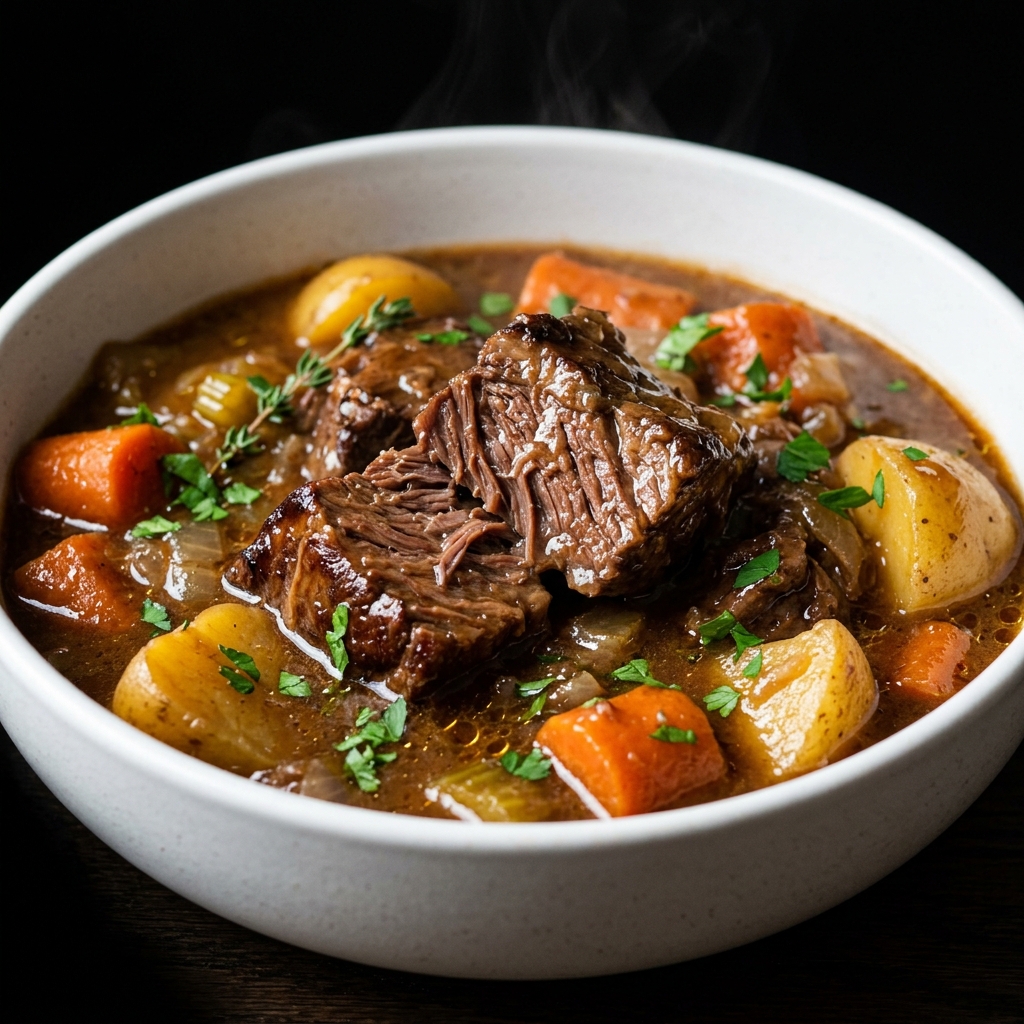
Expert Tips for the Best Beef Stew
Don’t overcrowd the pot. Brown the beef in batches if necessary. Good browning is one of the foundations of deep stew flavor.
Use a heavy pot. A Dutch oven or heavy-bottomed pot distributes heat more evenly and is ideal for slow braising.
Cut vegetables uniformly. Similar-sized pieces cook at roughly the same rate, making the finished stew more consistent.
Keep the simmer gentle. You want occasional bubbles rather than a rolling boil.
Don’t add the potatoes too early. Giving them less cooking time helps them retain their shape.
Taste before serving. As the stew cooks and the liquid reduces, the seasoning changes. Always taste the finished gravy and adjust it before bringing the pot to the table.
Give the stew time. If the beef isn’t tender yet, keep cooking. Patience is one of the most important ingredients in a truly excellent beef stew.
Make-Ahead Options
Tender Beef Stew with Rich Gravy is an excellent make-ahead meal because the flavor develops beautifully as it rests.
You can prepare the entire stew 1–2 days ahead, allow it to cool properly, and refrigerate it in an airtight container. When you’re ready to serve, reheat it gently on the stovetop over low to medium-low heat, stirring occasionally.
If the gravy has thickened considerably in the refrigerator, add a small splash of beef broth or water while reheating. Don’t add too much liquid at once; you can always add more if needed.
For the best texture, reheat the stew slowly rather than boiling it aggressively. Gentle reheating keeps the beef tender and helps prevent the vegetables from breaking apart.
You can also prepare some of the components ahead of time. The vegetables can be chopped and refrigerated, while the beef can be cut and seasoned shortly before cooking. Having everything prepared makes this recipe much easier to assemble when you’re ready to cook.
What to Serve with Beef Stew
One of the best things about a rich beef stew is that the gravy practically begs for something to soak it up. Here are some excellent serving options.
Creamy Mashed Potatoes
Mashed potatoes are arguably one of the best partners for beef stew. The creamy potatoes provide a smooth contrast to the tender beef and vegetables while absorbing the rich gravy.
For an especially comforting plate, spoon the stew generously over a mound of mashed potatoes and let the gravy run down the sides.
Crusty Bread
A loaf of crusty French bread, sourdough, or rustic artisan bread is perfect for dipping into the gravy.
The contrast between crisp crust and soft interior makes every spoonful of stew even more satisfying.
Steamed Rice
Rice is a simple and practical option, especially if you want a filling family dinner.
White rice, brown rice, or even a fragrant basmati rice can work beautifully. The grains provide a neutral base that allows the rich beef gravy to remain the star.
Buttered Egg Noodles
Wide egg noodles pair particularly well with hearty beef dishes.
Toss freshly cooked noodles with a little butter, then spoon the beef stew and gravy over the top. It’s an easy way to turn the stew into an even more substantial meal.
Roasted Vegetables
If you want more vegetables on the table, serve the stew alongside roasted green beans, Brussels sprouts, broccoli, or another seasonal vegetable.
The slightly caramelized flavor of roasted vegetables complements the savory gravy nicely.
Simple Green Salad
A crisp green salad can provide a refreshing contrast to the richness of the stew.
Try leafy greens with cucumber, tomatoes, and a light vinaigrette. The acidity of the dressing helps balance the deep, savory flavors of the beef and gravy.
How to Store Beef Stew
Allow the finished stew to cool appropriately before transferring it to airtight containers.
Store it in the refrigerator for up to 3–4 days.
For longer storage, beef stew can be frozen in freezer-safe containers or heavy-duty freezer bags. Leave a little room for expansion if using rigid containers.
Frozen beef stew is best used within approximately 2–3 months for good quality.
If possible, divide the stew into individual portions before freezing. This makes it much easier to thaw only what you need instead of repeatedly reheating the entire batch.
How to Thaw Frozen Beef Stew
The safest and most convenient method is to transfer the frozen stew to the refrigerator and allow it to thaw gradually overnight.
If you need it sooner, you can reheat it directly from frozen in a saucepan over low heat, adding a little broth or water and stirring occasionally as the stew loosens.
Avoid leaving cooked stew sitting at room temperature for extended periods.
How to Reheat Beef Stew Without Drying It Out
The stovetop is usually the best method.
Place the desired amount in a saucepan and heat gently over low to medium-low heat. Stir occasionally and add a splash of broth if the gravy has become too thick.
The goal is to heat the stew thoroughly without allowing it to boil aggressively.
You can also reheat individual portions in the microwave. Use a microwave-safe bowl, cover it loosely, and heat in intervals, stirring between each interval so the temperature distributes evenly.
Common Beef Stew Mistakes to Avoid
Even a simple beef stew can go wrong if a few important details are overlooked.
Skipping the Browning Step
This is probably the most common mistake.
Putting raw beef directly into the broth will cook it, but you won’t get the same depth of flavor. Browning creates complex savory flavors that become part of the finished gravy.
Using Too Much Liquid
Beef stew should have a rich gravy rather than a thin soup-like broth.
Start with the recommended amount of liquid and remember that you can always add more later. It is much easier to thin a gravy than to correct one that has become excessively watery.
Boiling the Stew Too Hard
A rolling boil is not necessary.
Keep the stew at a gentle simmer. Slow, controlled cooking gives the connective tissue in the beef time to break down while helping the meat remain succulent.
Cutting the Beef Too Small
Small pieces can become overcooked before the vegetables are ready.
Aim for generous bite-sized chunks that will remain substantial after several hours of cooking.
Adding Vegetables Too Early
Potatoes and carrots don’t necessarily need the entire cooking time required by the beef.
Adding them later helps preserve their shape, color, and texture.
Not Tasting at the End
Seasoning is not a one-time event.
The flavor of the stew changes as the liquid reduces. Always taste the finished gravy and make final adjustments to salt, pepper, herbs, or acidity before serving.
What If My Beef Is Still Tough?
Don’t assume the stew has failed.
This is one of the most important lessons when cooking beef stew.
If the beef is tough after the recommended cooking time, it may simply need additional time for the connective tissue to break down.
Continue cooking gently and check it periodically.
Adding more heat isn’t necessarily the solution. In many cases, more time at a gentle temperature is exactly what the beef needs.
Once the collagen has properly broken down, the same piece of meat that seemed disappointingly chewy can become tender enough to fall apart with a fork.
What If the Gravy Is Too Thin?
If your stew tastes delicious but the gravy isn’t thick enough, don’t worry.
Remove the lid and continue simmering gently for several minutes. This allows excess moisture to evaporate and naturally concentrates the gravy.
If you need a quicker solution, you can prepare a small slurry using a little cornstarch and cold water, then gradually stir it into the simmering stew.
Add only a small amount at a time. A good beef stew gravy should be thick and silky, not gluey.
What If the Gravy Is Too Thick?
Add a small amount of warm beef broth or water and stir.
Continue adding liquid gradually until the gravy reaches the consistency you prefer.
Remember that the gravy may thicken slightly more as the stew cools, so don’t make it excessively thin while the stew is still piping hot.
Can I Make Beef Stew Without Potatoes?
Absolutely.
If you don’t have potatoes or simply want a different version, you can leave them out and increase the amount of other vegetables.
Carrots, mushrooms, celery, pearl onions, and parsnips are all excellent additions.
Without potatoes, the stew will naturally have fewer carbohydrates, although the recipe as written is not specifically a low-carb or keto recipe because of the flour and other ingredients used in the gravy.
Can I Use a Different Cut of Beef?
Yes, although chuck is one of the most reliable choices.
Other beef cuts suitable for slow cooking can work well, provided they contain enough connective tissue to benefit from braising.
Avoid expensive, very lean steak cuts. Long cooking isn’t the best way to showcase their texture, and you may end up spending more money for a result that isn’t necessarily better.
For a classic stew, inexpensive, well-marbled braising cuts are often the smarter choice.
Frequently Asked Questions
How long does beef stew take to become tender?
Most beef stew made with chuck requires roughly 1½–2½ hours of gentle simmering, depending on the size of the beef pieces and the particular cut of meat. The best test is tenderness rather than a strict cooking time. The beef should be easily pierced with a fork.
Why is my beef stew meat tough?
Beef stew meat can remain tough if it hasn’t cooked long enough for its connective tissue to break down. Continue simmering gently and give it additional time. Avoid trying to solve the problem by rapidly boiling the stew.
Should I brown beef before making stew?
Yes. Browning the beef first creates a flavorful crust and leaves browned bits in the pot that can be incorporated into the gravy during deglazing. This adds considerably more flavor than simply simmering raw beef in broth.
Can I freeze homemade beef stew?
Yes. Beef stew freezes well when stored in an airtight freezer-safe container. For the best quality, use frozen stew within approximately 2–3 months and thaw it gradually in the refrigerator before reheating when possible.
Why did my potatoes fall apart in the stew?
The potatoes may have been cut too small or added too early. For better results, use sturdy potato varieties, cut them into generous chunks, and add them during the later stage of cooking.
Can I make this beef stew in a slow cooker?
Yes. Brown the beef and sauté the aromatics first for the best flavor, then transfer everything to the slow cooker. Cook on LOW until the beef is fork-tender, generally around 7–8 hours, adjusting the timing according to your slow cooker and the size of the beef pieces.
How can I make my beef stew more flavorful?
Focus on layering flavor rather than relying on one seasoning. Brown the beef well, caramelize the aromatics, cook the tomato paste briefly, deglaze the browned bits, use a flavorful beef broth, and season gradually throughout the cooking process.
Can I prepare beef stew the day before serving?
Yes, and it can actually be an excellent strategy. Refrigerating the finished stew overnight allows the flavors to meld and the gravy to become even richer. Reheat it gently the following day, adding a little broth if necessary.
Final Chef’s Tips for an Exceptional Beef Stew
If you want to take this recipe from good to genuinely memorable, remember these five principles: brown deeply, build flavor in layers, use the right cut of beef, cook gently, and be patient.
Don’t judge the stew too early. During the first part of cooking, the beef may seem firm and the gravy may taste unfinished. As the hours pass, the transformation is remarkable. The beef softens, the vegetables release their natural sweetness, the broth becomes concentrated, and the individual ingredients begin tasting like one beautifully balanced dish.
And don’t underestimate the importance of resting the stew before serving. Even 5–10 minutes gives the gravy a chance to settle and the flavors to come together.
When you finally ladle that glossy gravy over tender beef and vegetables, you should have a dish that feels far more special than the simplicity of its ingredients suggests.
The Best Part About Homemade Beef Stew
Tender Beef Stew with Rich Gravy is more than just an easy dinner recipe. It is the kind of meal that rewards you for slowing down.
It transforms humble ingredients into something deeply satisfying: fork-tender beef, naturally sweet vegetables, silky gravy, and an aroma that makes everyone in the house wonder when dinner will be ready.
Serve it with creamy mashed potatoes, warm crusty bread, steamed rice, or buttered noodles, and make sure there is enough gravy to go around.
Once you master the simple techniques behind this recipe—especially browning the beef and maintaining a gentle simmer—you’ll have a dependable comfort-food classic you can return to whenever you want a hearty, homemade meal that tastes like it has been simmering all day.
One final tip: make a little more than you think you’ll need. The leftovers are every bit as useful as the first serving, and the next-day version may be even more flavorful.
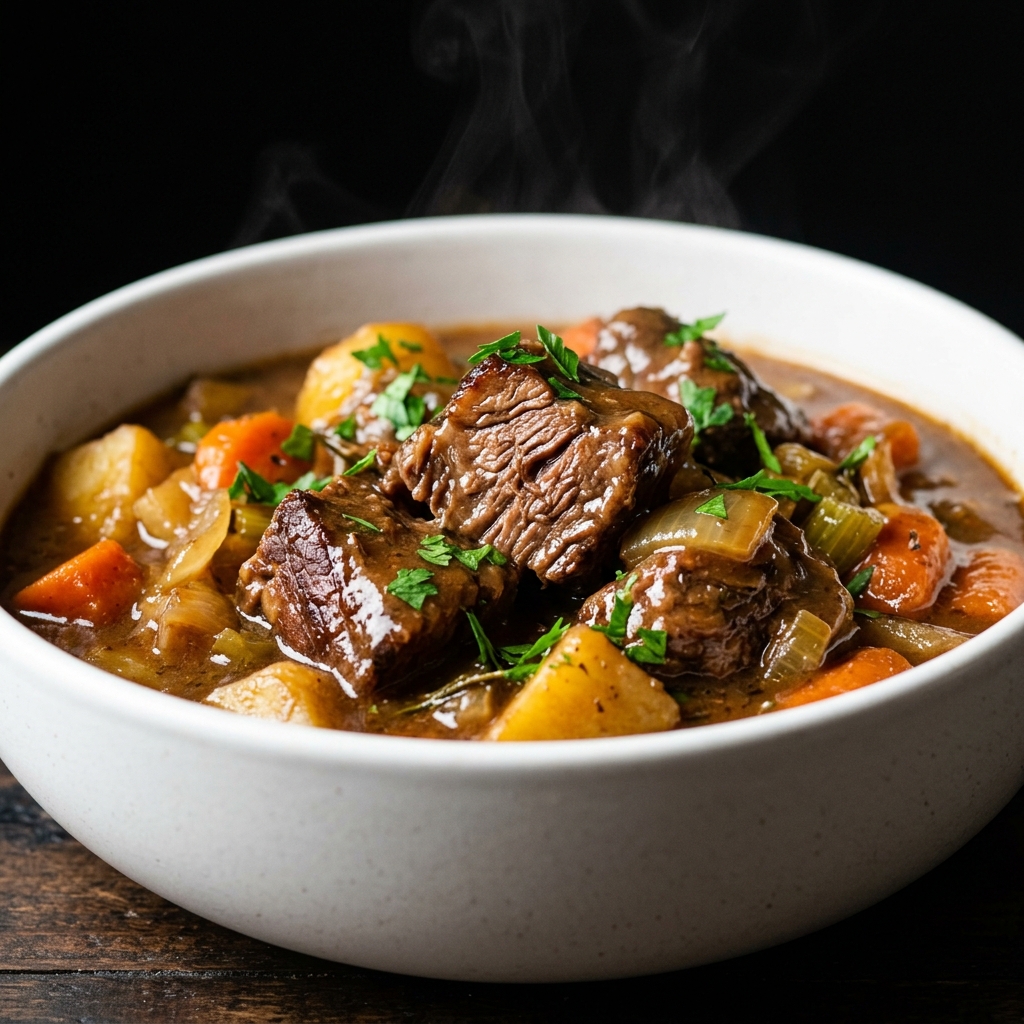
Tender Beef Stew with Rich Gravy
Ingredients
Equipment
Method
- Pat the beef chunks completely dry with paper towels. Season evenly with salt, black pepper, and paprika.
- Heat the oil in a large Dutch oven or heavy-bottomed pot over medium-high heat. Add the beef in batches, making sure not to overcrowd the pot. Brown the beef on several sides until deeply golden. Transfer the browned beef to a plate and repeat with the remaining meat.
- Reduce the heat to medium. Add the diced onion and celery to the same pot and cook for 5–7 minutes, stirring occasionally, until softened and lightly golden. Add the minced garlic and cook for another 30–60 seconds.
- Add the tomato paste and stir it into the vegetables. Cook for 1–2 minutes, allowing the paste to darken slightly and develop a deeper flavor.
- Sprinkle the flour over the vegetables and tomato paste. Stir continuously for about 1 minute to coat the ingredients and lightly cook the flour.
- Gradually pour in the beef broth while scraping the browned bits from the bottom of the pot with a wooden spoon. Stir until the liquid is smooth and the browned bits have dissolved into the gravy.
- Return the browned beef and any accumulated juices to the pot. Add the Worcestershire sauce, dried thyme, and bay leaves. Stir well.
- Bring the stew to a gentle simmer, then reduce the heat to low. Partially cover the pot and simmer for approximately 1½–2 hours, stirring occasionally, until the beef is beginning to become fork-tender.
- Add the potatoes and carrots during the final 35–45 minutes of cooking. Continue simmering gently until the vegetables are tender and the beef is completely fork-tender.
- Remove the bay leaves. Taste the stew and adjust the salt and pepper as needed. If the gravy is too thin, simmer uncovered for several additional minutes until it reaches your desired consistency. If it is too thick, add a small splash of beef broth.
- Remove the stew from the heat and allow it to rest for 5–10 minutes. Stir in the fresh parsley just before serving.
- Ladle the tender beef, vegetables, and rich gravy into bowls and serve hot with mashed potatoes, crusty bread, rice, buttered noodles, or your favorite side dish.
Notes
For deeper flavor: Brown the beef in batches rather than overcrowding the pot. The browned crust and fond left behind provide much of the stew's rich flavor.
For tender beef: Maintain a gentle simmer rather than a vigorous boil. If the beef is still tough after the suggested cooking time, continue simmering until fork-tender.
For thicker gravy: Simmer the finished stew uncovered for a few extra minutes to allow excess liquid to evaporate.
For thinner gravy: Add a small amount of beef broth or water until the desired consistency is reached.
Vegetable texture: Add potatoes and carrots toward the end of cooking so they become tender without completely falling apart.
Make ahead: The stew can be prepared 1–2 days ahead and refrigerated. Its flavor often becomes even richer after resting overnight.
Storage: Refrigerate leftovers in airtight containers for up to 3–4 days. Freeze for longer storage and use within approximately 2–3 months for best quality.
Diet note: As written, this recipe is not gluten-free, low-carb, keto, vegan, or vegetarian because it contains regular flour, potatoes, beef, and beef broth.

Hi, I’m Clara, the creator of Barakala. I love sharing simple, comforting, and delicious recipes that make everyday cooking easier and more enjoyable for home cooks.