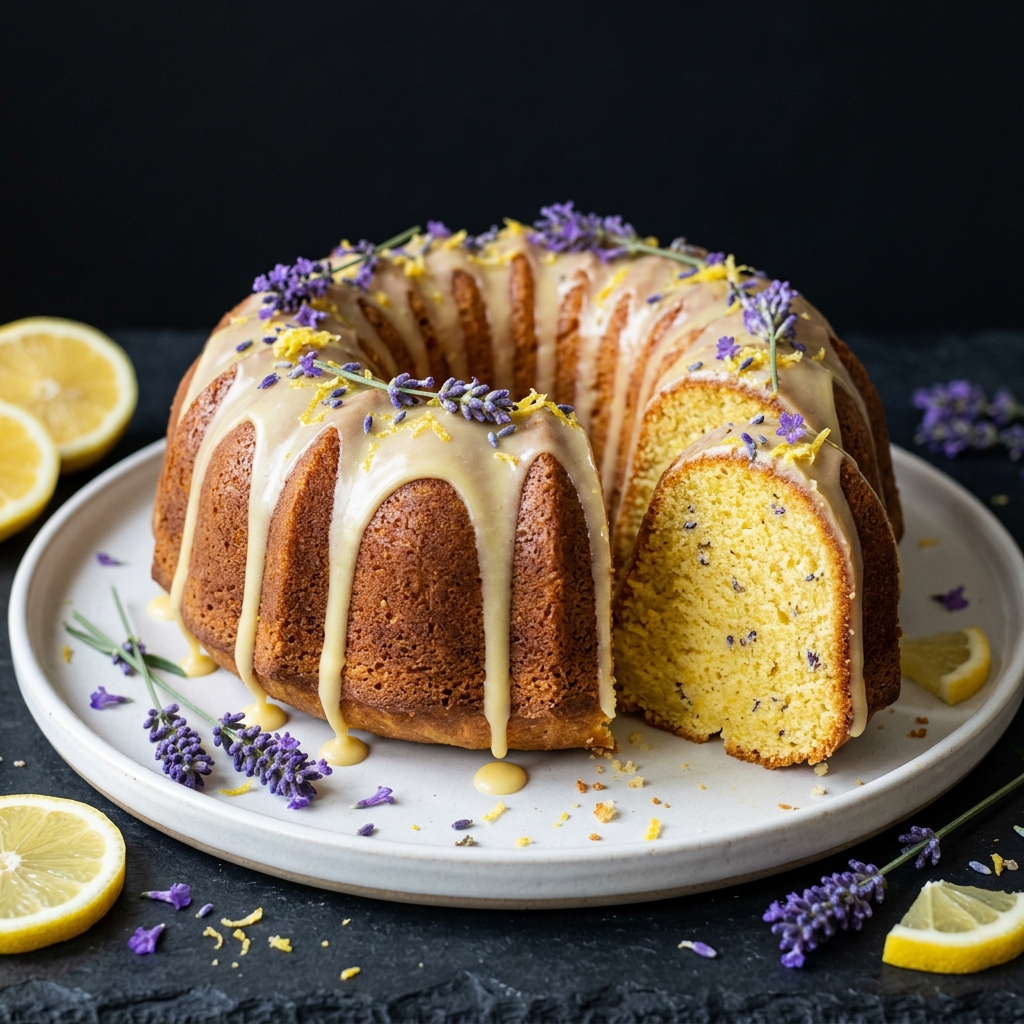
A slice of this Lemon Lavender Pound Cake is the kind of dessert that makes an ordinary afternoon feel special. It combines bright, refreshing lemon with the gentle floral character of culinary lavender, all tucked into a rich, buttery pound cake with a tender crumb and a beautiful lemon glaze. If you love elegant homemade desserts that look impressive but are still approachable to bake, this recipe deserves a place in your kitchen.
Ingredients for Lemon Lavender Pound Cake
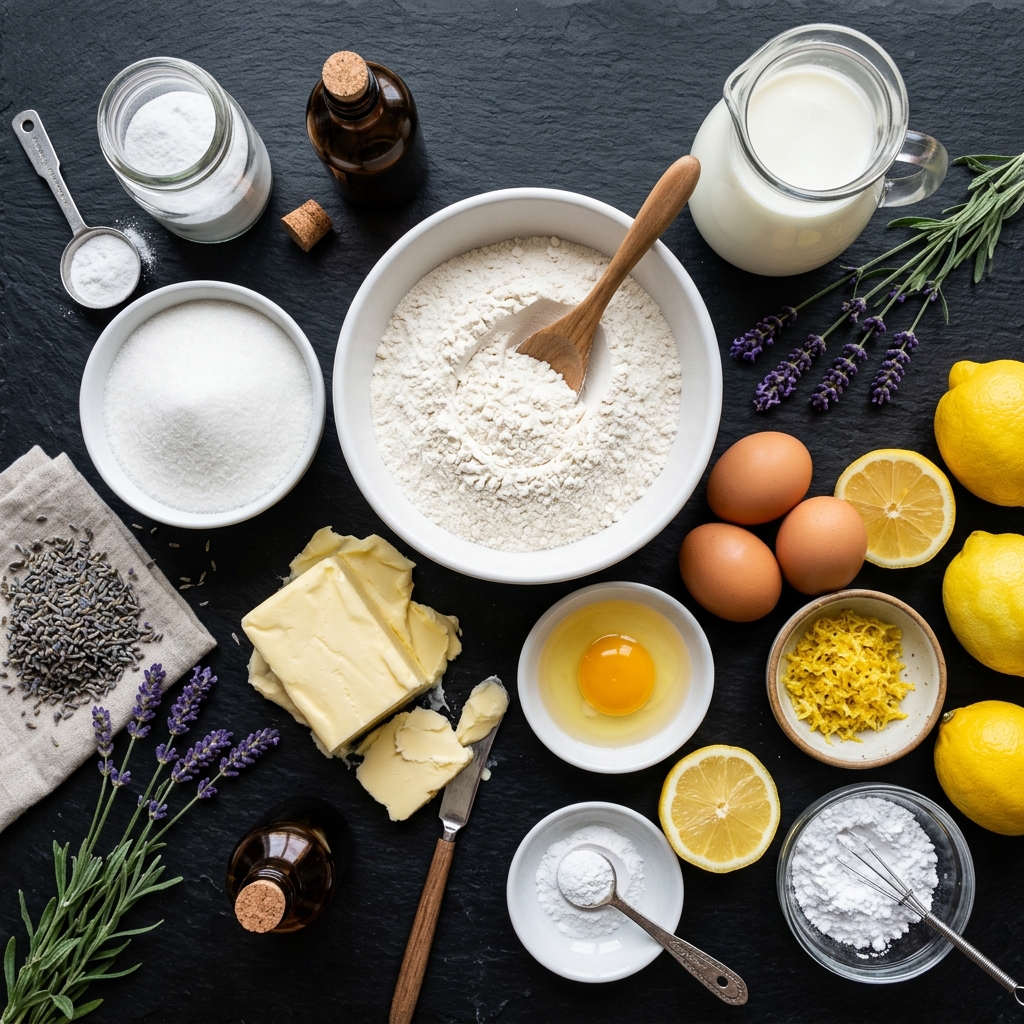
The secret to a memorable pound cake is not simply having the right ingredients—it is understanding what each ingredient contributes to the finished cake. Because pound cake has a relatively simple ingredient list, the quality and preparation of those ingredients can make a noticeable difference.
For the Pound Cake
All-purpose flour – 2 cups (240 g)
Flour provides the structure for the cake. Measure it carefully by spooning it into a measuring cup and leveling the top rather than scooping directly from the flour container. Too much flour can make the pound cake dense and dry.
Baking powder – 1½ teaspoons
This provides controlled lift, helping the cake rise while maintaining the substantial, tender texture expected from a pound cake.
Salt – ½ teaspoon
Salt balances the sweetness and enhances both the lemon and lavender flavors. It may seem like a small amount, but it is important in a cake with delicate flavors.
Unsalted butter – 1 cup (226 g), softened
Butter gives the cake its rich flavor, tender texture, and moist mouthfeel. Use softened butter rather than melted butter. Properly softened butter should be cool to the touch but yield easily when pressed.
Granulated sugar – 1¾ cups (350 g)
Sugar sweetens the cake while also helping create a tender crumb. Creaming sugar with butter is particularly important because the sugar helps incorporate tiny air pockets into the butter.
Large eggs – 4, preferably at room temperature
Eggs provide structure, richness, moisture, and emulsification. Room-temperature eggs blend more easily into the creamed butter mixture, helping create a smoother batter.
Fresh lemon zest – 2 tablespoons, finely grated
The zest is where much of the lemon’s aromatic intensity comes from. Use only the bright yellow outer layer of the peel and avoid the white pith underneath, which can taste bitter.
Fresh lemon juice – 3 tablespoons
Freshly squeezed lemon juice provides the bright acidity that gives this pound cake its refreshing character. Bottled lemon juice generally does not provide the same fresh flavor.
Pure vanilla extract – 2 teaspoons
Vanilla rounds out the citrus and floral flavors and gives the cake a warmer, more complete aroma.
Culinary lavender – 1 to 1½ teaspoons, finely chopped or lightly crushed
Use culinary-grade lavender rather than ornamental lavender intended for decoration or gardening. Lavender is powerful, so a restrained amount is important. The goal is a subtle floral note rather than a perfume-like flavor.
Whole milk – ½ cup (120 ml)
Milk contributes moisture and richness while helping create a tender crumb.
For the Lemon Glaze
Powdered sugar – 1½ cups (180 g)
Powdered sugar creates the smooth base of the glaze.
Fresh lemon juice – 2½ to 3 tablespoons
Add it gradually until the glaze reaches the consistency you want. A thicker glaze will sit prominently on the cake, while a thinner glaze will flow farther down the sides.
Fresh lemon zest – 1 teaspoon
A little zest intensifies the lemon aroma and gives the glaze attractive flecks of citrus.
For Garnishing
Fresh lemon slices or small lemon wedges
These make the finished cake immediately recognizable and add a vibrant pop of yellow.
Fresh culinary lavender sprigs or lavender blossoms
Use a small amount for decoration. If the flowers will directly touch the cake, make sure they are food-safe and intended for culinary use.
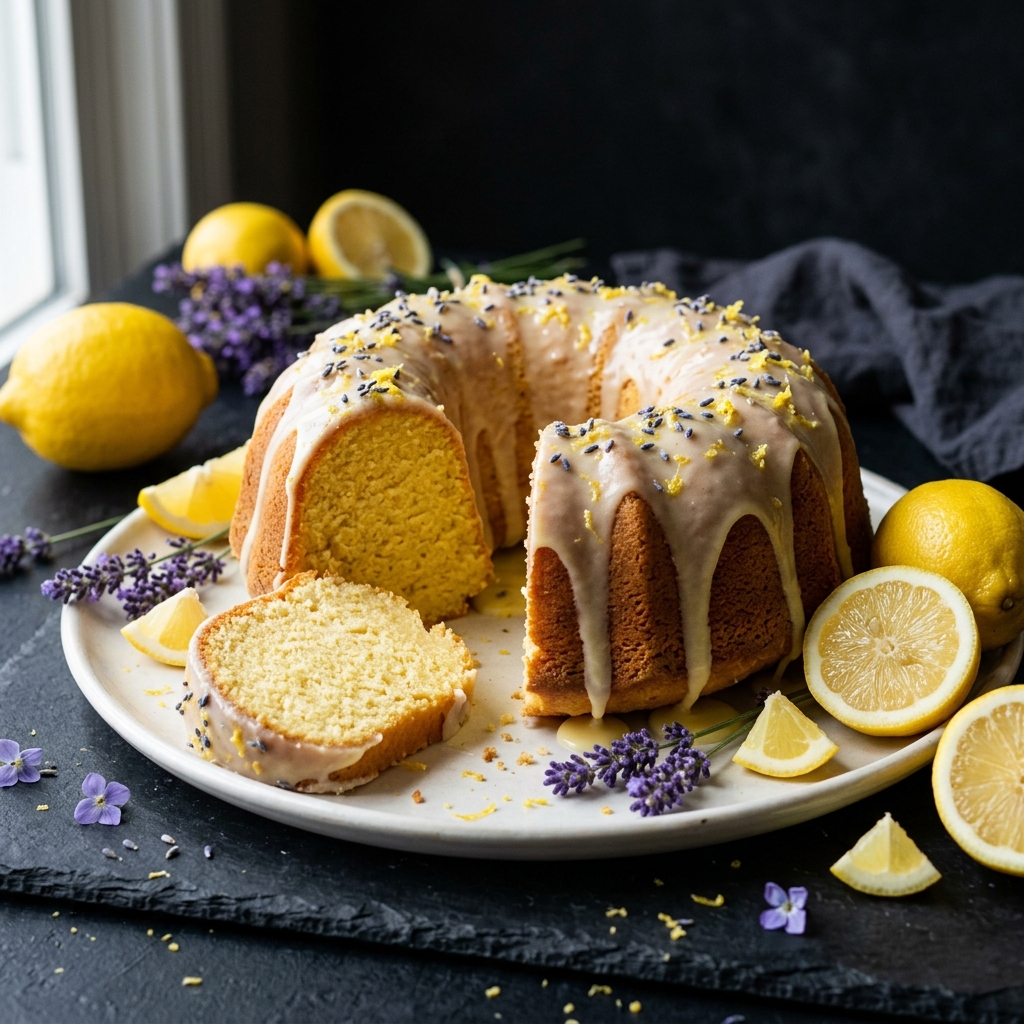
How to Make Lemon Lavender Pound Cake
The preparation is straightforward, but a few techniques make a major difference. Take your time during the butter-and-sugar creaming stage, add the eggs gradually, and avoid overmixing once the flour enters the batter.
Step 1: Prepare the Oven and Pan
Preheat your oven to 350°F (175°C).
Grease a 9-by-5-inch loaf pan thoroughly with softened butter or nonstick baking spray. For especially easy removal, line the bottom and two long sides with parchment paper, leaving a little overhang that can be used as handles.
A well-prepared pan is especially important for pound cake because its rich batter can cling to the sides as it bakes.
Step 2: Combine the Dry Ingredients
In a medium bowl, whisk together the all-purpose flour, baking powder, and salt.
Set the mixture aside.
This simple step distributes the baking powder and salt throughout the flour before they are introduced to the wet ingredients. It also prevents you from having to mix the batter extensively later.
Step 3: Infuse the Sugar With Lemon and Lavender
Place the granulated sugar in a large mixing bowl.
Add the finely grated lemon zest and culinary lavender. Rub the mixture gently between your fingertips for about 30 seconds.
This technique helps release aromatic oils from the lemon zest and lavender into the sugar. It is a small step, but it can make the citrus and floral aromas noticeably more pronounced throughout the finished cake.
Be gentle with the lavender. Crushing it excessively can release an overly strong floral character.
Step 4: Cream the Butter and Sugar
Add the softened butter to the lemon-lavender sugar.
Using a stand mixer fitted with the paddle attachment or a hand mixer, beat the butter and sugar mixture on medium speed for approximately 3 to 5 minutes, scraping down the bowl as needed.
The mixture should become noticeably lighter in color and fluffy in texture.
Do not rush this step. Creaming is one of the most important techniques in this recipe because it incorporates air into the butter, helping create a lighter pound cake rather than a heavy, compact one.
Step 5: Add the Eggs Gradually
Add the eggs one at a time, beating well after each addition.
Scrape down the sides and bottom of the bowl between additions to ensure everything is evenly incorporated.
If the mixture looks slightly curdled after adding an egg, do not panic. This can happen when the ingredients are not at exactly the same temperature. Adding a small amount of the dry ingredients later will help bring the batter together.
Step 6: Add the Lemon Juice and Vanilla
Mix in the fresh lemon juice and vanilla extract until just incorporated.
The mixture may look slightly loose at this stage, which is perfectly normal.
The combination of fresh lemon juice, lemon zest, and vanilla gives the cake a layered flavor rather than relying on lemon juice alone.
Step 7: Incorporate the Dry Ingredients and Milk
Add approximately one-third of the flour mixture to the bowl and mix on low speed just until partially incorporated.
Add half of the milk and mix briefly.
Repeat with another third of the flour mixture, followed by the remaining milk, and finish with the remaining flour.
Mix only until the batter comes together.
This alternating method helps prevent overmixing while distributing the flour and liquid evenly. Once the flour has been added, excessive mixing can develop gluten and make the finished cake tougher.
Step 8: Transfer the Batter to the Pan
Spoon the batter into the prepared loaf pan and gently spread the top with a spatula.
Tap the pan lightly against the counter once or twice to remove any unusually large air pockets.
Do not repeatedly bang the pan, as you do not want to knock out all the air developed during creaming.
Step 9: Bake Until Golden and Set
Place the pan in the center of the preheated oven.
Bake for approximately 55 to 70 minutes, depending on your oven and the exact shape and material of your pan.
The cake should become beautifully golden on top, and a toothpick inserted into the center should come out clean or with only a few moist crumbs attached.
If the top begins browning too quickly while the center still needs time to bake, loosely cover the cake with aluminum foil during the latter part of baking.
Avoid opening the oven repeatedly. Every unnecessary opening can cause temperature fluctuations and make it more difficult for the cake to bake evenly.
Step 10: Cool the Cake Properly
Remove the cake from the oven and allow it to cool in the pan for approximately 10 to 15 minutes.
Then carefully lift it out using the parchment overhang and transfer it to a wire rack.
Allow it to cool completely before glazing.
This is worth the wait. A warm pound cake is delicate, and cutting or glazing it too soon can cause the crumb to compress or the glaze to melt excessively.
How to Make the Lemon Glaze
While the cake cools, prepare the glaze.
Place the powdered sugar in a bowl and add 2½ tablespoons of fresh lemon juice.
Whisk until smooth, then add the lemon zest.
If the glaze is too thick, add a few drops of lemon juice at a time. If it becomes too thin, whisk in a little additional powdered sugar.
The ideal glaze should be thick enough to coat the cake but fluid enough to slowly drip down the sides.
Once the cake is completely cool, spoon or drizzle the glaze over the top, allowing some of it to naturally cascade down the sides.
Finish with a little fresh lemon zest and a few culinary lavender blossoms or sprigs for an elegant presentation.
What Makes This Lemon Lavender Pound Cake Special?
There is something particularly appealing about the combination of lemon and lavender. Lemon brings brightness, acidity, and a clean citrus aroma, while lavender contributes a delicate floral note that can make a familiar pound cake taste unexpectedly sophisticated.
The key is balance. Lavender should support the lemon rather than overpower it. When used carefully, it creates a subtle aromatic background that makes each bite more interesting without turning the cake into something that tastes strongly floral.
The texture is equally important. A successful pound cake should feel rich without being heavy, moist without being wet, and tender without falling apart. The combination of properly creamed butter, carefully measured flour, room-temperature eggs, and gentle mixing helps create that balance.
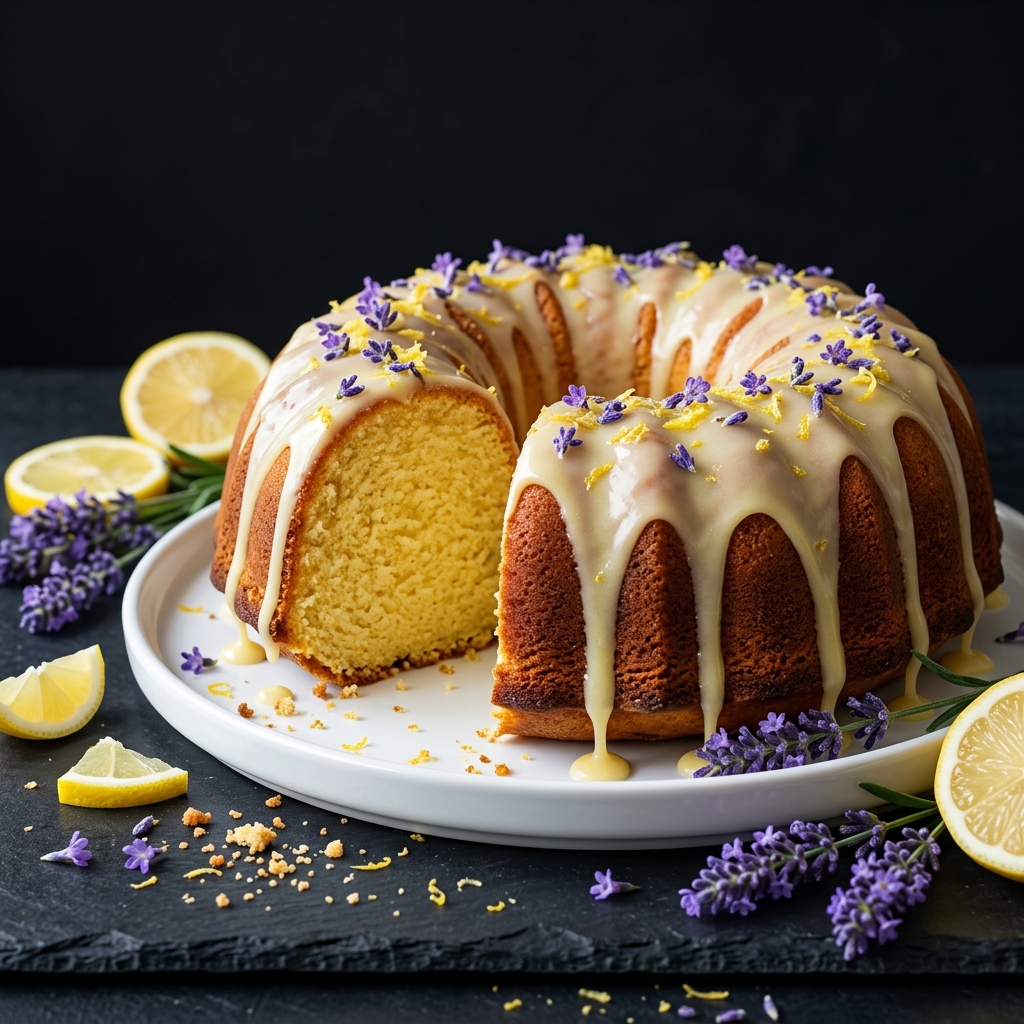
And then there is the glaze. The bright lemon glaze adds a fresh burst of citrus to every slice while providing a beautiful glossy finish. Against the golden cake, the pale glaze, yellow lemon zest, and tiny purple lavender accents make this dessert especially attractive for brunches, afternoon tea, showers, birthdays, spring gatherings, and dessert tables.
Variations to Try
One of the best things about this recipe is how easily the basic flavor profile can be adapted without losing its character.
Lemon Blueberry Lavender Pound Cake
Fold approximately 1 cup of fresh or frozen blueberries into the finished batter before transferring it to the pan.
Blueberries add juicy bursts of sweetness and beautiful color. If using frozen blueberries, add them directly from the freezer rather than thawing them first.
Lemon Lavender Almond Pound Cake
Replace about ¼ cup of the all-purpose flour with finely ground almond flour.
This adds a subtle nutty flavor and creates an especially rich crumb. You can also add a small amount of sliced almonds over the glaze for extra texture.
Extra-Lemony Pound Cake
For an even stronger citrus profile, increase the lemon zest rather than dramatically increasing the lemon juice.
Additional zest adds concentrated lemon aroma without introducing too much liquid into the batter.
You can also brush the cooled cake lightly with a simple lemon syrup before glazing it. This produces an exceptionally moist and intensely lemony dessert.
Orange Lavender Pound Cake
For a slightly warmer citrus variation, replace part of the lemon zest and juice with fresh orange zest and juice.
Orange pairs beautifully with lavender and produces a softer, sweeter citrus character.
Expert Tips for a Tender, Flavorful Pound Cake
Use room-temperature ingredients. Butter, eggs, and milk that are at similar temperatures blend together more smoothly, helping create a uniform batter.
Do not overdo the lavender. More lavender does not necessarily mean more flavor. Too much can make the cake taste intensely floral or slightly medicinal. A subtle lavender note is far more appealing.
Zest the lemon before squeezing it. Whole lemons are much easier to zest than squeezed lemons, and you need the zest for the most aromatic lemon flavor.
Use fresh lemon zest. The fragrant oils in freshly grated zest are one of the most important components of the cake’s citrus character.
Cream the butter and sugar properly. Give this stage the time it needs. The mixture should look lighter and fluffy rather than simply blended.
Add eggs one at a time. This helps the butter mixture maintain a smooth emulsion.
Do not overmix the flour. Once the flour is incorporated, stop mixing as soon as there are no obvious streaks of dry flour.
Bake in the center of the oven. This encourages more even heat distribution and helps prevent an overly dark bottom or uneven rise.
Let the cake cool completely before glazing. A warm cake can cause the glaze to become excessively thin and disappear into the crumb rather than forming that beautiful glossy finish.
Use culinary lavender only. Lavender sold specifically for culinary use is the appropriate choice for a recipe like this. Avoid using flowers treated with pesticides or other products not intended for food.
Make Ahead Options
Lemon Lavender Pound Cake is particularly convenient for entertaining because you can prepare it ahead of time.
The fully baked and cooled cake can be made 1 to 2 days ahead and kept tightly wrapped at room temperature. For the freshest presentation, prepare the glaze closer to serving time and drizzle it over the cake once you are ready to serve.
You can also freeze the unglazed cake. Wrap the completely cooled cake tightly in plastic wrap, followed by a layer of aluminum foil, and freeze for up to approximately 2 to 3 months. Thaw it overnight in the refrigerator or at room temperature while still wrapped, then allow it to come fully to room temperature before glazing.
For the best texture and appearance, add fresh lemon zest and lavender garnish after thawing rather than before freezing.
What to Serve With Lemon Lavender Pound Cake
This pound cake is delicious on its own, but a few simple accompaniments can turn it into an even more memorable dessert.
- Fresh berries: Strawberries, blueberries, raspberries, and blackberries provide freshness and natural sweetness.
- Whipped cream: A lightly sweetened whipped cream adds a soft, creamy contrast to the buttery cake.
- Vanilla ice cream: Especially good when the cake is served slightly warm.
- Greek yogurt: A spoonful of lightly sweetened Greek yogurt creates a pleasant tangy contrast.
- Fresh lemon curd: Perfect for serious lemon lovers who want an extra layer of citrus flavor.
- Tea or coffee: Earl Grey, chamomile, black tea, or a simple cup of coffee pairs beautifully with the cake.
The combination of lemon, lavender, and a tender buttery crumb makes this cake especially suited to afternoon tea and elegant brunch gatherings. Its appearance is refined enough for a celebration, while its preparation remains simple enough for an ordinary weekend baking project.
How to Store Lemon Lavender Pound Cake
Proper storage helps preserve the cake’s tender crumb, buttery flavor, and bright lemon glaze. Because this pound cake is naturally rich and moist, it keeps quite well when protected from air.
At Room Temperature
Once completely cooled and glazed, place the cake in an airtight cake container or wrap it tightly with plastic wrap.
It can generally be kept at room temperature for up to 3 days in a cool, dry environment. Keep it away from direct sunlight, heat, and humidity.
If your kitchen is particularly warm, storing the cake in the refrigerator may be preferable, although refrigeration can make butter-based cakes feel firmer.
In the Refrigerator
For longer short-term storage, refrigerate the cake in an airtight container for approximately 5 to 7 days.
Before serving, allow individual slices or the whole cake to sit at room temperature for a little while. This allows the butter in the crumb to soften again and brings back some of the cake’s original tender texture.
In the Freezer
For longer storage, freezing is an excellent option.
Wrap the completely cooled, unglazed cake tightly in plastic wrap and then in aluminum foil. Place it in a freezer-safe bag or container if possible.
Freeze for up to 2 to 3 months for the best quality.
When ready to serve, thaw the cake while still wrapped. Once completely thawed, prepare fresh lemon glaze and decorate the cake with lemon zest and culinary lavender.
Freezing the cake without the glaze generally produces a cleaner result because the glaze can become sticky or lose its attractive appearance after freezing and thawing.
How to Get the Perfect Lemon Flavor
One of the biggest differences between an average lemon cake and an exceptional lemon cake is how the lemon is incorporated.
It is tempting to simply add more lemon juice when you want stronger lemon flavor, but that is not always the best approach. Lemon juice contributes acidity and moisture, while lemon zest contributes concentrated aromatic citrus oils.
For that reason, fresh zest is essential.
When zesting your lemons, use a fine microplane or fine grater and gently remove only the yellow outer skin. Once you begin seeing the white layer underneath, move to another area of the lemon.
That white portion, known as the pith, is considerably more bitter and can negatively affect the delicate balance of the cake.
Another useful technique is to rub the zest into the granulated sugar before creaming it with the butter. This releases the fragrant oils and distributes the lemon aroma throughout the sugar.
For the glaze, always use freshly squeezed lemon juice when possible. The bright acidity provides a wonderful contrast to the rich pound cake.
How to Get the Perfect Lavender Flavor
Lavender requires a lighter touch than many other baking ingredients.
The purpose of lavender in this recipe is not to dominate the cake. Instead, it should sit behind the lemon and provide a soft floral aroma that becomes noticeable as you chew.
If you are new to baking with lavender, start conservatively. Culinary lavender can vary in intensity, so even the same measurement can produce slightly different results depending on the variety and freshness.
Choose food-grade culinary lavender and avoid using lavender intended only for decorative purposes.
If your lavender buds are relatively large, gently crush or chop them before adding them to the sugar. This helps distribute the flavor more evenly.
A particularly useful technique is to infuse the lavender into the sugar rather than adding large pieces directly to the batter. This creates a more integrated flavor and avoids having concentrated pieces of lavender in individual bites.
Why Did My Pound Cake Turn Out Dense?
A pound cake should be rich and substantial, but there is a difference between a pleasantly dense crumb and a cake that is heavy or gummy.
Several things can cause excessive density.
The first is overmixing after adding the flour. Once flour becomes hydrated, gluten begins developing. Excessive mixing can create a tougher texture.
Another common issue is insufficient creaming of the butter and sugar. If the butter and sugar are simply mixed together rather than properly beaten until light and fluffy, the batter may not contain enough air to produce the desired texture.
Cold ingredients can also interfere with the emulsion. When cold eggs are added to softened butter, the mixture can become uneven or curdled, making it more difficult to create a smooth batter.
Finally, make sure your baking powder is still active. Leavening agents lose effectiveness over time, which can result in a cake that does not rise as expected.
Why Did My Cake Sink in the Middle?
A slight dip can happen with rich pound cakes, but a significant collapse usually indicates an issue with baking or batter structure.
The cake may have been removed from the oven before the center was fully set. Even if the outside looks beautifully golden, the middle can still require additional baking time.
Opening the oven door repeatedly during baking can also cause temperature fluctuations.
Another possibility is too much liquid or insufficient flour. Accurate ingredient measurements are therefore important.
If you notice the cake browning rapidly while the center remains underbaked, loosely cover the top with foil and continue baking until a toothpick inserted into the center comes out with only a few moist crumbs.
Why Is My Lemon Lavender Cake Bitter?
There are two ingredients to examine first: lemon zest and lavender.
If too much of the white lemon pith was included during zesting, the cake can develop a bitter edge.
Similarly, excessive lavender can produce an unpleasantly strong floral flavor that may be perceived as bitter or medicinal.
The solution is not necessarily to eliminate either ingredient. Instead, use finely grated zest and a restrained quantity of culinary lavender.
The goal is harmony: lemon should be bright and recognizable, while lavender should provide a subtle aromatic accent.
Why Is My Lemon Glaze Too Thin?
A thin glaze usually means there is too much liquid relative to the powdered sugar.
Fortunately, this is easy to correct.
Whisk in additional powdered sugar, a tablespoon at a time, until the glaze thickens to your preferred consistency.
If the glaze is already on the cake and has become too thin, allow it to sit for several minutes. Some glazes naturally thicken as they stand.
For a dramatic bakery-style finish, aim for a glaze that slowly flows over the edges rather than immediately running off the cake.
Why Is My Glaze Too Thick?
If your glaze resembles frosting rather than a pourable drizzle, add fresh lemon juice a few drops at a time.
Whisk thoroughly after each addition.
It is much easier to thin a glaze gradually than to rescue one that has become excessively watery, so resist the temptation to add a large amount of lemon juice at once.
Frequently Asked Questions
Can I use dried lavender in Lemon Lavender Pound Cake?
Yes. Dried culinary lavender is commonly used for baking and works particularly well because its flavor is concentrated. However, use it sparingly because dried lavender can be considerably more intense than fresh lavender.
Always choose lavender specifically sold as culinary or food-grade lavender.
Can I make this pound cake without lavender?
Absolutely. If you prefer a classic citrus dessert, simply omit the lavender and make a lemon pound cake with the same buttery base and lemon glaze.
You can also replace the lavender with another complementary flavor, such as a small amount of poppy seeds or finely chopped fresh thyme.
Can I use bottled lemon juice?
Fresh lemon juice is strongly recommended for the best flavor, particularly in the glaze. Fresh lemons also provide the zest that gives the cake its distinctive citrus aroma.
Bottled lemon juice can work in a pinch, but the finished cake may not taste as bright and fresh.
Can I make this recipe in a Bundt pan?
Yes, but the baking time may change depending on the size and shape of the Bundt pan.
A Bundt pan has more exposed surface area than a loaf pan, so the cake may bake somewhat differently. Grease and flour the pan thoroughly, paying particular attention to the grooves and decorative details.
Begin checking for doneness earlier than you would with a loaf pan.
Can I add blueberries to the cake?
Yes. Blueberries are an excellent match for lemon and lavender.
Fresh or frozen blueberries can be folded gently into the finished batter. If using frozen berries, add them without thawing to minimize excess moisture and color bleeding.
For an especially attractive presentation, serve slices with a few fresh blueberries scattered around the plate.
How do I prevent the cake from sticking to the pan?
Grease the pan thoroughly and line the bottom and long sides with parchment when using a loaf pan.
Allow the baked cake to rest in the pan for about 10 to 15 minutes before removing it. If you try to remove it immediately, it can be fragile; if you leave it in the pan for too long, condensation can develop and make the edges more difficult to release.
How do I know when the pound cake is done?
The cake should have a golden surface, a set center, and a slightly springy texture when gently pressed.
The most reliable test is inserting a toothpick or thin skewer into the center. It should come out clean or with a few moist crumbs attached.
If the toothpick has wet batter on it, continue baking and check again after several minutes.
Can I make the cake less sweet?
Yes. The glaze is one of the easiest components to adjust.
You can use less glaze or make a thinner lemon glaze if you prefer a dessert that is less sweet. However, avoid dramatically reducing the sugar in the cake batter itself because sugar contributes more than sweetness—it also affects moisture, tenderness, browning, and overall structure.
Can I use salted butter?
Yes, although unsalted butter is preferable because it allows you to control the amount of salt in the recipe.
If salted butter is what you have available, reduce or omit the additional salt according to how salty the butter tastes.
The Secret to Serving This Cake Beautifully
A great pound cake deserves a presentation that highlights its texture and color.
Once the glaze has set, use a sharp serrated or chef’s knife to cut clean slices. Wipe the blade between cuts if you want especially neat presentation.
Arrange each slice slightly overlapping another on a modern white plate. Add a few thin lemon slices, a scattering of fresh berries, and a very small amount of culinary lavender for color.
For an elegant dessert-table presentation, avoid overcrowding the plate. The golden cake should remain the focal point.
A light dusting of powdered sugar can also be attractive if you are serving the cake without glaze, while a glossy lemon glaze provides a more dramatic finish.
A Simple Baker’s Checklist
Before putting your Lemon Lavender Pound Cake into the oven, quickly check these details:
- Butter is softened, not melted.
- Eggs and milk are preferably at room temperature.
- Flour has been measured accurately.
- Baking powder is fresh.
- Lemon zest contains little to no white pith.
- Culinary lavender is food-grade.
- Butter and sugar have been creamed until light and fluffy.
- Eggs have been incorporated gradually.
- Flour is mixed only until combined.
- The loaf pan has been properly prepared.
- The oven is fully preheated.
- The cake is baked until the center is completely set.
- The cake has cooled completely before glazing.
These small checks can prevent most of the common problems associated with homemade pound cake.
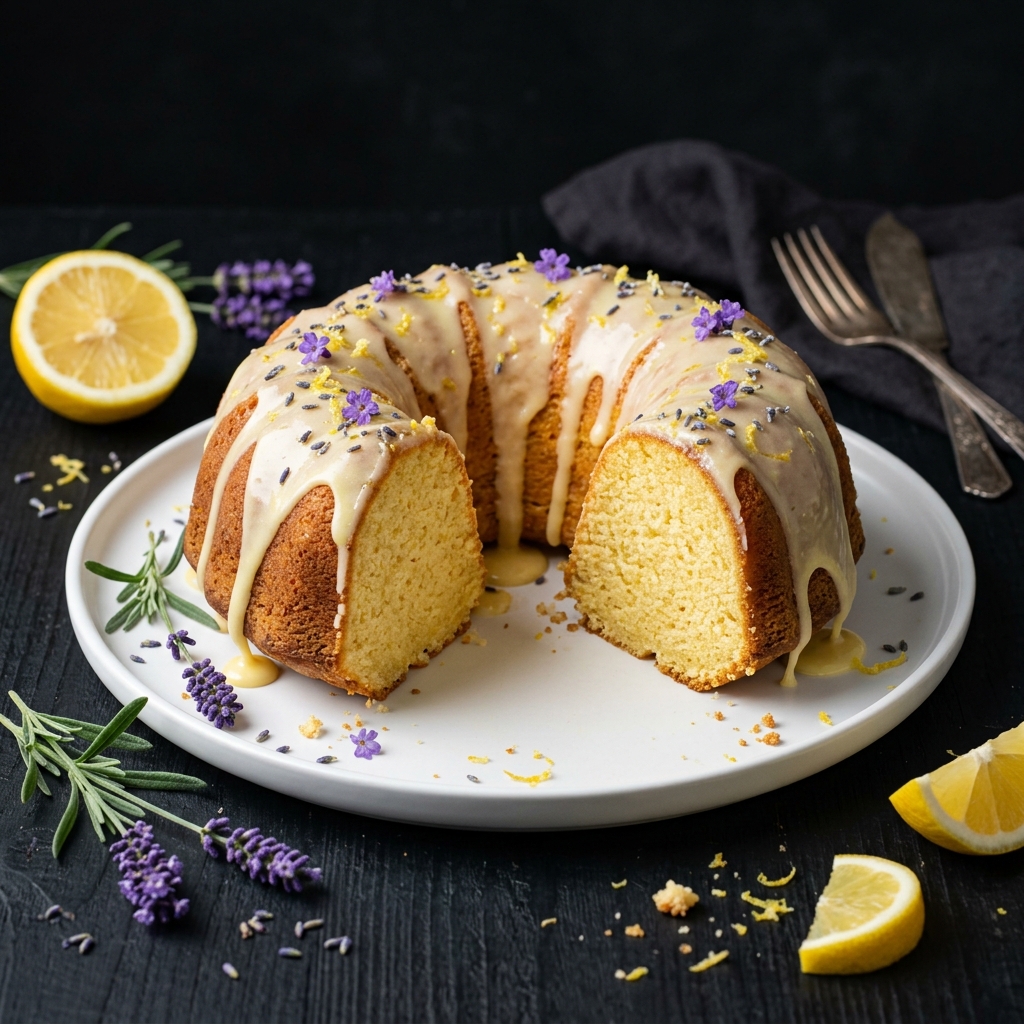
Lemon Lavender Pound Cake
Ingredients
Equipment
Method
- Prepare the oven and pan: Preheat the oven to 350°F (175°C). Grease a 9 × 5-inch loaf pan and line the bottom and long sides with parchment paper, leaving enough overhang to lift the cake out easily.
- Mix the dry ingredients: In a medium bowl, whisk together the flour, baking powder, and salt. Set aside.
- Infuse the sugar: Add the lemon zest and culinary lavender to the granulated sugar. Gently rub them together with your fingertips for about 30 seconds to release their aromatic oils.
- Cream the butter and sugar: Add the softened butter to the lemon-lavender sugar. Beat with a stand mixer or hand mixer on medium speed for 3–5 minutes, until light, pale, and fluffy. Scrape down the bowl as needed.
- Add the eggs: Add the eggs one at a time, beating well after each addition. Scrape down the bowl between additions to maintain an even mixture.
- Add lemon and vanilla: Mix in the fresh lemon juice and vanilla extract until just incorporated.
- Combine wet and dry ingredients: Add one-third of the flour mixture and mix on low speed. Add half of the milk and mix briefly. Repeat with another third of the flour mixture, the remaining milk, and finally the remaining flour. Mix only until the batter is just combined. Do not overmix.
- Fill the pan: Transfer the batter to the prepared loaf pan and smooth the top with a spatula. Gently tap the pan once or twice against the counter to release any large air pockets.
- Bake: Bake for 55–70 minutes, or until the cake is golden and a toothpick inserted into the center comes out clean or with a few moist crumbs. If the top browns too quickly, loosely cover it with aluminum foil during the final portion of baking.
- Cool: Allow the cake to cool in the pan for 10–15 minutes, then carefully lift it out using the parchment. Transfer to a wire rack and cool completely.
- Make the glaze: Whisk together the powdered sugar, lemon juice, and lemon zest. Adjust the consistency with a little extra powdered sugar or lemon juice as needed. The glaze should be thick enough to coat the cake while still flowing slowly over the edges.
- Glaze and decorate: Once the cake is completely cool, drizzle the lemon glaze over the top. Garnish with fresh lemon zest, lemon slices, and a small amount of culinary lavender.
- Serve: Allow the glaze to set slightly before slicing. Serve at room temperature with fresh berries, whipped cream, tea, coffee, or your favorite dessert accompaniment.
Notes
Lavender has a strong flavor, so start with 1 teaspoon if you prefer a very subtle floral note.
Fresh lemon zest provides much of the cake's intense lemon aroma. Avoid grating the bitter white pith beneath the yellow peel.
Room-temperature eggs and milk blend more easily into the creamed butter mixture.
Do not overmix once the flour is added, as this can make the pound cake tough.
Let the cake cool completely before glazing so the lemon glaze remains thick and attractive.
For the cleanest slices, use a sharp knife and wipe the blade between cuts.
Store covered at room temperature for up to 3 days, refrigerate for approximately 5–7 days, or freeze the unglazed cake for up to 2–3 months.
For a variation, add fresh or frozen blueberries to create a Lemon Blueberry Lavender Pound Cake.

Hi, I’m Clara, the creator of Barakala. I love sharing simple, comforting, and delicious recipes that make everyday cooking easier and more enjoyable for home cooks.