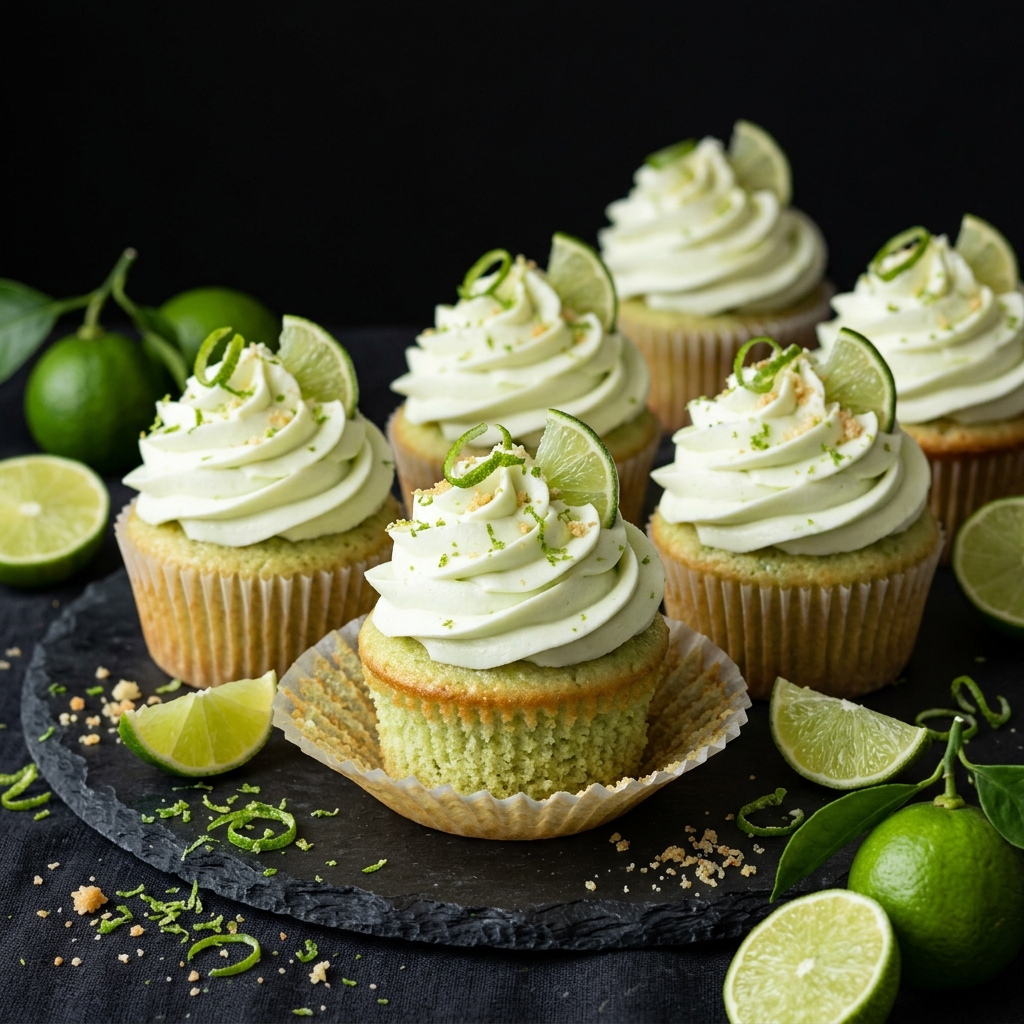
Bright, refreshing, and irresistibly creamy, these Key Lime Cupcakes bring the sweet-tart flavor of fresh citrus into every tender bite. With soft, moist cupcakes, fragrant lime zest, and a smooth lime frosting, they have the cheerful flavor of a classic key lime dessert in a beautiful individual-sized treat.
Ingredients You’ll Need
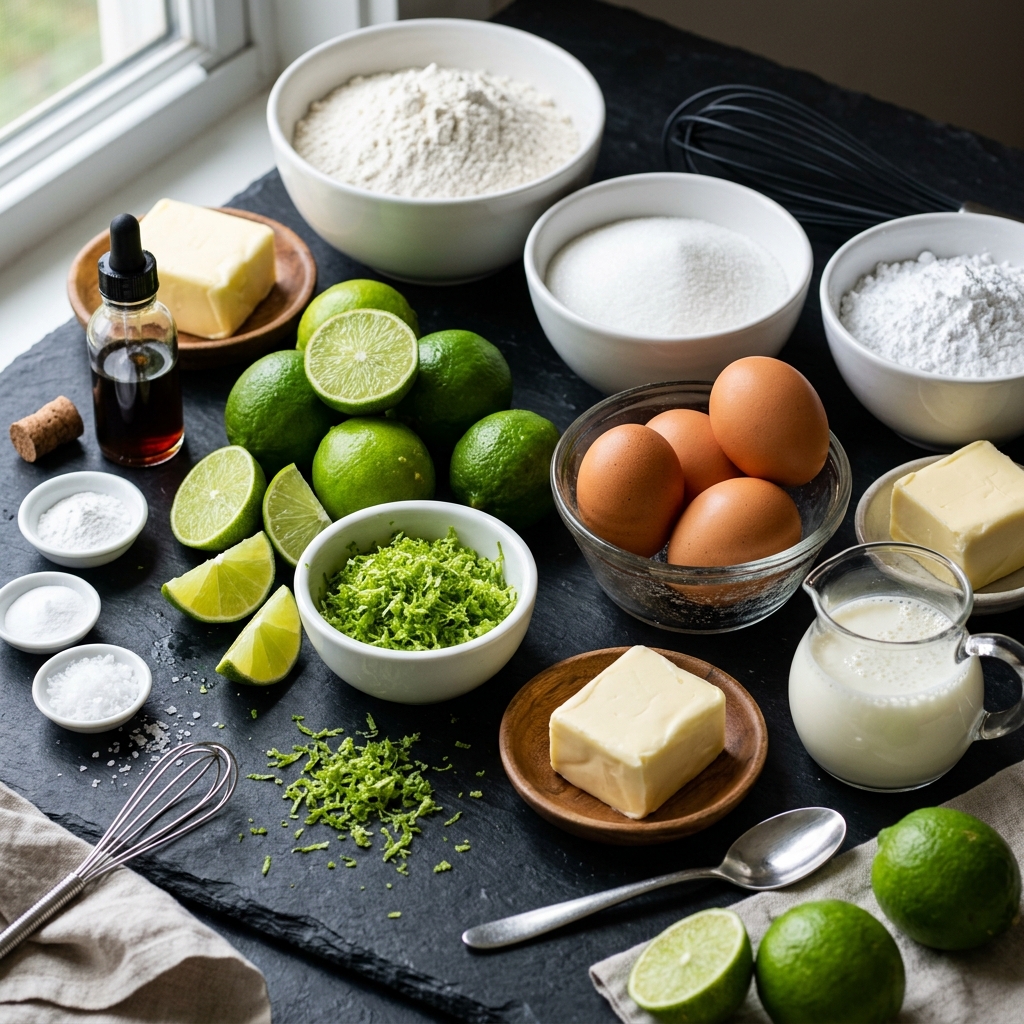
For the Key Lime Cupcakes
All-purpose flour: This forms the structure of the cupcakes. Measure the flour carefully, preferably by spooning it into a measuring cup and leveling it rather than scooping directly from the flour container. Too much flour can produce dense, dry cupcakes.
Baking powder: Helps the cupcakes rise and develop a soft, tender crumb.
Baking soda: Works alongside the acidic lime ingredients to encourage a good rise and contributes to a lighter texture.
Salt: Even in a sweet recipe, salt is important. It balances the sugar and helps bring out the citrus and vanilla flavors.
Unsalted butter: Butter provides richness and gives the cupcakes their tender texture. Using unsalted butter also gives you better control over the amount of salt in the recipe.
Granulated sugar: Sweetens the batter while helping create a delicate crumb.
Eggs: Eggs provide structure, moisture, richness, and stability as the cupcakes bake. Room-temperature eggs generally incorporate more smoothly into the batter.
Fresh key lime zest: This is one of the most important ingredients for strong lime flavor. Much of the aromatic citrus oil is concentrated in the peel, so zest can provide a more pronounced lime fragrance than juice alone.
Fresh key lime juice: Adds the signature tart, refreshing flavor. Freshly squeezed juice is preferable for a bright, natural taste.
Vanilla extract: A small amount rounds out the citrus flavor and gives the cupcakes a fuller dessert-like aroma.
Milk or buttermilk: Provides moisture and helps create a soft crumb. Buttermilk can contribute a subtle tang that works particularly well with lime.
For the Lime Frosting
Unsalted butter: Creates the creamy foundation of the frosting.
Powdered sugar: Provides sweetness while giving the frosting its smooth, spreadable or pipeable consistency.
Fresh key lime juice: Brings the citrus flavor into the frosting.
Key lime zest: Intensifies the lime aroma and gives the frosting a naturally fresh character.
Vanilla extract: Adds balance and prevents the frosting from tasting one-dimensional.
A small pinch of salt: Helps balance the sweetness and makes the lime flavor stand out.
For Garnishing
Fresh key lime wedges, thin lime slices, or a little finely grated lime zest make beautiful finishing touches. A small amount of zest is often enough to make the cupcakes look brighter and immediately communicate their citrus flavor.
If you cannot find fresh key limes, regular Persian limes can be used. The flavor will be slightly different, but the cupcakes will still be delicious.
How to Make Key Lime Cupcakes
Step 1: Prepare the Oven and Cupcake Pan
Begin by preheating your oven to 350°F (175°C). Line a standard 12-cup muffin pan with cupcake liners.
Preparing the pan before mixing the batter is a small step that makes the entire process easier. Once the batter is ready, you want to get it into the oven fairly quickly so the leavening agents can do their job effectively.
Step 2: Prepare the Dry Ingredients
In a medium mixing bowl, whisk together the flour, baking powder, baking soda, and salt.
Whisking rather than simply stirring helps distribute the leavening agents evenly throughout the flour. This matters because an unevenly distributed raising agent can result in cupcakes that rise inconsistently.
Set the bowl aside while you prepare the wet ingredients.
Step 3: Cream the Butter and Sugar
Place the softened butter and granulated sugar in a large mixing bowl. Beat them together until the mixture becomes noticeably lighter in color and fluffy in texture.
This step is more important than it may appear. Properly creamed butter and sugar create tiny pockets of air that help contribute to the cupcake’s final texture.
Avoid using butter that is melted. Softened butter should be cool to the touch but pliable enough to press easily with a finger.
Step 4: Add the Eggs
Add the eggs one at a time, mixing well after each addition.
Adding them gradually allows the mixture to remain smooth and helps the eggs emulsify properly with the butter. If the batter looks slightly curdled at this stage, don’t panic. A little separation can happen, especially if the ingredients are different temperatures.
Step 5: Add the Lime Zest and Vanilla
Add the fresh key lime zest and vanilla extract to the batter. Mix until evenly incorporated.
This is where the kitchen should begin smelling unmistakably citrusy. The zest contains aromatic oils that release as it is mixed into the butter and sugar, giving the cupcakes a much more vibrant lime fragrance.
For maximum flavor, zest the limes before squeezing them. Whole, firm limes are generally easier to zest than fruit that has already been squeezed.
Step 6: Add the Dry Ingredients and Milk
Gradually add the dry ingredients to the butter mixture, alternating with the milk or buttermilk.
A useful pattern is to add about one-third of the dry ingredients, mix briefly, add half of the milk, mix again, then repeat until everything is incorporated.
Do not overmix the batter. Once the flour disappears, stop mixing.
Overmixing develops gluten, which can make cupcakes chewy or dense instead of soft and tender.
Step 7: Add the Fresh Key Lime Juice
Gently mix in the fresh key lime juice until just combined.
The batter should be smooth and fairly thick but still easy to scoop. The citrus juice adds acidity and moisture, while the zest supplies the concentrated lime aroma.
Avoid adding excessive juice in an attempt to make the cupcakes more sour. Too much liquid can interfere with the intended texture. If you want a stronger lime flavor, additional zest is often a better solution than simply adding more juice.
Step 8: Fill the Cupcake Liners
Divide the batter evenly among the prepared cupcake liners, filling each approximately two-thirds full.
Using a cookie scoop can make this easier because it helps distribute the batter more evenly. Consistent filling also means the cupcakes should finish baking around the same time.
Avoid filling the liners all the way to the top. The batter needs room to rise without overflowing.
Step 9: Bake
Place the pan in the preheated oven and bake for approximately 18–22 minutes, or until the cupcakes are lightly golden and a toothpick inserted into the center comes out clean or with a few moist crumbs attached.
Try not to open the oven repeatedly during baking. A sudden change in temperature can interfere with the cupcakes’ rise.
Because ovens vary, begin checking toward the lower end of the suggested baking time.
Step 10: Cool Completely
Remove the pan from the oven and allow the cupcakes to cool in the pan for several minutes. Then transfer them to a wire rack to cool completely.
This step requires patience.
Do not frost warm cupcakes. Even slightly warm cupcakes can melt the butter in the frosting, causing it to become soft, slippery, and difficult to pipe.
Step 11: Make the Lime Frosting
While the cupcakes cool, beat the softened butter until smooth and creamy.
Gradually add the powdered sugar, mixing on low speed initially to prevent a cloud of sugar from covering your kitchen. Once incorporated, increase the speed and beat until fluffy.
Add the fresh key lime juice, lime zest, vanilla extract, and a small pinch of salt. Beat again until the frosting becomes smooth and creamy.
If the frosting is too thick, add a tiny amount of lime juice or milk. If it is too soft, gradually add a little more powdered sugar.
The goal is frosting that holds its shape while remaining light and creamy.
Step 12: Frost the Cupcakes
Once the cupcakes are completely cool, pipe or spread the lime frosting generously over the tops.
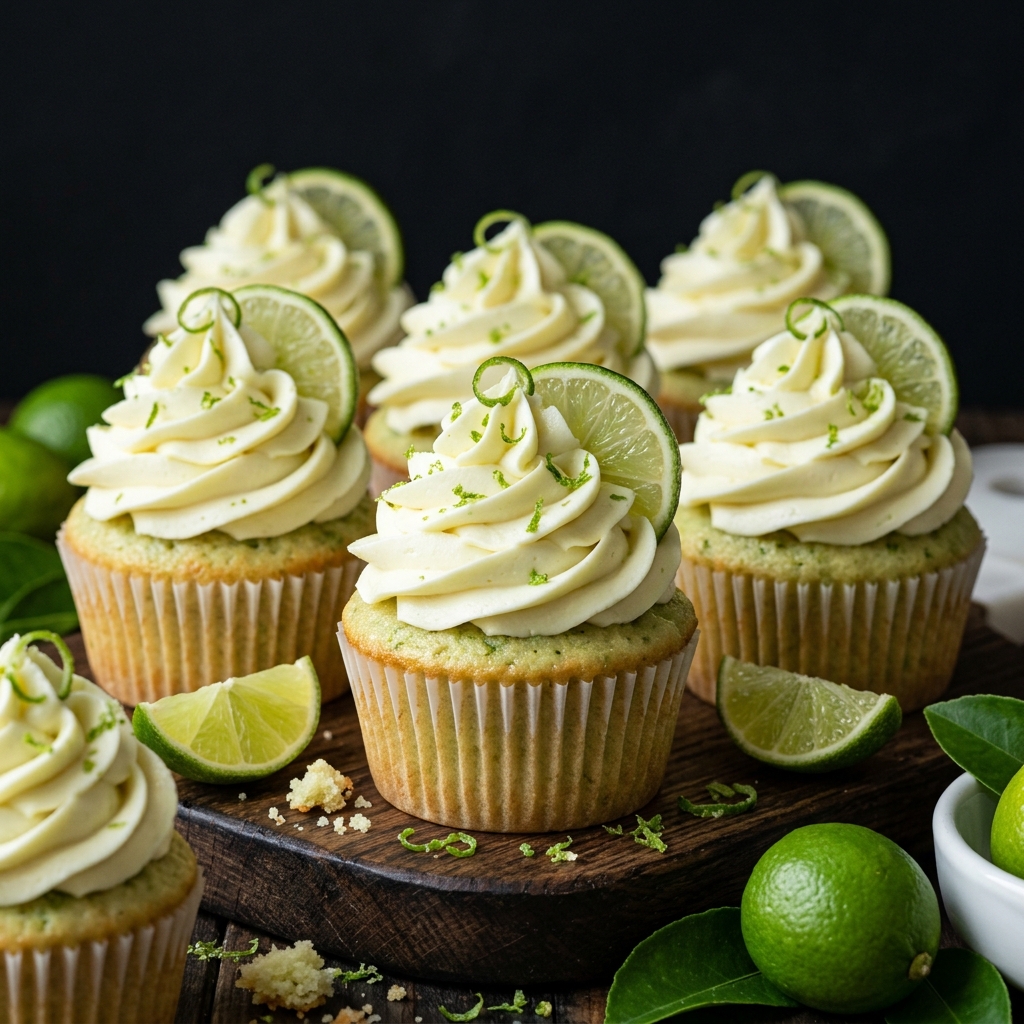
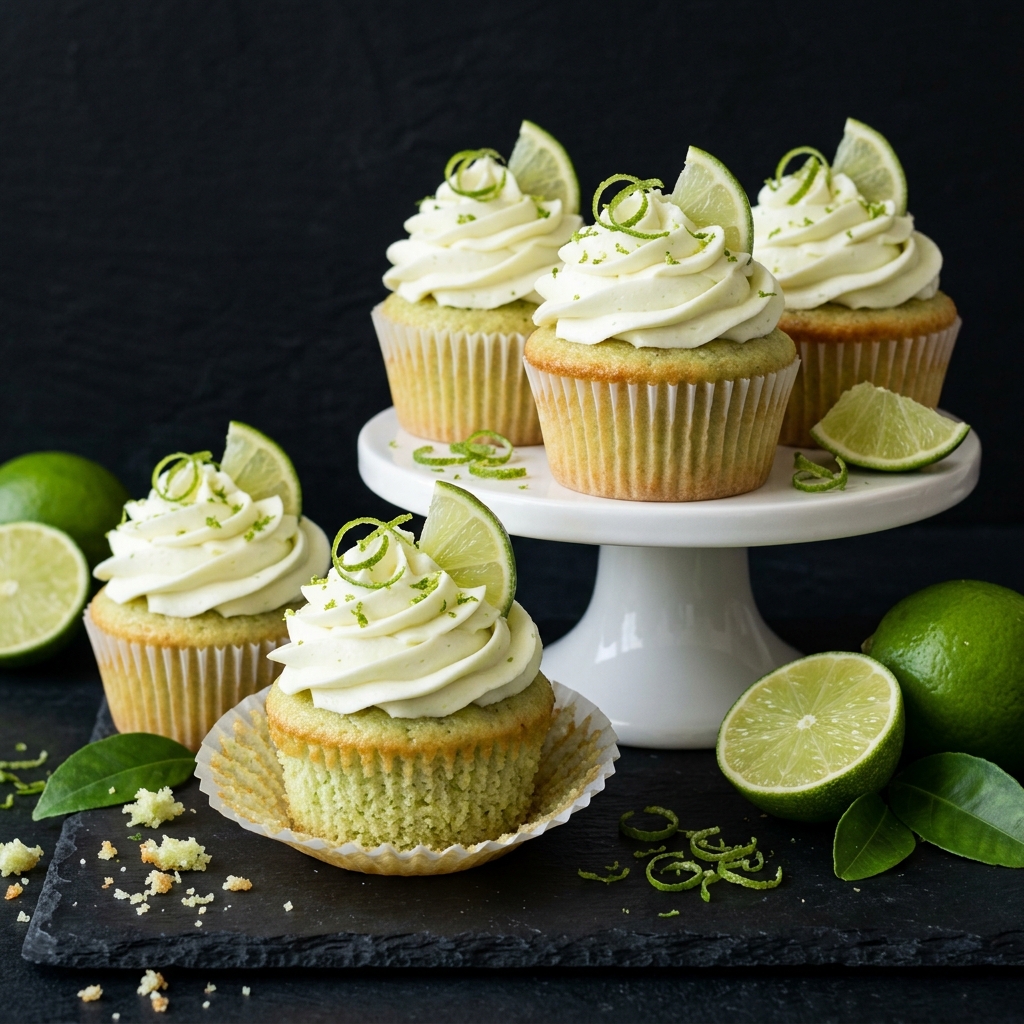
For a bakery-style presentation, use a piping bag fitted with a large star tip and pipe the frosting in a circular swirl.
Finish each cupcake with a small amount of fresh lime zest or a tiny lime wedge.
Keep the garnish restrained. The frosting and cupcake should remain the stars of the presentation.
The Little Detail That Makes the Biggest Difference
If you want your Key Lime Cupcakes to taste genuinely vibrant rather than simply sweet with a hint of lime, pay close attention to the zest.
Fresh lime zest contains intensely aromatic citrus oils, and these oils are responsible for much of the fragrance you associate with freshly peeled citrus. When you combine zest with fresh juice, you get two different expressions of lime: the aromatic brightness of the peel and the tart acidity of the juice.
There is another useful trick, too: gently rubbing the lime zest into the granulated sugar before adding it to the batter. This helps release some of the fragrant oils from the zest into the sugar, distributing that citrus aroma throughout the mixture. It is a simple professional-style technique that can make a noticeable difference.
Recipe Variations
Key Lime Coconut Cupcakes
For a tropical variation, add finely shredded unsweetened coconut to the cupcake batter. You can also sprinkle toasted coconut over the frosting for extra texture.
The combination of creamy coconut and tart lime creates a flavor profile reminiscent of a tropical dessert.
Key Lime Cream Cheese Frosting
Replace part of the butter in the frosting with softened cream cheese. The result is tangier, richer, and slightly more decadent.
This variation works particularly well if you enjoy the flavor combination of citrus and cheesecake.
Key Lime Pie Cupcakes
Turn these cupcakes into a miniature interpretation of key lime pie by adding a graham cracker crumb base before baking.
For an extra dessert-like finish, garnish with graham cracker crumbs alongside the lime zest.
Raspberry Key Lime Cupcakes
Add a few fresh raspberries to the presentation or pair the cupcakes with a raspberry filling.
The berries provide a naturally sweet and slightly tart contrast to the bright lime flavor.
Extra-Citrusy Lime Cupcakes
If you are a serious citrus lover, increase the amount of finely grated lime zest rather than dramatically increasing the lime juice.
This produces a more aromatic lime flavor while helping preserve the cupcake’s intended texture.
Expert Tips for Bakery-Style Results
Use fresh citrus whenever possible. Bottled lime juice can be convenient, but fresh juice and freshly grated zest provide a brighter aroma and flavor.
Do not overmix the batter. Mix only until the ingredients are combined. This is one of the easiest ways to protect the tender crumb.
Bring refrigerated ingredients toward room temperature. Room-temperature butter and eggs generally blend more easily, producing a smoother batter.
Zest before juicing. A firm whole lime is easier to zest than a soft, squeezed lime.
Avoid the white pith. When zesting the lime, grate only the thin green outer layer. The white layer underneath can taste bitter.
Cool completely before decorating. This is essential for a stable buttercream.
Don’t overfill the liners. Consistent filling helps produce evenly shaped cupcakes with attractive domed tops.
Taste the frosting before piping. Lime varies in acidity, so taste the frosting and adjust carefully. A little extra zest can increase citrus intensity without dramatically changing the frosting’s consistency.
Use a light hand with garnish. Fresh lime zest is beautiful, but too much can overpower the visual balance and make the cupcakes look messy.
Serve at the right temperature. If refrigerated, allow the cupcakes to sit at room temperature briefly before serving. The frosting becomes creamier and the lime flavor becomes more pronounced as it loses some of its chill.
Make-Ahead Options
Key Lime Cupcakes are excellent for preparing ahead, especially when you are planning a party, gathering, or special occasion.
The cupcakes themselves can be baked a day ahead. Once completely cool, place them in an airtight container and keep them at room temperature in a cool area. Avoid refrigerating unfrosted cupcakes unless necessary, as refrigeration can sometimes make cake lose moisture and become slightly firmer.
The lime frosting can also be prepared ahead of time. Store it in an airtight container in the refrigerator for up to several days. Before using, allow it to soften at room temperature and beat it briefly again until smooth and fluffy. If the frosting seems too firm, a small amount of milk or lime juice can help restore the desired consistency.
For the freshest presentation, frost the cupcakes on the day you plan to serve them.
If you are preparing them several days in advance, the unfrosted cupcakes can also be frozen. Wrap them individually or place them in a freezer-safe airtight container, then thaw them at room temperature before decorating.
What to Serve With Key Lime Cupcakes
These cupcakes already have a bright, refreshing flavor, so they pair especially well with simple drinks and lighter desserts.
Freshly Brewed Tea
A cup of black tea, green tea, or lightly flavored herbal tea makes an excellent companion. The subtle bitterness of tea balances the sweetness of the frosting while allowing the lime flavor to remain prominent.
Iced Tea
For a warm-weather gathering, serve the cupcakes with chilled unsweetened or lightly sweetened iced tea. Lemon, mint, or citrus-infused iced tea works particularly well.
Fresh Fruit
A platter of strawberries, raspberries, blueberries, or pineapple can add color to a dessert table while providing a naturally fresh contrast to the creamy cupcakes.
Fresh Whipped Cream and Berries
For a more elaborate dessert presentation, arrange the cupcakes alongside small portions of lightly sweetened whipped cream and fresh berries.
Coffee
Coffee may seem like an unexpected pairing for lime, but its roasted flavor provides an interesting contrast to the bright citrus. A lightly sweetened coffee or cold brew works particularly well if you enjoy contrasting flavors.
How to Store Key Lime Cupcakes
Proper storage helps preserve both the moist cupcake and the creamy frosting.
At Room Temperature
If your kitchen is cool and the cupcakes are not filled with a highly perishable filling, they can generally be kept in an airtight container for about 1–2 days.
Keep them away from direct sunlight, heat, and humidity.
Because the frosting contains butter and may include dairy ingredients, use extra caution in a warm environment. If your kitchen is particularly hot, refrigeration is the safer option.
In the Refrigerator
Store frosted cupcakes in an airtight cupcake container in the refrigerator for approximately 3–4 days.
The important part is protecting them from refrigerator air, which can dry out exposed cake and allow the cupcakes to absorb odors from other foods.
Before serving, allow refrigerated cupcakes to sit at room temperature for a short period. This helps soften the frosting and brings out the buttery texture and citrus aroma.
In the Freezer
For longer storage, freeze the cupcakes without frosting whenever possible.
Place completely cooled cupcakes in a freezer-safe airtight container, separating layers with parchment paper if necessary. They can generally be kept frozen for around 2–3 months for best quality.
Thaw them at room temperature while still covered. Once completely thawed, decorate with freshly prepared frosting and lime garnish.
Frequently Asked Questions
What makes Key Lime Cupcakes different from regular lime cupcakes?
Key lime cupcakes are inspired by the distinctive flavor of key lime, which is traditionally associated with a particularly aromatic, tart citrus flavor. Regular limes can also be used successfully, especially when fresh key limes are unavailable.
The biggest difference is the character of the citrus rather than the basic cupcake technique.
Can I use regular limes instead of key limes?
Yes. Persian limes, which are commonly sold in supermarkets, are an excellent substitute.
The flavor will not be exactly identical, but you can still make delicious lime cupcakes. If you want a stronger citrus presence, use plenty of fresh zest along with the juice.
Why are my cupcakes dry?
Dry cupcakes can result from several things, but the most common causes are too much flour, overbaking, or overmixing.
Measuring flour accurately is particularly important. If you scoop flour directly from the bag or container, you can accidentally pack extra flour into the measuring cup.
Also, begin checking the cupcakes toward the earlier end of the baking time. Every oven is slightly different.
Why did my cupcakes sink in the middle?
Several factors can cause cupcakes to sink.
Opening the oven door too early, using too much liquid, inaccurate measurements, underbaking, or excessive leavening can all contribute.
Make sure your baking powder and baking soda are reasonably fresh and avoid opening the oven during the early stages of baking.
A cupcake that is still underbaked in the center may also collapse as it cools because its structure has not fully set.
Why is my frosting too runny?
The most common causes are overly soft butter, too much liquid, or a warm kitchen.
Try chilling the frosting briefly and then beating it again. If it remains too soft, gradually add more powdered sugar until it reaches a pipeable consistency.
When adding lime juice, remember that a little goes a long way. You can always add more, but removing excess liquid from frosting is much more difficult.
Can I make these cupcakes without a piping bag?
Absolutely.
You can spread the frosting onto each cupcake using an offset spatula, the back of a spoon, or a small butter knife.
For a rustic homemade appearance, simply swirl the frosting over the cupcake and finish it with fresh lime zest.
Can I make mini Key Lime Cupcakes?
Yes. This recipe can be adapted for a mini muffin pan.
Mini cupcakes generally require a shorter baking time, so begin checking them early. Because they are smaller, they can also be particularly attractive for dessert buffets, showers, afternoon teas, and parties.
Can I add lime filling to the cupcakes?
Yes. For an extra-special version, you can hollow a small portion from the center of each completely cooled cupcake and add a small amount of lime curd before frosting.
The filling creates an additional burst of citrus flavor when the cupcake is bitten into.
Just be careful not to remove too much of the center, or the cupcake may lose some of its structural support.
Common Mistakes to Avoid
Even a relatively simple cupcake recipe can go wrong if a few details are overlooked.
One common mistake is treating lime juice as the only source of lime flavor. Juice provides acidity and tartness, but zest delivers much of the fragrant citrus character. Using both creates a more complete flavor.
Another mistake is adding too much liquid because you want the cupcakes to taste more citrusy. This can negatively affect the texture. If the cupcakes need more lime intensity, increase the zest rather than dramatically increasing the juice.
Overmixing is another issue worth watching. Once the flour has been incorporated, there is no advantage to continuing to beat the batter. Excessive mixing can lead to a tighter, chewier crumb.
Finally, don’t underestimate the importance of cooling. Frosting a warm cupcake may seem harmless, but heat can quickly soften buttercream and turn an attractive swirl into a melted layer.
How to Get a Beautiful Bakery-Style Presentation
Presentation matters, particularly when these cupcakes are being served at a celebration or photographed for a recipe collection.
Start with evenly baked cupcakes. If some cupcakes rise significantly higher than others, the finished display can look uneven.
Next, use a large star piping tip to create generous frosting swirls. Begin in the center or along the outer edge and work upward in a steady circular motion.
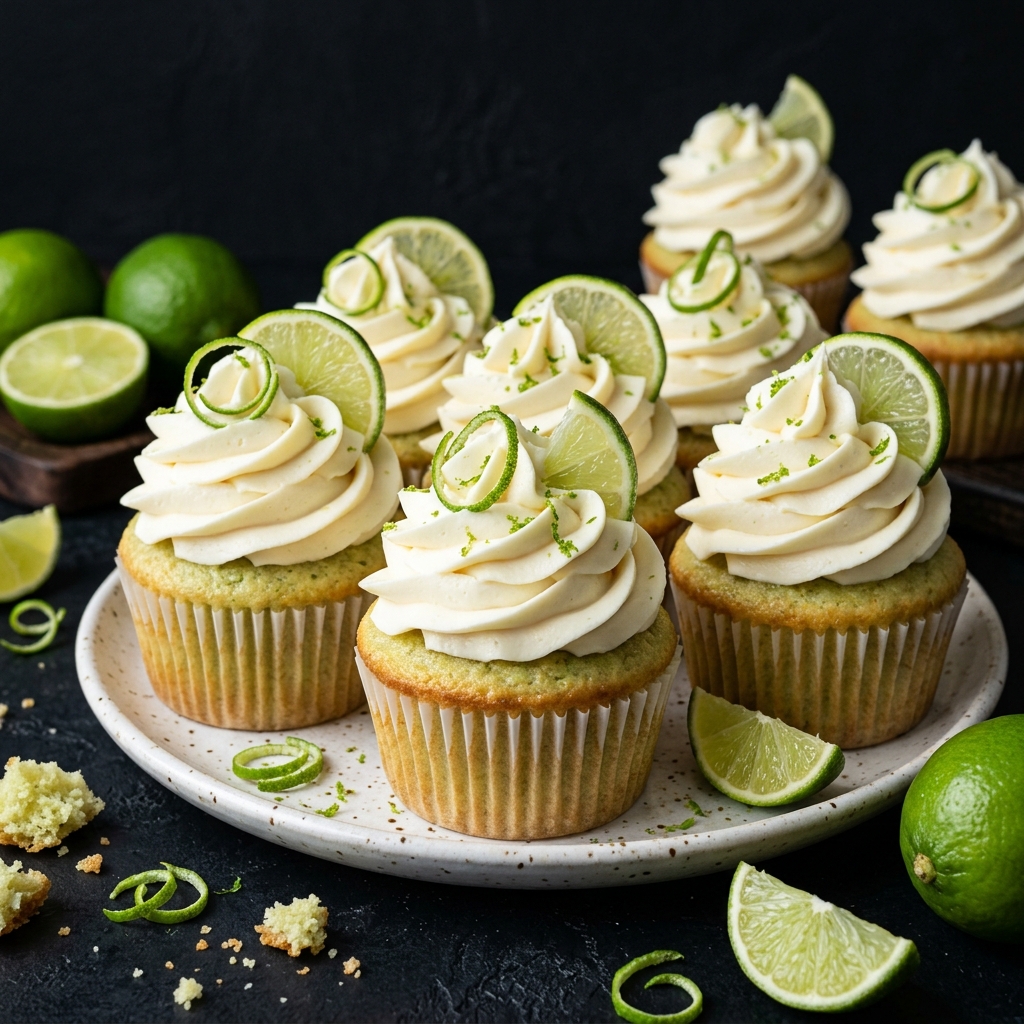
A little lime zest scattered over the frosting gives the cupcakes a naturally vibrant finish. A very thin lime wedge placed at an angle can add height and color, but make sure the garnish is small enough that the cupcake remains easy to eat.
For a more sophisticated dessert table, arrange the cupcakes on a modern white cake stand or serving platter. The bright green citrus accents against a clean white serving surface create a fresh, elegant presentation.
The Best Way to Get a Strong Lime Flavor
If you have ever made a citrus dessert that tasted mostly like sugar, the solution is not necessarily more juice.
Think about lime flavor as having several layers.
The zest provides aroma. The juice provides acidity and brightness. The sugar provides balance. The butter and dairy ingredients provide richness, which softens the sharpness of the citrus.
When these elements are balanced correctly, the result tastes distinctly lime-forward without becoming sour.
For the strongest natural flavor, zest the limes immediately before using them. Fresh zest loses some of its aromatic intensity over time. Also, avoid grating deeply into the white pith beneath the green peel because it can introduce bitterness.
This simple approach gives you a much more sophisticated citrus flavor than relying heavily on bottled lime juice.
Why These Cupcakes Work for So Many Occasions
One of the biggest advantages of Key Lime Cupcakes is their versatility.
They are colorful enough for a birthday celebration but sophisticated enough for a dinner party. They can be served at a spring brunch, summer barbecue, afternoon tea, baby shower, bridal shower, picnic, or holiday dessert table.
Because each guest receives an individual cupcake, there is also no need to slice and serve a large cake. That makes them particularly convenient for gatherings.
The combination of soft cake, creamy frosting, tart citrus, and fresh zest also gives the dessert a refreshing quality that makes it especially appealing when you want something lighter-tasting than a very rich chocolate or caramel dessert.
A Few Final Chef’s Notes
For the most reliable results, focus on ingredient temperature, accurate measurements, gentle mixing, and proper cooling.
Use fresh lime zest generously but thoughtfully. Measure flour carefully. Don’t overbake the cupcakes simply because you are waiting for them to become deeply golden; citrus cupcakes are best when they remain soft and moist.
And when it comes to the frosting, taste as you go.
Limes naturally vary in acidity, so your frosting may need a slight adjustment depending on the fruit you’re using. A little additional zest can intensify the citrus aroma, while a small pinch of salt can help balance excessive sweetness.
Most importantly, don’t rush the final stage. Give the cupcakes enough time to cool, make sure the frosting has the right consistency, and finish them with fresh lime zest just before serving.
Key Lime Cupcakes
Ingredients
Equipment
Method
- Preheat the oven to 350°F (175°C). Line a 12-cup muffin pan with cupcake liners and set aside.
- In a medium bowl, whisk together the flour, baking powder, baking soda, and salt until evenly distributed. Set aside.
- In a large bowl, beat the softened butter and granulated sugar until light, fluffy, and noticeably paler in color, about 2–3 minutes.
- Add the eggs one at a time, beating well after each addition. Scrape down the sides of the bowl as needed.
- Mix in the fresh key lime zest and vanilla extract until evenly incorporated.
- Add the dry ingredients in portions, alternating with the milk or buttermilk. Mix gently after each addition and stop mixing as soon as the flour is incorporated.
- Add the fresh key lime juice and mix just until combined. Do not overmix.
- Divide the batter evenly among the prepared cupcake liners, filling each about two-thirds full.
- Bake for 18–22 minutes, or until the cupcakes are lightly golden and a toothpick inserted into the center comes out clean or with a few moist crumbs.
- Allow the cupcakes to cool in the pan for several minutes, then transfer them to a wire rack. Cool completely before frosting.
- Beat the softened butter until smooth and creamy. Gradually add the powdered sugar, mixing on low speed until incorporated.
- Add the key lime juice, lime zest, vanilla extract, and salt. Beat on medium-high speed until the frosting is light and fluffy.
- If the frosting is too thick, add milk a teaspoon at a time. If it is too soft, add a little more powdered sugar.
- Pipe or spread the lime buttercream over the completely cooled cupcakes. Finish with fresh lime zest or a small key lime wedge.
- Serve and enjoy!
Notes
Zest before juicing: Whole limes are much easier to zest than squeezed ones.
Avoid the white pith: Only grate the green outer skin because the white pith can taste bitter.
Do not overmix: Mix the batter only until the ingredients are combined to keep the cupcakes soft and tender.
Cool completely before frosting: Warm cupcakes can melt the buttercream and make it difficult to achieve attractive frosting swirls.
For stronger lime flavor: Increase the amount of fresh lime zest rather than adding excessive lime juice.
Storage: Keep frosted cupcakes in an airtight container in the refrigerator for up to 3–4 days. Allow them to sit at room temperature briefly before serving for the best texture.
Make-ahead: The cupcakes can be baked a day ahead, while the frosting can be prepared several days ahead and refrigerated until needed.
Freezing: Unfrosted cupcakes can be frozen in an airtight freezer-safe container for approximately 2–3 months for best quality.
Diet note: The standard recipe is vegetarian but is not gluten-free, vegan, keto, or low-carb.

Hi, I’m Clara, the creator of Barakala. I love sharing simple, comforting, and delicious recipes that make everyday cooking easier and more enjoyable for home cooks.