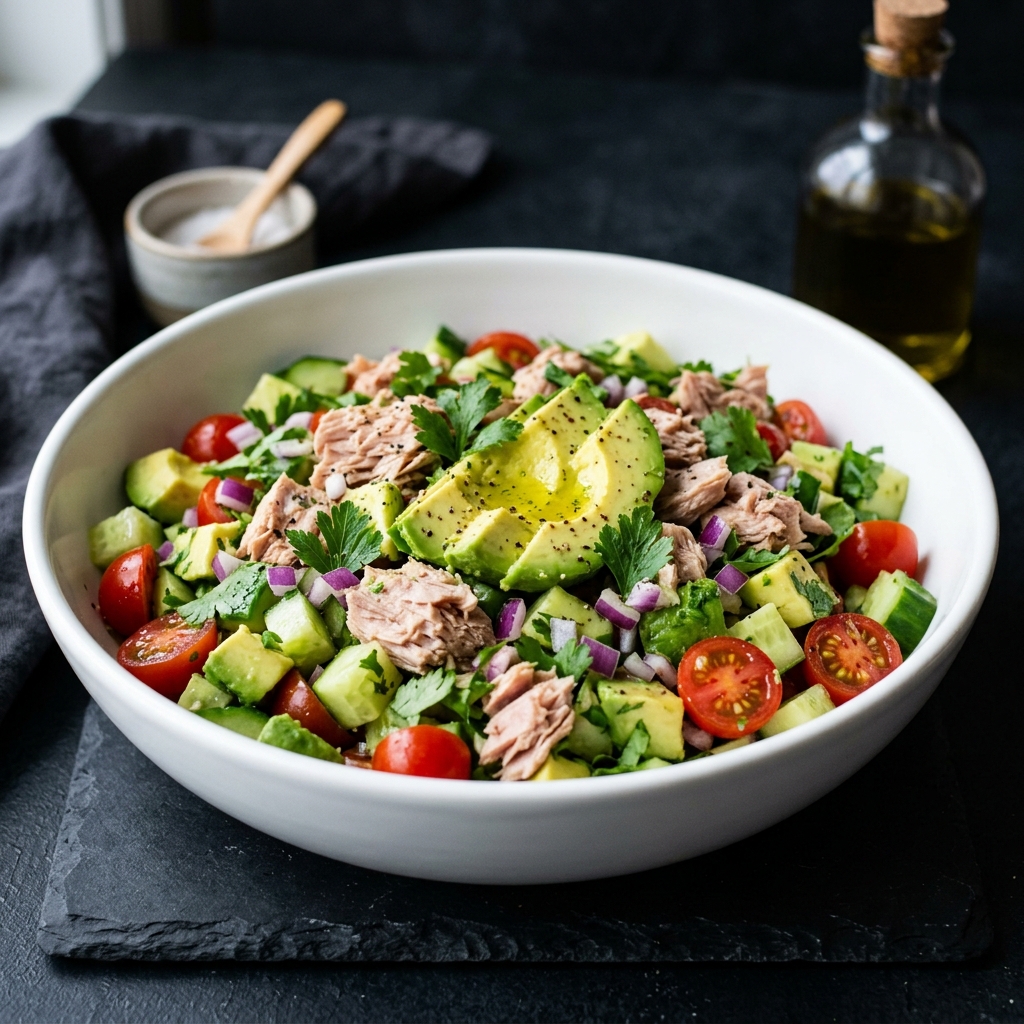
If you are looking for a lunch that is fresh, satisfying, colorful, and genuinely easy to make, this Avocado Tuna Salad deserves a place at the top of your list. It brings together creamy ripe avocado, flaky tuna, crisp vegetables, fresh herbs, and a bright dressing in one bowl, creating a salad that feels light without leaving you hungry an hour later.
Ingredients You’ll Need
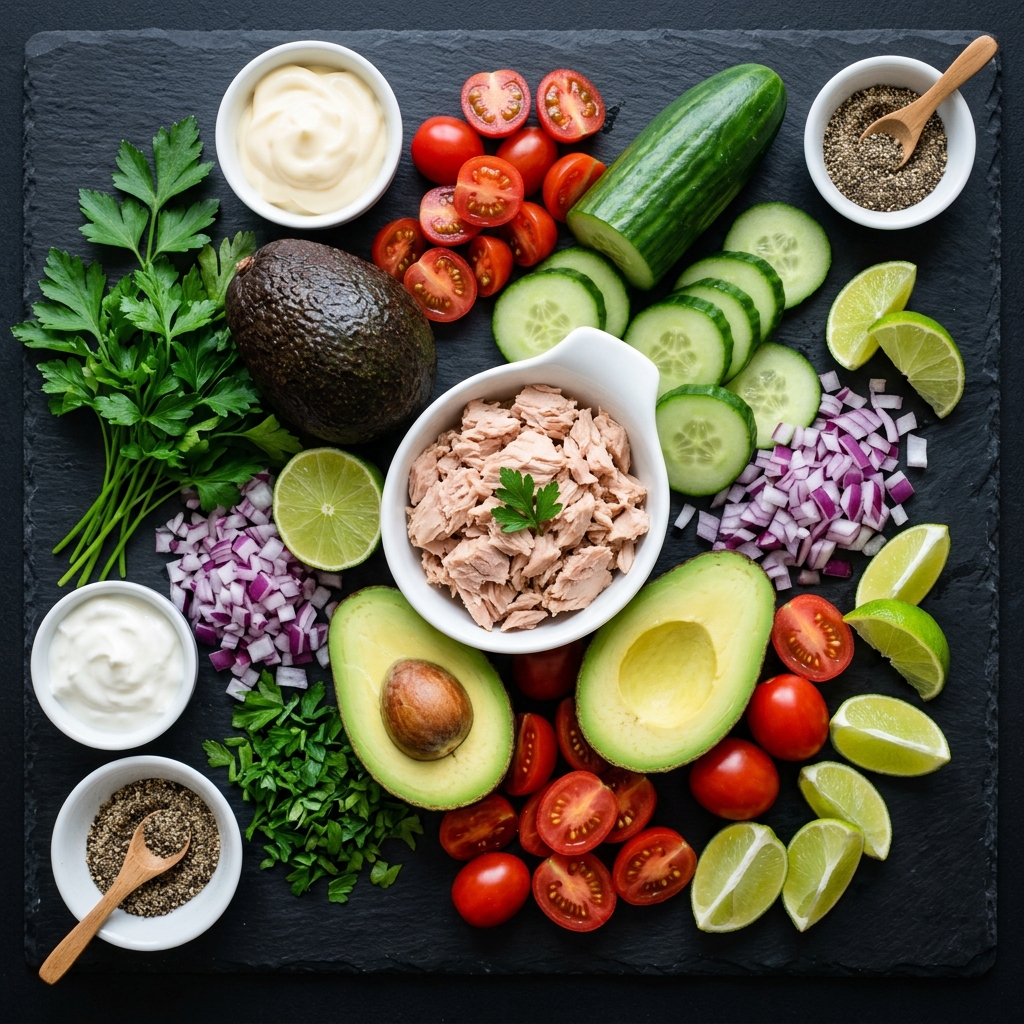
For the salad, you will need:
- 2 cans tuna, drained – Use tuna packed in water for a lighter salad or tuna packed in oil for a richer flavor. Choose tuna with a firm texture and drain it thoroughly so excess liquid does not make the salad watery.
- 2 ripe avocados – The avocado should yield gently when pressed but should not feel mushy. Ripe avocado provides the creamy texture that makes this salad so appealing.
- 1 cup cherry tomatoes, halved – These add sweetness, acidity, and beautiful color. Grape tomatoes are also an excellent substitute.
- 1 small cucumber, diced – Cucumber contributes a refreshing crunch that contrasts nicely with the soft avocado and tuna.
- ¼ small red onion, finely diced – Red onion adds a mild sharpness and a beautiful purple color. If you prefer a gentler onion flavor, soak the diced onion in cold water for a few minutes and drain well.
- ¼ cup fresh parsley or cilantro, chopped – Fresh herbs brighten the entire salad. Parsley gives a clean, fresh flavor, while cilantro creates a more pronounced citrusy and herbal character.
- 1–2 tablespoons fresh lemon or lime juice – Citrus is particularly important because it cuts through the richness of the avocado and tuna while helping slow avocado browning.
- 1 tablespoon extra-virgin olive oil – This adds a subtle fruity richness and helps bring the dressing together.
- 1 teaspoon Dijon mustard – Optional, but highly recommended for a little tang and depth.
- Salt, to taste
- Freshly ground black pepper, to taste
For a creamier version, you can also add 1–2 tablespoons mayonnaise or plain Greek yogurt to the dressing. If you are specifically keeping the recipe keto or low-carb, choose a dressing ingredient without added sugar.
Read Also: How to Make The Best Caprese Salad at Home
Choosing the Best Avocado
The avocado is one of the most important ingredients in this recipe, so take a moment to choose it carefully. A ripe avocado should feel slightly soft when gently pressed in the palm of your hand. It should not be rock-hard, but it also should not collapse under pressure.
If your avocados are still firm, leave them at room temperature for a day or two. Once they reach the ideal ripeness, refrigerating them can slow further softening and give you a little more time to use them.
For salad, slightly firm-ripe avocado is actually preferable to an extremely soft one. You want pieces that hold their shape when mixed rather than turning into guacamole.
How to Make Avocado Tuna Salad
Step 1: Prepare the Vegetables
Begin by washing and drying the cucumber, tomatoes, herbs, and any other fresh produce you are using. Cut the cherry tomatoes in half and dice the cucumber into small, bite-sized pieces.
Finely dice the red onion. Keeping the onion pieces small helps distribute their flavor throughout the salad rather than allowing one large bite of onion to overpower everything else.
Chop the fresh parsley or cilantro and set it aside.
Step 2: Prepare the Avocado
Cut the avocados in half lengthwise and remove the pits. Carefully scoop the flesh from the skin and cut it into medium-sized chunks.
Avoid cutting the avocado too small. Larger pieces are easier to fold into the salad without breaking apart, and they give you those beautiful creamy avocado bites throughout the finished dish.
Immediately drizzle the avocado with a little lemon or lime juice. This adds flavor and helps reduce browning.
Step 3: Drain and Flake the Tuna
Open the tuna cans and drain them thoroughly. This step matters more than it might seem.
Excess water or oil can dilute the dressing and make the finished salad loose. Once drained, place the tuna in a large mixing bowl and gently break it apart with a fork.
Do not mash it into a paste. Keeping some flakes and small chunks creates a much more pleasant texture.
Step 4: Make the Dressing
In a small bowl, whisk together the lemon or lime juice, olive oil, Dijon mustard, salt, and freshly ground black pepper.
If you want a creamier salad, stir in mayonnaise or Greek yogurt until the dressing is smooth.
Taste the dressing before adding it to the salad. It should taste slightly brighter and more seasoned than you might expect because the other ingredients will soften its intensity once everything is combined.
Step 5: Combine the Tuna and Vegetables
Add the diced cucumber, halved tomatoes, red onion, and chopped herbs to the bowl with the tuna.
Pour over the dressing and gently toss until the ingredients are evenly coated.
At this stage, resist the temptation to overmix. Tuna salad can quickly become mushy if aggressively stirred, and the goal is to preserve distinct textures.
Step 6: Add the Avocado Last
Finally, add the avocado chunks.
Using a large spoon or rubber spatula, gently fold the avocado into the salad. Use slow, lifting motions rather than vigorous stirring.
You want the avocado to remain visibly chunky, with some pieces coated in dressing and others retaining their beautiful shape.
Taste the salad and adjust the seasoning. It may need another squeeze of lemon or lime juice, a pinch of salt, or a little more black pepper.
Step 7: Serve Immediately
For the freshest presentation, transfer the finished salad to a modern serving bowl and garnish with a few fresh herbs.
A final squeeze of citrus just before serving can make the flavors pop.
You can serve it immediately at room temperature or chill it briefly before eating. However, if you are chilling it, remember that avocado is at its best when it has not been left exposed to air for an extended period.
Check Other Recipes:
The Secret to Making This Salad Taste Restaurant-Worthy
The difference between an ordinary tuna salad and an exceptional one often comes down to balance rather than complexity.
You need richness from the avocado, savory depth from the tuna, acidity from the citrus, freshness from the herbs, and crunch from the vegetables. If one element dominates, the salad can feel flat. Too much avocado without enough acid can taste heavy. Too much citrus can make the salad sharp. Too much tuna can overpower the vegetables.
This is why tasting the dressing before combining everything is such an important professional cooking habit. The dressing is essentially the seasoning system for the entire salad. Adjusting it first allows you to control the final flavor much more precisely.
There is another small trick worth remembering: season in layers. Season the dressing, taste it again after combining it with the tuna and vegetables, and then make a final adjustment after adding the avocado. Each ingredient changes how you perceive salt and acidity, so seasoning only once at the beginning can leave the finished salad tasting less vibrant than it should.
Delicious Variations to Try
One of the strengths of Avocado Tuna Salad is how easily it can be customized without losing its identity.
Spicy Avocado Tuna Salad
For a little heat, add finely chopped jalapeño, red pepper flakes, cayenne pepper, or a small amount of your favorite hot sauce. A squeeze of lime works especially well with the spicy version.
Mediterranean-Style Tuna Avocado Salad
Add diced bell pepper, Kalamata olives, cucumber, parsley, and a small amount of crumbled feta. Replace some of the original dressing with extra-virgin olive oil and lemon juice for a brighter Mediterranean-inspired version.
Creamy Avocado Tuna Salad
For a richer, creamier result, combine the dressing with a small amount of mayonnaise or plain Greek yogurt. This version works especially well when served as a sandwich or wrap filling.
Crunchy Tuna Avocado Salad
If texture is your priority, add diced celery, bell pepper, radishes, or toasted sunflower seeds. The extra crunch provides a wonderful contrast to the soft avocado.
Herb-Forward Version
Use a generous combination of parsley, cilantro, chives, or dill. Fresh herbs can completely change the character of the salad while keeping the basic recipe simple.
Expert Tips for the Best Results
Use good-quality tuna. Since tuna is one of the primary ingredients, its flavor matters. A firm, clean-tasting tuna will give you a much better salad than tuna with a mushy texture or overly strong flavor.
Do not drown the ingredients in dressing. Start with a modest amount and add more if needed. You can always add dressing, but you cannot easily remove it once the salad becomes too wet.
Keep the avocado chunky. Smaller pieces break apart quickly during mixing and can turn the salad into an unintended avocado mash.
Add the avocado near the end. This simple step protects its shape and gives the finished salad a much more attractive appearance.
Taste before serving. Fresh produce varies in sweetness, acidity, and intensity. A final taste allows you to correct the seasoning instead of assuming the original measurements will be perfect every time.
Use fresh citrus whenever possible. Bottled lemon or lime juice can work in a pinch, but freshly squeezed citrus usually provides a cleaner, brighter flavor that makes the salad taste fresher.
Do not skip the herbs. Even a small amount of fresh parsley or cilantro can lift the flavor of tuna and avocado and prevent the salad from tasting too rich.
Drain the tuna properly. Excess liquid is one of the easiest ways to accidentally create a watery salad. Give the tuna a good drain before adding it to the mixing bowl.
Serve it fresh. Avocado is naturally delicate. This salad is at its most attractive and flavorful shortly after preparation, when the vegetables are crisp and the avocado is bright.
A Little More to Know Before You Serve It
What makes this salad especially useful is that it can move effortlessly between different meals. Serve it over crisp lettuce for a refreshing salad bowl, spoon it onto toasted bread for a quick open-faced lunch, or wrap it in a low-carb tortilla for something more substantial. You can even serve it alongside crackers or fresh vegetables as a casual snack or light meal.
And while the ingredient list is simple, the finished dish has plenty of visual appeal. The bright green avocado, red tomatoes, purple onion, fresh herbs, and pale tuna create the kind of natural color contrast that makes the salad look as good as it tastes.
The key is to treat those colors and textures as part of the recipe itself. Cut the vegetables neatly, keep the avocado chunky, avoid overmixing, and finish with a few fresh herbs and a squeeze of citrus. Those small details turn an everyday tuna salad into something that looks genuinely special.
Make-Ahead Options
Avocado Tuna Salad is best when prepared close to serving time, but you can still do some of the work ahead to make busy days much easier.
The tuna can be drained and stored in the refrigerator, while the cucumber, tomatoes, red onion, and herbs can be washed, chopped, and kept separately in airtight containers. The dressing can also be prepared in advance and refrigerated. When you are ready to eat, simply combine the prepared ingredients, cut the avocado, and fold it in just before serving.
If you want to prepare the salad several hours ahead, add a little extra lemon or lime juice to the avocado and keep the finished salad tightly covered and refrigerated. For the best color, texture, and freshness, however, same-day preparation is recommended.
What to Serve with Avocado Tuna Salad
One of the reasons this salad is so versatile is that it can be served in several different ways depending on whether you want a light lunch, a more substantial meal, or an easy appetizer.
Serve It Over Greens
For an extra-fresh meal, spoon the tuna avocado mixture over a bed of romaine lettuce, mixed greens, spinach, arugula, or spring greens. The crisp greens add volume without making the meal feel heavy.
Serve It With Toast
Pile the salad onto toasted sourdough, whole-grain bread, or another favorite bread for a simple open-faced lunch. The crunchy toast provides an excellent contrast to the creamy avocado.
Make a Wrap
Spoon the salad into a tortilla or low-carb wrap with lettuce and additional sliced vegetables. This is particularly convenient for packed lunches.
Add Fresh Vegetables
Serve it alongside cucumber sticks, bell pepper strips, celery, radishes, or carrot sticks. This makes the meal feel fresh while adding even more crunch.
Serve With Crackers
For a quick snack or casual lunch, serve the salad with sturdy whole-grain or gluten-free crackers. Choose crackers that can hold a generous scoop without breaking.
Add a Simple Soup
For a more complete meal, pair the salad with a light vegetable soup, tomato soup, or broth-based soup. The freshness of the salad balances nicely with a warm bowl of soup.
Serve It as a Lettuce Cup
For a lighter, low-carb presentation, spoon the tuna avocado salad into crisp lettuce leaves. Butter lettuce and romaine leaves work particularly well because they are sturdy enough to hold the filling.
How to Store Avocado Tuna Salad
Because avocado is delicate, proper storage is especially important.
Place leftover salad in an airtight container and refrigerate it promptly. Press a piece of food-safe plastic wrap directly against the surface of the salad before sealing the container. Reducing the amount of air touching the avocado can help slow browning.
For the best quality, consume the prepared salad within 1 day. It may remain acceptable for a little longer when properly refrigerated, but the avocado will gradually lose its bright color and the vegetables may become less crisp.
If you know you will have leftovers, an even better approach is to prepare the tuna, vegetables, herbs, and dressing separately and add freshly cut avocado only when you are ready to eat.
Avoid leaving tuna salad containing avocado at room temperature for extended periods. Refrigerate leftovers promptly, particularly when the salad contains mayonnaise or other perishable ingredients.
How to Keep Avocado From Turning Brown
Browning is one of the most common concerns when preparing avocado-based recipes, but it is easy to slow down.
The main culprit is exposure to oxygen. Once avocado flesh is cut, it begins reacting with the air, gradually causing the surface to darken.
Fresh lemon or lime juice helps because its acidity slows this process. However, citrus is not a magical guarantee that the avocado will remain perfectly green indefinitely. The most effective approach is to combine citrus juice with airtight storage and minimal air exposure.
For the best appearance, cut the avocado shortly before serving whenever possible.
Can You Make This Salad Without Mayonnaise?
Absolutely.
In fact, you do not need mayonnaise at all to make a delicious Avocado Tuna Salad. The avocado itself provides plenty of creaminess, while olive oil and fresh citrus create a light dressing.
If you prefer a creamier consistency, Greek yogurt is another option. It adds tang and creaminess without making the salad feel as heavy as a mayonnaise-based dressing.
The choice ultimately depends on the style you want. For a bright, fresh salad, use citrus and olive oil. For a richer salad, add mayonnaise. For a tangy, creamy version, try Greek yogurt.
Can You Use Tuna Packed in Oil?
Yes. Tuna packed in oil can work beautifully in this recipe and will produce a richer, more savory salad.
However, drain it well before adding it to the other ingredients. Because avocado already provides substantial richness, tuna packed in water may be preferable if you want a lighter result.
If you use oil-packed tuna, you can also reduce the amount of olive oil in the dressing. Taste first and adjust rather than automatically adding the full amount.
Can Frozen Avocado Be Used?
Fresh avocado is strongly recommended.
Frozen avocado can work in smoothies and some cooked applications, but freezing and thawing changes its texture. For a salad where the avocado is supposed to remain in attractive chunks, fresh avocado gives a significantly better result.
If you have frozen avocado available, it can still be used in an emergency, but expect it to be softer and less visually appealing.
Is Avocado Tuna Salad Healthy?
This recipe can be a nutritious choice because it combines several nutrient-dense ingredients in one meal.
Tuna contributes protein, while avocado provides healthy fats and fiber. Fresh vegetables add vitamins, minerals, water, and additional fiber, while herbs and citrus provide flavor without requiring large amounts of dressing.
However, the nutritional profile depends on the exact ingredients and portions used. For example, adding a large amount of mayonnaise will increase the calorie and fat content, while a lighter citrus-and-olive-oil dressing will create a different nutritional balance.
If you are following a specific dietary plan, always consider the individual ingredients you choose, particularly packaged tuna, mayonnaise, dressings, and wraps.
Is Avocado Tuna Salad Keto-Friendly?
A traditional version of this salad can fit comfortably into a keto-friendly eating pattern because tuna, avocado, cucumber, leafy greens, and many other non-starchy vegetables are naturally low in carbohydrates.
The main ingredient to watch is the dressing. Some commercial dressings and mayonnaise products contain added sugar or other ingredients that can increase carbohydrate content.
For a simple keto-friendly version, use tuna, avocado, cucumber, leafy vegetables, herbs, lemon or lime juice, olive oil, salt, and pepper. Always check packaged ingredient labels when following a strict ketogenic diet.
Is Avocado Tuna Salad Gluten-Free?
The core ingredients in this recipe are naturally gluten-free. Tuna, avocado, cucumber, tomatoes, onion, herbs, citrus juice, olive oil, salt, and pepper do not inherently contain gluten.
The important consideration is packaged or processed ingredients. Check the label on canned tuna, mayonnaise, mustard, seasonings, crackers, tortillas, or other additions if you need the meal to be strictly gluten-free.
When serving the salad with bread or crackers, choose certified gluten-free products if cross-contact or strict gluten avoidance is a concern.
Can You Make This Recipe Dairy-Free?
Yes. The basic recipe is naturally dairy-free if you use an olive oil and citrus dressing.
If you choose Greek yogurt as a creamy dressing ingredient, the recipe will contain dairy. To keep it dairy-free, simply leave the yogurt out or replace it with a suitable dairy-free alternative.
Can You Add Other Vegetables?
Definitely. This recipe is forgiving and works well with many fresh vegetables.
Try adding:
- Diced bell peppers
- Celery
- Radishes
- Sweet corn
- Shredded carrots
- Spring onions
- Baby spinach
- Arugula
- Jalapeño
- Shredded cabbage
Keep in mind that ingredients such as corn and carrots contain more carbohydrates than leafy greens, cucumber, or avocado, so choose additions according to your dietary preferences.
Frequently Asked Questions
Can I use canned tuna for Avocado Tuna Salad?
Yes. Canned tuna is ideal for this recipe because it is convenient, affordable, and requires virtually no cooking. Drain it thoroughly and gently break it into flakes before mixing it with the vegetables.
How do I know when an avocado is ripe?
A ripe avocado should give slightly when gently pressed. If it is completely hard, it needs more time to ripen. If it feels extremely soft or has large sunken areas, it may be overripe.
For this salad, look for an avocado that is ripe but still firm enough to hold its shape when cut.
Why is my tuna salad watery?
The most common causes are poorly drained tuna, watery vegetables, or too much dressing.
Drain the tuna thoroughly, pat vegetables dry when necessary, and add the dressing gradually. If your cucumber is particularly watery, you can remove some of its seeds before dicing it.
How can I make the salad more filling?
Serve it over greens, add a boiled egg, spoon it onto whole-grain toast, place it inside a wrap, or serve it alongside a substantial vegetable side.
You can also increase the tuna portion if you want more protein while keeping the basic character of the recipe intact.
Can I prepare Avocado Tuna Salad the night before?
You can prepare most components the night before, but the best approach is to wait to cut and add the avocado until shortly before serving.
Prepare the tuna, vegetables, herbs, and dressing separately, refrigerate them, and combine everything the following day. This will give you a fresher color and better texture.
What can I use instead of lime juice?
Fresh lemon juice is the easiest substitute. Both provide the acidity needed to brighten the salad and balance the richness of the avocado and tuna.
You can also experiment with a small amount of vinegar, such as apple cider vinegar or white wine vinegar, although the flavor will be slightly different.
What herbs work best in tuna avocado salad?
Parsley and cilantro are excellent choices. Dill, chives, basil, and green onions can also work depending on the flavor profile you want.
For a classic fresh flavor, parsley is an easy choice. For something brighter and more distinctive, cilantro pairs especially well with lime and avocado.
Can I make this recipe spicy?
Yes. Add diced jalapeño, crushed red pepper flakes, cayenne pepper, hot sauce, or another favorite chili ingredient.
For the best balance, introduce the heat gradually. The creamy avocado will soften the perception of spice, so a little extra heat may be appropriate if you want the salad to have a noticeable kick.
Conclusion
A great Avocado Tuna Salad does not need a long ingredient list or complicated cooking techniques. Its appeal comes from getting a few simple details right: use ripe but firm avocado, choose good-quality tuna, keep the vegetables crisp, use enough citrus to brighten the richness, season carefully, and fold everything together gently.
The result is a colorful, refreshing, satisfying salad that can work as a quick lunch, light dinner, meal-prep component, sandwich filling, wrap, lettuce cup, or easy appetizer. It is also remarkably adaptable, so once you have mastered the basic combination, you can adjust the vegetables, herbs, dressing, and level of spice to suit your taste.
Most importantly, do not underestimate the power of freshness. When the avocado is perfectly ripe, the tomatoes are juicy, the cucumber is crisp, the herbs are fragrant, and the citrus is freshly squeezed, this simple salad becomes something genuinely special. It is the kind of recipe that proves healthy, convenient food does not have to be boring or complicated—it simply needs thoughtful ingredients and good preparation.

Avocado Tuna Salad
Ingredients
Equipment
Method
- Prepare the vegetables: Wash and dry the vegetables. Halve the cherry tomatoes, dice the cucumber, finely chop the red onion, and chop the fresh herbs.
- Prepare the avocado: Cut the avocados in half, remove the pits, scoop out the flesh, and cut into medium-sized chunks. Toss gently with a little lemon or lime juice to add flavor and help slow browning.
- Drain the tuna: Drain the tuna thoroughly and place it in a large mixing bowl. Gently break it apart with a fork while keeping some flakes and chunks intact.
- Make the dressing: In a small bowl, whisk together the remaining lemon or lime juice, olive oil, Dijon mustard, salt, and black pepper. For a creamier salad, mix in mayonnaise or Greek yogurt.
- Combine the ingredients: Add the cucumber, cherry tomatoes, red onion, and fresh herbs to the tuna. Pour over the dressing and gently toss until evenly coated.
- Add the avocado: Carefully fold the avocado chunks into the salad using a large spoon or spatula. Avoid vigorous mixing so the avocado remains chunky.
- Taste and adjust: Taste the salad and add more citrus juice, salt, pepper, or herbs if needed.
- Serve: Serve immediately or refrigerate for about 10–15 minutes before serving for a slightly chilled salad.
Notes
Drain the tuna thoroughly to prevent a watery salad.
Add the avocado last and fold gently to prevent it from becoming mashed.
Fresh lemon or lime juice provides the best flavor and helps slow avocado browning.
For a keto-friendly version, use a low-carb dressing and avoid sweetened mayonnaise or other high-carb additions.
For the freshest texture, prepare the salad close to serving time.
If making ahead, prepare the tuna, vegetables, herbs, and dressing separately and add freshly cut avocado just before serving.
Store leftovers in an airtight container in the refrigerator and preferably consume within 1 day for the best avocado color and vegetable texture.

Hi, I’m Clara, the creator of Barakala. I love sharing simple, comforting, and delicious recipes that make everyday cooking easier and more enjoyable for home cooks.