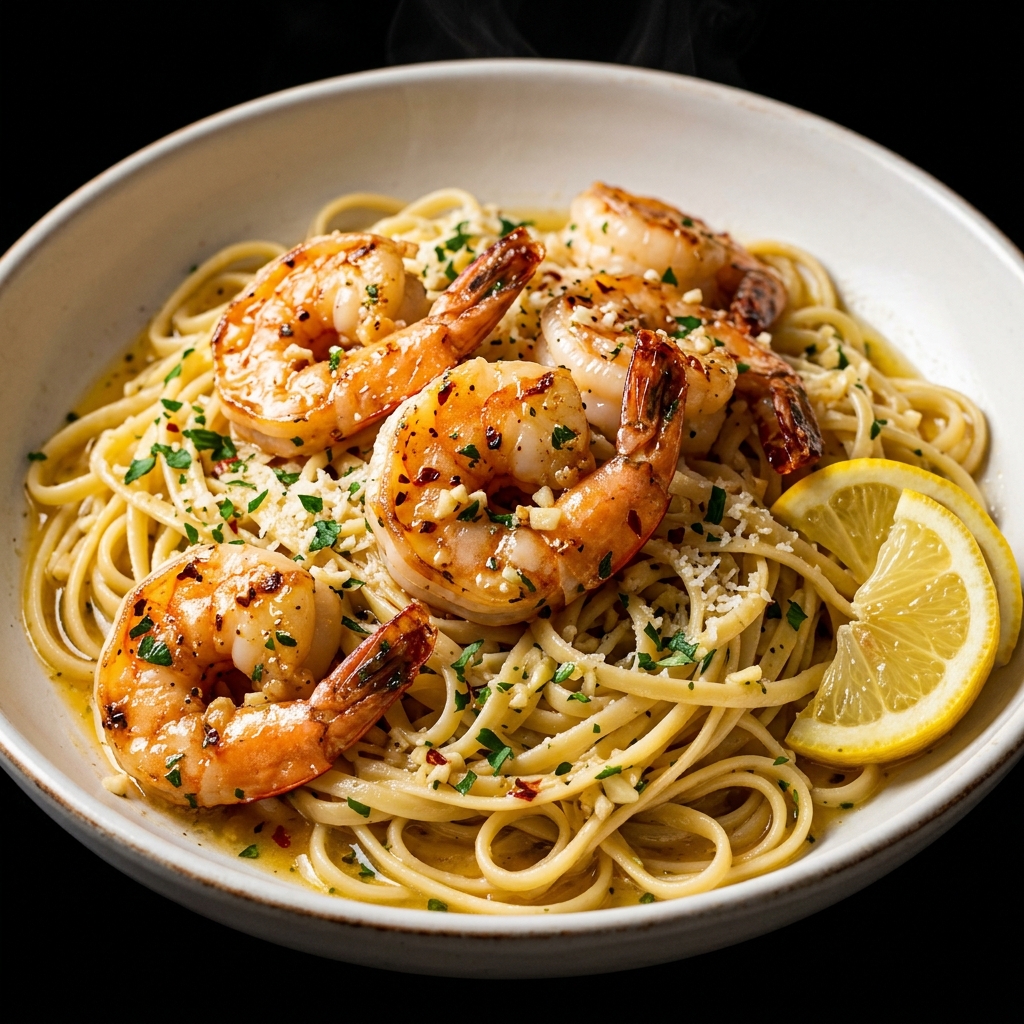
There are few things more satisfying than sitting down to a plate of perfectly cooked shrimp coated in a silky garlic-butter sauce, brightened with fresh lemon, and tossed with tender pasta. Shrimp Scampi is one of those recipes that looks and tastes restaurant-worthy but is surprisingly simple to make at home. The combination of juicy shrimp, fragrant garlic, rich butter, lemon, parsley, and a touch of red pepper creates a beautifully balanced dish that feels elegant enough for entertaining while still being quick enough for a weeknight dinner. The secret is not complicated ingredients—it is knowing how to treat each ingredient properly so the shrimp stay tender and the sauce becomes glossy, flavorful, and irresistibly delicious.
Ingredients You’ll Need

Shrimp
Use about 1 pound of large or jumbo shrimp, preferably peeled and deveined. Fresh shrimp are wonderful, but high-quality frozen shrimp can work just as well.
If using frozen shrimp, thaw them completely and pat them very dry before cooking. Excess moisture can cause the shrimp to steam rather than sear, preventing the beautiful golden exterior that adds so much flavor.
Large shrimp are particularly useful for scampi because they are easier to cook without drying out. Smaller shrimp can work, but they require closer attention because they cook even faster.
Spaghetti
Use approximately 8 ounces of spaghetti. You can substitute linguine, fettuccine, angel hair, or another pasta you enjoy.
For the best texture, cook the pasta until al dente, meaning it is tender but still has a slight firmness when bitten. The pasta will spend a little more time in the sauce, so avoiding overcooking at the boiling stage is important.
Reserve some of the pasta cooking water before draining. This starchy water is one of the most useful ingredients in the entire recipe because it can help loosen the sauce and encourage the butter, wine, and other liquids to come together into a smooth coating.
Butter
Use about 4 tablespoons of unsalted butter.
Unsalted butter gives you greater control over the final seasoning. If salted butter is all you have, simply reduce the amount of additional salt.
For the richest flavor, use good-quality butter. Because butter is such an important part of the sauce, its flavor will be noticeable.
Garlic
You will need approximately 4 to 6 fresh garlic cloves, finely minced or thinly sliced.
Fresh garlic makes a major difference here. Jarred minced garlic can be convenient, but fresh garlic provides a much more vibrant aroma and flavor.
Be careful not to brown or burn the garlic. Burned garlic becomes bitter very quickly, and that bitterness can overpower the delicate shrimp and lemon flavors.
Lemon
Use 1 fresh lemon, providing both juice and zest if desired.
Lemon is essential because it balances the richness of the butter. Freshly squeezed lemon juice is preferable to bottled lemon juice, while a small amount of finely grated zest can add an especially bright citrus aroma.
Dry White Wine
Use about ½ cup of dry white wine.
A dry white wine contributes acidity and depth while helping create the sauce. Choose a wine you would actually enjoy drinking rather than an overly sweet cooking wine.
If you prefer not to use wine, chicken or seafood stock can be used as a substitute, although the flavor will be slightly different.
Fresh Parsley
Use approximately ¼ cup of finely chopped fresh parsley.
Parsley adds color and freshness to an otherwise rich dish. Add some toward the end of cooking rather than cooking all of it for an extended period.
Red Pepper Flakes
Use ¼ to ½ teaspoon red pepper flakes, depending on your preference.
They are not intended to make the dish overwhelmingly spicy. Instead, they provide a gentle warmth that makes the buttery sauce more interesting.
Olive Oil
Use approximately 1 tablespoon extra-virgin olive oil for cooking the shrimp.
Olive oil also helps raise the cooking fat’s tolerance for the relatively high heat needed to sear the shrimp.
Salt and Black Pepper
Season the shrimp with salt and freshly ground black pepper before cooking.
Remember that the pasta water, butter, and other ingredients can also contribute salt, so season gradually and taste before adding more.
How to Make Shrimp Scampi
1. Prepare the Shrimp
If your shrimp are frozen, thaw them completely. Remove the shells and tails if desired, then make sure they are properly deveined.
Pat the shrimp thoroughly dry with paper towels.
This step may seem minor, but it is one of the biggest differences between nicely browned shrimp and pale, watery shrimp. Moisture is the enemy of good searing. Dry shrimp make much better contact with the hot pan.
Season them lightly with salt and freshly ground black pepper.
2. Cook the Pasta
Bring a large pot of generously salted water to a boil.
Add the spaghetti and cook according to the package directions until al dente. Before draining, reserve approximately 1 cup of pasta water.
Drain the pasta and set it aside.
Do not rinse the pasta. The starch remaining on its surface helps the sauce cling to the noodles.
3. Sear the Shrimp
Heat a large skillet over medium-high heat and add the olive oil.
Once the oil is hot, arrange the shrimp in a single layer. Avoid overcrowding the pan. If necessary, cook them in batches.
Cook the shrimp for approximately 1 to 2 minutes per side, depending on their size.
They should become pink and opaque with lightly golden edges. Once they are nearly cooked through, transfer them to a plate.
Do not worry if they are not completely finished at this stage. They will return to the pan later, and this approach greatly reduces the risk of overcooking.
4. Build the Garlic Butter Base
Reduce the heat to medium and add the butter to the same skillet.
Once the butter begins to melt, add the minced or sliced garlic and red pepper flakes.
Cook for roughly 30 seconds to 1 minute, stirring frequently, until the garlic becomes fragrant.
This is a crucial moment. You want the garlic to release its aroma without becoming dark brown. If the garlic starts browning rapidly, reduce the heat immediately.
5. Deglaze the Pan
Pour in the dry white wine and gently scrape the bottom of the skillet with a wooden spoon or spatula.
Those browned bits left behind by the shrimp are packed with flavor. Deglazing lifts them into the sauce instead of leaving them stuck to the pan.
Allow the wine to simmer for approximately 2 to 3 minutes, giving it time to reduce slightly.
The sauce should become more concentrated while retaining enough liquid to coat the pasta.
6. Create the Silky Sauce
Add the remaining butter and stir gently as it melts into the wine and garlic mixture.
Now add a small splash of the reserved pasta water.
The combination of starchy pasta water and butter helps create a smoother, more cohesive sauce. Rather than looking like separate pools of liquid and fat, the sauce should become glossy and lightly creamy in appearance without actually containing cream.
Taste the sauce and adjust the salt, black pepper, and lemon according to your preference.
7. Add the Pasta
Add the cooked spaghetti directly to the skillet.
Toss the pasta continuously for a minute or two, allowing the sauce to coat every strand.
If the pasta looks dry, add another small splash of reserved pasta water. Add it gradually—you can always add more, but adding too much at once can make the sauce watery.
The goal is a glossy coating rather than a puddle of sauce at the bottom of the pan.
8. Return the Shrimp to the Pan
Add the cooked shrimp back into the skillet.
Gently toss everything together for about 30 seconds to 1 minute, just until the shrimp are fully cooked and heated through.
Avoid prolonged cooking at this point. Shrimp can go from tender to rubbery surprisingly quickly.
9. Finish With Lemon and Parsley
Remove the skillet from the heat.
Add the fresh lemon juice, lemon zest if using, and chopped parsley.
Toss gently to distribute everything.
Taste one final time. If the dish tastes heavy, add a little more lemon. If it tastes flat, it may need a small pinch of salt. If you want additional warmth, add another pinch of red pepper flakes.
The finished dish should taste rich but bright, garlicky but not bitter, buttery but not greasy, and pleasantly citrusy.
The Secret to Perfect Shrimp Scampi
The biggest secret is actually timing.
Shrimp do not need a long cooking time. Their natural sweetness is at its best when they are cooked just until opaque and firm. If you continue cooking them simply because you are waiting for the sauce to finish, you can easily end up with tough shrimp.
That is why this recipe cooks the shrimp first and then temporarily removes them from the skillet. The sauce gets time to develop without the shrimp being exposed to unnecessary heat. They return only at the end, where they finish cooking gently.
The second secret is the sauce itself. A great shrimp scampi sauce should not merely be melted butter with garlic floating in it. By combining butter with wine, lemon, and a little starchy pasta water, you create a sauce with better texture and balance. Tossing the pasta directly in that sauce helps everything cling together.
Variations to Try
Creamy Shrimp Scampi
For a richer version, add a small amount of heavy cream after the wine has reduced. Simmer gently until the sauce thickens slightly, then add the shrimp and pasta.
Keep in mind that cream changes the traditional character of scampi, but it creates an indulgent variation that many people enjoy.
Shrimp Scampi Without Pasta
For a lighter meal, skip the spaghetti and serve the garlic butter shrimp with roasted vegetables, zucchini noodles, cauliflower rice, or a crisp green salad.
This is also a useful option if you are trying to reduce carbohydrates.
Spicy Shrimp Scampi
Increase the red pepper flakes or add a small amount of finely chopped fresh chili pepper.
For maximum flavor, let the chili warm gently in the butter and garlic rather than adding it only at the very end.
Lemon Herb Shrimp Scampi
Increase the amount of fresh parsley and add other delicate herbs such as chives or a small amount of fresh basil.
The key is moderation. Strong herbs can overpower the delicate flavor of shrimp.
Garlic-Forward Scampi
If you are a serious garlic lover, increase the garlic slightly and use a combination of finely minced garlic and thinly sliced garlic.
The minced garlic melts more thoroughly into the sauce, while thin slices provide small bursts of roasted garlic flavor.
Expert Tips for Restaurant-Quality Shrimp Scampi
Dry the shrimp thoroughly. This is one of the easiest ways to improve browning and flavor.
Do not overcrowd the skillet. Shrimp need enough room to make direct contact with the hot surface.
Use fresh garlic. The flavor is noticeably brighter and more aromatic.
Do not burn the garlic. Garlic should become fragrant and lightly softened, not dark brown and bitter.
Reserve pasta water. Even if you think you will not need it, save some before draining the pasta.
Cook the pasta al dente. Slightly firm pasta holds up better when tossed with hot sauce.
Do not overcook the shrimp. They should be removed from the heat as soon as they are just cooked.
Add lemon at the end. Fresh lemon juice tastes brighter when it is not subjected to prolonged cooking.
Taste before serving. A final adjustment of salt, pepper, lemon, or red pepper flakes can turn a good dish into an exceptional one.
Serve immediately. Shrimp scampi is at its best while the sauce is glossy and hot.
What Makes This Recipe Better Than Ordinary Shrimp Pasta?
The difference is in the technique rather than the number of ingredients.
A basic shrimp pasta can easily become heavy, oily, or bland if the sauce is not balanced. Shrimp scampi avoids that problem by combining several contrasting elements: rich butter, aromatic garlic, acidic lemon, dry wine, fresh parsley, and a gentle amount of heat.
The shrimp themselves also play an important role. Properly seared shrimp develop subtle caramelized notes while remaining naturally sweet and tender inside. When those flavors meet the garlic-butter sauce and al dente pasta, every component contributes something different.
And there is one more detail worth remembering: the sauce should cling to the pasta, not simply sit underneath it. Tossing the noodles directly in the skillet gives you a much more cohesive dish and ensures that every bite carries the flavors of the scampi sauce.
A Few Final Preparation Notes
If you are preparing this dish for guests, organize everything before turning on the stove. Shrimp cook quickly, garlic can burn quickly, and the sauce comes together in minutes. Having the garlic chopped, lemon juiced, parsley prepared, wine measured, and shrimp dried beforehand makes the cooking process much smoother.
Also, resist the temptation to add every ingredient at once. Building the dish in stages allows each ingredient to perform its job properly. First develop the shrimp’s flavor, then create the garlic-butter base, deglaze the pan, build the sauce, coat the pasta, and finally bring everything together.
That small amount of discipline is what transforms a quick homemade dinner into a dish that feels genuinely restaurant-worthy.
What to Expect When You Serve It
When served immediately, the pasta should be glossy and lightly coated, while the shrimp should remain plump, juicy, and tender. You should be able to smell the garlic and lemon before taking the first bite, followed by the richness of butter and the freshness of parsley.
The finished plate should have plenty of visual contrast: golden-pink shrimp, pale pasta, bright green parsley, vibrant lemon, and tiny flecks of red pepper against the glossy sauce.
It is the kind of dinner that can make an ordinary evening feel special without requiring complicated culinary techniques.
Make-Ahead Options
Shrimp scampi is best when prepared fresh, particularly because shrimp can become firm and dry when reheated. However, you can make several components ahead of time to make dinner much faster.
The garlic can be minced, parsley chopped, lemon juiced and zested, and shrimp peeled and deveined several hours ahead. Keep the prepared ingredients refrigerated in separate airtight containers until you are ready to cook.
You can also measure the wine, red pepper flakes, butter, olive oil, salt, and pepper in advance. If serving the dish for a dinner party, having everything prepared before cooking is especially helpful because the actual cooking process moves quickly.
For the best texture, cook the pasta and shrimp shortly before serving rather than fully assembling the finished dish hours ahead.
What to Serve With Shrimp Scampi
Shrimp scampi already contains pasta, protein, and a flavorful sauce, so you do not need many additional dishes. However, a few simple sides can turn it into a complete and beautifully balanced meal.
Crusty Garlic Bread
Garlic bread is one of the best companions for shrimp scampi because it gives you something to soak up every last drop of the buttery sauce.
A crusty baguette, toasted Italian bread, or homemade garlic bread works beautifully. For an especially good texture, choose bread with a crisp exterior and soft interior.
Simple Green Salad
A fresh salad provides a crisp contrast to the rich sauce.
Try mixed greens with cucumber, tomatoes, red onion, and a light lemon vinaigrette. The acidity of the dressing complements the lemon in the scampi without making the meal feel excessively heavy.
Roasted Asparagus
Roasted asparagus pairs naturally with garlic butter shrimp. Toss asparagus with olive oil, salt, and pepper, then roast until tender with lightly crisp edges.
A small squeeze of lemon just before serving ties the vegetable and shrimp together.
Steamed or Roasted Broccoli
Broccoli is another excellent choice, particularly if you want more vegetables on the plate. Keep the seasoning simple so the shrimp scampi remains the star.
Sautéed Spinach
Fresh spinach cooked briefly with garlic and olive oil provides color and a mild earthy flavor. It is especially good when you want to add vegetables without introducing another heavy side dish.
Lemon-Roasted Vegetables
A mixture of zucchini, bell peppers, asparagus, or cherry tomatoes can add additional color and freshness. Finish the vegetables with lemon juice and fresh herbs for a cohesive flavor profile.
How to Store Shrimp Scampi
If you have leftovers, allow the shrimp scampi to cool slightly before transferring it to an airtight container.
Refrigerate within about two hours of cooking and consume within 3 to 4 days for best quality.
Because the pasta absorbs sauce as it sits, leftovers will generally be less glossy and saucy than the freshly prepared dish. This is completely normal.
For the best results, store the pasta and shrimp together only if necessary. If you have the option to store components separately, keeping the sauce, pasta, and shrimp separate can help preserve their individual textures.
How to Reheat Shrimp Scampi
Gentle reheating is extremely important.
Stovetop Method
Place the leftovers in a skillet over low to medium-low heat.
Add a small splash of water, stock, or additional broth to loosen the sauce. Stir gently and heat just until everything is warmed through.
Avoid high heat. The goal is to warm the shrimp rather than cook them again.
Microwave Method
If using a microwave, place the leftovers in a microwave-safe dish and cover loosely.
Heat in short intervals, stirring between intervals. This prevents the edges from becoming excessively hot while the center remains cold.
Do not microwave the shrimp for an extended period at once because they can quickly become rubbery.
Can You Freeze Shrimp Scampi?
Technically, shrimp scampi can be frozen, but it is not the preferred method.
The sauce can change texture after freezing and thawing, while cooked pasta may become soft or mushy. Shrimp can also lose some of their desirable texture after repeated heating.
If you absolutely need to freeze it, it is generally better to freeze the cooked shrimp and sauce separately from the pasta. Thaw safely in the refrigerator and reheat gently.
For the best quality, however, prepare shrimp scampi fresh whenever possible.
Common Mistakes to Avoid
Overcooking the Shrimp
This is the most common problem.
Shrimp cook extremely quickly. If you leave them in the pan while preparing the sauce, they can become tough before the rest of the dish is finished.
Cooking them briefly, removing them from the skillet, and returning them near the end gives you much more control.
Using Wet Shrimp
Wet shrimp do not sear properly. They release water into the skillet and can become pale instead of developing flavorful browned edges.
Always pat them thoroughly dry.
Burning the Garlic
Garlic should be fragrant and lightly softened. Once it becomes deeply brown, it can turn bitter.
Keep the heat controlled and stir frequently.
Adding Too Much Lemon
Lemon is essential, but too much can overwhelm the butter and shrimp.
Start with a moderate amount, taste, and add more if needed.
Skipping the Pasta Water
This simple ingredient can make a noticeable difference.
The starch helps the sauce cling to the pasta and creates a smoother, more cohesive consistency.
Using Too Much Oil
The butter already contributes richness, so excessive olive oil can make the finished dish greasy.
Use enough oil to help cook the shrimp, then allow the butter and other ingredients to create the sauce.
Overcrowding the Pan
Shrimp need room to sear. If too many shrimp are packed into a small skillet, the temperature can drop and moisture can accumulate.
Cook in batches when necessary.
How to Tell When Shrimp Are Perfectly Cooked
Perfectly cooked shrimp should be opaque rather than translucent, firm but not hard, and curled gently into a loose “C” shape.
If shrimp curl tightly into an “O” shape, they may have been cooked too long.
Color is another useful indicator, but it should not be your only guide. The exact appearance varies depending on the shrimp variety and size.
For the most reliable results, pay attention to texture and cooking time as well as appearance.
Frequently Asked Questions
What is shrimp scampi sauce made of?
Traditional shrimp scampi sauce is generally built from butter, garlic, lemon, white wine, parsley, and seasonings. Olive oil is often used for cooking the shrimp, while red pepper flakes can add gentle heat.
The combination produces a sauce that is buttery and rich but balanced by acidity from lemon and wine.
Can I make shrimp scampi without white wine?
Yes.
You can replace the white wine with seafood stock, chicken stock, or another suitable broth. A little additional lemon juice can help provide some of the acidity that wine normally contributes.
The flavor will not be exactly the same, but the dish can still be delicious.
Can I use frozen shrimp?
Absolutely.
Frozen shrimp can be excellent for shrimp scampi as long as they are properly thawed before cooking. Thaw them in the refrigerator when possible, then pat them very dry before seasoning.
Avoid putting heavily frozen or wet shrimp directly into the hot skillet because they will release excess water and interfere with browning.
What size shrimp is best for scampi?
Large or jumbo shrimp are ideal because they remain substantial after cooking and are easier to monitor.
Medium shrimp can also work well, particularly if you prefer smaller pieces throughout the pasta. Just remember that smaller shrimp cook faster.
Can I use pre-cooked shrimp?
You can, but raw shrimp are strongly recommended.
Pre-cooked shrimp require very little reheating and can become rubbery if cooked in the sauce for too long. If using pre-cooked shrimp, add them only near the end and warm them gently.
What pasta is best for shrimp scampi?
Spaghetti and linguine are excellent choices because their long strands hold the buttery sauce beautifully.
Angel hair can also work, although it cooks extremely quickly and is more delicate. Fettuccine provides a wider noodle but creates a slightly heavier eating experience.
How do I make shrimp scampi less greasy?
The key is balance.
Use the recommended amount of butter and olive oil, make sure the sauce contains enough lemon and wine or stock, and incorporate a little reserved pasta water while tossing the pasta.
The pasta water helps the sauce emulsify and cling to the noodles rather than separating into pools of fat.
Why did my shrimp become rubbery?
Shrimp usually become rubbery because they have been cooked for too long or at excessive heat.
Shrimp need only a short cooking period. Remove them from the skillet once they are nearly cooked, then return them to the sauce briefly at the end.
Can I make shrimp scampi spicy?
Yes.
Add more red pepper flakes for additional heat, or use finely chopped fresh chili. You can also add a pinch of cayenne if you want a stronger kick.
Start conservatively and adjust at the end.
Can I make shrimp scampi without pasta?
Definitely.
Serve the shrimp and sauce with roasted vegetables, zucchini noodles, cauliflower rice, rice, quinoa, or crusty bread.
For a lower-carbohydrate version, replacing traditional pasta with zucchini noodles or another vegetable-based option works particularly well.
Is Shrimp Scampi Gluten-Free?
The basic shrimp scampi sauce can be gluten-free because shrimp, butter, garlic, lemon, parsley, olive oil, and most basic seasonings do not naturally contain gluten.
However, traditional wheat-based spaghetti is not gluten-free.
To make the complete dish gluten-free, use certified gluten-free pasta and check packaged ingredients such as broth and seasonings for potential gluten-containing additives.
If you are cooking for someone with celiac disease or a medically necessary gluten-free diet, also pay attention to cross-contact during preparation.
Is Shrimp Scampi Low-Carb or Keto?
Traditional shrimp scampi served over wheat pasta is not considered low-carb or keto because pasta contributes a substantial amount of carbohydrates.
The shrimp and butter-based sauce themselves can fit comfortably into a low-carbohydrate eating pattern, depending on the exact ingredients and quantities.
For a lower-carb version, replace traditional spaghetti with zucchini noodles, spaghetti squash, shirataki noodles, cauliflower rice, or another suitable alternative.
For strict keto preparation, choose ingredients carefully and avoid regular pasta.
Is Shrimp Scampi Vegetarian or Vegan?
No.
Shrimp is seafood, so traditional shrimp scampi is neither vegetarian nor vegan. Butter also makes the traditional recipe unsuitable for vegan diets.
A plant-based adaptation would require replacing the shrimp with a suitable vegetable or plant-based seafood alternative and replacing butter with a plant-based fat. However, that would be a variation rather than traditional shrimp scampi.
Nutrition Considerations
The nutritional profile of shrimp scampi depends heavily on the amount of pasta, butter, oil, and other ingredients used.
Shrimp provide protein and several important nutrients, while pasta supplies carbohydrates for energy. Butter and olive oil contribute fat, and garlic, lemon, parsley, and other fresh ingredients add flavor without requiring large quantities.
For a lighter version, you can reduce the amount of butter, increase the shrimp-to-pasta ratio, add vegetables, and use a smaller portion of pasta.
Keep in mind that homemade recipes can vary considerably in serving size, so nutrition estimates should be treated as approximate unless ingredients are weighed and calculated precisely.
How to Make This Recipe More Flavorful
If you want to take your shrimp scampi from good to exceptional, focus on layering flavor.
Start by properly seasoning the shrimp. Then create flavor in the same skillet by using the browned bits left behind after searing. When wine is added, those flavorful pieces loosen from the bottom and become part of the sauce.
Fresh garlic should be fragrant but not burned. Fresh lemon should be added toward the end to preserve its brightness. Parsley should also be used as a finishing herb rather than cooked for an extended period.
Finally, taste before serving.
Professional cooks rarely rely entirely on a recipe’s measurements. They taste the finished sauce and determine whether it needs more salt, acidity, richness, or heat. Learning to make these small adjustments is one of the most useful cooking skills you can develop.
How to Plate Shrimp Scampi Beautifully
Presentation can make a simple homemade meal look extraordinary.
Use a modern white shallow bowl or a wide pasta plate. Twirl the spaghetti into a neat mound rather than simply piling it onto the plate.
Arrange several shrimp visibly on top so they are immediately recognizable. Spoon a little extra sauce over the pasta, then finish with chopped parsley, a few delicate red pepper flakes, and a small lemon wedge.
Avoid covering the entire dish with excessive garnish. The shrimp, pasta, and glossy sauce should remain the focus.
A dark serving surface or black background can create especially striking contrast with the golden shrimp, green parsley, bright lemon, and pale pasta.
Why Fresh Lemon Matters So Much
It may seem like a small ingredient, but lemon is one of the elements that keeps shrimp scampi from becoming overwhelmingly rich.
Butter creates body and richness. Garlic creates savory intensity. Shrimp provide natural sweetness. Lemon introduces acidity that brings those flavors into balance.
Fresh lemon juice has a much brighter flavor than bottled alternatives, and a little lemon zest can provide additional aromatic citrus character without making the sauce excessively acidic.
If your finished scampi tastes heavy, do not immediately assume that it needs less butter. Sometimes what it really needs is a little more acidity.
The Best Way to Serve Shrimp Scampi
Shrimp scampi should ideally go from skillet to plate without a long wait.
As the dish sits, the pasta continues absorbing the sauce, and the glossy consistency gradually becomes thicker and less fluid. Serving immediately preserves the texture that makes the recipe so appealing.
Bring the skillet to the table if you are serving family-style, or plate individual portions while everything is still hot.
Finish each serving with fresh parsley and a small amount of lemon. Serve with warm crusty bread if desired.
Conclusion
A great Shrimp Scampi does not depend on complicated techniques or an enormous ingredient list. It depends on understanding a handful of simple principles: dry the shrimp, sear them quickly, protect the garlic from burning, build flavor in the same skillet, use pasta water to bring the sauce together, and finish with fresh lemon and herbs.
Once you understand those principles, the recipe becomes remarkably flexible. You can make it with spaghetti for a comforting family dinner, serve it with vegetables for a lighter meal, increase the spice for a bolder version, or prepare it for guests when you want something that looks impressive without keeping you trapped in the kitchen.
The real magic happens when the tender shrimp, silky garlic-butter sauce, bright lemon, fresh parsley, and perfectly cooked pasta come together in the final toss. That is when the individual ingredients stop tasting separate and become one cohesive dish.
And perhaps that is what makes shrimp scampi such a reliable favorite: it delivers the feeling of a special restaurant dinner while remaining simple enough for an ordinary evening at home. Once you make it properly, it is the kind of recipe you will want to return to whenever you need a quick dinner that feels anything but ordinary.

Shrimp Scampi
Ingredients
Equipment
Method
- Cook the pasta: Bring a large pot of generously salted water to a boil. Cook the spaghetti until al dente according to the package directions. Before draining, reserve about 1 cup of the pasta cooking water. Drain the pasta without rinsing.
- Prepare the shrimp: Pat the shrimp thoroughly dry with paper towels. Season lightly with salt and black pepper.
- Sear the shrimp: Heat the olive oil in a large skillet over medium-high heat. Add the shrimp in a single layer and cook for about 1–2 minutes per side, until pink, opaque, and lightly golden. Transfer the shrimp to a plate.
- Sauté the garlic: Reduce the heat to medium and add 2 tablespoons of butter to the same skillet. Add the garlic and red pepper flakes. Cook for about 30–60 seconds, stirring frequently, until fragrant. Do not allow the garlic to burn.
- Add the wine: Pour in the white wine and scrape the browned bits from the bottom of the skillet. Simmer for 2–3 minutes to reduce slightly.
- Make the sauce: Add the remaining 2 tablespoons of butter and stir until melted. Add a small splash of reserved pasta water and stir to create a glossy, cohesive sauce.
- Add the pasta: Transfer the cooked spaghetti to the skillet. Toss thoroughly for 1–2 minutes so the sauce coats the pasta. Add additional pasta water a little at a time if the pasta appears dry.
- Return the shrimp: Add the shrimp back to the skillet and gently toss for 30 seconds to 1 minute, just until heated through and completely cooked.
- Finish: Remove the skillet from the heat. Add fresh lemon juice, lemon zest if using, and chopped parsley. Toss gently and taste, adjusting salt, pepper, lemon, or red pepper flakes as desired.
- Serve: Serve immediately while the sauce is glossy and the shrimp are tender. Garnish with additional parsley and lemon wedges if desired.
Notes
Avoid overcrowding the skillet; cook shrimp in batches if necessary.
Do not overcook the shrimp, as they can quickly become rubbery.
Reserve pasta water before draining—it helps create a silky sauce that clings to the spaghetti.
Fresh lemon juice provides the best flavor and balances the richness of the butter.
For a gluten-free version, use certified gluten-free pasta.
For a lower-carb version, serve the shrimp and sauce over zucchini noodles, cauliflower rice, or another suitable vegetable-based alternative.
Serve immediately for the best texture and sauce consistency.

Hi, I’m Clara, the creator of Barakala. I love sharing simple, comforting, and delicious recipes that make everyday cooking easier and more enjoyable for home cooks.