
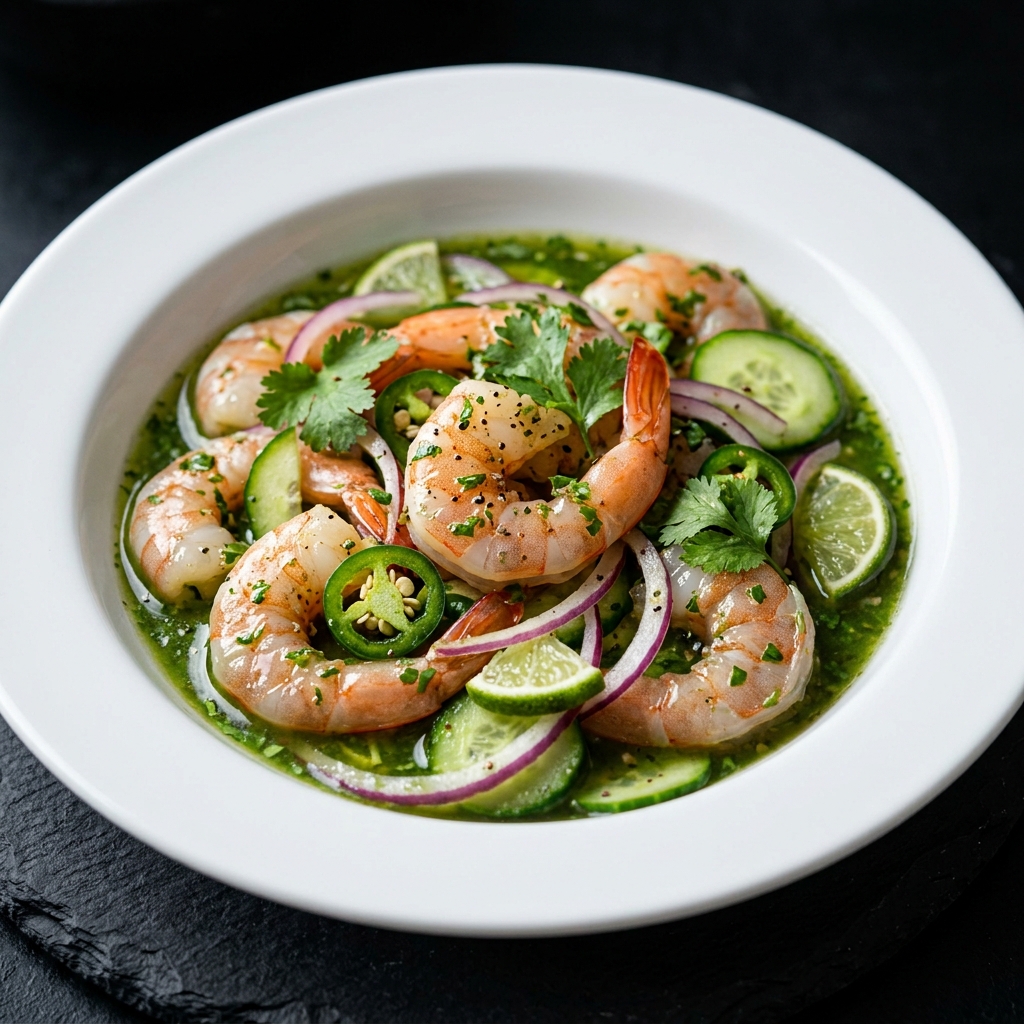
There are few seafood dishes as bright, refreshing, and instantly exciting as Shrimp Aguachile. Juicy shrimp, fresh lime juice, fiery green chiles, fragrant cilantro, crisp cucumber, and thinly sliced red onion come together in a bold combination that is tangy, spicy, fresh, and incredibly flavorful. This Mexican-inspired favorite is surprisingly simple to prepare, yet the contrast of textures and flavors makes it feel special enough for entertaining. Whether you are looking for an easy seafood appetizer, a light summer meal, or a colorful dish to serve alongside your favorite Mexican recipes, this Shrimp Aguachile delivers plenty of fresh flavor with very little cooking involved.
Ingredients You’ll Need

The ingredient list for Shrimp Aguachile is refreshingly straightforward, but quality matters enormously. Since there are no heavy sauces or long cooking processes to hide mediocre ingredients, fresh seafood, juicy limes, aromatic herbs, and flavorful chiles will make the biggest difference.
Fresh Shrimp
Use fresh, high-quality shrimp that have been peeled and deveined. Medium or large shrimp work particularly well because they remain substantial enough to provide a satisfying bite.
For traditional-style aguachile, the shrimp is typically served raw and sliced or butterflied so the lime-chile mixture can come into direct contact with more of the flesh. If you prefer a cooked version, briefly poach the shrimp until just opaque, then chill it thoroughly before continuing with the recipe.
Fresh Lime Juice
Freshly squeezed lime juice is essential. Bottled lime juice generally lacks the lively aroma and clean acidity that makes aguachile so refreshing.
Because lime is one of the primary flavor components, taste your limes before preparing the sauce. Some are intensely tart while others are surprisingly mild. You may need to adjust the amount slightly depending on their acidity.
Fresh Cilantro
Cilantro gives the aguachile its characteristic fresh, herbal flavor. Use both tender leaves and some of the softer stems, which contain plenty of flavor. Avoid using wilted cilantro because its flavor will be noticeably weaker.
Jalapeños or Serrano Chiles
Fresh green chiles provide the heat. Jalapeños are a good choice if you want moderate spice, while serrano chiles deliver a sharper and more intense heat.
If you are sensitive to spice, remove the seeds and inner membranes. However, keep some of them if you enjoy a fiery aguachile.
Garlic
A small amount of fresh garlic adds savory depth to the bright lime and chile mixture. Garlic can quickly overpower delicate seafood, so use it thoughtfully rather than allowing it to dominate the sauce.
Red Onion
Thinly sliced red onion adds color, crunch, sweetness, and a pleasant sharpness. Slice it as thinly as possible so it becomes tender and lightly infused with the lime mixture without losing all of its texture.
Cucumber
Cucumber is not simply decorative. Its cool, crisp texture provides a welcome contrast to the acidity and chile heat. English cucumber or another crisp, seed-light variety works especially well.
Salt and Black Pepper
Aguachile depends on proper seasoning. Salt brings the flavors together and enhances the natural sweetness of the shrimp, while freshly ground black pepper adds subtle warmth.
Optional Garnishes
Fresh cilantro leaves, additional jalapeño slices, lime wedges, avocado, and a little extra red onion can all be used for finishing. Avocado is particularly good when you want to soften the heat and add a creamy element to the dish.
What Is Shrimp Aguachile?
Aguachile is a traditional Mexican seafood preparation most closely associated with the coastal regions of Mexico. The name essentially refers to the chile-infused liquid in which the seafood is served. Unlike many seafood recipes that rely on a long list of ingredients or complicated cooking methods, aguachile is all about using a handful of fresh ingredients and allowing each one to make an impact.
Shrimp is the star of this recipe. It is paired with a bright mixture of fresh lime juice, cilantro, green chiles, garlic, and seasonings. Red onion contributes a sharp, slightly sweet bite, while cucumber adds coolness and crunch. The result is a dish that balances acidity, heat, freshness, and natural sweetness.
One important detail is that the lime juice changes the texture and appearance of raw shrimp through acidity, but this should not be confused with cooking shrimp using heat. Because the shrimp is served raw or acid-marinated, using exceptionally fresh, properly handled shrimp is important. For anyone who is pregnant, immunocompromised, elderly, or otherwise advised to avoid raw seafood, cooked shrimp is the safer choice.
How to Prepare Shrimp Aguachile
Step 1: Prepare the Shrimp
Begin by peeling and deveining the shrimp if this has not already been done. Rinse them briefly under cold running water and pat them very thoroughly dry with paper towels.
For a more traditional presentation, butterfly the shrimp by making a lengthwise cut along the back without cutting completely through. Open each shrimp gently so it lies flatter.
This step is more than cosmetic. A butterflied shrimp exposes more surface area to the lime and chile mixture, allowing the flavors to distribute more evenly.
If you are preparing the shrimp raw, keep it refrigerated while you prepare everything else. Seafood should remain cold from the moment you begin preparation until it is served.
Step 2: Prepare the Vegetables
Thinly slice the red onion and cucumber. Slice the jalapeños or serrano chiles into rounds.
For an especially attractive presentation, vary the thickness slightly while keeping most of the onion very thin. This creates a more natural appearance and gives different textures throughout the dish.
If the raw onion tastes particularly sharp, place the slices in ice water for about 10 minutes, then drain and pat them dry. This takes away some of the harshness while keeping the onion crisp.
Step 3: Make the Green Aguachile Sauce
Add fresh lime juice, cilantro, green chiles, garlic, salt, and a little black pepper to a blender.
Blend until the mixture becomes vibrant and relatively smooth. It should have a fresh green appearance with enough body to cling lightly to the shrimp.
Taste the mixture before adding it to the seafood. This is where you can make the most important adjustments. If it tastes too acidic, balance it with a little more cilantro or a small amount of additional seasoning. If the flavor is too mild, add another chile. If it lacks depth, check the salt before adding more ingredients.
The goal is not simply to make the sauce hot. A great aguachile should taste bright and layered, with lime acidity first, followed by fresh cilantro, chile heat, savory garlic, and the natural sweetness of the shrimp.
Step 4: Combine the Shrimp and Aguachile
Arrange the prepared shrimp in a chilled modern serving dish or shallow white plate. Pour the green aguachile mixture over the shrimp, making sure the liquid reaches as much of the seafood as possible.
Add the sliced red onion, cucumber, and fresh chile pieces.
Gently spoon some of the sauce over the top rather than aggressively mixing everything together. This preserves the appearance of the shrimp and keeps the vegetables crisp.
Step 5: Allow the Flavors to Develop
Let the shrimp rest in the lime mixture for a short period while keeping it properly chilled. The exact timing depends on whether you are using raw or cooked shrimp and how you prefer the texture.
As the shrimp sits in the acidic mixture, its surface will become firmer and more opaque. Remember, however, that lime juice does not provide the same food-safety control as heat cooking.
If you prefer a more traditional raw preparation, serve it promptly while the shrimp retains a tender, delicate texture. If you prefer a cooked preparation, use properly cooked and chilled shrimp before dressing it with the aguachile mixture.
Step 6: Finish and Serve
Finish the dish with fresh cilantro leaves, additional thinly sliced chile, cucumber, red onion, and lime wedges.
For an especially beautiful presentation, arrange the shrimp so that each piece remains visible instead of burying it under the vegetables. Spoon some of the vivid green sauce around and over the shrimp.
The finished dish should look vibrant and abundant. The green aguachile sauce, pink shrimp, purple-red onion, green cucumber, and fresh herbs create a natural color palette that makes the dish as attractive as it is flavorful.
The Secret to Truly Great Shrimp Aguachile
The secret is not complicated technique. It is balance.
Aguachile should never taste like nothing more than lime juice and chili. The acidity needs to be bright but not overwhelming, the chile should provide heat without completely masking the seafood, and the cilantro should add freshness rather than becoming bitter or dominant.
This is why tasting the aguachile mixture before serving is so important. Limes vary in acidity, chiles vary dramatically in heat, and shrimp vary in natural sweetness. A professional approach is to treat the recipe as a framework and make small seasoning adjustments based on the ingredients in front of you.
The second secret is temperature. Shrimp Aguachile is at its best when served cold and fresh. Chilling the shrimp, vegetables, sauce, and serving dish beforehand helps maintain that crisp, refreshing quality that makes the dish so appealing.
Delicious Variations to Try
Mild Shrimp Aguachile
For a gentler version, use jalapeños instead of serrano chiles and remove the seeds and membranes. You will still get the fresh green chile flavor without making the dish overwhelmingly spicy.
Extra-Spicy Aguachile
If you love heat, use serrano chiles and add an extra chile to the blended sauce. A small amount of red chile can also introduce a different kind of heat and create an attractive color contrast.
Aguachile with Avocado
Add slices or cubes of ripe avocado just before serving. The creamy avocado provides a wonderful contrast to the sharp lime, spicy chiles, and crisp vegetables.
Cucumber-Forward Aguachile
For an especially refreshing version, increase the amount of cucumber. This is ideal for hot-weather gatherings when you want something light, crisp, and hydrating.
Cooked Shrimp Aguachile
For people who prefer not to eat raw seafood, use shrimp that has been gently cooked and thoroughly chilled. Once cooled, dress it with the same vibrant lime, cilantro, and chile mixture. You will still enjoy the signature flavor profile while using cooked seafood.
Expert Tips for the Best Shrimp Aguachile
Choose the freshest shrimp possible. The quality of the seafood is the foundation of the recipe. Look for shrimp that smell clean and fresh rather than strongly fishy.
Keep everything cold. Chill the shrimp and vegetables until you are ready to assemble the dish. A cold aguachile is considerably more refreshing.
Use fresh lime juice. This is one of the few ingredients where the difference between fresh and bottled is especially noticeable.
Do not drown the dish in garlic. Garlic should support the chile and lime rather than overpower the delicate shrimp.
Taste before serving. Adjust the salt, chile, cilantro, and lime according to the ingredients you have. This small step can transform a good aguachile into an exceptional one.
Slice the vegetables thinly. Thin red onion and cucumber integrate beautifully with the shrimp and allow every bite to contain multiple textures.
Serve immediately for the freshest texture. Aguachile is at its most appealing when freshly assembled. Leaving seafood in an acidic mixture for too long can make its texture increasingly firm and dry.
Use a shallow serving dish. A shallow white plate allows the colorful shrimp and green sauce to spread naturally and makes the dish much more visually impressive.
What Makes This Dish So Special?
Shrimp Aguachile is one of those recipes that proves impressive food does not need to be complicated. There is no long simmering sauce, elaborate marinade, or extensive list of spices. Instead, the recipe relies on freshness and thoughtful preparation.
The moment you taste it, you get several sensations at once: the clean sweetness of shrimp, sharp lime acidity, fresh cilantro, chile heat, crisp cucumber, and the unmistakable bite of red onion. Each ingredient has a role, and when the proportions are right, the result is incredibly satisfying.
That combination also makes aguachile surprisingly versatile. It can become the centerpiece of a casual seafood lunch, an impressive appetizer for guests, or a refreshing addition to a Mexican-inspired dinner spread. Serve it beautifully, keep it cold, and give the ingredients room to shine, and even a simple plate of shrimp becomes something memorable.
Make-Ahead Options
Shrimp Aguachile is best enjoyed fresh, so it is not a recipe I recommend preparing completely the day before. The acidity from the lime juice continues to affect the texture of the shrimp over time, and the vegetables gradually lose some of their crispness.
However, you can prepare several components ahead of time to make serving much easier.
The aguachile sauce can be blended a few hours ahead and stored covered in the refrigerator. Keep it cold until you are ready to assemble the dish. The red onion, cucumber, and chiles can also be sliced ahead of time and refrigerated separately in airtight containers.
If you are using cooked shrimp, you can cook and chill the shrimp in advance. For the best texture, combine the shrimp with the lime-chile mixture relatively close to serving time rather than letting it sit dressed for many hours.
For entertaining, this preparation method is particularly useful. Have all of your ingredients chilled, sliced, and ready to go, then assemble the aguachile shortly before your guests arrive. This gives you the convenience of advance preparation without sacrificing the fresh texture that makes the dish special.
What to Serve with Shrimp Aguachile
Shrimp Aguachile is flavorful enough to stand on its own, but the right accompaniments can turn it into a complete and satisfying meal. Because the aguachile is bright, acidic, and spicy, choose sides that either provide a mild contrast or complement its Mexican-inspired flavors.
Tortilla Chips
Crisp tortilla chips are one of the easiest accompaniments. They provide a salty crunch and are perfect for scooping up shrimp, vegetables, and the flavorful green aguachile sauce.
Choose sturdy chips that will not immediately break when they come into contact with the liquid.
Tostadas
For a more substantial presentation, spoon the aguachile onto crisp tostadas. The crunchy corn base provides a wonderful contrast to the tender shrimp and fresh vegetables.
You can add a thin layer of avocado underneath the shrimp for extra creaminess.
Avocado
Fresh avocado is particularly good with spicy aguachile. Its rich, creamy texture balances the sharp acidity of the lime and softens the heat of the chiles.
Simply slice an avocado and arrange it alongside the shrimp, or serve small avocado cubes directly over the finished dish.
Mexican Rice
If you are serving the aguachile as part of a larger dinner, a simple Mexican-style rice makes an excellent accompaniment. Its mild, savory flavor gives everyone a more substantial side without competing with the fresh seafood.
Black Beans
Seasoned black beans can also work beautifully. Their earthy flavor contrasts with the bright citrus and herbs while adding additional protein and substance to the meal.
Fresh Corn
Grilled or boiled corn makes an excellent warm-weather side. The natural sweetness of corn pairs particularly well with chile and lime.
Simple Green Salad
A crisp salad dressed lightly with lime and olive oil can extend the fresh character of the meal without making it feel heavy.
When serving aguachile with multiple dishes, remember that the shrimp should remain the star. Avoid sides with extremely strong sauces or heavy seasoning that could overwhelm the delicate seafood.
How to Store Shrimp Aguachile
Because Shrimp Aguachile traditionally involves raw or acid-marinated seafood, storage requires extra care. It is best prepared in quantities that can be eaten soon after assembly rather than intentionally making a large batch for several days of leftovers.
If you have leftovers, transfer them promptly to a clean, airtight container and refrigerate them. Keep the refrigerator properly cold and avoid leaving the dish at room temperature for extended periods.
For the best quality, consume leftovers as soon as possible. The longer the shrimp remains in the acidic lime mixture, the more its texture changes. The cucumber and onion will also become softer as they continue sitting in the sauce.
Do not freeze prepared aguachile. Freezing can seriously damage the texture of the vegetables and seafood and will not preserve the fresh character of the dish.
Most importantly, do not rely on lime juice as a substitute for proper refrigeration or heat cooking. Acid changes the appearance and texture of seafood, but it does not make raw shrimp equivalent to shrimp that has been cooked to a safe internal temperature.
If you are unsure whether leftover seafood has been stored safely, it is better to discard it than take a chance.
Common Mistakes to Avoid
Even though Shrimp Aguachile is a relatively simple recipe, a few common mistakes can prevent it from reaching its full potential.
Using Low-Quality Shrimp
Since shrimp is the centerpiece, poor-quality seafood will be immediately noticeable. Avoid shrimp with a strong unpleasant odor or questionable freshness.
Adding Too Much Lime
More lime does not automatically mean more flavor. Excessive acidity can overwhelm the shrimp and make the finished dish taste harsh.
Start with a balanced amount, taste the sauce, and adjust gradually.
Making the Sauce Too Spicy
Heat should enhance the dish rather than make it impossible to taste anything else. If you are serving guests, consider starting with a moderate amount of chile and offering extra sliced chiles at the table.
Overblending the Cilantro
A quick blend creates a fresh, vibrant sauce. Excessive blending can sometimes produce a less appealing texture and may make delicate herbs taste overly intense.
Letting the Shrimp Sit Too Long
The longer seafood sits in acidic lime juice, the more its texture changes. If you want tender, fresh-tasting shrimp, assemble the dish relatively close to serving.
Serving It Warm
Aguachile is meant to be refreshing. Serving it warm or allowing it to sit at room temperature for too long takes away from both its quality and its food-safety profile.
How to Make Restaurant-Quality Shrimp Aguachile at Home
Presentation matters more than many home cooks realize, particularly with a dish as naturally colorful as aguachile.
Start with a clean, modern white plate. The white surface provides a dramatic contrast against the vibrant green sauce and makes the shrimp, red onion, cucumber, and chiles stand out.
Instead of piling everything randomly onto the plate, arrange the shrimp individually or in a loose circular pattern. Spoon the green sauce around and over the shrimp, then distribute the vegetables strategically.
Use fresh cilantro leaves as a finishing element rather than covering the entire dish with them. A few bright green leaves, thin red onion slices, cucumber pieces, and fresh chile rounds can make the plate look polished without appearing overly styled.
Finally, add lime wedges around the edge. They are practical for guests who want extra acidity, but they also reinforce the visual identity of the dish.
The goal is to make the food look abundant and natural rather than overly perfect. Aguachile should feel fresh, coastal, vibrant, and generous.
Frequently Asked Questions
Is Shrimp Aguachile cooked?
Traditional Shrimp Aguachile is commonly prepared with raw fresh shrimp that is exposed to a lime-based chile mixture. The acid changes the shrimp’s color and texture, but this is not the same as cooking with heat.
For a safer alternative, especially for people who should avoid raw seafood, use properly cooked and chilled shrimp.
Can I make Shrimp Aguachile with frozen shrimp?
Yes, frozen shrimp can be used if it has been properly frozen, thawed safely, and handled correctly. In fact, high-quality frozen seafood can be an excellent option when exceptionally fresh shrimp is unavailable.
Thaw the shrimp under refrigeration rather than leaving it on the counter. Once thawed, drain it thoroughly and pat it dry before preparing the recipe.
How spicy should Shrimp Aguachile be?
The ideal level of spice is completely personal. Jalapeños generally provide a more moderate heat, while serrano chiles are significantly sharper and hotter.
If you are preparing the dish for guests, start moderately spicy. You can always add more sliced chile before serving, but removing excessive heat from the finished sauce is much more difficult.
Can I use lemon instead of lime?
Lime is the classic choice and provides the flavor profile most people associate with aguachile. However, lemon can work if fresh limes are unavailable.
Keep in mind that the finished dish will taste different. Lemon tends to provide a somewhat different aromatic character and acidity, so lime remains the preferred option for the most traditional flavor.
Can I make aguachile without cilantro?
Yes. Cilantro contributes an important herbal note, but the dish can still be enjoyable without it. If you dislike cilantro, consider using a smaller amount of another fresh herb, although the resulting flavor will no longer be as traditional.
Why is my aguachile too sour?
If the lime flavor is overwhelming, the most likely issue is simply too much acidity relative to the other ingredients. Taste the sauce before adding it to the shrimp and adjust gradually.
Additional cilantro, a little more chile, and proper seasoning can help restore balance. The goal is bright acidity, not an aggressively sour flavor.
Can I use cooked shrimp for this recipe?
Absolutely. Cooked Shrimp Aguachile is an excellent alternative for anyone who prefers cooked seafood. Gently cook the shrimp until just opaque, cool it rapidly, and refrigerate it before dressing it with the lime and chile mixture.
This version will have a slightly different texture from traditional raw shrimp aguachile, but it can still be exceptionally flavorful and refreshing.
How long should shrimp sit in lime juice?
There is no single ideal time for everyone because texture preference varies. A short exposure produces a more tender texture, while longer exposure makes the shrimp progressively firmer and more opaque.
Rather than relying solely on the clock, pay attention to the shrimp’s appearance and texture. Most importantly, remember that lime juice should not be treated as a food-safety substitute for cooking.
Is Shrimp Aguachile keto and low-carb?
A traditional aguachile made with shrimp, lime juice, cilantro, chiles, cucumber, onion, garlic, and seasonings is naturally low in carbohydrates and can generally fit into a keto eating pattern.
However, accompaniments such as tortilla chips, tostadas, rice, or other carbohydrate-rich sides will change the overall nutritional profile of the meal.
Is Shrimp Aguachile gluten-free?
Traditional Shrimp Aguachile ingredients are naturally gluten-free. Shrimp, lime, cilantro, chiles, cucumber, onion, and garlic do not inherently contain gluten.
As always, check packaged ingredients and seasonings if you are preparing the dish for someone who must strictly avoid gluten, particularly when using commercially prepared sauces or spice blends.
Conclusion
Shrimp Aguachile is proof that great cooking often begins with respecting fresh ingredients. When you combine high-quality shrimp with bright lime, vibrant green chiles, fragrant cilantro, crisp cucumber, and sharp red onion, you do not need complicated techniques or a heavy sauce to create something memorable.
The beauty of this recipe lies in its balance. The shrimp provides delicate sweetness, lime brings brightness, chiles add energy, cilantro contributes freshness, and the vegetables provide crunch and color. Every component has a purpose.
If you are making aguachile for the first time, concentrate on three things: start with excellent seafood, taste and balance your chile-lime mixture before serving, and keep the entire dish cold and fresh. Those simple details will take your homemade aguachile from ordinary to something that feels worthy of a coastal Mexican restaurant.
Serve it with crisp tostadas or tortilla chips, plenty of lime wedges, creamy avocado, and a few extra slices of fresh chile for anyone who wants more heat. Most importantly, serve it soon after assembly and enjoy it while the flavors and textures are at their brightest.
Once you master the basic version, you can easily adapt the recipe to your preferred level of spice and experiment with different garnishes and accompaniments. Whether served as an elegant appetizer, a refreshing lunch, or part of a vibrant Mexican-inspired spread, Shrimp Aguachile is the kind of dish that catches attention the moment it reaches the table and keeps people coming back for another bite.
Shrimp Aguachile
Ingredients
Equipment
Method
- Peel and devein the shrimp, then rinse briefly under cold water and pat completely dry. For a traditional presentation, butterfly each shrimp by making a lengthwise cut along the back without cutting all the way through. Keep the shrimp refrigerated while preparing the remaining ingredients.
- Thinly slice the red onion, cucumber, and fresh chiles. For a milder onion flavor, soak the sliced red onion in ice water for about 10 minutes, then drain and pat dry.
- Add the fresh lime juice, cilantro, jalapeños or serrano chiles, garlic, salt, and black pepper to a blender. Blend until smooth and vibrant green. Taste and adjust the salt, lime, cilantro, or chile according to preference.
- Place the prepared shrimp in a shallow serving dish, spreading them out so the lime-chile mixture can reach as much of the seafood as possible.
- Pour the green aguachile sauce evenly over the shrimp. Gently spoon the sauce over the top without aggressively mixing the seafood.
- Arrange the sliced red onion, cucumber, and fresh chile over and around the shrimp. Keep some of the shrimp visible for an attractive presentation.
- Refrigerate the assembled aguachile for about 10–15 minutes before serving. The shrimp will become firmer and more opaque as it sits in the acidic mixture.
- Finish with fresh cilantro leaves and lime wedges. Serve immediately while the shrimp and vegetables are cold, fresh, and crisp.
Notes
Traditional aguachile commonly uses raw shrimp. Lime juice changes the texture and appearance of raw shrimp but should not be considered equivalent to cooking with heat.
For anyone who should avoid raw seafood, use properly cooked and thoroughly chilled shrimp instead.
Adjust the amount and type of chile according to your preferred spice level. Serranos generally provide more heat than jalapeños.
Freshly squeezed lime juice gives the best flavor and brightness.
Serve soon after preparation for the best texture and freshness.
Do not leave the finished aguachile at room temperature for an extended period.
For a creamier variation, serve with fresh avocado slices.
Crisp tortilla chips or tostadas make excellent accompaniments.

Hi, I’m Clara, the creator of Barakala. I love sharing simple, comforting, and delicious recipes that make everyday cooking easier and more enjoyable for home cooks.