
Imagine a scoop of homemade ice cream so creamy and silky that it practically melts on your tongue, with delicate lavender notes balanced by the warm, golden sweetness of honey. This Honey Lavender Ice Cream is an elegant yet surprisingly approachable dessert that turns a handful of simple ingredients into something truly memorable.
Ingredients You’ll Need
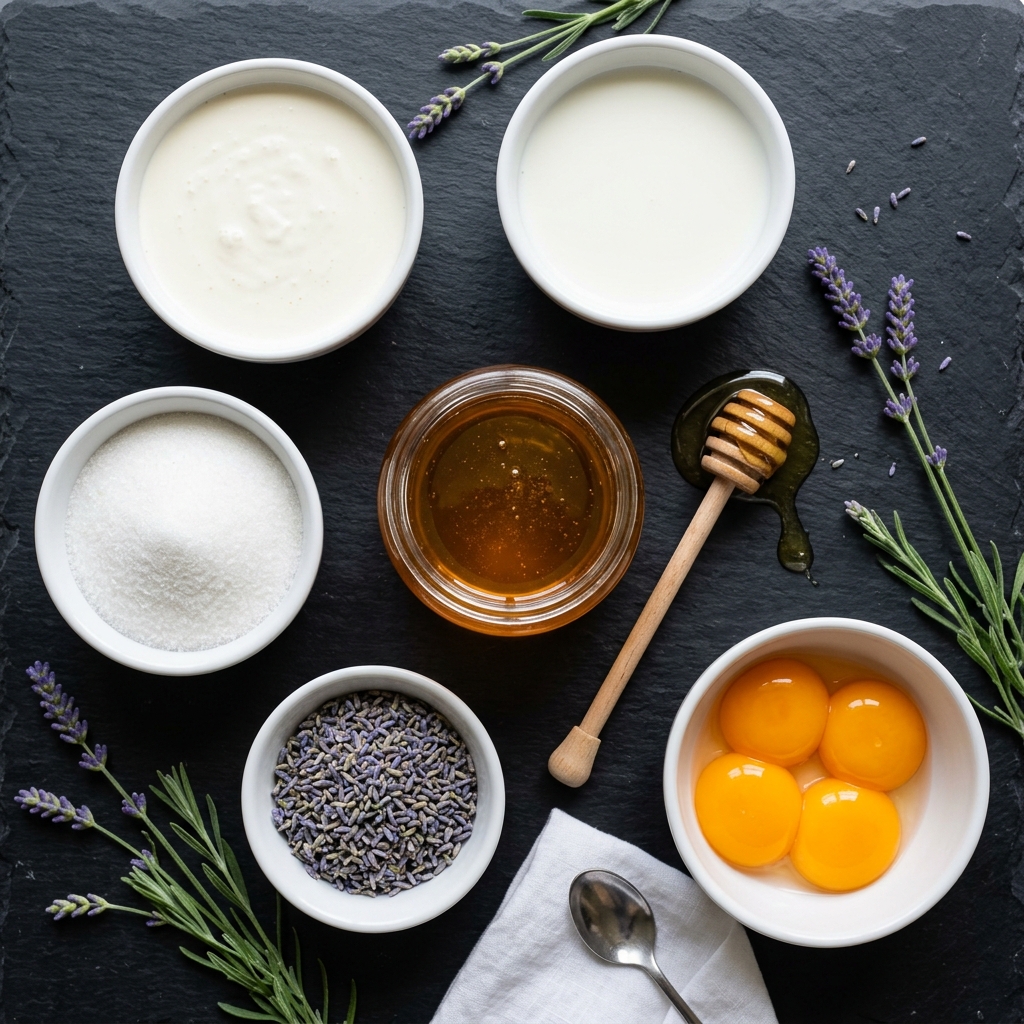
Heavy Cream
Heavy cream provides much of the fat responsible for the rich, smooth texture of the ice cream. The higher fat content also helps create a softer, more luxurious mouthfeel and reduces the chance of the finished ice cream becoming overly icy.
For the best results, use fresh full-fat heavy cream rather than a reduced-fat substitute.
Whole Milk
Whole milk balances the richness of the heavy cream while providing enough liquid for a smooth custard base. Avoid skim or low-fat milk if possible, as the reduced fat can produce a less creamy result.
Honey
Honey is more than just a sweetener in this recipe. It contributes its own floral character and helps complement the lavender.
A mild, light-colored honey is an excellent choice if you want the lavender flavor to remain prominent. A strongly flavored honey can be delicious too, but it will create a more noticeable honey-forward dessert.
Because honey varies naturally in flavor, you can experiment with different varieties once you have made the recipe successfully.
Granulated Sugar
Sugar provides additional sweetness and helps improve the texture of homemade ice cream. It works alongside the honey rather than replacing it completely.
Using only honey can make the flavor overly intense and can alter the texture of the frozen dessert, so keeping a balanced combination of honey and granulated sugar gives you better control.
Culinary Lavender
Use food-grade culinary lavender rather than lavender intended for decorative or fragrance purposes.
Lavender should be used carefully. Its flavor becomes stronger as it steeps, so the amount and steeping time are important. English lavender varieties are commonly favored for culinary applications because they tend to have a more pleasant, delicate floral profile.
Egg Yolks
Egg yolks create a classic custard-style ice cream base. Their natural emulsifying properties help bring the milk and cream together while contributing richness, body, and a wonderfully smooth texture.
For the richest result, use fresh large eggs and separate the yolks carefully.
Vanilla Extract
A small amount of vanilla helps round out the floral notes and gives the finished ice cream a more complete flavor. It should not dominate the recipe; think of it as a supporting ingredient.
Salt
Just a small pinch of salt can make a noticeable difference. It doesn’t make the ice cream taste salty. Instead, it helps balance the sweetness and allows the honey and lavender flavors to stand out more clearly.

How to Make Honey Lavender Ice Cream
1. Prepare the Lavender Infusion
Begin by combining the heavy cream, whole milk, and culinary lavender in a medium saucepan.
Warm the mixture gently over medium-low heat until it is hot and steamy, but do not allow it to reach a vigorous boil. Once steam begins to rise from the surface, remove the saucepan from the heat.
Let the lavender steep in the warm dairy mixture for several minutes.
This is one of the most important stages of the recipe because it determines how pronounced the lavender flavor will be. A shorter infusion produces a softer floral note, while a longer infusion creates a stronger lavender character.
Taste carefully as you go if desired. The flavor should be recognizable but pleasant and delicate rather than overwhelming.
Once the desired flavor has developed, strain the mixture through a fine-mesh sieve to remove the lavender buds.
Press very gently on the lavender with a spoon to extract the flavorful dairy, but avoid aggressively squeezing the buds, which can introduce a harsher floral character.
2. Whisk the Egg Yolks and Sugar
While the lavender-infused dairy is warming, place the egg yolks and granulated sugar in a separate mixing bowl.
Whisk until the mixture becomes smoother and slightly lighter in color.
You don’t need to whip the yolks into a thick foam. The goal is simply to combine them thoroughly with the sugar so they are ready to be tempered with the warm dairy.
This step is important because adding hot dairy directly to cold egg yolks can cause the eggs to scramble.
3. Temper the Eggs
Slowly pour a small amount of the warm lavender-infused dairy into the egg yolk mixture while whisking continuously.
Keep whisking as you gradually add more of the warm dairy.
Once the egg mixture has warmed, pour it back into the saucepan containing the remaining dairy.
The gradual process is called tempering, and it is one of the secrets to producing a smooth custard instead of tiny pieces of cooked egg.
Take your time here. There is no advantage to rushing this step.
4. Cook the Custard Gently
Return the saucepan to the stove and cook the mixture over low to medium-low heat, stirring constantly with a wooden spoon or heat-resistant spatula.
Pay particular attention to the bottom and corners of the pan, where the custard can heat more quickly.
The mixture should gradually thicken enough to lightly coat the back of a spoon.
Avoid boiling the custard. Excessive heat can cause the egg proteins to coagulate too quickly, leaving you with a curdled or grainy mixture.
If you have an instant-read thermometer, aim for approximately 170–175°F (77–79°C).
5. Add the Honey, Vanilla, and Salt
Once the custard has thickened, remove it from the heat.
Stir in the honey, vanilla extract, and a small pinch of salt.
Adding the honey at this stage helps preserve its delicate flavor rather than subjecting it to prolonged high heat.
Stir until everything is completely incorporated.
Taste the custard carefully once it has cooled slightly. This is your opportunity to evaluate the balance. You should notice creamy richness first, followed by gentle honey sweetness and a subtle floral lavender finish.
6. Strain the Custard
Pour the finished custard through a fine-mesh sieve into a clean bowl.
This extra step may seem unnecessary, but it is worth doing. Straining removes any tiny pieces of cooked egg and catches remaining lavender particles, giving you a noticeably smoother finished ice cream.
For an especially silky texture, strain the custard twice.
7. Cool the Mixture Completely
Cover the bowl and refrigerate the custard until thoroughly chilled.
Do not rush this stage.
A cold base churns more efficiently and can produce a smoother texture because the ice cream machine does not have to work as hard to cool a warm mixture.
For the best texture, chill the custard for several hours or, ideally, overnight.
The Secret to Getting the Lavender Flavor Just Right
Lavender is one of those ingredients where restraint makes all the difference. If you have ever tasted a lavender dessert that reminded you more of perfume than food, the problem was almost certainly balance.
For this ice cream, the lavender should provide an aromatic background rather than overpowering the honey and cream. The finished dessert should taste elegant, creamy, and floral—not bitter, soapy, or medicinal.
The honey plays an important role here because its natural floral sweetness softens the sharper edges of the lavender. Vanilla and salt then help tie everything together, creating a flavor that feels much more sophisticated than the relatively short ingredient list might suggest.
Churning the Ice Cream
Once the custard is completely chilled, pour it into your ice cream maker and churn according to the manufacturer’s instructions.
The exact churning time will depend on the machine, but you are looking for a thick, soft-serve-like consistency. The mixture should increase noticeably in volume and hold its shape when scooped.
Avoid over-churning. Once the ice cream reaches the proper consistency, transfer it promptly to a freezer-safe container.
For the most attractive presentation, use a shallow container rather than a very deep one. A shallow layer freezes more evenly and makes it easier to scoop the ice cream later.
Freeze Until Firm
Cover the container tightly and place it in the freezer.
Freshly churned ice cream is often soft enough to serve immediately, but allowing it to freeze for several hours gives it the firmer texture most people expect from scoopable ice cream.
Before serving, let the container sit at room temperature for a few minutes if the ice cream has become particularly firm.
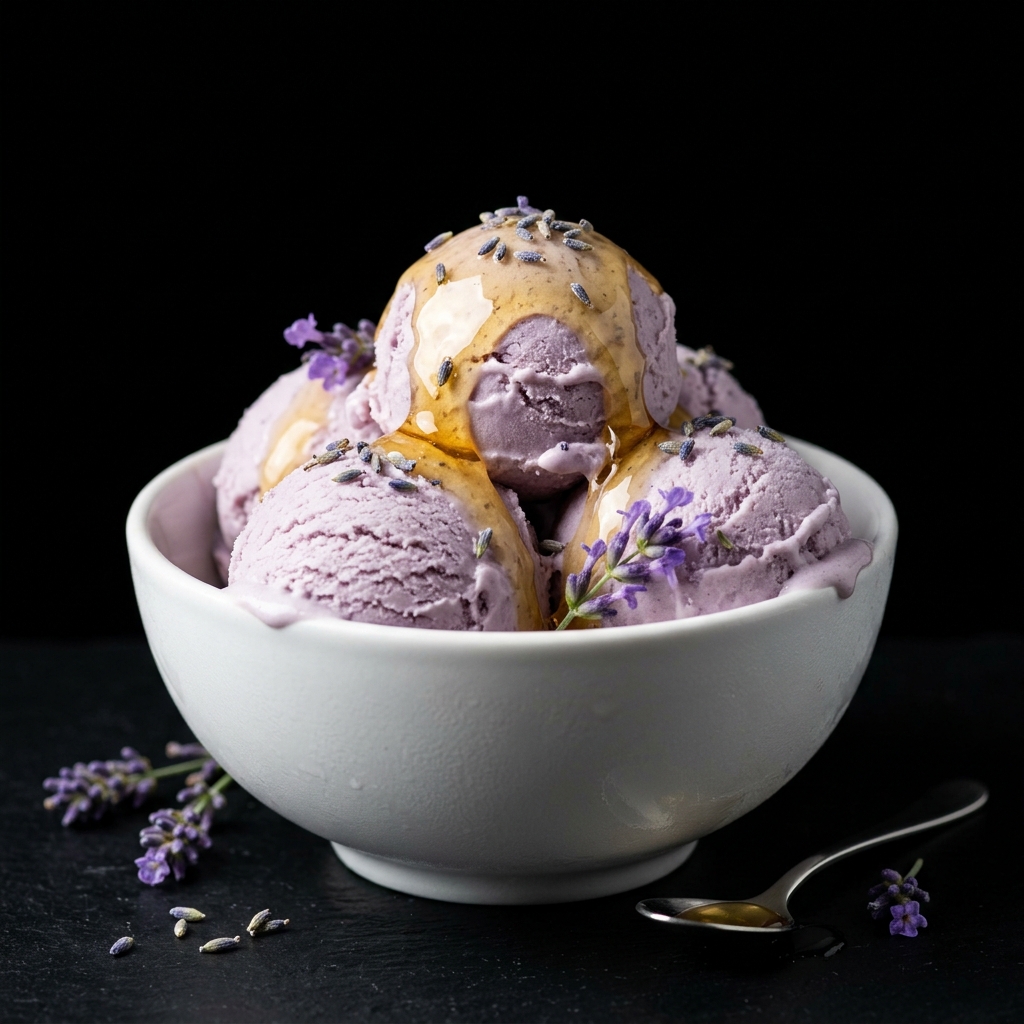
Then scoop generously and finish with a delicate drizzle of honey or a few culinary lavender buds if desired.
Variations to Try
Honey Vanilla Lavender Ice Cream
For a more familiar flavor profile, increase the vanilla slightly while keeping the lavender subtle. This version is especially appealing if you are introducing lavender desserts to someone who has never tried one before.
Lemon Honey Lavender Ice Cream
Add a small amount of finely grated lemon zest to the dairy while it infuses, then strain it out with the lavender.
The bright citrus aroma gives the ice cream a refreshing quality and creates a beautiful contrast with the floral honey and lavender.
Berry and Lavender Ice Cream
Serve scoops of Honey Lavender Ice Cream with fresh blueberries, raspberries, or blackberries.
The tartness of the berries cuts through the richness of the cream while their natural sweetness complements the honey.
Honey Lavender Ice Cream with Toasted Nuts
For additional texture, serve the ice cream with lightly toasted pistachios, almonds, or walnuts.
Pistachios are particularly beautiful with the pale lavender color and add a subtle nutty flavor without overwhelming the floral notes.
Expert Tips for the Creamiest Homemade Ice Cream
Use full-fat dairy. The fat in cream and whole milk contributes directly to the luxurious texture of the finished ice cream.
Don’t boil the custard. Gentle heat is essential when working with egg yolks. A low and steady temperature gives you a smooth base.
Use culinary lavender only. Decorative lavender is not necessarily intended for consumption and may have been treated differently from culinary herbs.
Don’t overdo the lavender. Stronger does not mean better. A restrained floral note tastes much more sophisticated.
Chill the custard thoroughly. A properly chilled base generally churns better and produces a smoother texture.
Strain the custard. Even if your custard looks perfectly smooth, straining removes tiny particles that could otherwise affect the final texture.
Use quality honey. Since honey is one of the primary flavors, its character will be noticeable. Choose one that you genuinely enjoy eating on its own.
Let the ice cream soften slightly before scooping. Homemade ice cream can freeze more firmly than commercial varieties. A few minutes at room temperature can make scooping much easier without significantly affecting the texture.
Taste before freezing. Cold temperatures suppress flavor perception. The chilled base should taste pleasantly flavorful before it goes into the freezer, while keeping in mind that the final frozen dessert will taste slightly less intense.
Keep the finished ice cream well covered. Exposure to air can cause ice crystals to form and can allow the ice cream to absorb unwanted freezer odors.
Make-Ahead Options
Honey Lavender Ice Cream is an excellent make-ahead dessert because the flavor actually has time to settle and develop as the ice cream rests in the freezer.
You can prepare the custard base up to 24 hours ahead and keep it tightly covered in the refrigerator. Chilling the base overnight is particularly convenient because it allows you to make the custard one day and churn the ice cream the next.
Once churned, the ice cream can be transferred to a freezer-safe container and stored until you are ready to serve it. For the best texture and flavor, allow the freshly churned ice cream to freeze for several hours before serving.
If you’re preparing it for a dinner party, birthday celebration, afternoon tea, or special gathering, making the ice cream the day before is a smart approach. It gives you one less dessert to worry about on the day of the event.
What to Serve With Honey Lavender Ice Cream
Although a scoop of Honey Lavender Ice Cream is beautiful enough to serve on its own, the delicate floral flavor pairs wonderfully with a variety of desserts, fruits, nuts, and toppings.
Fresh Berries
Fresh raspberries, blueberries, strawberries, and blackberries are excellent choices. Their natural acidity provides a pleasant contrast to the rich creaminess of the ice cream.
A simple bowl of mixed berries alongside a scoop can turn this homemade ice cream into an elegant but effortless dessert.
Honey Drizzle
A thin drizzle of honey over the finished scoops reinforces the signature flavor of the recipe and adds an attractive glossy finish.
For the best presentation, use only a small amount. Too much honey can make the dessert excessively sweet and overpower the lavender.
Shortbread Cookies
Buttery shortbread is a particularly good companion because its simple flavor allows the floral ice cream to remain the focus.
Serve one or two crisp cookies alongside each scoop for an easy dessert worthy of a dinner party.
Lemon Desserts
The bright acidity of lemon works beautifully with lavender and honey. Consider serving the ice cream alongside lemon shortbread, lemon cake, lemon tart, or a small slice of lemon pound cake.
The combination creates a balanced dessert with creamy, floral, citrusy, and buttery elements.
Toasted Pistachios
Chopped toasted pistachios add crunch and a subtle nutty flavor. Their natural green color also creates a beautiful visual contrast with the soft lavender shade of the ice cream.
Sprinkle a small amount over the top just before serving.
Fresh Lavender
A tiny sprig of fresh culinary lavender can make the presentation especially attractive.
Use it primarily as a garnish rather than mixing large amounts into the finished ice cream. Remember that the garnish should enhance the dessert visually without overwhelming its flavor.
How to Store Honey Lavender Ice Cream
Proper storage is essential if you want homemade ice cream to maintain its smooth texture.
Transfer the finished ice cream into a clean, airtight freezer-safe container as soon as possible after churning. A shallow container with a relatively small amount of empty space is ideal.
Press a piece of parchment paper or freezer-safe plastic wrap directly against the surface of the ice cream before sealing the container. This creates an additional barrier against air and helps reduce the formation of ice crystals.
Keep the container toward the back of the freezer where the temperature tends to remain more stable. Avoid storing it near the freezer door, where repeated temperature changes can encourage ice crystals and texture deterioration.
For the best quality, enjoy the ice cream within approximately 1–2 weeks, although it may remain safe for longer when continuously frozen and properly stored. Homemade ice cream generally has its best texture when enjoyed relatively soon after preparation.
If you notice a layer of ice crystals developing on the surface, scrape away the affected portion before serving. The ice cream underneath may still be perfectly enjoyable, although the texture may not be as creamy as when freshly frozen.
How to Get Soft, Scoopable Homemade Ice Cream
One of the most common frustrations with homemade ice cream is opening the freezer to discover a dessert that is extremely hard.
This does not necessarily mean the recipe went wrong. Homemade ice cream often freezes more firmly than commercial ice cream because commercial products may contain stabilizers and other ingredients designed to maintain a softer texture.
Honey can help contribute to a pleasantly soft texture because it contains sugars that behave differently from ordinary granulated sugar. However, the ice cream will still become firm when stored for several hours.
The easiest solution is patience.
Remove the container from the freezer and let it sit at room temperature for approximately 5–10 minutes before scooping. The exact time will depend on the temperature of your freezer and the size of the container.
Avoid repeatedly microwaving the entire container. Repeated thawing and refreezing can damage the texture and encourage ice crystal formation.
Instead, allow only the portion you intend to serve to soften naturally.
Troubleshooting Common Problems
Why Did My Ice Cream Turn Out Icy?
Icy ice cream can result from several factors, including a warm base, insufficient churning, excessive water content, or improper storage.
Make sure the custard is thoroughly chilled before churning and that your ice cream machine is operating according to its instructions.
Storage also matters. Keeping the container tightly sealed and minimizing temperature fluctuations can make a substantial difference.
Why Does My Ice Cream Taste Too Strongly of Lavender?
The most likely cause is using too much lavender or steeping it for too long.
Lavender is intensely aromatic, so it should be treated more like a potent herb than a mild ingredient.
If you’re making this recipe for the first time, it is better to begin with a restrained amount. You can always increase the lavender slightly in a future batch once you know how strong your particular culinary lavender is.
Why Is My Ice Cream Not Creamy?
A creamy texture begins with the base. Full-fat dairy, properly cooked egg yolks, thorough chilling, and effective churning all contribute to the final consistency.
If the custard was overheated and the eggs scrambled slightly, the finished ice cream may also have a less-than-perfect texture.
Straining the custard before chilling can help remove small particles and produce a smoother result.
Why Did My Custard Become Lumpy?
Lumpy custard usually means the egg yolks became too hot too quickly.
This is why tempering is so important. Warm the yolks gradually by whisking in the hot dairy before returning the mixture to the saucepan.
If your custard develops a few small lumps, immediately remove it from the heat and strain it through a fine-mesh sieve. If the eggs have been severely scrambled, however, the texture may not be completely recoverable.
Can I Make This Without an Ice Cream Maker?
Yes.
An ice cream maker gives you the easiest path to a smooth, creamy texture, but you can still make a frozen dessert without one.
After thoroughly chilling the custard, place it in a shallow freezer-safe container. Freeze it and stir vigorously at regular intervals as it begins to firm up. Breaking up the developing ice crystals repeatedly can help improve the texture.
This method requires more attention and generally won’t produce exactly the same texture as machine-churned ice cream, but it can work when an ice cream maker isn’t available.
Frequently Asked Questions
Can I use dried lavender for Honey Lavender Ice Cream?
Yes. Dried culinary lavender is commonly used for this type of recipe and has a concentrated flavor, so it should be measured carefully.
Always make sure the lavender is specifically labeled as culinary or food-grade. Avoid using lavender sold solely for decorative, fragrance, or craft purposes.
Can I use fresh lavender instead of dried lavender?
Fresh culinary lavender can be used, but the flavor and intensity will differ from dried lavender.
Because fresh lavender contains more moisture and its aromatic compounds may behave differently during infusion, you may need to adjust the amount. Start conservatively and taste the infused dairy before proceeding.
What type of honey is best for this ice cream?
A mild, floral honey is an excellent starting point because it complements the lavender without overpowering it.
Clover honey, wildflower honey, or another mild honey can work well. More strongly flavored varieties can also be delicious if you want the honey to play a larger role in the final dessert.
Can I make Honey Lavender Ice Cream without eggs?
Yes. You can make an eggless version using a cream-and-milk base thickened with another suitable ingredient or simply rely on the dairy and churning process.
However, an egg-based custard provides additional richness and a particularly luxurious texture, which is why it is used in this version.
Is Honey Lavender Ice Cream gluten-free?
The traditional ingredients in this recipe are naturally gluten-free, including dairy, eggs, honey, sugar, lavender, vanilla, and salt.
As always, check packaged ingredients such as vanilla or other additions if you are preparing the dessert for someone with celiac disease or a medically necessary gluten-free diet, particularly when cross-contamination is a concern.
Is Honey Lavender Ice Cream vegetarian?
Yes, a traditional egg-and-dairy Honey Lavender Ice Cream is vegetarian.
It is not vegan because it contains dairy and eggs.
Can I make this ice cream vegan?
You can create a vegan variation by replacing the dairy and eggs with suitable plant-based alternatives. Full-fat coconut milk or another rich plant-based cream can provide body, while a vegan custard technique can replace the egg yolks.
Keep in mind that changing the fat and liquid composition will affect both the flavor and freezing characteristics, so the resulting dessert will have a somewhat different texture from the traditional version.
Can I reduce the sugar?
Sugar contributes more than sweetness to ice cream. It also affects the freezing point and helps keep the dessert from becoming excessively hard.
For that reason, dramatically reducing the sugar can result in a harder, icier texture.
If you want a less-sweet ice cream, make small adjustments rather than removing a large portion of the sugar at once.
How long does homemade Honey Lavender Ice Cream last?
For the best flavor and texture, enjoy it within about 1–2 weeks when stored properly in an airtight freezer-safe container.
It can remain frozen for longer, but the texture may gradually become less creamy as ice crystals develop and the dessert absorbs freezer odors.

Honey Lavender Ice Cream
Ingredients
Equipment
Method
- Combine the heavy cream, whole milk, and dried culinary lavender in a medium saucepan. Heat over medium-low heat until hot and steaming, but do not boil. Remove from the heat and let steep for about 5–8 minutes, tasting carefully to ensure the lavender flavor remains delicate rather than overpowering. Strain through a fine-mesh sieve and discard the lavender.
- In a separate bowl, whisk the egg yolks and granulated sugar until smooth and slightly lighter in color.
- Slowly pour about ½ cup of the warm lavender-infused dairy into the egg mixture while whisking constantly. Gradually whisk in more of the warm dairy until the egg mixture is thoroughly warmed.
- Pour the tempered egg mixture back into the saucepan. Cook over low to medium-low heat, stirring constantly, until the custard thickens enough to lightly coat the back of a spoon. If using a thermometer, aim for approximately 170–175°F (77–79°C). Do not allow the custard to boil.
- Remove the custard from the heat. Stir in the honey, vanilla extract, and salt until completely combined.
- Pour the custard through a fine-mesh sieve into a clean bowl to remove any tiny pieces of cooked egg or remaining lavender particles.
- Cover the custard and refrigerate until completely cold, preferably for at least 6 hours or overnight.
- Pour the chilled custard into an ice cream maker and churn according to the manufacturer's instructions, usually until it reaches a thick, soft-serve-like consistency.
- Transfer the churned ice cream to a freezer-safe airtight container. Smooth the surface, press parchment paper or freezer-safe plastic wrap directly against the ice cream if desired, cover tightly, and freeze for at least 3–4 hours, or until firm.
- Let the ice cream sit at room temperature for about 5–10 minutes before scooping if it is very firm. Serve with a delicate honey drizzle, a few culinary lavender buds, fresh berries, toasted pistachios, or shortbread cookies if desired.
Notes
Lavender is potent, so avoid adding more than recommended unless you specifically want a stronger floral flavor.
A mild honey works particularly well because it complements rather than overwhelms the lavender.
For the smoothest texture, chill the custard thoroughly before churning.
Straining the custard is highly recommended because it removes any small pieces of cooked egg and excess lavender.
Homemade ice cream can become quite firm in the freezer. Allow it to sit at room temperature for several minutes before scooping.
Store tightly covered in the freezer and enjoy within approximately 1–2 weeks for the best texture and flavor.
For a refreshing variation, add a little finely grated lemon zest to the dairy while infusing, then strain it out before making the custard.

Hi, I’m Clara, the creator of Barakala. I love sharing simple, comforting, and delicious recipes that make everyday cooking easier and more enjoyable for home cooks.