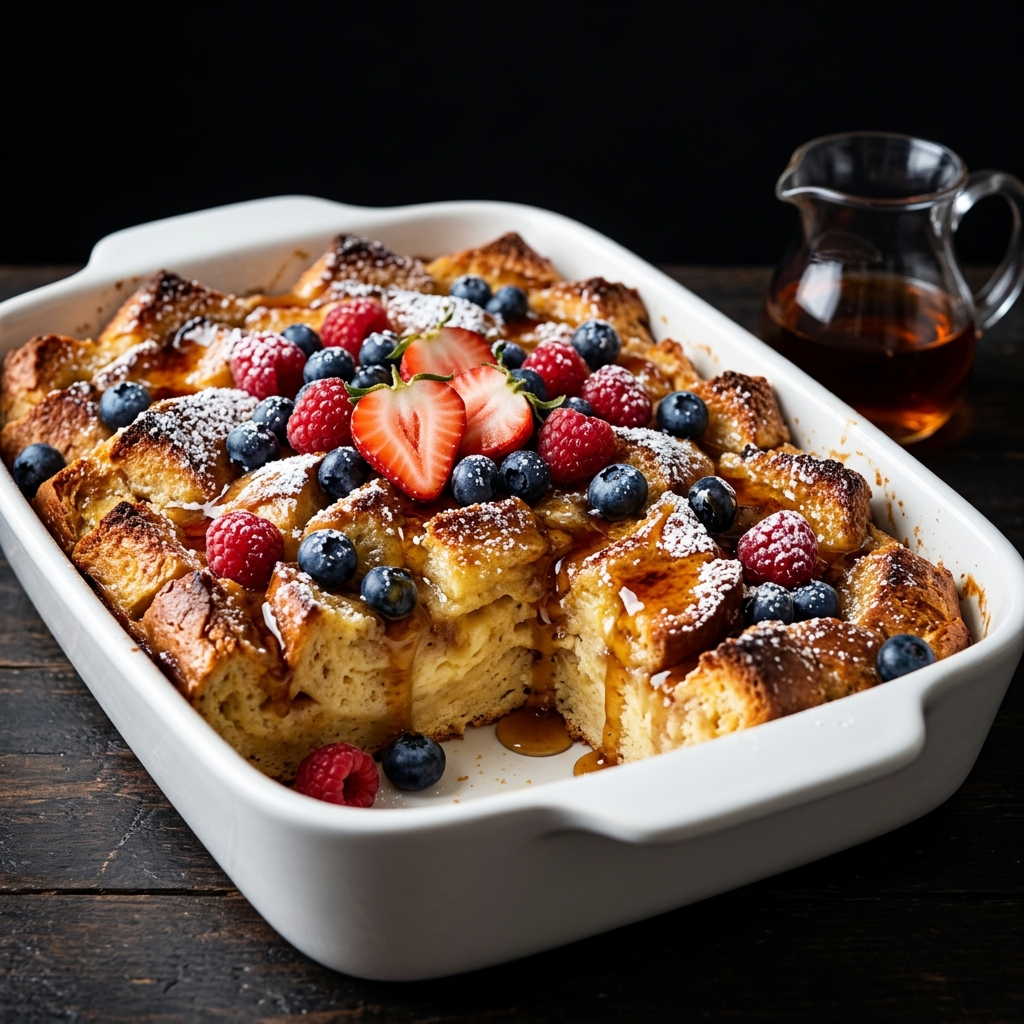
There is something wonderfully comforting about waking up to the aroma of cinnamon, vanilla, buttery bread, and maple syrup—and this Slow Cooker French Toast Casserole makes that experience remarkably easy. Soft bread soaks up a rich, creamy custard while the slow cooker gently transforms it into a golden, tender breakfast that feels special enough for a holiday but simple enough for an ordinary weekend morning.
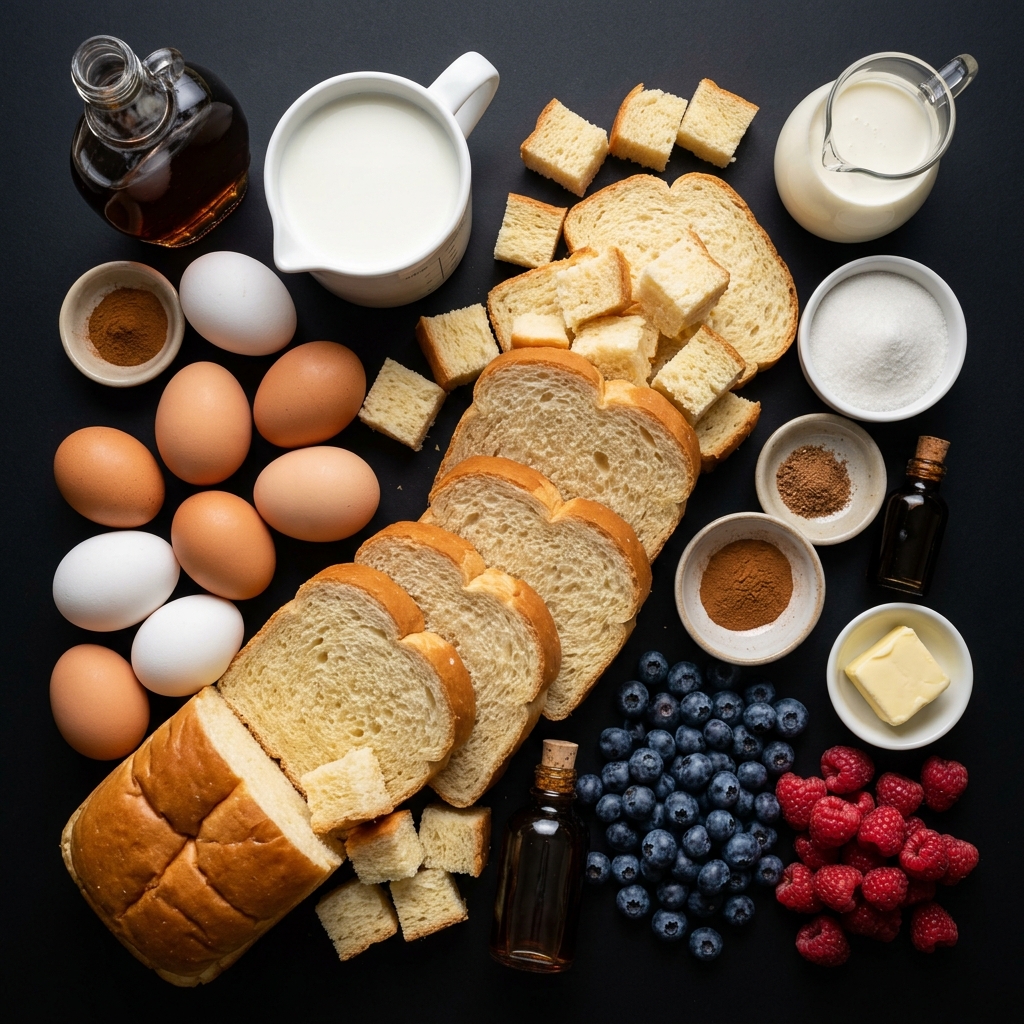
Ingredients You’ll Need
The beauty of this recipe is that most of the ingredients are familiar pantry and refrigerator staples. Each one has a specific job, so understanding what they contribute can help you make a better casserole and confidently adapt it when necessary.
Bread
Use about 8 cups of cubed bread. Brioche, challah, French bread, or a sturdy thick-sliced white bread all work well.
Brioche is particularly delicious because its buttery, slightly sweet character gives the casserole a rich, bakery-style flavor. Challah produces a similarly tender result. French bread is a little more rustic and has enough structure to hold the custard beautifully.
For the best texture, avoid extremely fresh, soft sandwich bread if possible. Slightly stale bread is actually preferable because it can absorb more custard without immediately becoming mushy.
If your bread is very fresh, cut it into cubes and leave it uncovered for a few hours, or spread the cubes on a baking sheet and let them dry slightly before assembling the casserole.
Eggs
Use 6 large eggs.
Eggs are the backbone of the custard. They help bind the milk, cream, sugar, and flavorings together while giving the casserole its characteristic rich, soft texture.
Whisk the eggs thoroughly before combining them with the dairy. You want the whites and yolks completely incorporated so that the finished casserole has an even texture.
Whole Milk
Use 2 cups of whole milk.
Whole milk provides moisture and creaminess without making the custard excessively heavy. Lower-fat milk can work, but whole milk gives the casserole a noticeably richer result.
Heavy Cream
Add 1 cup of heavy cream for an especially luxurious texture.
The combination of whole milk and heavy cream gives the casserole a balanced richness. If you prefer a lighter breakfast, you can replace some or all of the heavy cream with additional milk, although the finished casserole will be less rich.
Granulated Sugar
Use about ½ cup of granulated sugar.
Sugar sweetens the custard and helps encourage a beautiful golden exterior as the casserole cooks. If you plan to serve the casserole with plenty of maple syrup, you can slightly reduce the sugar without dramatically changing the recipe.
Pure Vanilla Extract
Add 2 teaspoons of pure vanilla extract.
Vanilla brings warmth and depth to the custard. It may seem like a small addition, but it helps transform the flavor from ordinary sweet bread into something much more reminiscent of classic French toast.
Ground Cinnamon
Use 1½ teaspoons of ground cinnamon.
Cinnamon is one of the defining flavors of this breakfast casserole. For the most noticeable flavor, use fresh, aromatic cinnamon rather than an old container that has been sitting in the pantry for years.
Ground Nutmeg
Add about ¼ teaspoon of ground nutmeg.
Nutmeg is optional, but a small amount adds a subtle warmth that complements cinnamon and vanilla beautifully. Be careful not to overdo it; nutmeg should support the flavor rather than dominate it.
Unsalted Butter
Use about 4 tablespoons of melted unsalted butter.
Butter adds richness and helps create those irresistible golden edges. Unsalted butter also gives you better control over the overall seasoning.
Maple Syrup
Pure maple syrup can be drizzled over the finished casserole or incorporated into the custard for additional sweetness.
For serving, real maple syrup is especially good because its deep, caramel-like flavor pairs naturally with cinnamon, vanilla, and buttery bread.
Powdered Sugar
A light dusting of powdered sugar just before serving makes the casserole look beautiful while adding another gentle layer of sweetness.
Fresh Berries
Blueberries, raspberries, strawberries, or a combination can be served over the casserole.
The berries are not essential to the base recipe, but their fresh, slightly tart flavor provides a welcome contrast to the rich custard and sweet maple syrup.
How to Make Slow Cooker French Toast Casserole
Once your ingredients are ready, the preparation is straightforward. The most important part is making sure the bread gets evenly coated with custard and that the slow cooker is prepared properly.
Step 1: Prepare the Slow Cooker
Lightly grease the inside of a 6-quart slow cooker with butter or nonstick cooking spray.
Pay particular attention to the bottom and lower sides. This helps prevent sticking and makes serving considerably easier.
If your slow cooker tends to cook aggressively around the edges, you can also use a slow-cooker liner, although greasing the cooker directly generally gives the best texture on the exterior of the casserole.
Step 2: Cut the Bread
Cut the bread into roughly 1-inch cubes.
Try to keep the pieces reasonably similar in size. Consistent pieces absorb the custard at a similar rate, giving you a more uniform finished casserole.
Do not worry if some pieces are slightly irregular. In fact, a rustic mixture of pieces can create appealing differences in texture throughout the casserole.
Step 3: Make the Custard
In a large mixing bowl, whisk together the eggs, whole milk, heavy cream, granulated sugar, vanilla extract, cinnamon, and nutmeg.
Whisk until the mixture is smooth and the eggs are fully incorporated.
Add the melted butter and whisk again.
The custard should smell strongly of vanilla and cinnamon before you even add the bread. That is a good indication that you have built a flavorful foundation.
Step 4: Add the Bread
Place the bread cubes into the prepared slow cooker.
Pour the custard gradually over the bread rather than dumping it all into one spot. This makes it easier for the liquid to distribute evenly.
Using a large spoon or spatula, gently toss or press the bread so that as many pieces as possible come into contact with the custard.
Do not aggressively mash the bread. You want it coated and moistened while still retaining enough structure to produce distinct pieces in the finished casserole.
Step 5: Let the Bread Absorb the Custard
For an especially tender and flavorful result, allow the assembled casserole to rest for approximately 15 to 30 minutes before cooking.
This gives the bread time to absorb some of the custard.
If you are preparing the casserole in advance, cover it and refrigerate it instead. The longer soaking period allows the flavors to develop and ensures the center becomes wonderfully moist.
Step 6: Cook on Low
Cover the slow cooker with its lid and cook on LOW for approximately 3½ to 4½ hours, depending on your slow cooker.
Slow cookers vary considerably, so cooking time should be treated as a guideline rather than an absolute rule.
The casserole is ready when the center is set and no longer looks like liquid custard. The edges should be golden and firm, while the center should remain soft and tender rather than dry.
Avoid repeatedly lifting the lid during cooking. Every time you remove the lid, heat escapes and the cooking process slows down.
Step 7: Check the Center
Near the end of the cooking period, gently check the center.
The casserole should have a cohesive, spoonable texture. If the center is still visibly wet and loose, continue cooking in short increments until it sets.
Do not judge doneness solely by the color of the top. Because the casserole cooks inside a covered slow cooker, the top may not brown as dramatically as a traditional oven-baked French toast casserole.
Step 8: Rest Before Serving
Turn off the slow cooker and let the casserole rest uncovered for about 10 to 15 minutes.
This short resting period allows the custard to settle and makes the casserole easier to serve.
It also gives you a chance to prepare your toppings without worrying about overcooking the dish.
Step 9: Add the Finishing Touches
Spoon generous portions onto serving plates.
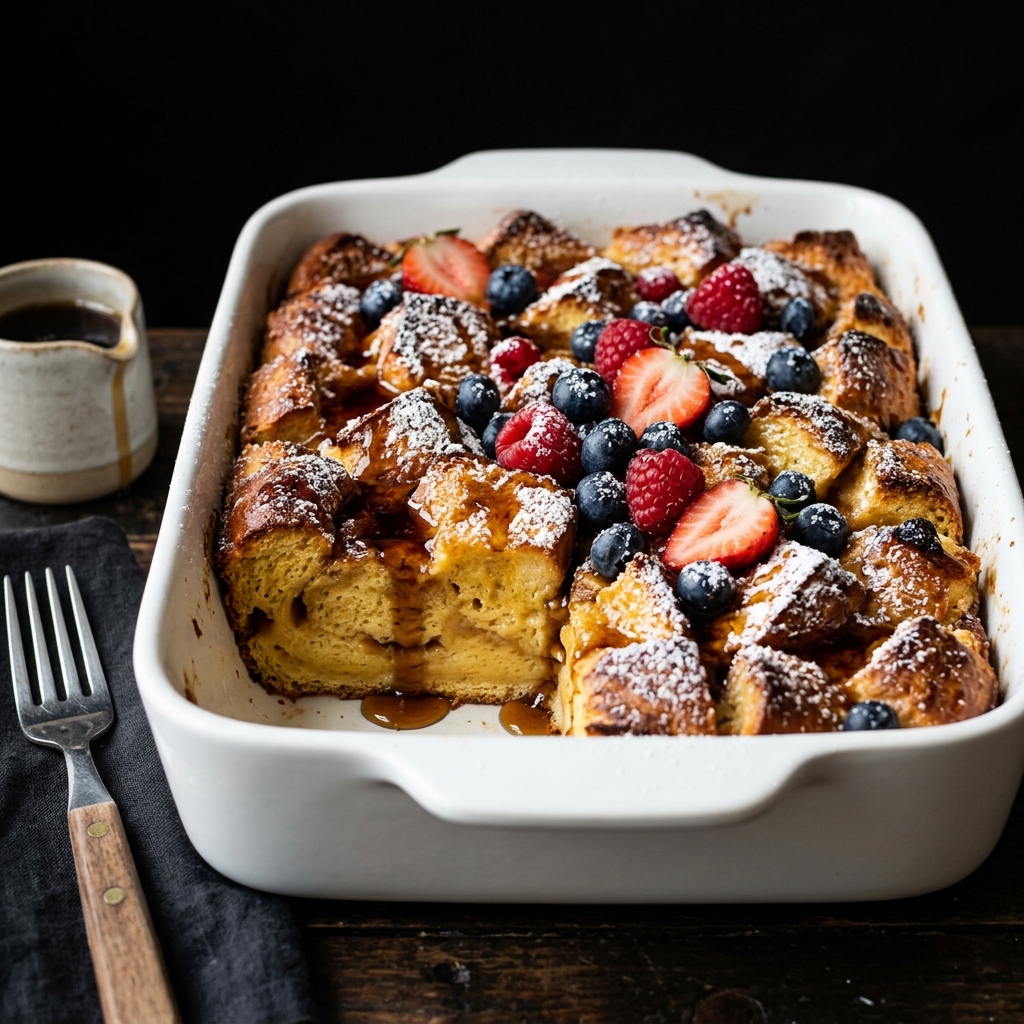
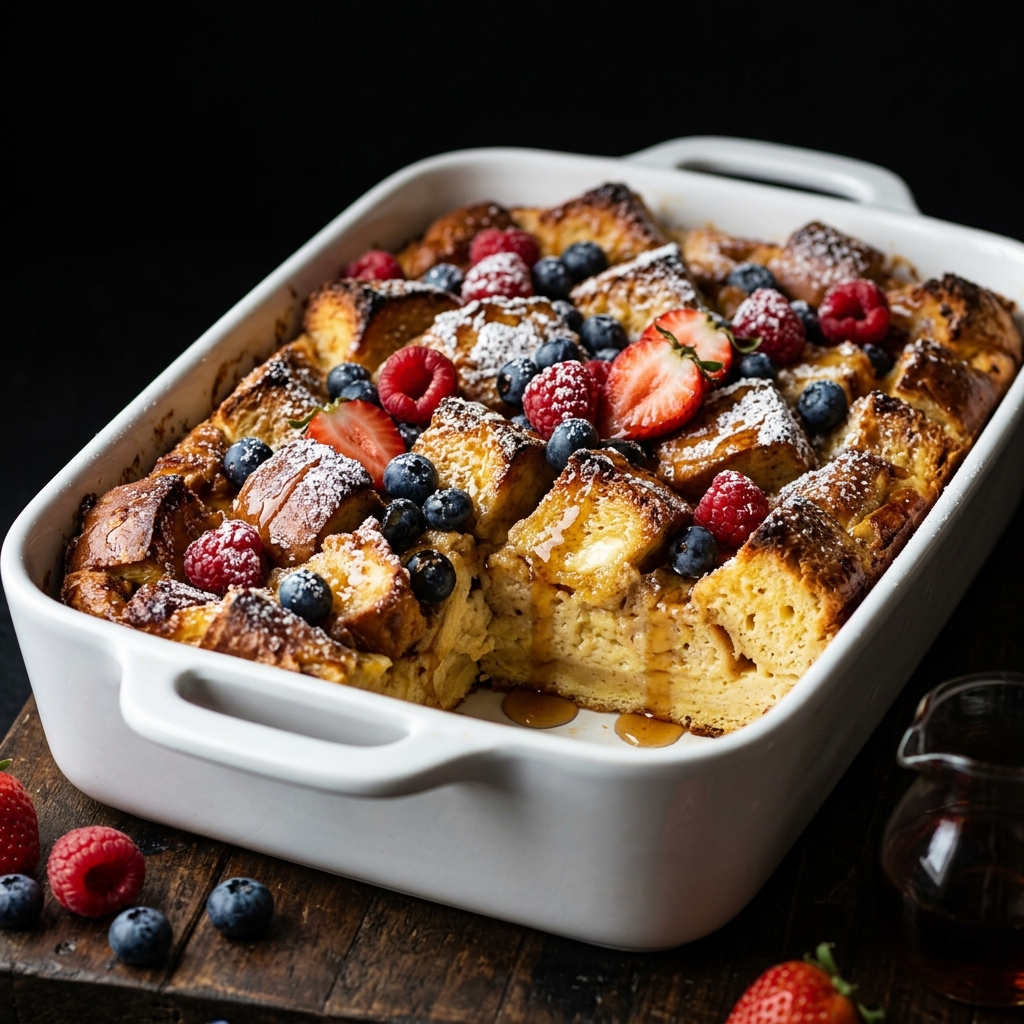
Dust lightly with powdered sugar, drizzle with warm maple syrup, and scatter fresh blueberries, raspberries, or sliced strawberries over the top.
For an extra indulgent presentation, add a small pat of butter while the casserole is still warm.
The contrast between the warm cinnamon-scented casserole, cool fresh berries, sweet maple syrup, and delicate powdered sugar makes every bite more interesting.
The Secret to Getting the Texture Right
The most important lesson with French toast casserole is that bread choice and moisture balance matter more than complicated technique.
A casserole can easily become either too wet or too dry. If the bread is extremely fresh and soft, it may absorb the custard too quickly and become overly mushy. If the bread is very dry and the custard is insufficient, the finished dish can become firm and dry around the edges.
That is why slightly stale, sturdy bread is such a useful choice. It acts almost like a sponge: it absorbs the flavorful custard while retaining enough structure to create a satisfying contrast between the soft center and more substantial pieces of bread.
There is another important detail that many home cooks overlook: do not rush the soaking process. Giving the bread time to absorb the custard helps distribute moisture throughout the casserole. Instead of having some dry pieces and some saturated pieces, you get a more cohesive texture from edge to center.
Variations to Try
One of the reasons this slow cooker breakfast is so versatile is that the basic custard can become the foundation for several different flavor combinations.
Blueberry French Toast Casserole
Fold fresh or frozen blueberries into the bread before adding the custard.
Blueberries release their juices as they cook, creating little pockets of fruity flavor throughout the casserole. Serve with powdered sugar and maple syrup for a classic combination.
Apple Cinnamon Version
Add peeled, diced apples along with an extra pinch of cinnamon.
Choose a firm apple that holds its shape during cooking. Apples add natural sweetness, subtle acidity, and a pleasant tender texture.
For a fall-inspired version, a small amount of chopped pecans can also be added.
Strawberry French Toast Casserole
Add sliced strawberries toward the end of preparation rather than using very thin slices throughout the casserole.
Strawberries can release considerable moisture, so using them primarily as a topping is often the easiest way to preserve their fresh flavor and attractive appearance.
Chocolate Chip French Toast Casserole
Scatter semisweet or dark chocolate chips between the bread cubes before adding the custard.
The chocolate melts into the warm casserole, creating a dessert-like breakfast that is particularly appealing for special occasions.
Because chocolate chips add sweetness, you can reduce the amount of sugar in the custard if desired.
Pecan Maple Version
Add roughly chopped pecans and serve the finished casserole with maple syrup.
The crunchy nuts create a wonderful contrast against the soft custardy bread. Toasting the pecans beforehand can make their flavor even more pronounced.
Expert Tips for a Better Casserole
Choose the Right Bread
This is arguably the most important tip. Brioche and challah produce a rich, tender casserole, while French bread provides more structure. Slightly stale bread is generally preferable to extremely fresh bread.
Cut the Bread Evenly
Uniform cubes help the custard distribute more consistently. Aim for pieces around 1 inch in size.
Do Not Overmix
Once the custard meets the bread, handle the mixture gently. Excessive stirring can break down the bread and create a dense, pasty texture.
Use Real Vanilla and Maple Syrup When Possible
Because this recipe contains relatively few major flavor components, quality makes a difference. Pure vanilla extract and real maple syrup provide more depth than heavily artificial alternatives.
Watch Your Slow Cooker
Cooking times vary between models. A casserole that takes four hours in one slow cooker may finish sooner in another.
The first time you make this recipe, start checking toward the lower end of the suggested cooking range.
Avoid Overcooking
A French toast casserole should be tender and moist, not dry. Once the center has set, continuing to cook it for a long time can cause the edges to become overly firm.
Let It Rest
Those extra 10 to 15 minutes after cooking are worthwhile. Resting allows the casserole to settle and makes it easier to portion without falling apart.
Make-Ahead Option
This recipe is particularly well suited to make-ahead preparation.
Assemble the bread and custard in the slow cooker insert, cover it, and refrigerate it overnight. The bread will have plenty of time to absorb the custard, which can make the finished casserole exceptionally tender and flavorful.
When you are ready to cook, remove the chilled insert from the refrigerator and allow it to sit briefly according to your slow cooker’s manufacturer guidance before beginning the cooking process. Avoid placing a very cold ceramic insert directly into a hot environment if the manufacturer does not permit it, as sudden temperature changes can damage some cookware.
For the best results, add delicate toppings such as powdered sugar and fresh berries immediately before serving rather than the night before.
What to Serve With Slow Cooker French Toast Casserole
Although this casserole is substantial enough to serve by itself, a few carefully chosen sides can turn it into a complete brunch spread.
Fresh Berries
Blueberries, strawberries, raspberries, and blackberries provide brightness and acidity that balance the rich custard.
Greek Yogurt
Plain or lightly sweetened Greek yogurt adds creaminess and a little tang. It also works particularly well alongside berries.
Crispy Bacon
The salty, savory character of bacon contrasts beautifully with the sweetness of French toast casserole.
Breakfast Sausage
Chicken, turkey, or traditional breakfast sausage can provide a savory element alongside the sweet casserole.
Fresh Fruit Salad
A simple fruit salad keeps the meal refreshing and adds color to the breakfast table.
Maple Syrup
For anyone who enjoys an especially sweet breakfast, serve warm maple syrup on the side so everyone can add as much as they prefer.
How to Store Leftovers
Allow leftover casserole to cool before transferring it to an airtight food-safe container.
Refrigerate leftovers promptly and use them within about 3 to 4 days for the best quality.
For individual portions, divide the casserole before refrigerating. This makes reheating much more convenient and prevents you from repeatedly heating the entire batch.
To reheat, microwave an individual portion in short intervals until warmed through. You can also reheat portions in a covered oven-safe dish in the oven until hot.
If the casserole seems slightly dry after refrigeration, a small drizzle of maple syrup or a spoonful of milk or cream before reheating can help restore some moisture.
The texture is generally best when leftovers are reheated gently rather than exposed to very high heat for an extended period.
Frequently Asked Questions
Can I use regular sandwich bread?
Yes, although sturdier bread generally produces a better texture. If using ordinary sandwich bread, allow it to dry out slightly before assembling the casserole so it can absorb the custard without becoming excessively soft.
Can I prepare this French toast casserole the night before?
Yes. Preparing it the night before is one of the most convenient ways to make it. The overnight soaking period allows the bread to absorb the custard thoroughly and makes the recipe particularly practical for breakfast gatherings.
Why is my French toast casserole soggy?
Excess moisture, very fresh bread, or insufficient cooking time can all contribute to a soggy casserole. Use sturdy or slightly stale bread, make sure the custard proportions are balanced, and cook until the center is properly set.
Can I use frozen berries?
Yes. Frozen blueberries and other berries can be used, although they may release more moisture than fresh fruit. For the cleanest presentation, fresh berries are particularly nice as a topping.
Can I make this without heavy cream?
Yes. You can replace the heavy cream with additional whole milk. The casserole will still work, but it will have a lighter and slightly less luxurious texture.
How do I know when the casserole is done?
The center should be set rather than visibly liquid, while the edges should be firm and cooked through. Because slow cookers vary, rely on the texture of the casserole rather than following the clock alone.
Can I freeze French toast casserole?
Yes, although freezing can slightly change the texture of the custard-soaked bread. For best quality, cool it completely, portion it into airtight freezer-safe containers, and use it within a reasonable period. Thaw refrigerated before reheating for more even results.
Slow Cooker French Toast Casserole
Ingredients
Equipment
Method
- Prepare the slow cooker: Lightly grease the inside of a 6-quart slow cooker with butter or nonstick cooking spray, paying particular attention to the bottom and sides.
- Prepare the bread: Cut the bread into approximately 1-inch cubes. Slightly stale bread works particularly well because it absorbs the custard without becoming overly mushy.
- Make the custard: In a large bowl, whisk together the eggs, whole milk, heavy cream, granulated sugar, vanilla extract, cinnamon, and nutmeg until smooth and thoroughly combined. Whisk in the melted butter.
- Combine the bread and custard: Place the bread cubes into the prepared slow cooker. Gradually pour the custard over the bread, gently stirring or pressing the bread so the custard is distributed evenly.
- Rest the mixture: Allow the bread to absorb the custard for 15–30 minutes before cooking. For a make-ahead version, cover and refrigerate overnight.
- Slow cook: Cover and cook on LOW for approximately 3½–4½ hours. Cooking time will vary depending on the slow cooker. Avoid repeatedly lifting the lid during cooking.
- Check for doneness: The casserole is ready when the center is set and no longer visibly liquid, while the edges are firm and golden. The center should remain soft and tender rather than dry.
- Rest: Turn off the slow cooker and leave the casserole uncovered for 10–15 minutes before serving. This allows the custard to settle and makes the casserole easier to portion.
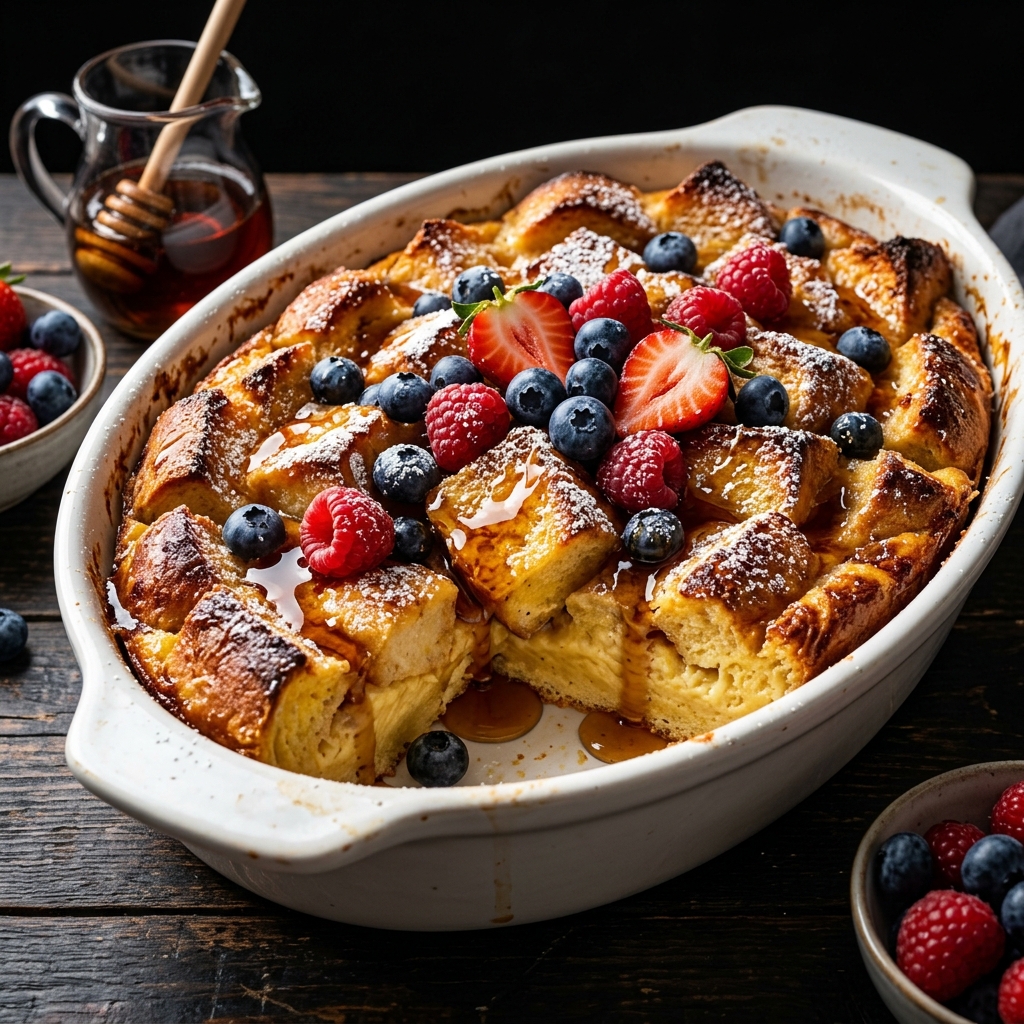
- Finish and serve: Spoon the warm casserole onto plates. Dust with powdered sugar, drizzle with maple syrup, and top with fresh blueberries, raspberries, and sliced strawberries if desired.
Notes
Slightly stale is better: Fresh bread can become overly soft. If necessary, cube fresh bread and let it dry uncovered for several hours before using.
Do not overcook: Slow cookers vary, so begin checking the casserole toward the lower end of the cooking range.
Make ahead: The casserole can be assembled and refrigerated overnight before cooking. Follow your slow cooker's manufacturer guidance regarding placing a chilled insert into the appliance.
Topping flexibility: Blueberries, raspberries, strawberries, chopped pecans, whipped cream, or additional maple syrup can all be used according to preference.
For a lighter version: Replace some or all of the heavy cream with additional whole milk.
Storage: Refrigerate cooled leftovers in an airtight container for 3–4 days. Reheat individual portions gently in the microwave or oven.
Diet note: The traditional recipe is vegetarian but is not gluten-free, low-carb, keto, or vegan because it contains wheat-based bread, dairy, eggs, and added sugars.

Hi, I’m Clara, the creator of Barakala. I love sharing simple, comforting, and delicious recipes that make everyday cooking easier and more enjoyable for home cooks.