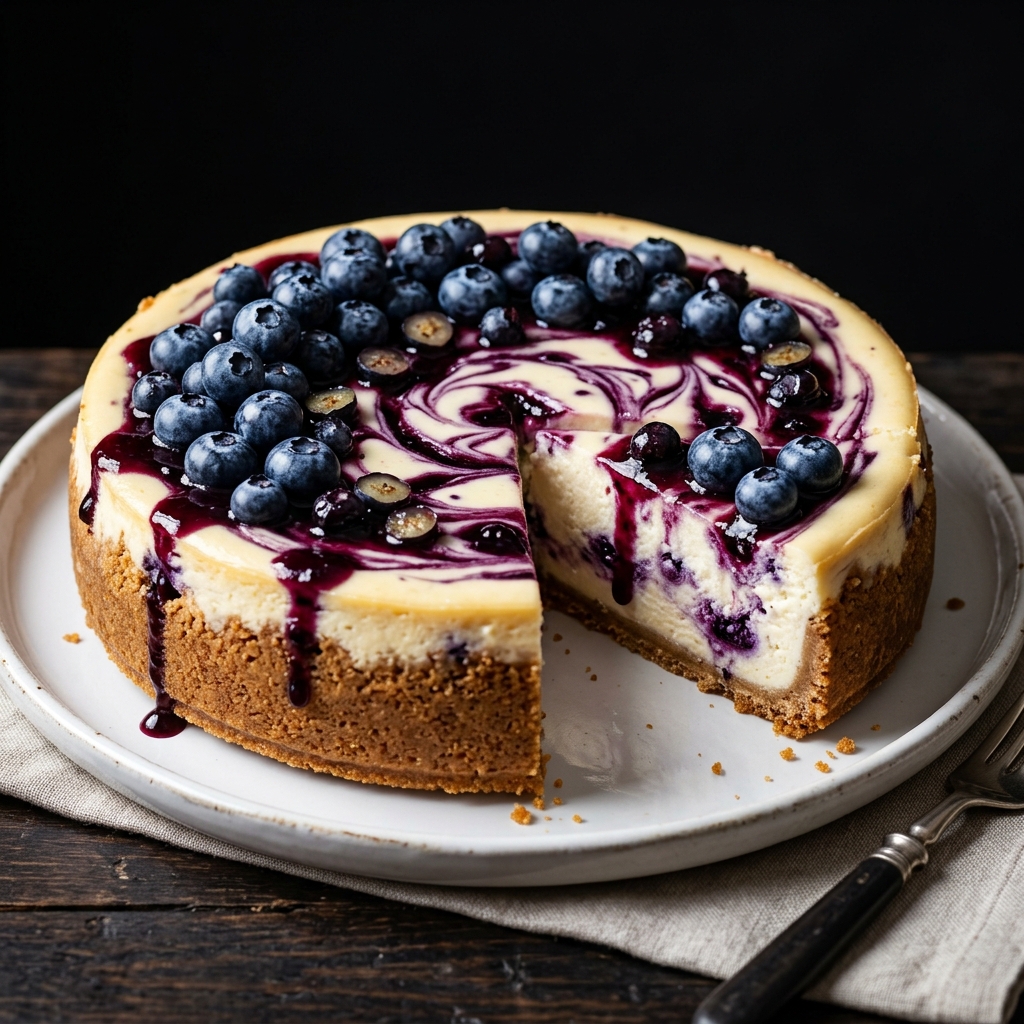
Few desserts can make a table feel instantly special like a beautifully baked Blueberry Swirl Cheesecake. This creamy, velvety cheesecake combines a buttery graham cracker crust with rich vanilla cheesecake and ribbons of vibrant blueberry flavor, creating a dessert that looks impressive but is surprisingly approachable when you know the right techniques. Whether you are making it for a holiday, birthday, dinner party, or simply craving an unforgettable homemade dessert, this recipe gives you everything you need for a smooth, creamy cheesecake with a gorgeous blueberry swirl in every slice.
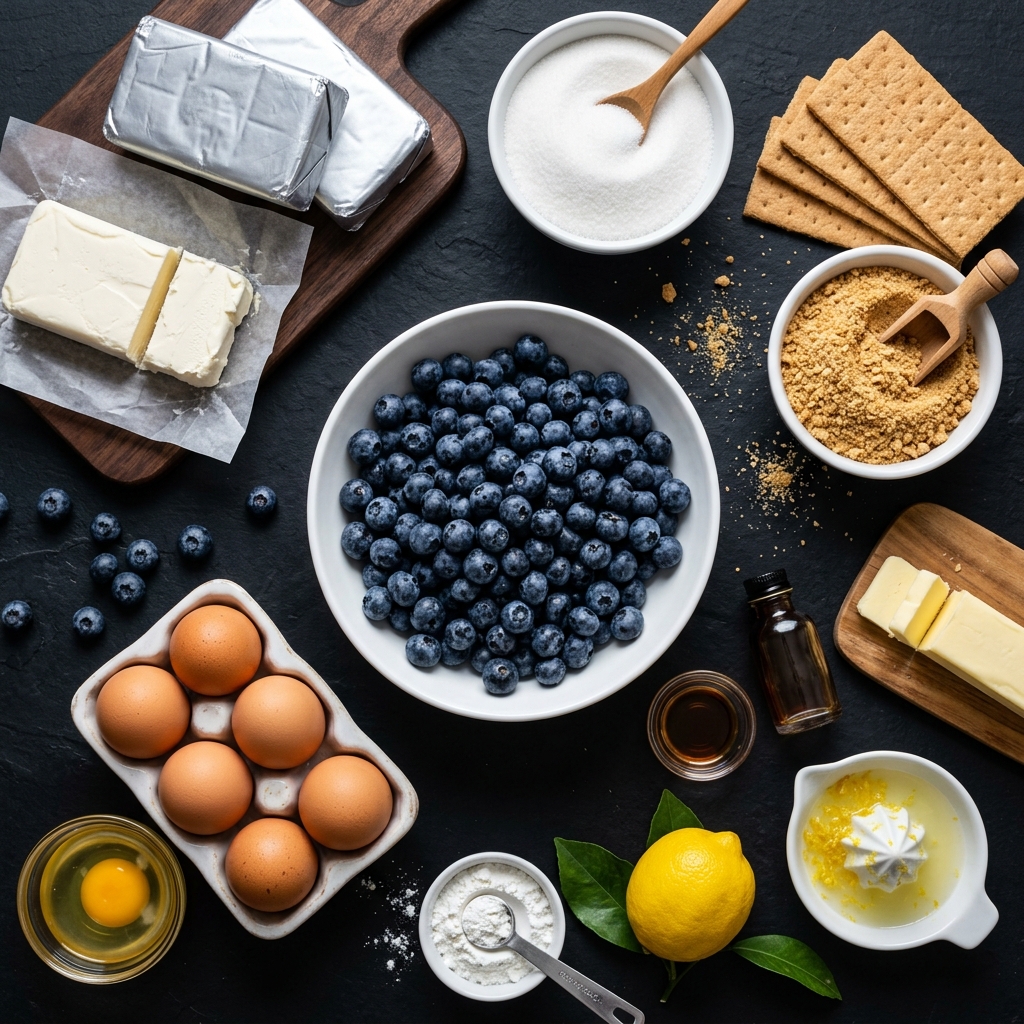
Ingredients for Blueberry Swirl Cheesecake
A great cheesecake starts with good ingredients, but just as important is understanding what each ingredient contributes. Cheesecake is a relatively simple dessert, so there is nowhere for poor-quality ingredients or incorrect measurements to hide.
For the Graham Cracker Crust
Graham crackers: Use finely crushed graham crackers for a compact, even crust. The crumbs should resemble fine sand rather than large chunks so the crust holds together properly when sliced.
Unsalted butter: Melted butter binds the crumbs together and gives the crust its rich, buttery flavor. Unsalted butter also allows you to control the overall saltiness of the dessert.
Granulated sugar: A small amount of sugar adds sweetness and helps the crust develop a lightly crisp, golden finish during baking.
For the Blueberry Swirl
Fresh blueberries: Fresh blueberries provide the brightest color and naturally fruity flavor. Choose berries that are plump, deeply colored, and free from mold or excessive softness.
Granulated sugar: Sugar balances the natural tartness of the blueberries and helps create a glossy blueberry sauce.
Lemon juice: A little fresh lemon juice brings brightness to the blueberry mixture and keeps the fruit flavor from tasting overly sweet.
Cornstarch: Cornstarch thickens the blueberry mixture so it can be swirled into the cheesecake without becoming excessively watery.
For the Cheesecake Filling
Full-fat cream cheese: This is the foundation of the cheesecake. Full-fat cream cheese creates the richest flavor and smoothest texture. Avoid using reduced-fat cream cheese if your goal is a classic, dense and creamy cheesecake.
Granulated sugar: Sugar sweetens the filling while also contributing to its smooth texture.
Large eggs: Eggs provide structure and help the cheesecake set as it bakes. They should be added gradually and mixed gently to avoid incorporating too much air.
Pure vanilla extract: Vanilla enhances the cream cheese and blueberry flavors and gives the cheesecake its familiar bakery-style aroma.
Sour cream: Sour cream adds moisture and a subtle tang that balances the richness of the cream cheese. It also helps produce a softer, silkier cheesecake texture.
Fresh lemon juice: A small amount adds acidity and makes the blueberry and cream cheese flavors taste brighter.
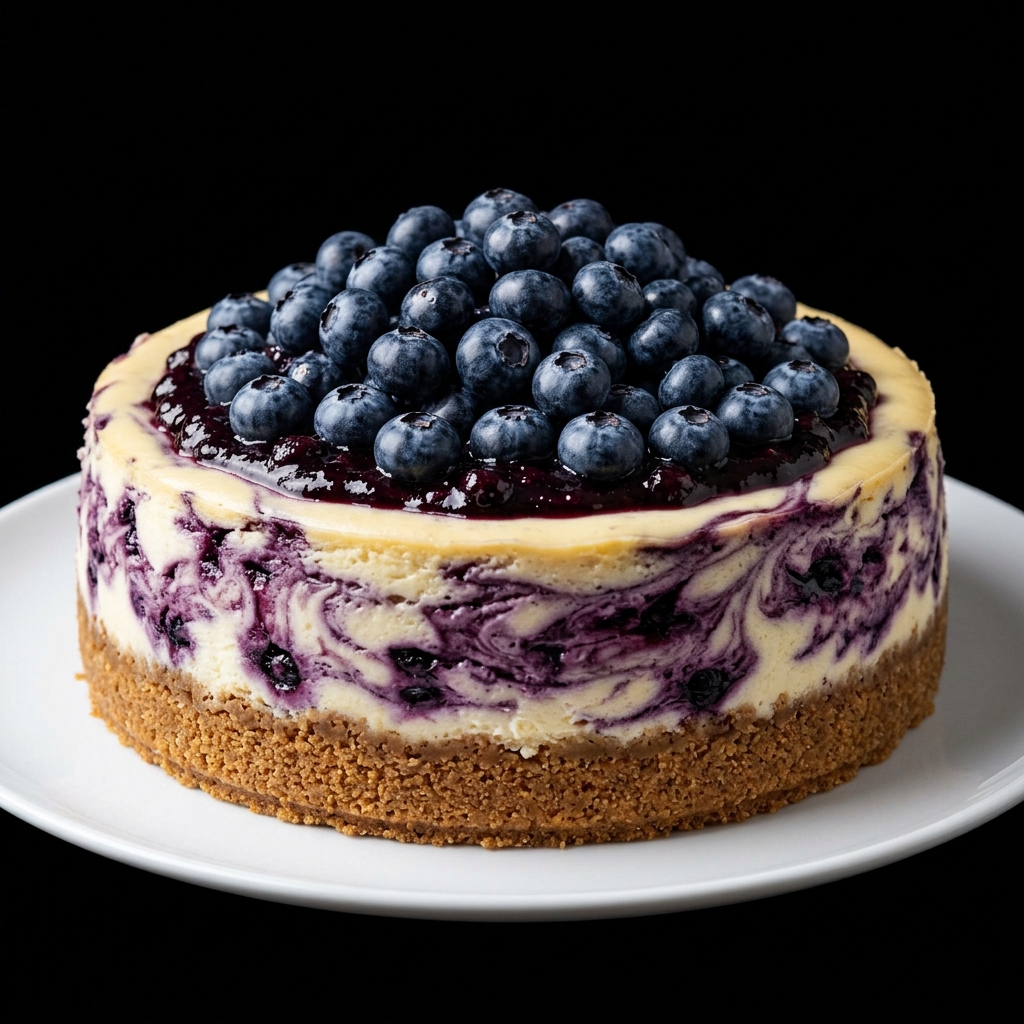
How to Make Blueberry Swirl Cheesecake
Step 1: Prepare the Pan
Begin by lightly greasing a 9-inch springform pan. For easier cleanup and additional protection against water, wrap the outside bottom of the pan tightly with a couple of layers of heavy-duty aluminum foil if you plan to use a water bath.
Preheat your oven to 325°F (165°C).
Cheesecake benefits from gentle, consistent heat. Unlike cakes that can tolerate vigorous rising, cheesecake should bake slowly so the filling sets evenly without becoming dry or developing large cracks.
Step 2: Make the Graham Cracker Crust
Crush the graham crackers until you have fine, even crumbs. Combine the crumbs with melted butter and sugar until the mixture resembles damp sand.
Press the mixture firmly into the bottom of the prepared springform pan. You can use the flat bottom of a measuring cup or glass to create an even surface.
Bake the crust for approximately 8–10 minutes, just until it becomes lightly fragrant and slightly darker around the edges. Remove it from the oven and allow it to cool while you prepare the filling.
Do not skip this short pre-bake. It helps the crust become firm enough to support the creamy cheesecake without becoming excessively soft after the filling is added.
Step 3: Prepare the Blueberry Swirl
Add the blueberries, sugar, lemon juice, and cornstarch to a small saucepan over medium heat.
Cook the mixture while stirring occasionally until the blueberries begin to break down and release their juices. Continue cooking until the mixture becomes noticeably thicker and resembles a loose blueberry jam.
This usually takes around 5–8 minutes, depending on the berries and the heat of your stove.
Remove the blueberry mixture from the heat and allow it to cool for several minutes. For an especially smooth swirl, you can press the mixture through a fine-mesh sieve to remove some or all of the blueberry skins. If you prefer a more rustic cheesecake with small pieces of fruit throughout, leave it as it is.
The important thing is that the blueberry mixture should not be piping hot when it is added to the cheesecake. Excessive heat can interfere with the texture of the filling.
Step 4: Make the Cheesecake Filling
Place the softened cream cheese in a large mixing bowl. Beat it on low to medium speed until smooth and creamy.
Add the sugar gradually and mix just until incorporated. Scrape down the sides and bottom of the bowl to make sure there are no lumps of cream cheese hiding in the mixture.
Add the sour cream, vanilla extract, and lemon juice, mixing until smooth.
Now add the eggs one at a time, mixing on low speed after each addition and stopping as soon as the egg disappears into the batter.
This is one of the most important steps in making a beautiful cheesecake. Avoid aggressively beating the eggs into the mixture. Excessive air can become trapped in the batter and expand during baking, increasing the chance of cracks or an uneven surface.
Step 5: Assemble the Cheesecake
Pour the cheesecake batter over the cooled graham cracker crust and smooth the surface gently.
Spoon small amounts of the cooled blueberry mixture over the top. You do not need to cover the entire surface. In fact, leaving portions of the creamy cheesecake visible creates a more dramatic finished appearance.
Using the tip of a skewer, thin knife, or chopstick, gently drag through the blueberry mixture in sweeping motions to create elegant swirls.
Do not over-swirl.
A few deliberate movements create beautiful ribbons of blueberry throughout the cheesecake. If you keep stirring, the blueberry mixture will blend into the cheesecake and you will lose the distinct marbled appearance that makes this dessert so attractive.
Step 6: Bake the Cheesecake
Place the cheesecake in the preheated oven.
If using a water bath, carefully place the springform pan inside a larger roasting pan and add hot water around it, taking care not to splash water onto the cheesecake.
Bake for approximately 55–70 minutes, depending on your oven and the depth of the cheesecake.
The edges should look set, while the center should still have a gentle wobble when the pan is carefully nudged. Do not wait until the entire cheesecake looks completely firm. It will continue to set as it cools.
Once baked, turn off the oven and leave the cheesecake inside with the door slightly open for about 30–60 minutes. This gradual temperature change helps reduce the risk of the cheesecake cracking from a sudden drop in temperature.
The Secret to a Cheesecake That Looks as Good as It Tastes
The most important secret is surprisingly simple: do not rush the cheesecake.
From the moment you soften the cream cheese to the moment you slice the finished dessert, gentle handling makes a noticeable difference. Room-temperature ingredients blend more smoothly, low-speed mixing prevents excess air, and moderate baking temperatures allow the center to set gradually.
The other secret is knowing when the cheesecake is actually done. A cheesecake should not be baked until it resembles a completely firm cake. If the center has a slight jiggle while the edges are set, you are usually in the right range. The residual heat will continue cooking the center as the cheesecake cools.
And then comes the part that requires the most patience: chilling. A cheesecake that has been properly cooled and refrigerated will have a significantly better texture than one that is sliced while still warm. The filling becomes firmer, creamier, and easier to cut, while the blueberry flavor becomes more pronounced.
Blueberry Swirl Cheesecake Variations
One of the best things about this recipe is how easily it can be customized without losing its classic character.
Mixed Berry Cheesecake
Replace some of the blueberries with raspberries or blackberries. A combination of berries creates a deeper fruit flavor and gives the swirl several shades of red, purple, and blue.
Lemon Blueberry Cheesecake
For a brighter citrus-forward dessert, increase the amount of fresh lemon zest in the cheesecake filling. Lemon zest provides a more concentrated citrus aroma than lemon juice without adding much additional liquid.
Blueberry Cheesecake with Fresh Berry Topping
Instead of putting all of the blueberry mixture into the swirl, reserve some for serving. Spoon the cooled blueberry sauce over individual slices and finish with fresh blueberries.
Chocolate Cookie Crust
For a richer variation, substitute chocolate sandwich cookies for the graham crackers. The combination of chocolate, creamy cheesecake, and blueberries creates a more decadent dessert.
Mini Blueberry Swirl Cheesecakes
Turn the recipe into individual desserts by baking the cheesecakes in a lined muffin pan or individual mini cheesecake molds. This is an excellent option for parties because each guest receives a beautifully portioned dessert.
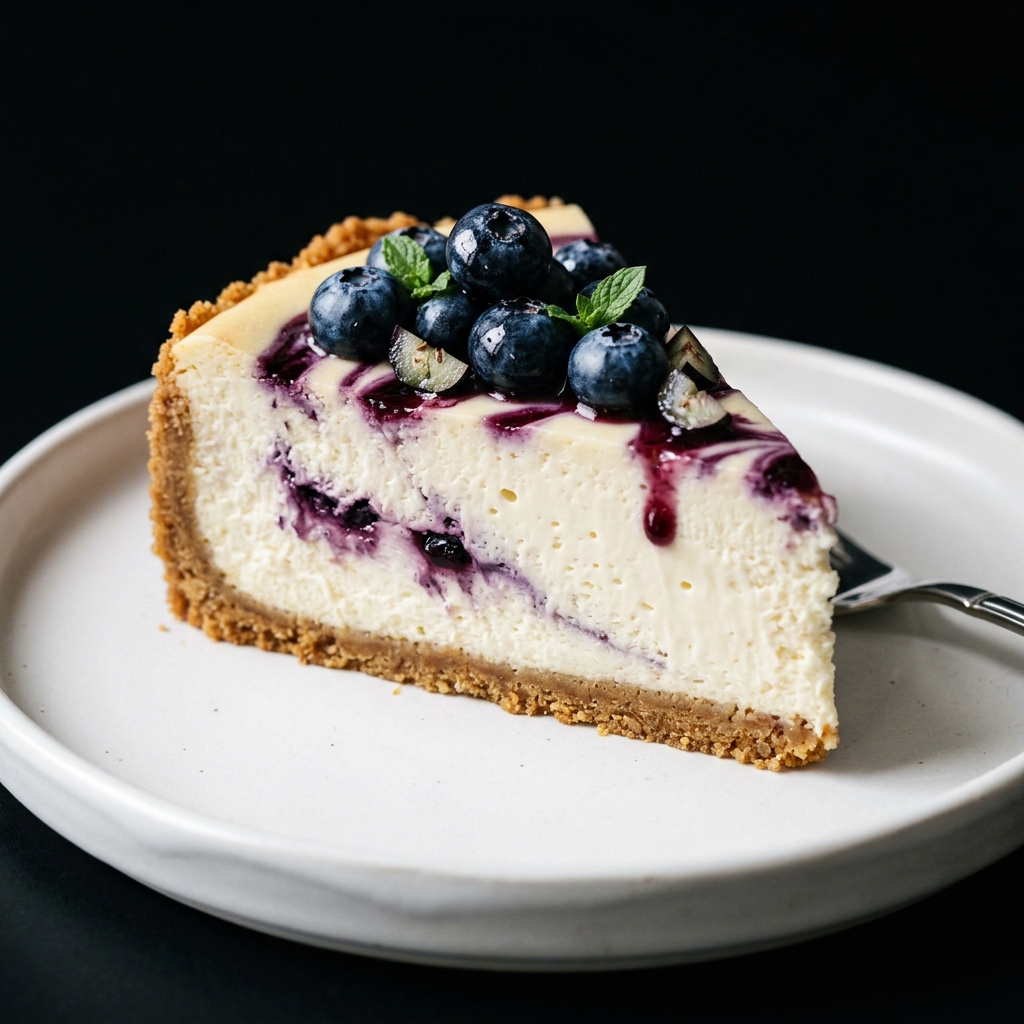
Expert Tips for the Perfect Cheesecake
Bring the cream cheese to room temperature. Cold cream cheese is much more difficult to blend smoothly and can leave small lumps in the filling.
Use full-fat cream cheese. It provides the richness and structure needed for a classic creamy cheesecake.
Do not overmix after adding the eggs. Mix only until each egg is incorporated. This keeps unnecessary air out of the batter.
Cool the blueberry mixture before swirling. Warm fruit sauce can disturb the cheesecake batter and make the swirl less defined.
Do not over-swirl. A few controlled strokes are enough. You want visible ribbons of blueberry rather than a completely purple cheesecake.
Bake gently. A moderate oven temperature gives the cheesecake time to set without drying the edges.
Look for a slight center wobble. A small jiggle is a sign that the cheesecake still has moisture and will finish setting during cooling.
Cool gradually. Sudden temperature changes can encourage cracking, so allow the cheesecake to cool slowly.
Chill thoroughly before slicing. For the cleanest slices and best texture, refrigerate the cheesecake for several hours, preferably overnight.
Use a sharp knife for serving. For bakery-style slices, run a sharp knife under hot water, wipe it dry, and then cut. Clean and rewarm the knife between slices for especially neat presentation.
Make-Ahead Options
Blueberry Swirl Cheesecake is an excellent make-ahead dessert because its texture actually improves as it rests and chills. You can prepare the entire cheesecake one to two days before serving, which makes it especially convenient for holidays, dinner parties, birthdays, and other occasions when you want dessert finished before your guests arrive.
For the best results, bake the cheesecake as directed and allow it to cool completely. Once cooled, cover it carefully and refrigerate it overnight. Keep the cheesecake in the springform pan until you are ready to serve it so the sides remain protected.
The blueberry topping or sauce can also be prepared ahead of time. Store it separately in an airtight container in the refrigerator, then spoon it over the cheesecake immediately before serving.
If you are preparing the cheesecake several days ahead, wait until closer to serving time to add decorative fresh blueberries. This keeps the berries looking plump, glossy, and fresh rather than allowing them to soften in the refrigerator.
What to Serve with Blueberry Swirl Cheesecake
This cheesecake is rich and flavorful enough to serve by itself, but a few simple accompaniments can make each slice feel even more special.
Fresh Blueberries
A handful of fresh blueberries adds freshness and a pleasant contrast to the creamy cheesecake. You can scatter them around the plate or place a small cluster on top of each slice.
Blueberry Sauce
Warm or room-temperature blueberry sauce provides an extra burst of fruit flavor and makes the dessert look beautifully finished. Drizzle a small amount over the plate or spoon it directly onto the cheesecake.
Whipped Cream
A small dollop of lightly sweetened whipped cream adds an airy contrast to the dense, creamy cheesecake. Avoid making the whipped cream excessively sweet because the cheesecake already provides plenty of richness.
Fresh Lemon Zest
A little finely grated lemon zest over each serving gives the dessert a fresh aroma and cuts through the richness of the cream cheese.
Vanilla Ice Cream
For an especially indulgent dessert, serve a small scoop of vanilla ice cream alongside the cheesecake. The cold, creamy ice cream works beautifully with the tart blueberry flavor.
Fresh Mint
A small mint leaf can be used as a simple garnish when serving. It adds a fresh visual touch without overpowering the blueberry and vanilla flavors.
How to Store Blueberry Swirl Cheesecake
Proper storage is important because cheesecake contains dairy and eggs and should remain refrigerated.
Allow the cheesecake to cool completely before covering it. Place it in the refrigerator in an airtight container or cover it tightly with plastic wrap or aluminum foil.
Stored properly in the refrigerator, homemade cheesecake will generally keep well for up to 5 days.
If the cheesecake has already been sliced, you can place individual slices in airtight containers. This is particularly convenient when you want to enjoy one piece at a time without repeatedly exposing the entire cheesecake to air.
Keep the cheesecake refrigerated until you are ready to serve it. For the best texture and flavor, remove it from the refrigerator approximately 15–30 minutes before serving. This allows the filling to soften slightly while remaining safely chilled.
Can You Freeze Blueberry Swirl Cheesecake?
Yes. Cheesecake freezes remarkably well when properly wrapped.
For the best results, freeze the cheesecake without fresh fruit garnishes. Once it has completely chilled, wrap it tightly in plastic wrap and then place it inside a freezer-safe container or freezer bag.
You can freeze the cheesecake whole or divide it into individual slices. Freezing individual portions makes it much easier to thaw exactly what you need.
For the best quality, use frozen cheesecake within approximately 1–2 months.
To thaw, transfer the cheesecake to the refrigerator and allow it to defrost slowly, preferably overnight. Avoid thawing it at room temperature for extended periods because the dairy-based filling should remain properly chilled.
Do not refreeze cheesecake that has already been completely thawed.
How to Get Clean, Beautiful Cheesecake Slices
Presentation matters, especially with a dessert as visually striking as Blueberry Swirl Cheesecake.
Start with a properly chilled cheesecake. A cold cheesecake is considerably easier to cut than one that is still warm or barely set.
Use a long, sharp knife. Run the blade under hot water for a few seconds, then dry it completely with a clean towel. Make one confident cut through the cheesecake rather than repeatedly sawing back and forth.
Wipe the knife clean between cuts and repeat the process.
This simple technique gives you smooth, professional-looking slices with clearly visible layers of crust, creamy cheesecake, and blueberry swirl.
If you want an especially elegant presentation, place each slice slightly off-center on a white dessert plate. Add a few fresh blueberries, a thin drizzle of blueberry sauce, and a small amount of whipped cream. The contrast between the bright cheesecake and dark serving surface can make the blueberry colors stand out beautifully.
Troubleshooting Common Cheesecake Problems
Even experienced home bakers occasionally encounter cheesecake problems. Fortunately, most issues have straightforward explanations.
Why Did My Cheesecake Crack?
Cracking can happen for several reasons, including overmixing, overbaking, sudden temperature changes, or allowing the cheesecake to become too dry.
One of the easiest ways to reduce cracking is to avoid excessive mixing once the eggs have been added. Bake the cheesecake gently and remove it when the center still has a slight wobble.
Cooling it gradually can also make a major difference.
If your cheesecake develops a small crack anyway, do not worry. The blueberry swirl, fresh berries, whipped cream, or blueberry sauce can easily turn an imperfect surface into a beautiful finished dessert.
Why Is My Cheesecake Lumpy?
Lumps are usually caused by cream cheese that was too cold or by adding ingredients too quickly.
Allow the cream cheese to soften at room temperature before beginning. Beat it until smooth before adding the remaining ingredients.
If you notice lumps after adding the other ingredients, avoid aggressively beating the batter in an attempt to remove them. Excessive mixing can introduce air into the filling.
Why Did My Cheesecake Turn Out Too Soft?
Cheesecake needs sufficient time to bake and, more importantly, sufficient time to chill.
Remember that the center should still have a gentle wobble immediately after baking. That does not necessarily mean the cheesecake is undercooked.
However, if the entire cheesecake is very loose and liquid-like after several hours of refrigeration, it may have been underbaked or the ingredient proportions may have been altered.
Allowing the cheesecake to chill overnight usually gives the filling plenty of time to fully firm up.
Why Did My Crust Fall Apart?
A crumbly crust usually means there was not enough butter to bind the crumbs, the crumbs were too coarse, or the crust was not pressed firmly enough into the pan.
The mixture should resemble damp sand before it is pressed into the pan. Use the bottom of a measuring cup or glass to compact the crust evenly.
Allowing the crust to cool after baking also helps it firm up before the cheesecake filling is added.
Why Did My Blueberry Swirl Disappear?
The blueberry mixture may have been too thin, or it may have been swirled too deeply or too aggressively into the cheesecake.
The blueberry sauce should have a thick, jam-like consistency before it is added. Use small spoonfuls and make only a few gentle swirling movements.
The goal is to create ribbons and streaks rather than completely mixing the fruit into the cheesecake.
Frequently Asked Questions
Can I use frozen blueberries for the swirl?
Yes. Frozen blueberries can work very well, particularly when fresh blueberries are unavailable. You do not necessarily need to thaw them first when making the blueberry sauce, although they may require slightly more cooking time because they release additional moisture.
Cook the mixture until it has thickened sufficiently before using it in the cheesecake.
Can I make this cheesecake without a water bath?
Yes. A water bath is helpful because the gentle, moist heat can encourage more even baking, but it is not absolutely required.
If you prefer not to use one, bake the cheesecake at the recommended moderate temperature and avoid overbaking. Allowing the cheesecake to cool gradually can also help minimize cracks.
Another option is to place a separate pan of hot water on a lower oven rack. This can add moisture to the oven without requiring the cheesecake pan itself to sit directly in water.
Can I use a regular cake pan instead of a springform pan?
A springform pan is strongly recommended because it makes removing the cheesecake much easier.
If you only have a regular cake pan, line it carefully with parchment paper and make sure there is enough overhang to help lift the cheesecake out after it has thoroughly chilled. However, removing a deep cheesecake from a standard pan can be more difficult and may affect the final presentation.
How long should cheesecake chill before serving?
For the best texture, chill the cheesecake for at least 6 hours, although overnight is even better.
This extended chilling period allows the filling to fully set and gives the flavors time to develop. It also makes slicing much easier.
Can I use a blueberry pie filling instead of homemade blueberry sauce?
You can, but homemade blueberry sauce generally gives you better control over sweetness, thickness, and flavor.
Commercial pie filling can sometimes be excessively sweet or thick and may contain ingredients that produce a different texture. If you use it, add small amounts and swirl gently rather than covering the entire cheesecake surface.
Can I make this recipe gluten-free?
Yes. The cheesecake filling and blueberry swirl can be naturally gluten-free, but traditional graham crackers are usually made with wheat.
To make a gluten-free version, use certified gluten-free graham crackers or another gluten-free cookie for the crust. Also check the labels of packaged ingredients if you need to avoid gluten strictly.
Can I make this cheesecake keto-friendly?
The traditional version is not keto-friendly because it contains regular sugar and a graham cracker crust.
However, you can create a keto-style version by replacing the sugar with an appropriate low-carbohydrate sweetener and using a keto-friendly nut-based crust. The blueberry quantity may also need to be controlled because fruit contains naturally occurring carbohydrates.
Can I make mini versions of this cheesecake?
Absolutely. Mini Blueberry Swirl Cheesecakes are a wonderful option for parties, showers, celebrations, and dessert tables.
Use a muffin pan with liners and reduce the baking time significantly because smaller cheesecakes set much faster than a full-size cheesecake. Begin checking them early rather than relying strictly on the baking time for the full-size version.
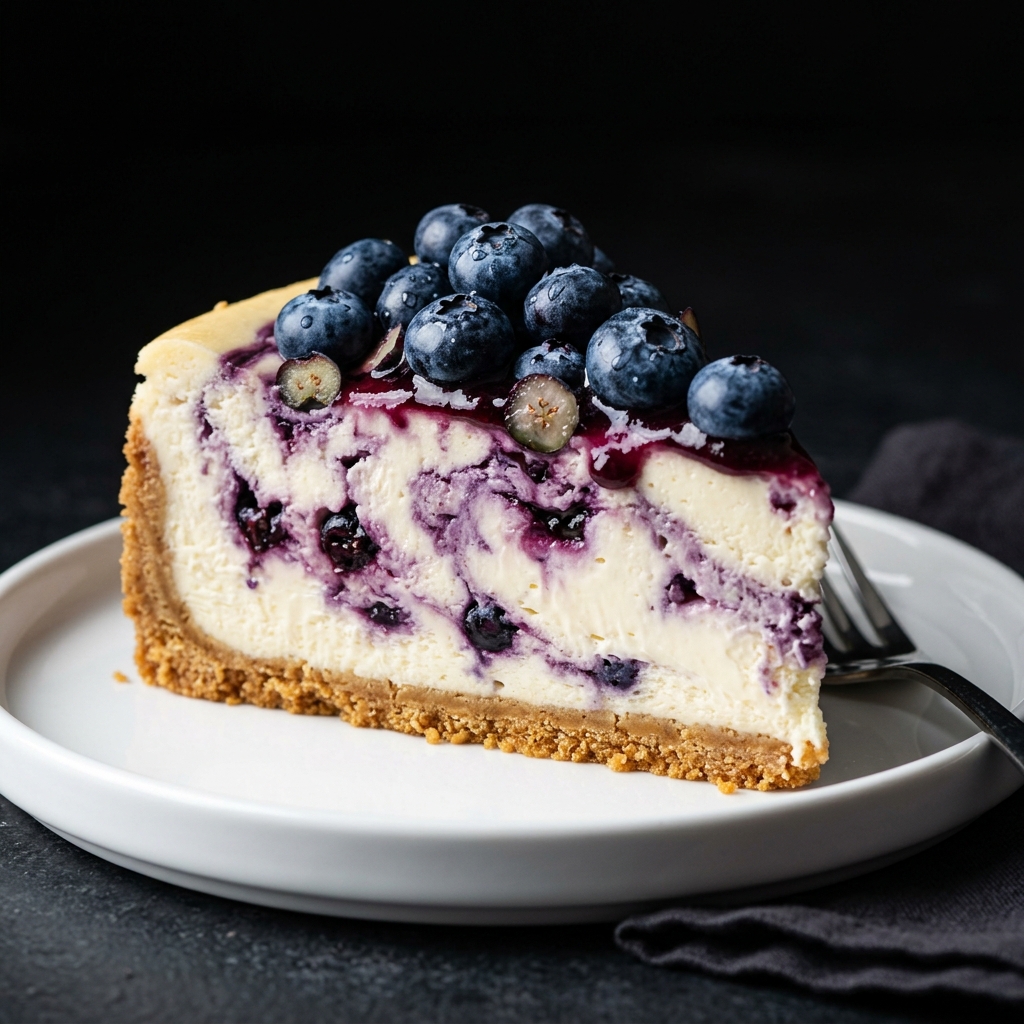
Blueberry Swirl Cheesecake
Ingredients
Equipment
Method
- Grease a 9-inch springform pan. If using a water bath, wrap the outside bottom of the pan tightly with heavy-duty aluminum foil. Preheat the oven to 325°F (165°C).
- Combine the finely crushed graham crackers, melted butter, and sugar until the mixture resembles damp sand. Press firmly and evenly into the bottom of the springform pan. Bake for 8–10 minutes, then remove and allow to cool.
- Add blueberries, sugar, lemon juice, and cornstarch to a small saucepan. Cook over medium heat for approximately 5–8 minutes, stirring occasionally, until the blueberries break down and the mixture thickens to a jam-like consistency. Remove from the heat and cool. For a smoother sauce, strain through a fine-mesh sieve if desired.
- Beat the softened cream cheese on low to medium speed until smooth. Gradually add the sugar and mix until incorporated. Add the sour cream, vanilla, and lemon juice.
- Add the eggs one at a time, mixing on low speed only until each egg is incorporated. Avoid overmixing, as excessive air can contribute to cracks during baking.
- Pour the cheesecake filling over the cooled crust and smooth the top. Drop spoonfuls of the cooled blueberry sauce over the surface. Use a skewer or thin knife to gently swirl the blueberry mixture through the cheesecake. Do not over-swirl.
- Place the cheesecake in the oven. If using a water bath, carefully add hot water to the surrounding roasting pan. Bake for approximately 55–70 minutes, or until the edges are set while the center still has a gentle wobble.
- Turn off the oven and leave the cheesecake inside with the door slightly open for 30–60 minutes. Remove it from the oven and allow it to cool completely.
- Cover the cheesecake and refrigerate for at least 6 hours, preferably overnight. This allows the cheesecake to fully set and develop its best creamy texture.
- Carefully remove the springform ring. Garnish with fresh blueberries, blueberry sauce, lemon zest, whipped cream, or other desired toppings. For clean slices, use a sharp knife warmed under hot water and wiped dry between cuts.
Notes
Make sure the cream cheese and eggs are close to room temperature before mixing.
Do not overbeat the batter, especially after adding the eggs.
Allow the blueberry sauce to cool before swirling it into the cheesecake.
Use only a few gentle swirling motions for clearly defined blueberry ribbons.
A slight wobble in the center when the cheesecake comes out of the oven is normal; it will continue setting as it cools.
For the best texture, refrigerate the cheesecake overnight before serving.
Fresh blueberries are excellent for garnish, but add them shortly before serving for the freshest appearance.
Store covered in the refrigerator for up to 5 days.
The cheesecake can also be frozen, preferably without fresh fruit garnishes, for approximately 1–2 months.
For a gluten-free version, substitute the traditional graham crackers with certified gluten-free graham crackers.
The standard recipe is vegetarian, but it is not vegan, keto, or low-carb.

Hi, I’m Clara, the creator of Barakala. I love sharing simple, comforting, and delicious recipes that make everyday cooking easier and more enjoyable for home cooks.